Rue du Gros-Horloge, à Rouen — History & Analysis
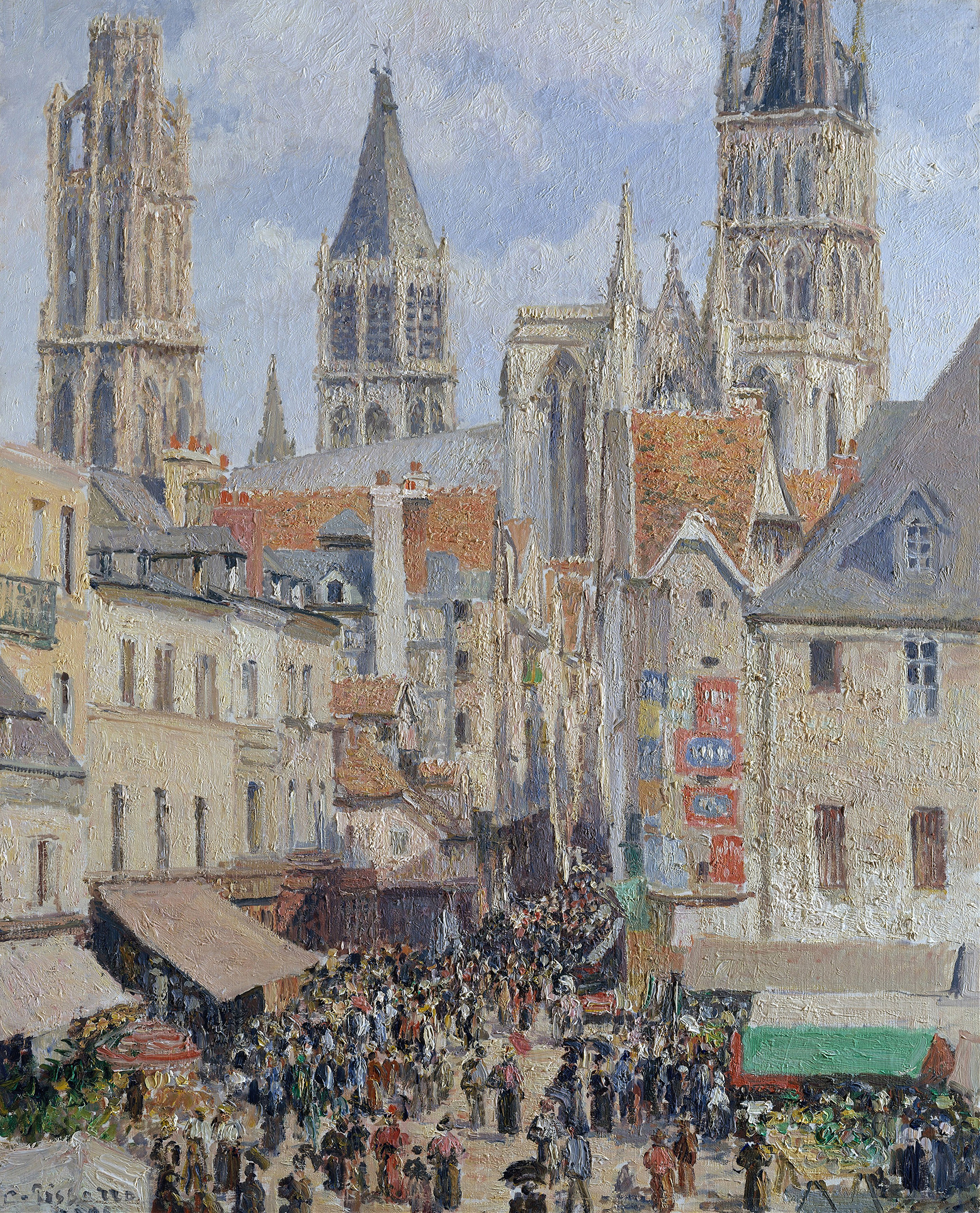
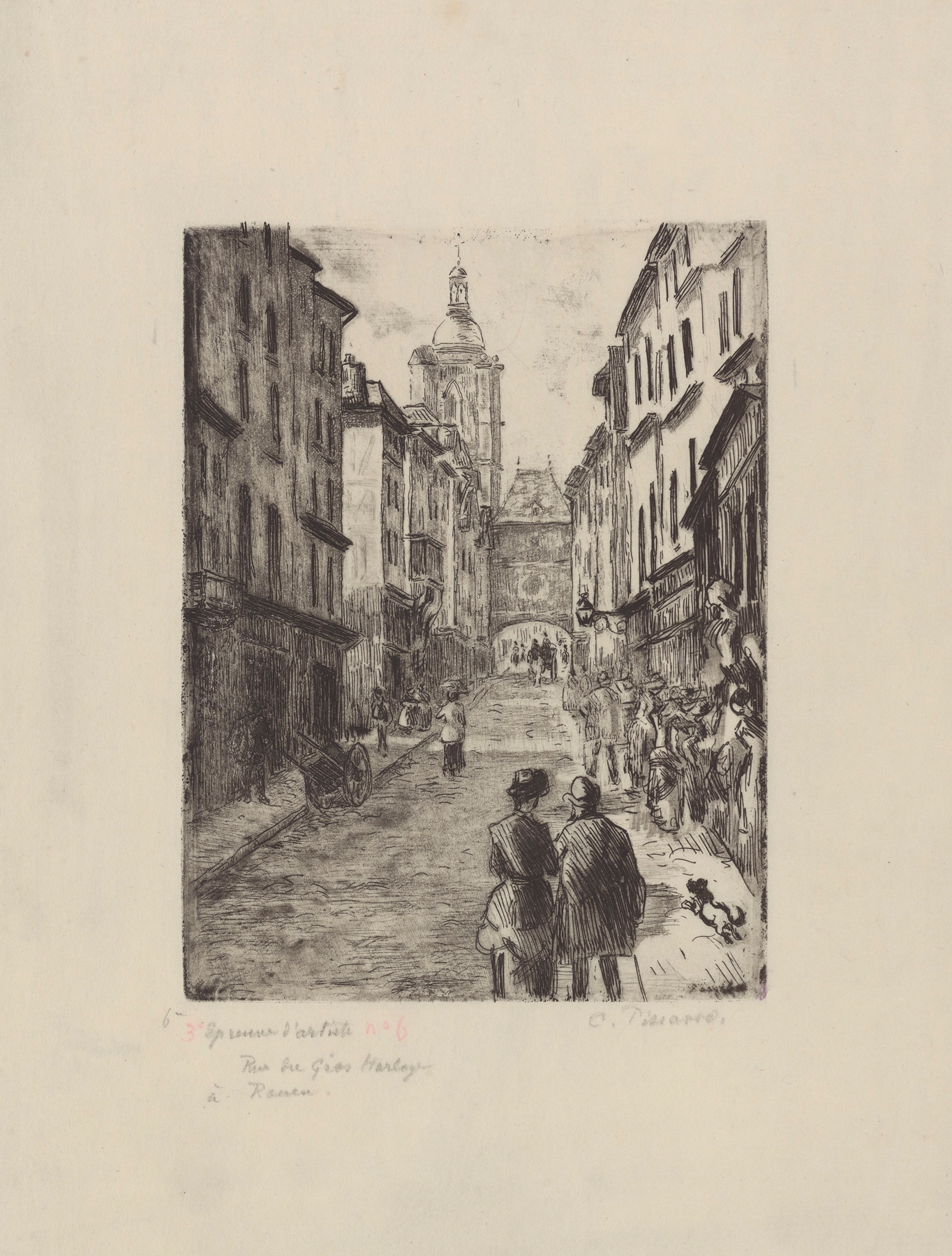
Could beauty survive in a century of chaos? The streets whisper stories of longing, their cobblestones echoing the footsteps of those who dared to dream amid turmoil. Look to the center of the canvas where the grand archway of the Gros-Horloge stands, a breathtaking focal point. Notice how the light cascades through the arch, illuminating the vibrant hues of the buildings that frame this bustling street. The soft blues and warm earth tones blend harmoniously, inviting the viewer to wander deeper into the scene. Each brushstroke reveals Pissarro's keen eye for detail, from the gentle ripples in the fabric of the pedestrians’ clothing to the dappled sunlight dancing upon the cobblestones. Beneath the lively façade of daily life lies a palpable tension—a yearning for connection amid the chaos of modernity. The contrast between the sturdy architecture and the fleeting figures of passersby encapsulates a tension between permanence and transience. This duality speaks to the artist’s own struggle against the constraints of time and progress, capturing the essence of urban life while hinting at the ephemeral nature of existence. Pissarro painted this work in Rouen in 1884, a pivotal moment in his career as he sought to define his own voice within the evolving Impressionist movement. At this time, he was navigating the complexities of personal and professional relationships while experimenting with light and color in the face of a rapidly industrializing world. This painting reflects not only his artistic exploration but also the intricate dynamic between beauty and the encroaching chaos of a new century.