Ruines romaines, le Forum avec le Colisée et l’Obélisque — History & Analysis
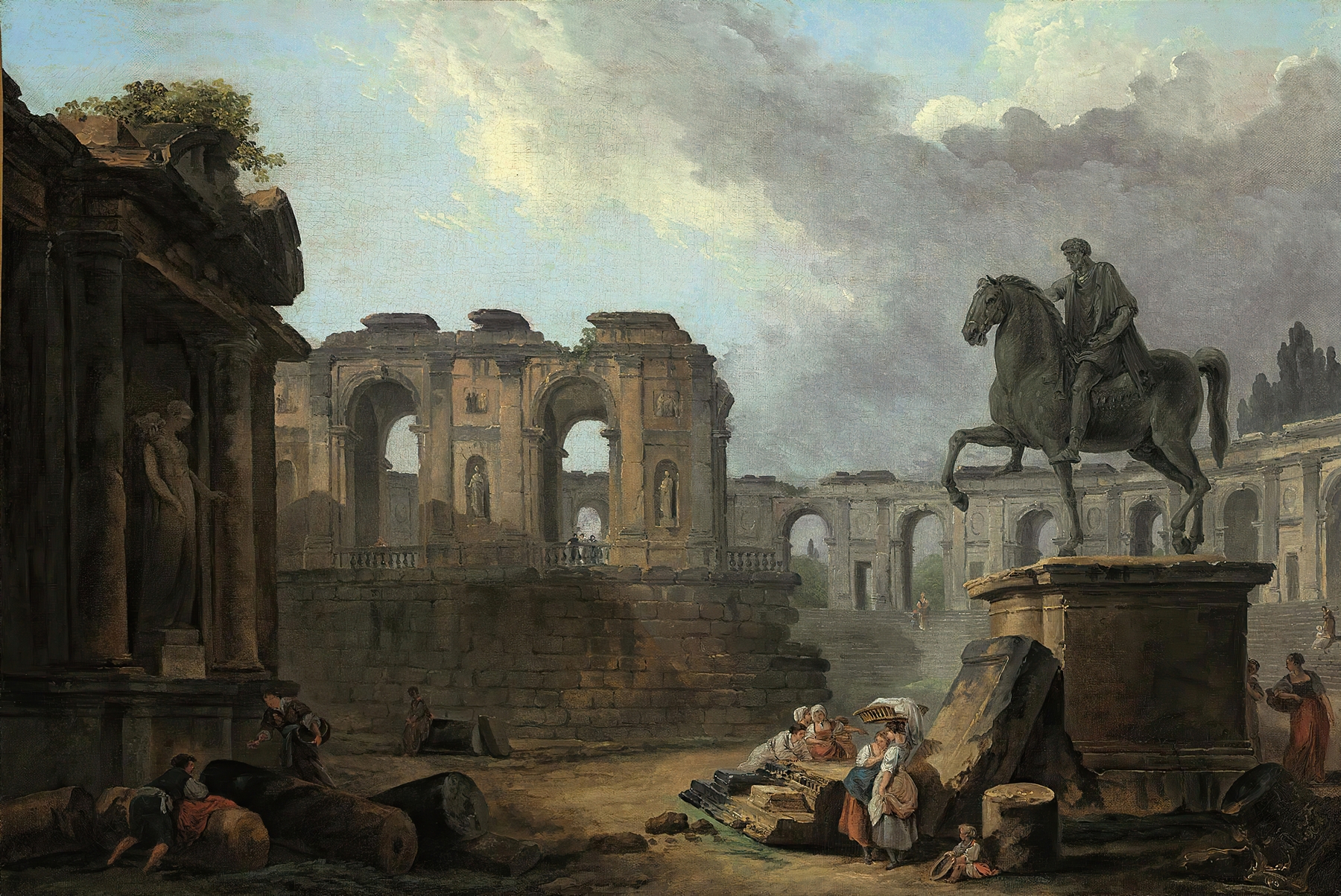
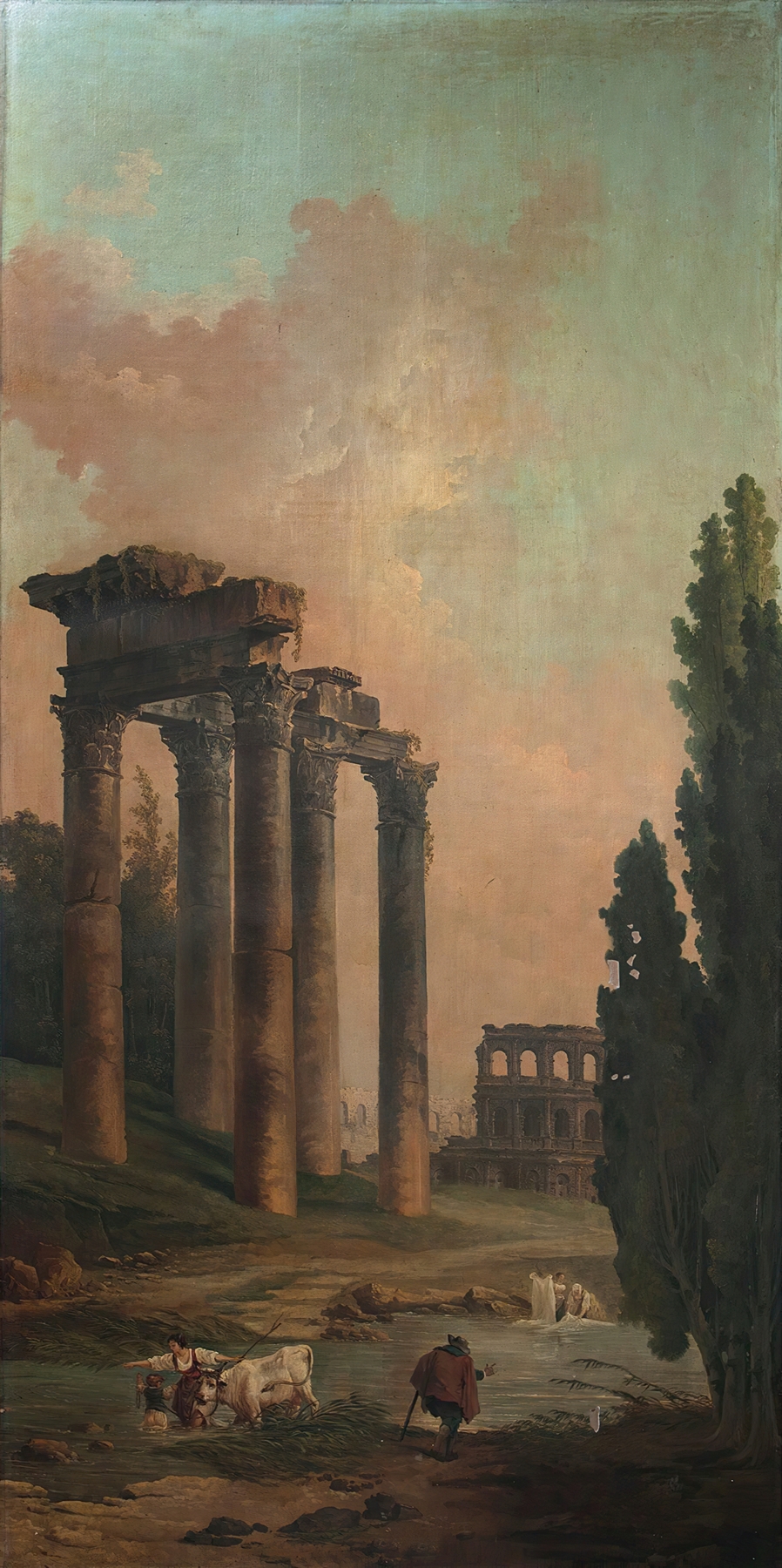
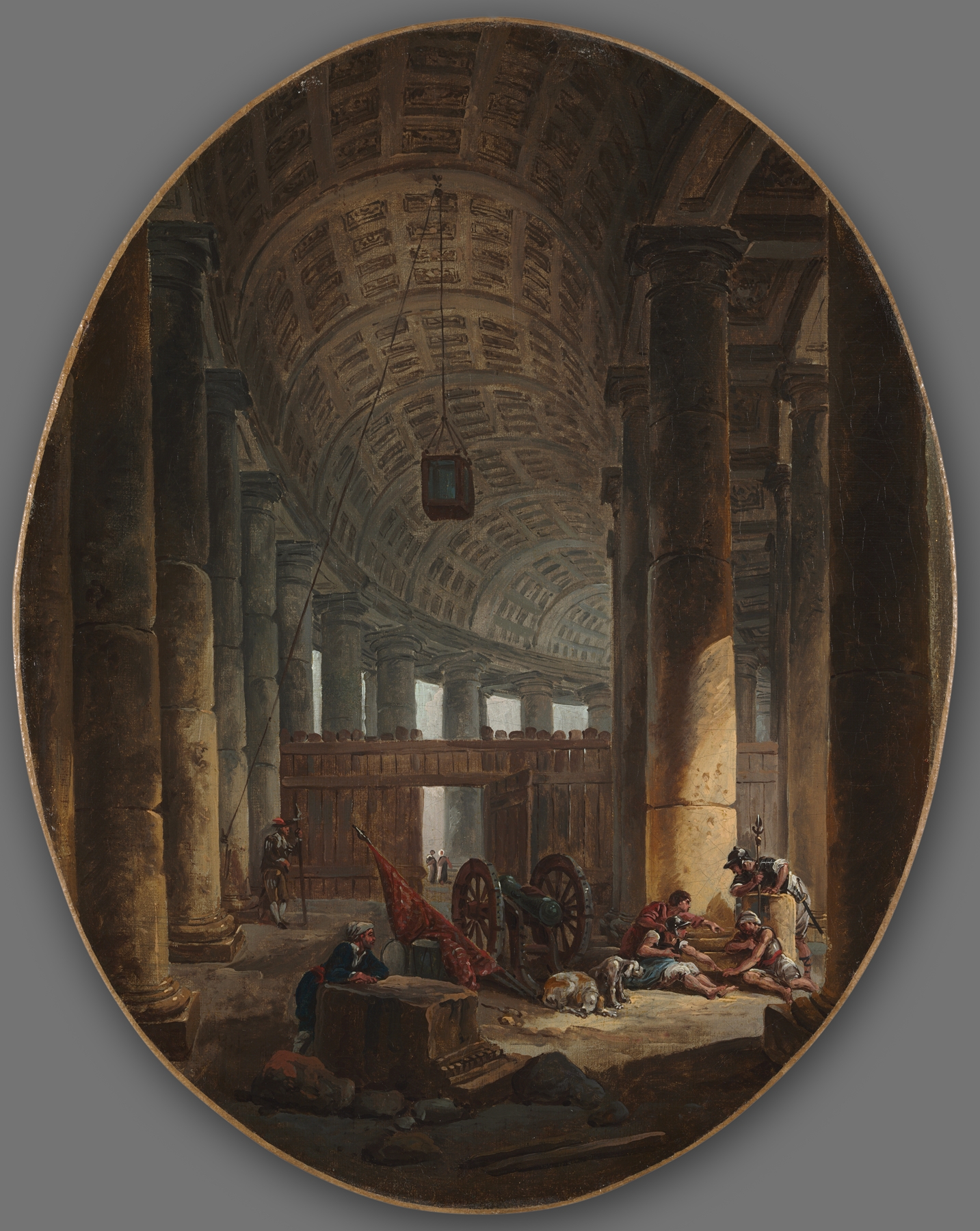
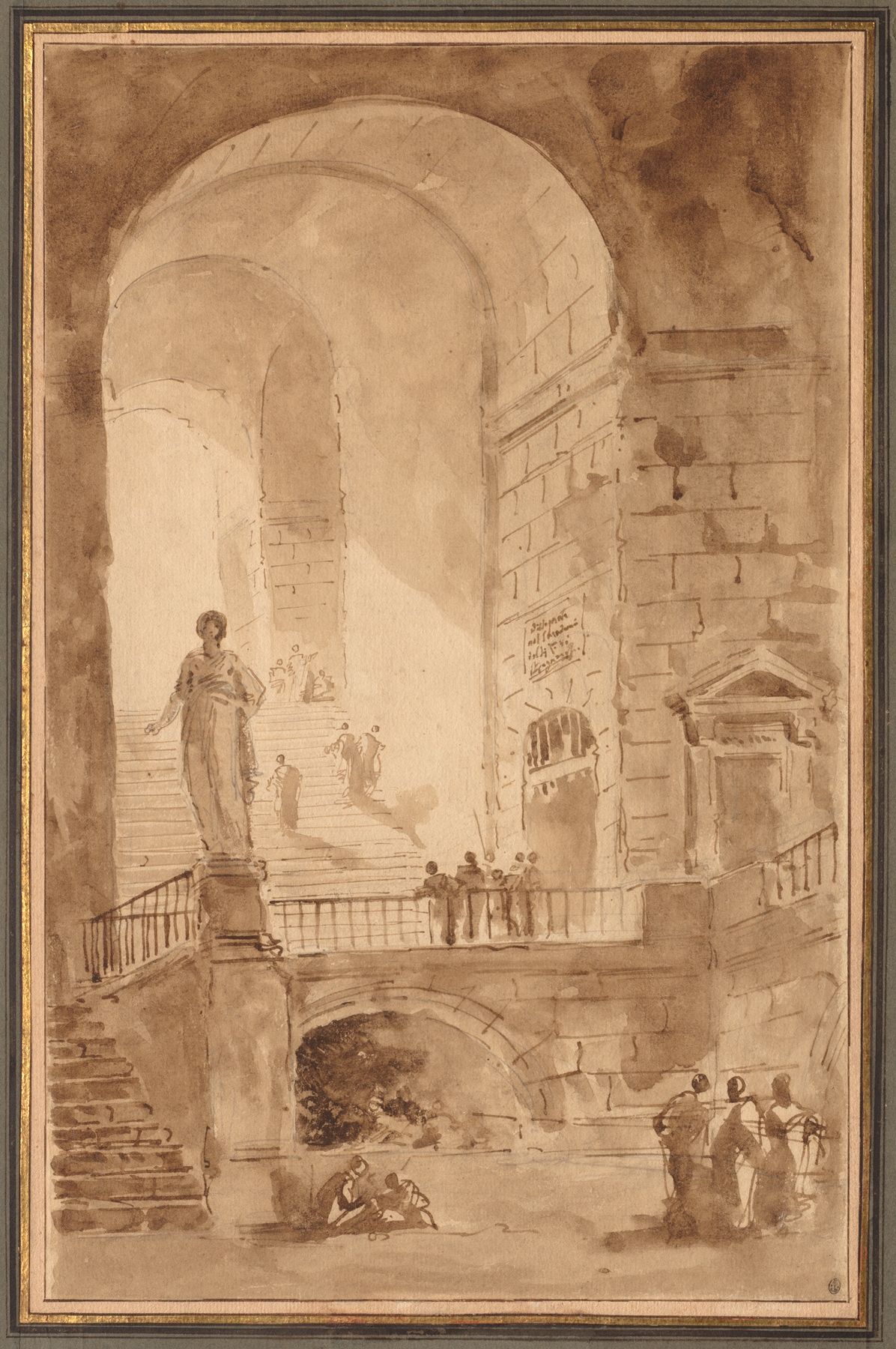
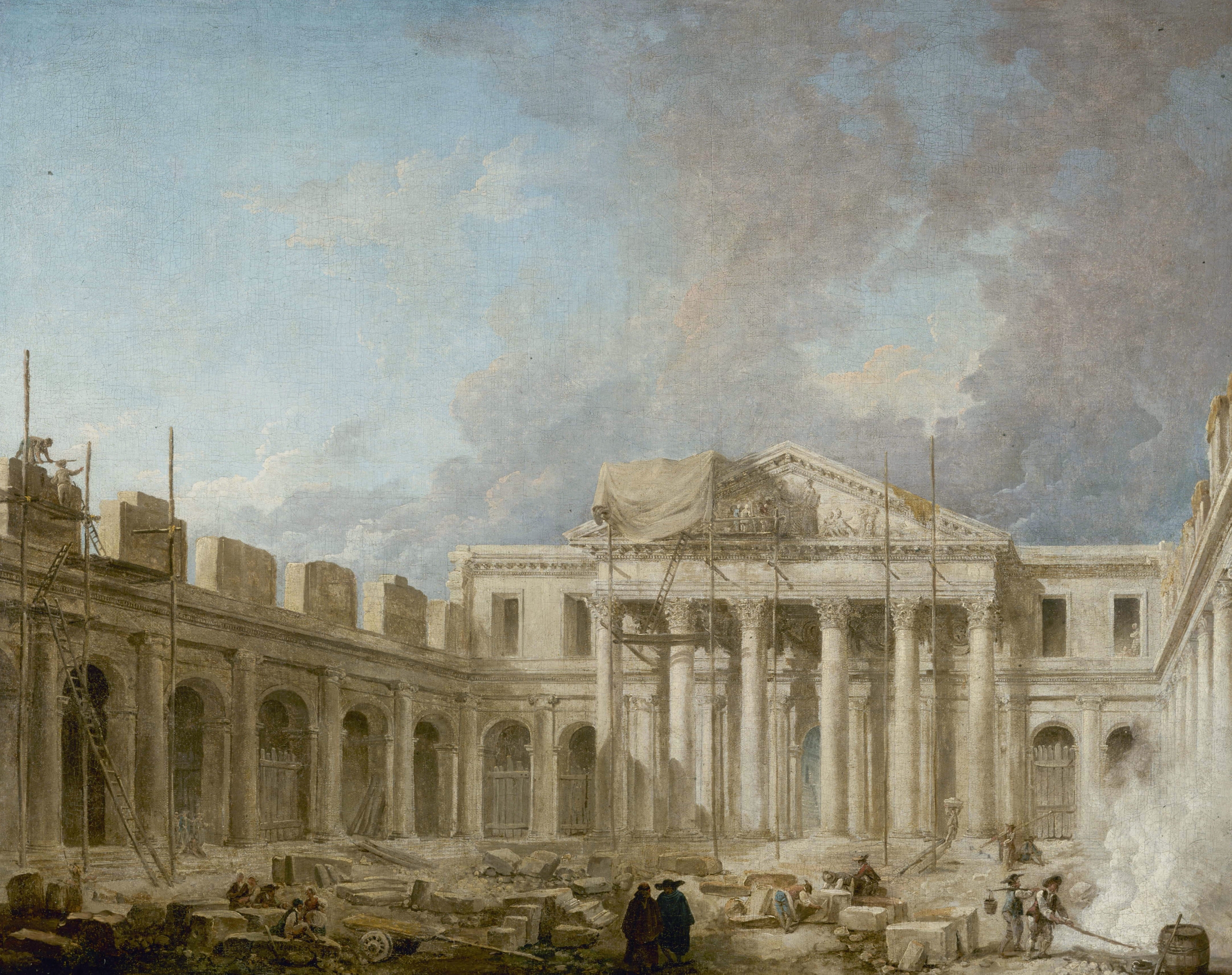
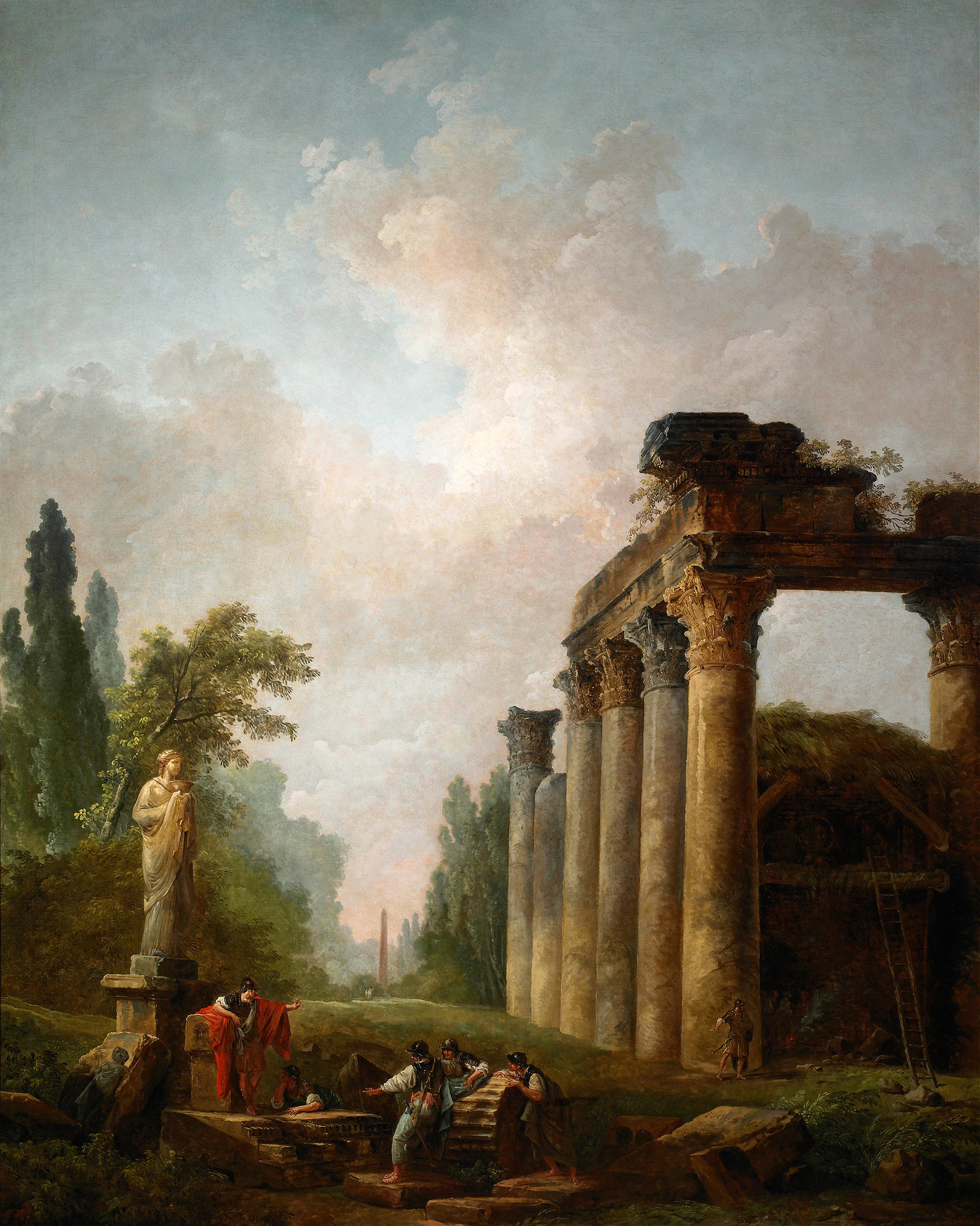
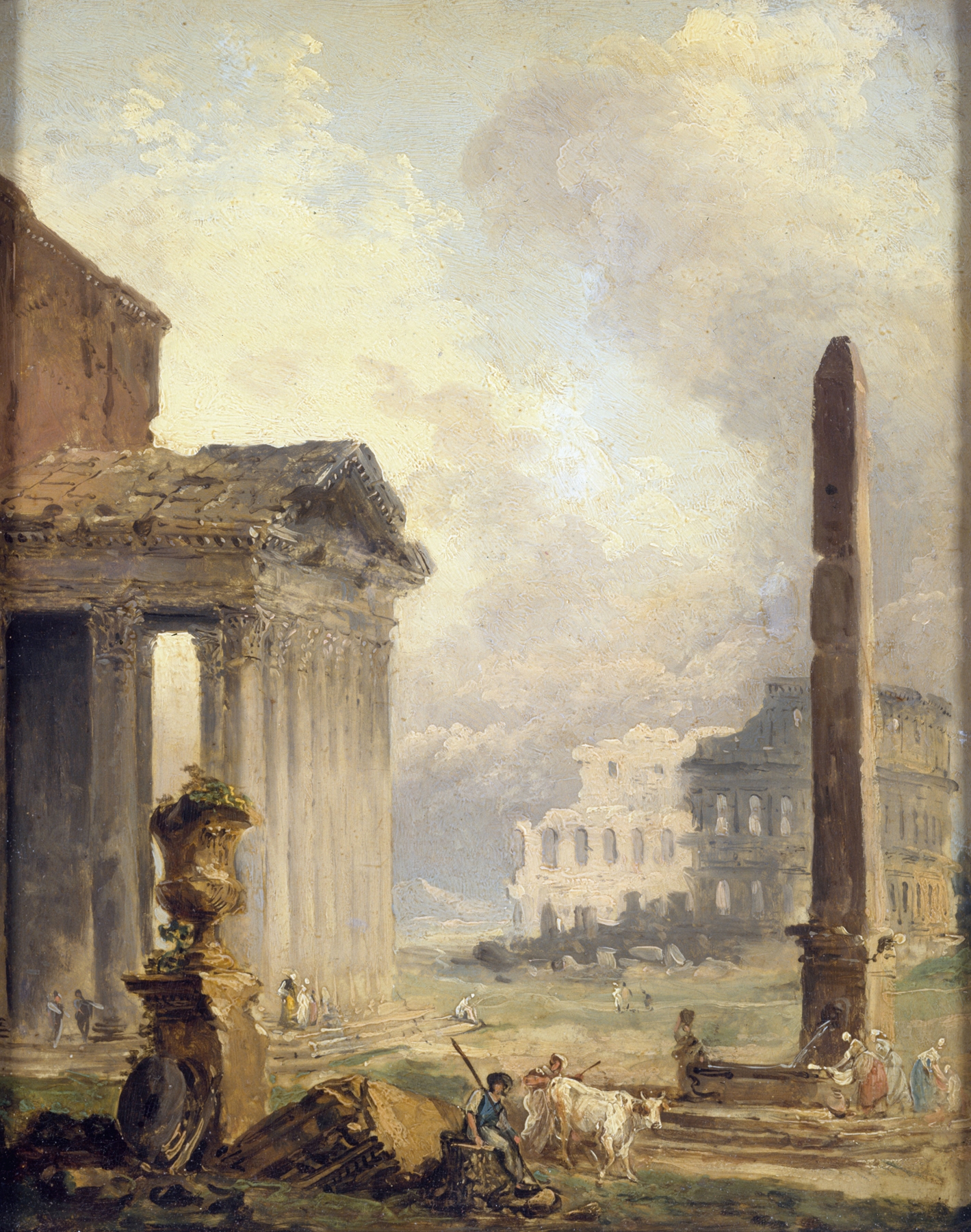
Where does light end, and longing begin? In the ethereal embrace of *Ruines romaines, le Forum avec le Colisée et l’Obélisque*, a profound dialogue unfolds between the grandeur of history and the whispers of decay. Look to the left at the towering remnants of the Colosseum, bathed in the soft glow of a fading sun, its arches inviting yet haunting. Notice how the light dances on the obelisk, casting long shadows that stretch across the crumbled stones of the Forum. The delicate brushwork creates a sense of movement, as if the very air around these ruins is charged with stories of past glory and present desolation. The palette, rich in ochres and muted blues, evokes a feeling of nostalgia, capturing the transient beauty of this once-vibrant scene. Delve deeper into the artwork's contrasts, where the vibrancy of nature intertwines with human destruction. The verdant greenery, flourishing amidst the remnants, symbolizes hope, yet the broken architecture embodies loss and violence against time. Here, history is alive with echoes of the past, inviting viewers to ponder what remains of a civilization marked by both beauty and brutality. The juxtaposition between the lively flora and the fragile ruins serves as a poignant reminder of life’s fragility, caught between permanence and impermanence. In 1765, Hubert Robert created this piece while living in Rome, a city steeped in history and artistic influence. The artist was immersed in the revival of classical ideals, finding inspiration in the ruins that dotted the landscape. At this time, the art world was experiencing a shift towards Romanticism, and Robert's work reflected both a deep reverence for the past and a burgeoning awareness of nature’s reclaiming force, setting the stage for a new artistic dialogue.