
The Ruin — History & Facts
What secret hides in the quiet of the canvas? In the stillness of The Ruin, yearning whispers through the remnants of a forgotten world, inviting deeper contemplation on time and memory. Focus first on the archway at the center, its crumbling stones framed by lush greenery that seems to reclaim the structure. Notice how the warm sunlight bathes the scene, casting gentle shadows that bring depth to the foreground. The play of light against the weathered stone suggests a narrative: nature's slow dance of erasure and the human longing for permanence amid decay. As you explore further, observe the scattered fragments of classical architecture and the delicate play between the vibrant greenery and the muted tones of the ruin.
Each piece tells a story—perhaps of aspirations once grand, now laid bare by time. The intricate details of the foliage suggest life and vitality, contrasting starkly with the desolation of the man-made. This duality evokes an emotional tension, a dialogue between loss and resilience, stirring an ache for what has been lost yet remains in memory. In 1789, The Ruin was crafted by Hubert Robert during a period of immense political upheaval in France.
Living in Paris amidst the stirrings of the French Revolution, he focused on themes of nostalgia and the passage of time, reflecting both his artistic ideals and the changing world around him. This work emerged from a context where the ruins symbolized not just decay, but the bittersweet beauty of history and the ephemeral nature of existence.
More Artworks by Hubert Robert
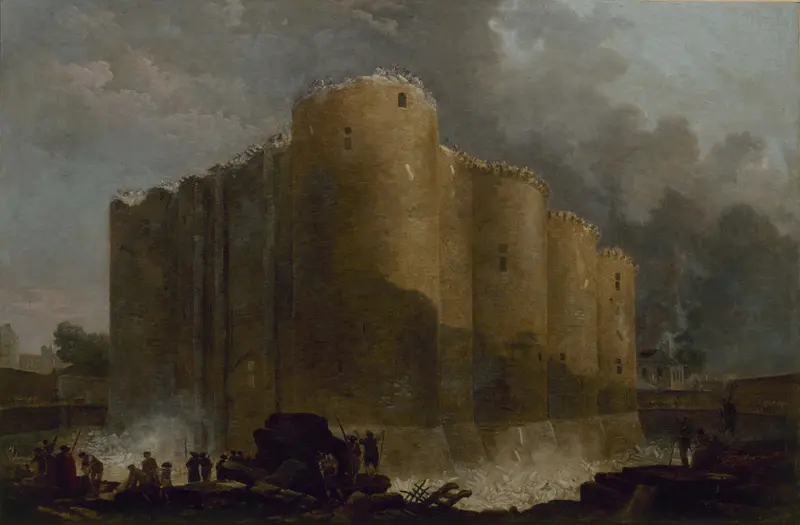
The Bastille in the First Days of Its Demolition
Hubert Robert

Roman Ruins, Villa Pamfili
Hubert Robert
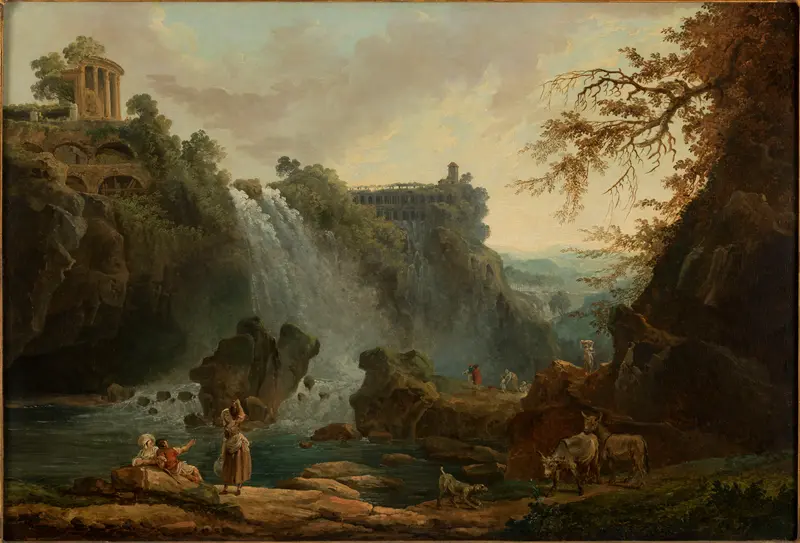
Les Cascatelles de Tivoli
Hubert Robert
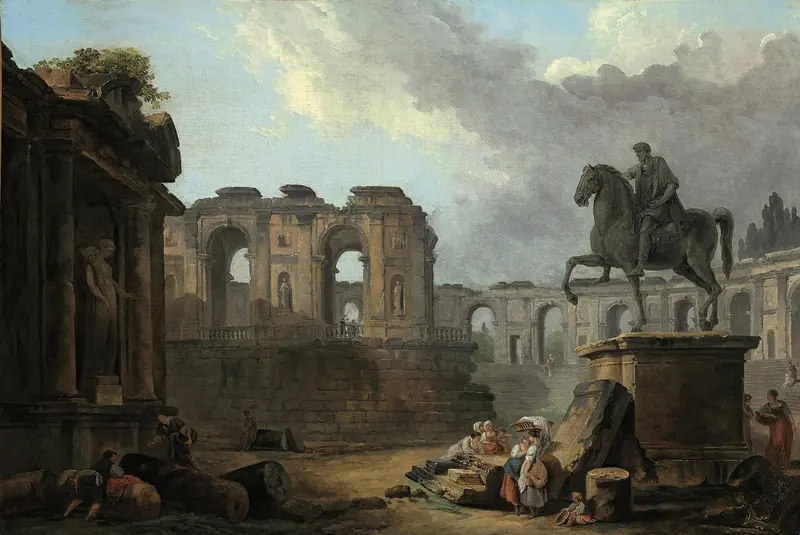
A Roman capriccio with washerwomen by the Statue of Marcus Aurelius
Hubert Robert
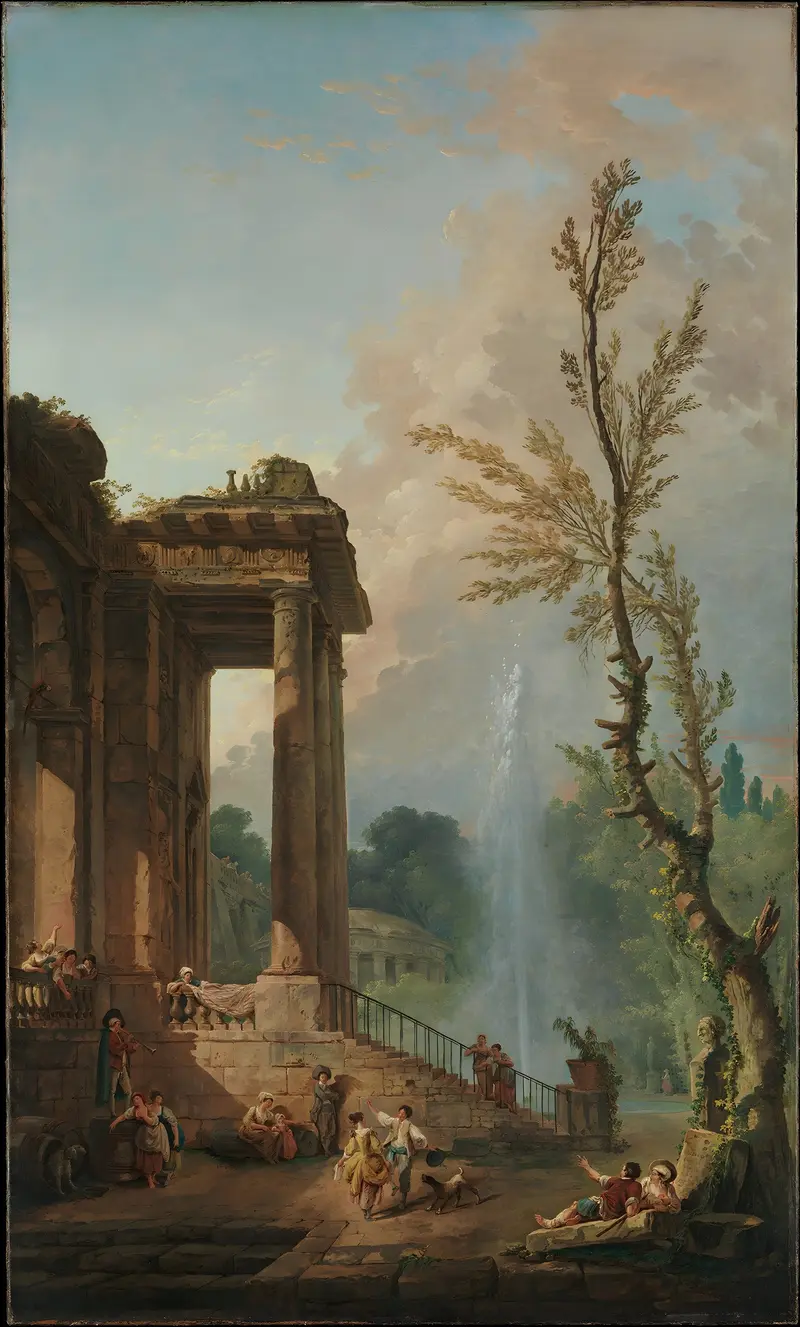
The Portico of a Country Mansion
Hubert Robert

Stair and Fountain in the Park of a Roman Villa
Hubert Robert

The Tivoli waterfalls with the Temple of the Sibyl
Hubert Robert
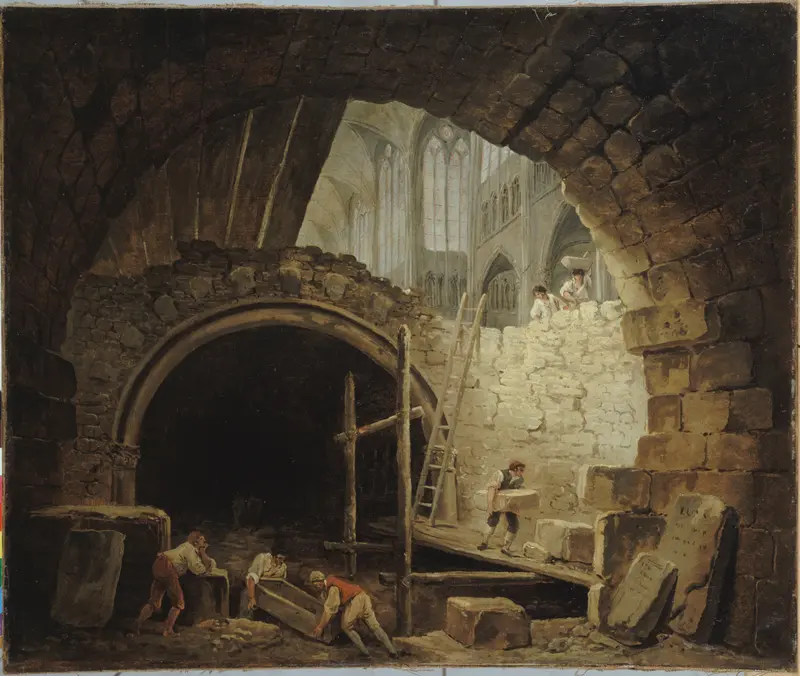
La Violation des caveaux des rois dans la basilique de Saint-Denis, en octobre 1793
Hubert Robert
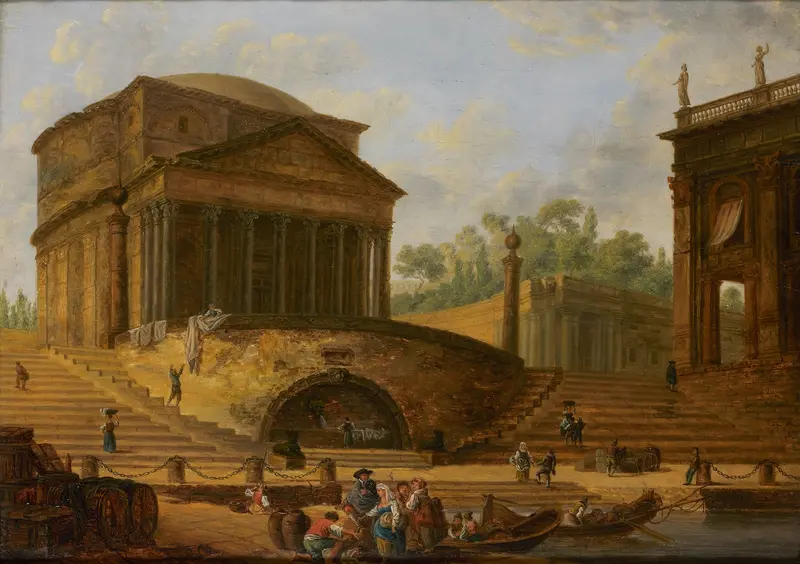
Roman capriccio
Hubert Robert
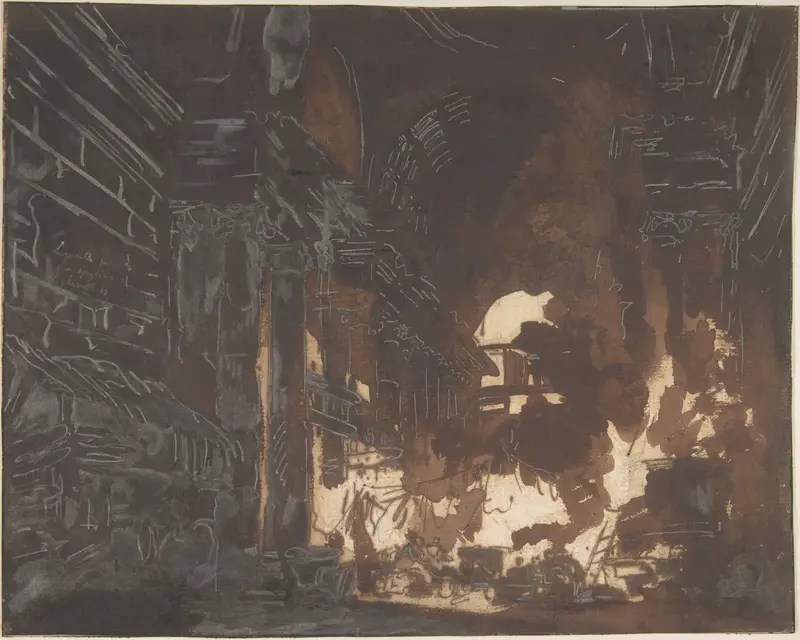
Washerwomen in a Ruined Gallery
Hubert Robert





