Les Cascatelles de Tivoli — History & Analysis
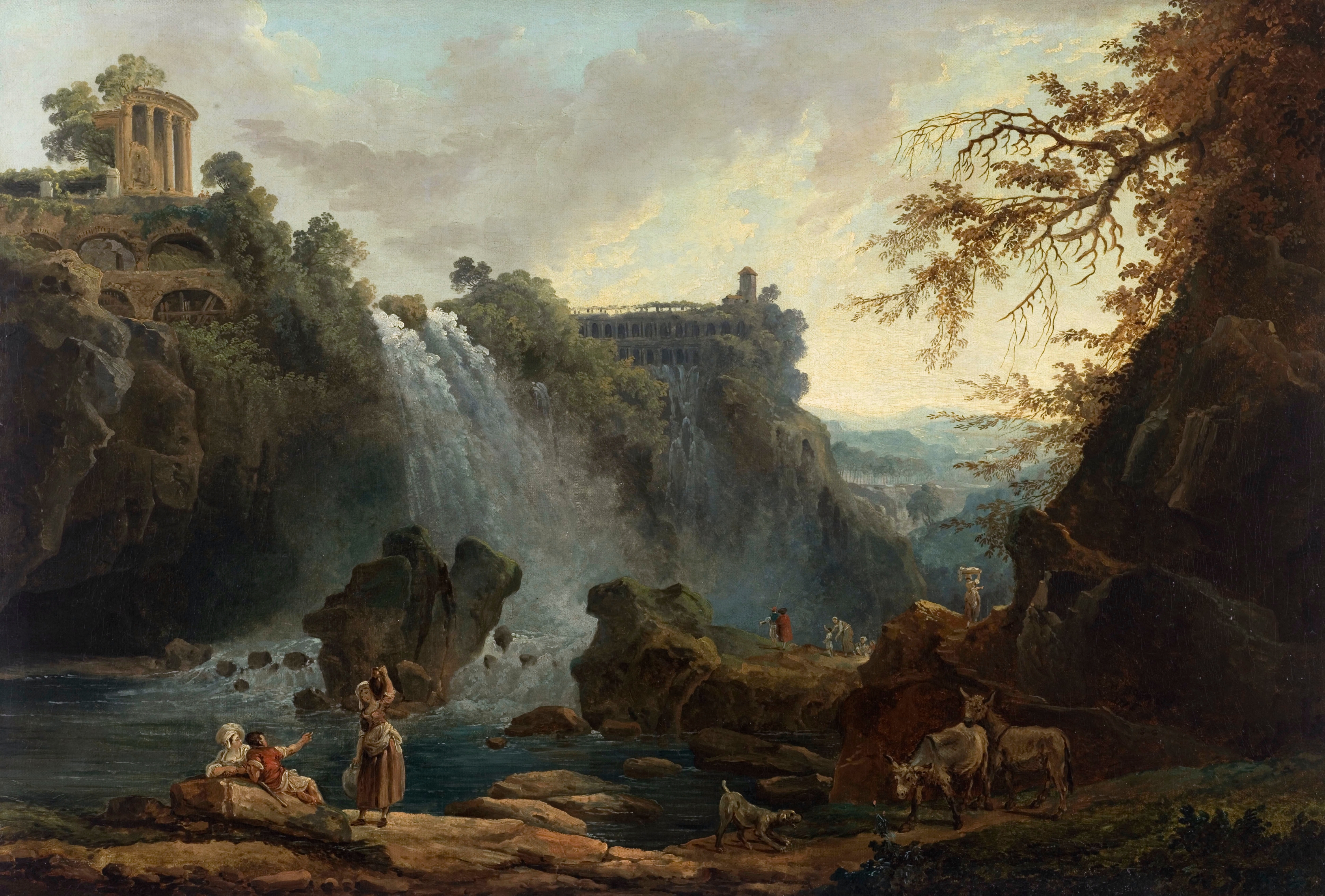
Can beauty exist without sorrow? In *Les Cascatelles de Tivoli*, the splendor of cascading waters and ancient ruins intertwines with an undercurrent of impending change, hinting at the revolution that looms just beyond the tranquil scene. Look to the left at the robust, craggy rocks that serve as a foundation for a waterfall, where water tumbles joyfully, surrounded by lush greenery. Notice how the sunlight glimmers on the water’s surface, creating a dance of light and shadow that fills the canvas with life. The composition invites your eyes to wander from the serene water to the soft whisper of trees on the horizon, seamlessly guiding you through a harmonious landscape that balances nature and man-made structures. Yet, beneath the idyllic surface, this painting captures a tension that is deeply felt. The ruins, with their weathered stone, speak of a forgotten past, where prosperity once flourished but now stands as a reminder of lost grandeur. The vibrant greenery, while beautiful, hints at nature's reclamation, suggesting a cycle of destruction and rebirth, echoing the turbulent spirit of the era. Each element, from the rushing water to the remnants of architecture, poses a question about the fragility of beauty amidst societal turmoil. In 1776, Hubert Robert painted this masterpiece during a time of significant upheaval in France, where whispers of revolution began to resonate across the country. Balancing the ideals of the Enlightenment with a growing sense of unrest, he created works that showcased both the splendor of nature and the remnants of human ambition. This period marked a transition in art as well, as artists started to explore themes of change, loss, and the delicate beauty inherent in decay.