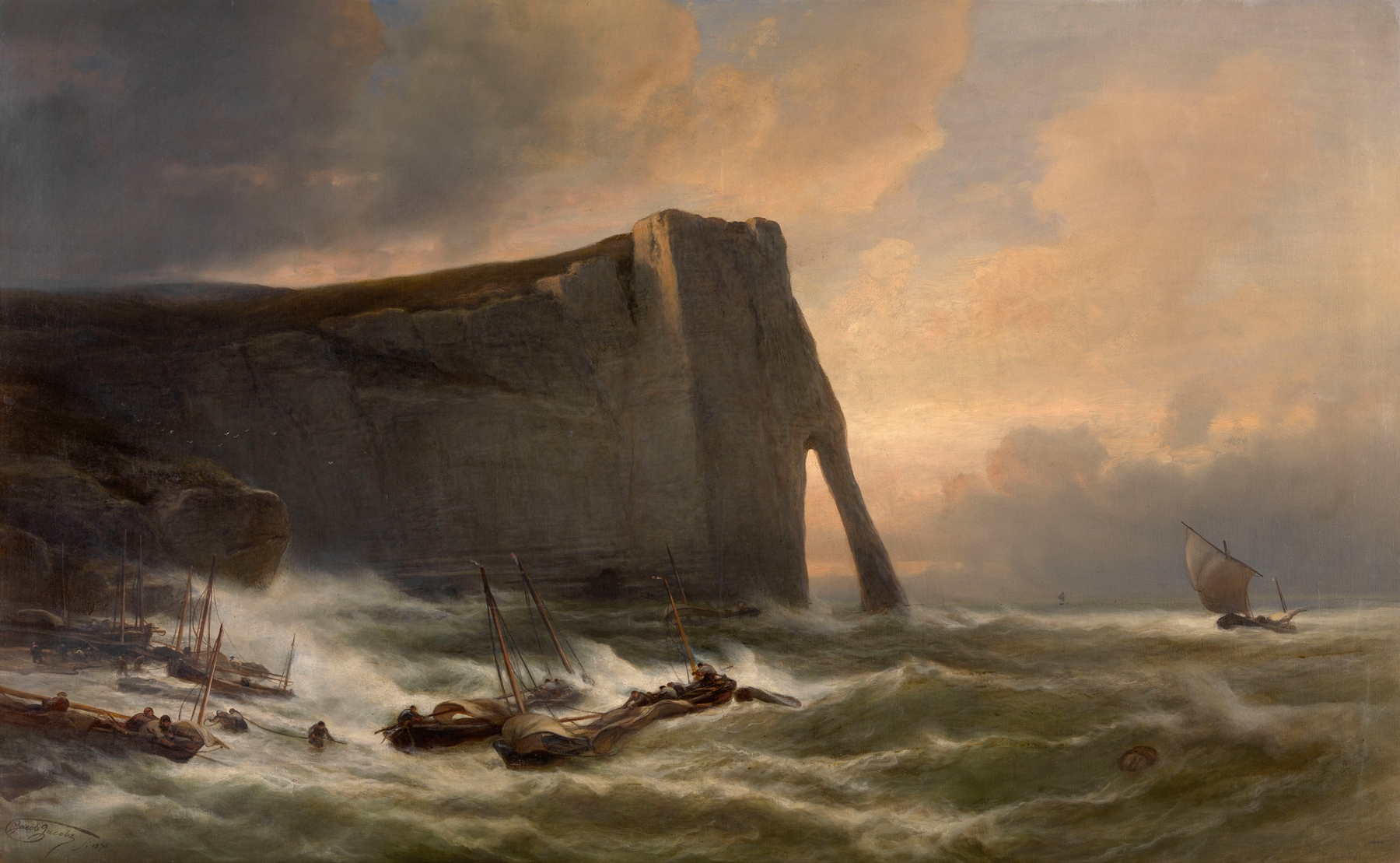
Ruins of the Palace of Karnak at Thebes — History & Analysis
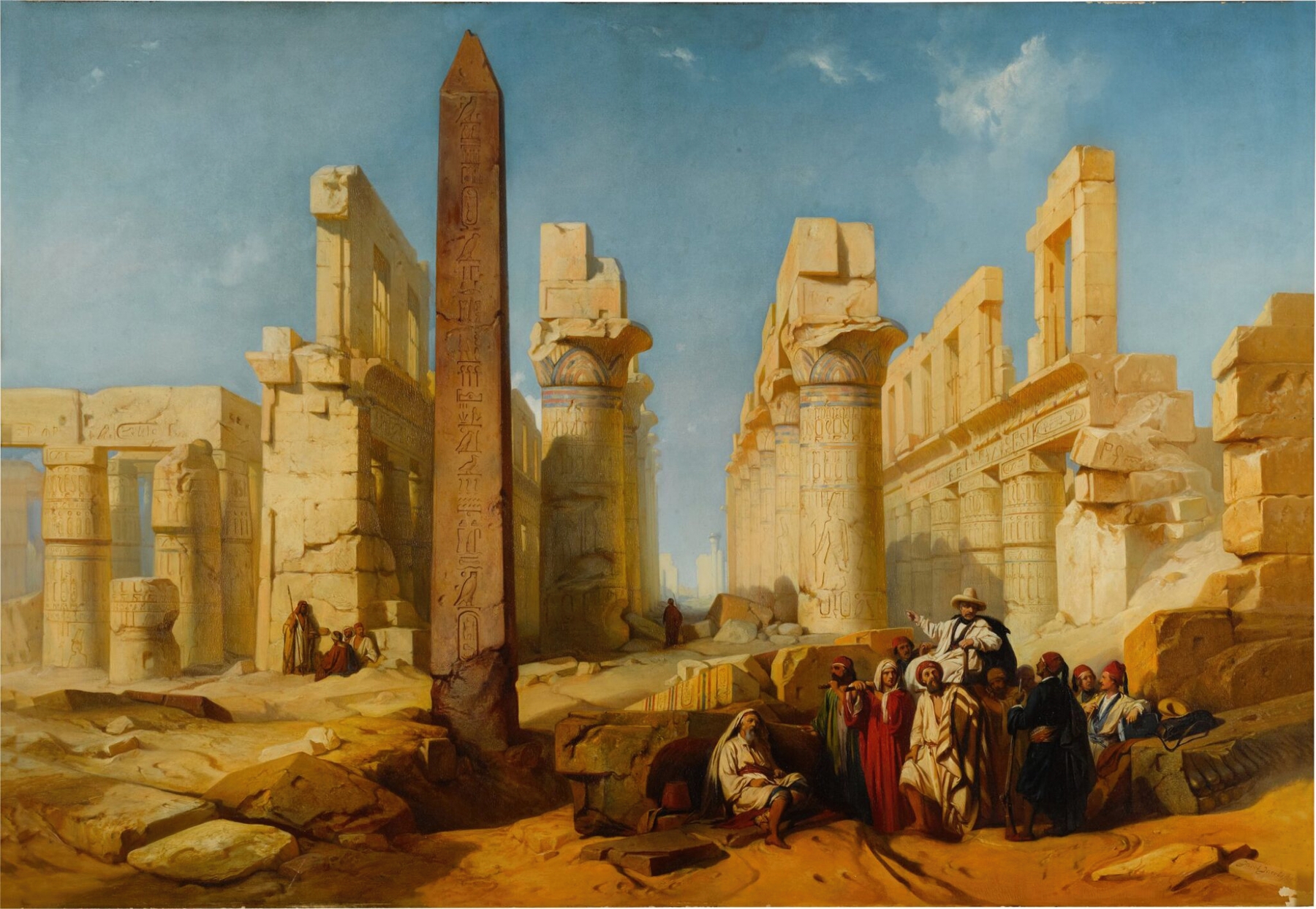
Where does light end, and longing begin? In the haunting shadows of Ruins of the Palace of Karnak at Thebes, the past echoes through the remnants of grandeur, whispering of both decay and beauty. Look to the left at the towering columns, their intricate hieroglyphs etched deep, still telling stories long after their creators have vanished. The cool blues and warm earth tones of the palette create a contrast that evokes both serenity and nostalgia.
Notice how the light filters through the crumbling structures, illuminating fragments of stone that dance with the dust of history. The composition invites the eye to wander, teasing apart the layers of time and emotion woven into each element. At first glance, the scene may seem tranquil, but beneath the surface lies a tension born of forgotten glory and the violence of nature’s reclaiming power. The stark juxtaposition of light and shadow serves as a reminder of human ambition's fragility amidst the relentless passage of time.
Each crack and crevice in the stone tells a tale of destruction and resilience, raising questions about the impermanence of greatness and the inevitable return to dust. Jacob Jacobs created this evocative piece in 1847 while in Egypt, during a period when Western artists were deeply fascinated by ancient civilizations. The mid-19th century saw a surge in romanticism and exploration, where many artists sought to capture the essence of landscapes steeped in history. Jacobs, drawing from both his artistic vision and the rich heritage of Thebes, encapsulated this moment in art, carving a bridge between the past and the viewer’s modern gaze.