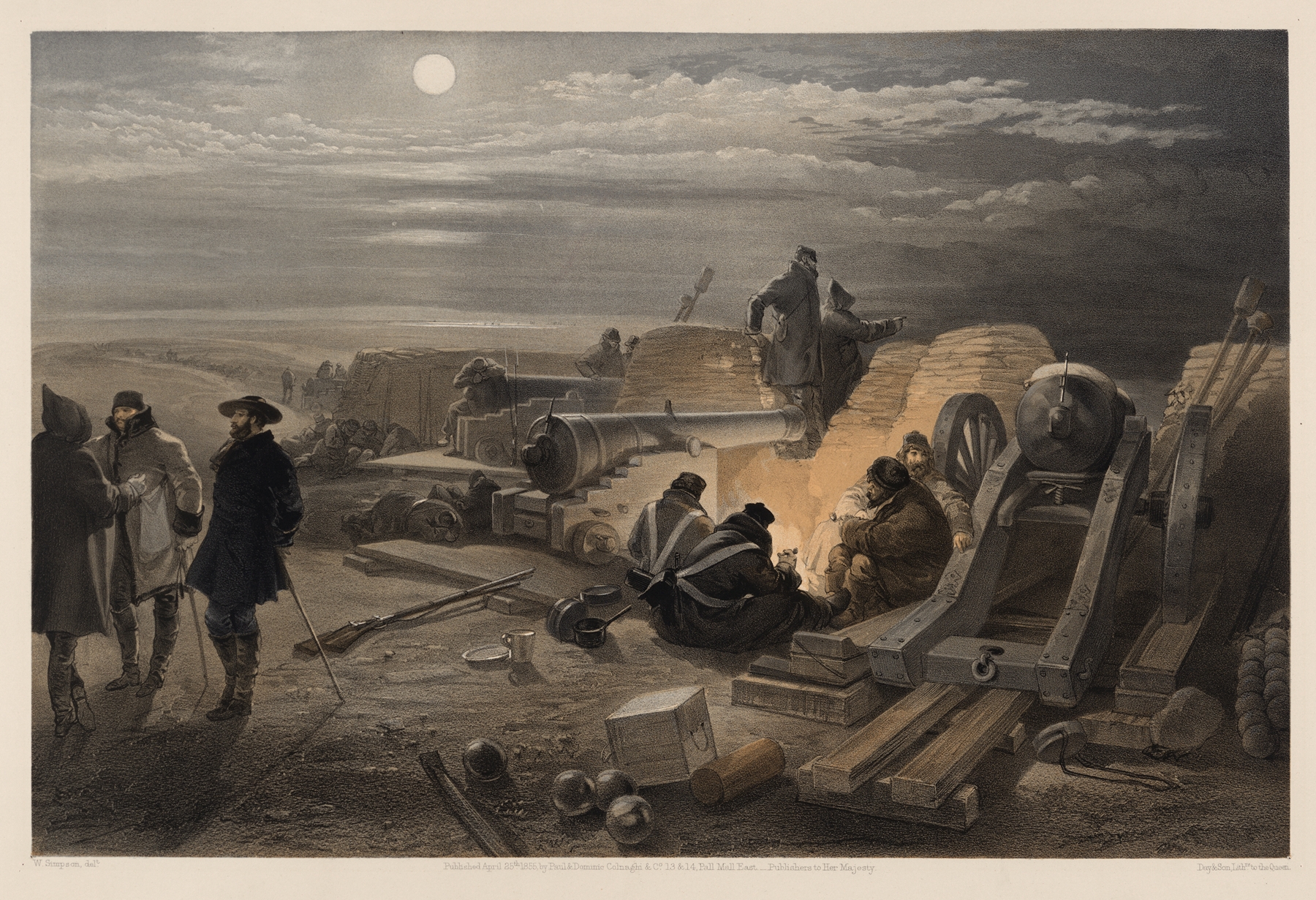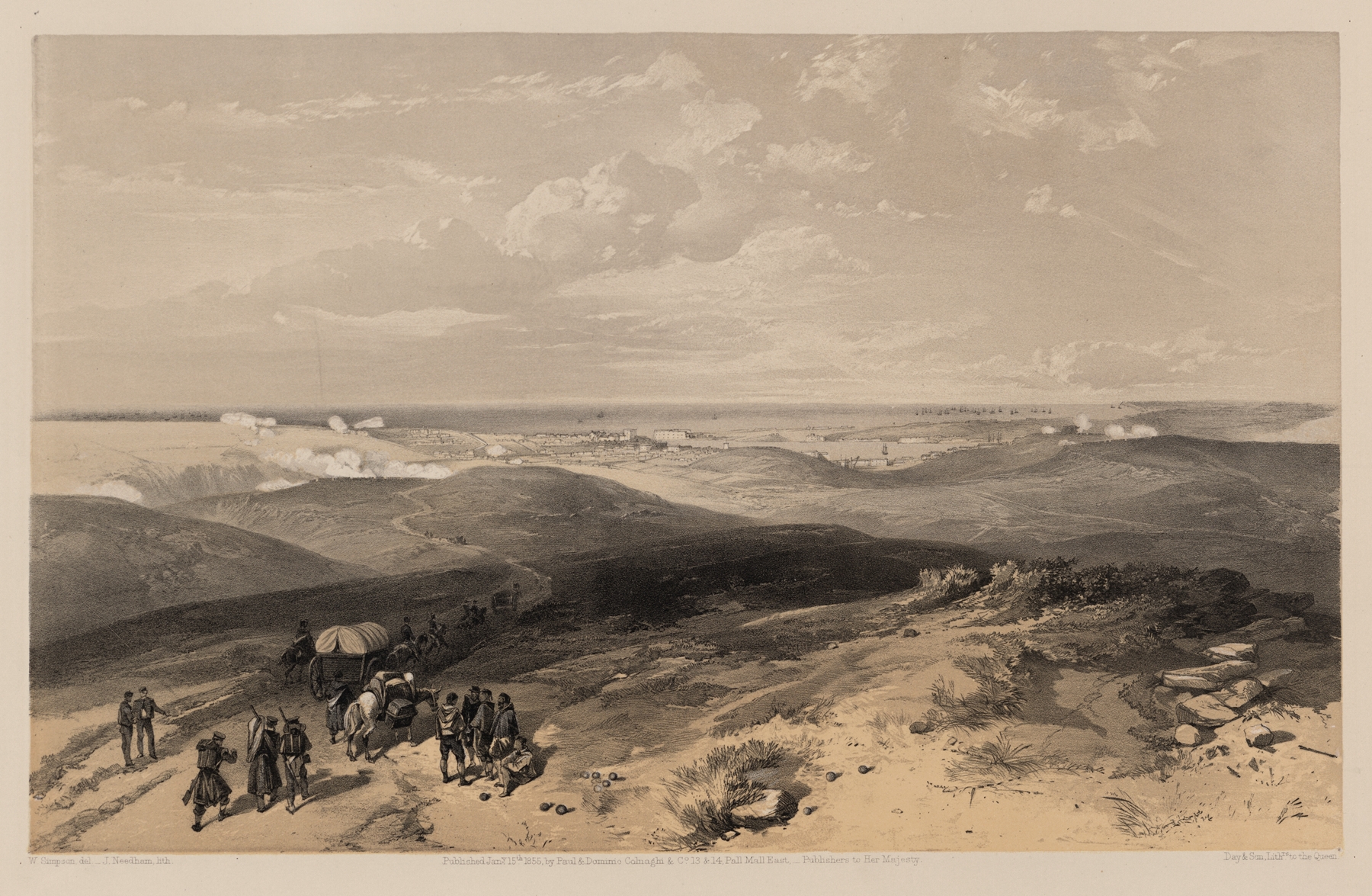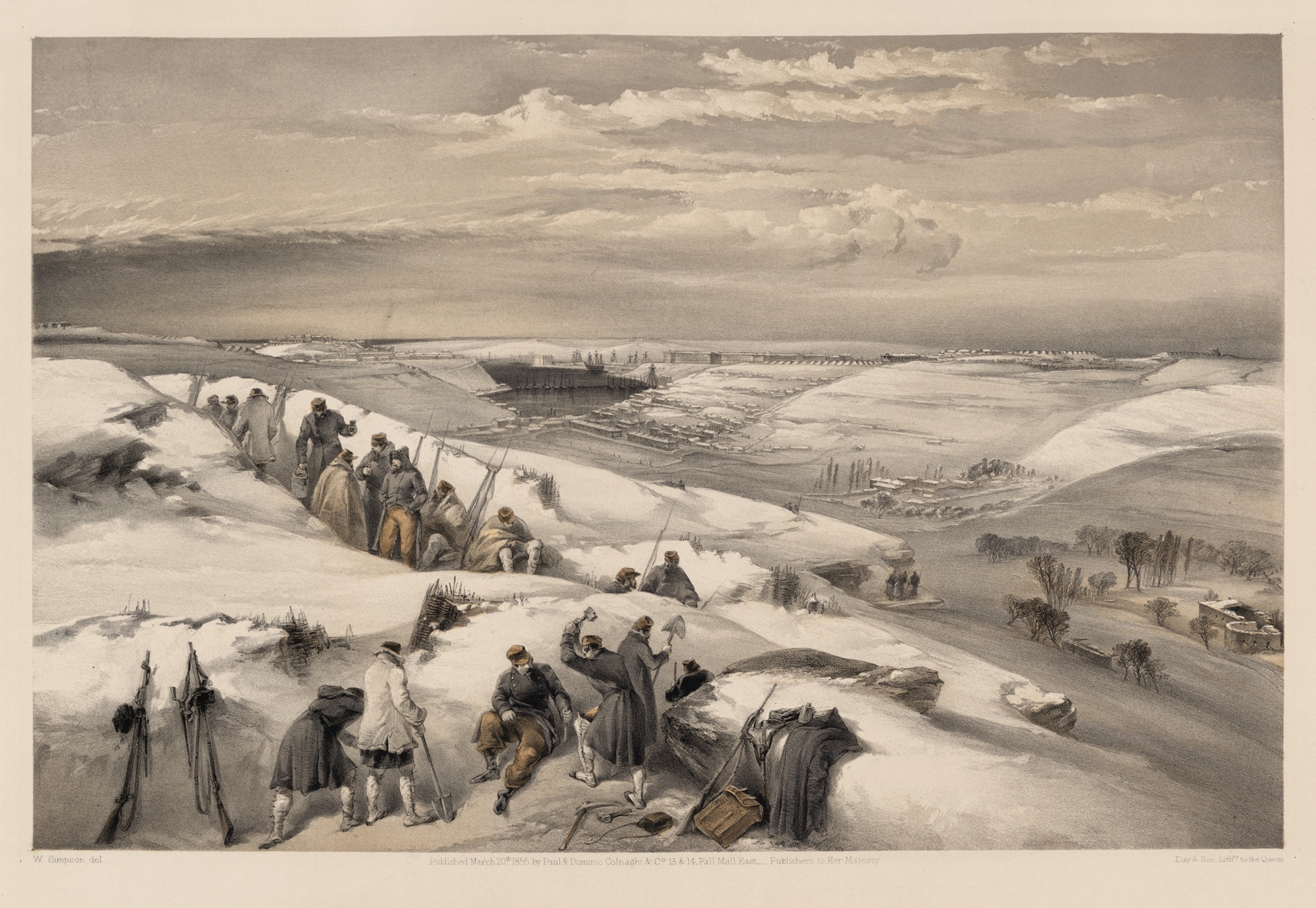
Russian rifle pit – now part of the British advanced trenches, on the left of the right attack, or Gordon’s battery — History & Analysis
Did the painter know this moment would outlive them? In the heart of a conflict, where the weight of history settles like dust, one can’t help but ponder the weight of captured memories and lingering sorrow. Look to the foreground, where the rough-hewn earth forms a stark trench, a testament to human struggle and endurance. The muted palette of browns and greys evokes a sense of desolation, while a scattering of soldiers, small in scale yet significant, conveys the enormity of their task.
Notice how light filters through the heavy clouds, casting a soft, diffused glow that highlights the fatigue etched on their faces, hinting at the relentless march of time and the burden of war. Delve deeper into the scene, and you will find contrasts between the stark reality of the soldiers’ plight and the pastoral background, where nature seems indifferent to their struggle. The juxtaposition of man-made fortifications against the untouched landscape reflects a tension between destruction and the enduring beauty of the world. Each brushstroke speaks to the melancholy of survival, the fleeting nature of heroism, and the sorrow intertwined with duty.
In 1855, during the Crimean War, William Simpson found himself in the midst of chaos, armed with nothing more than his art and a sketchbook. This work emerged as he documented the harrowing realities faced by soldiers in the trenches, capturing a moment that intertwined personal sacrifice with the broader narrative of a turbulent era in military history. His illustrations would become vital historical records, reminding future generations of the cost of conflict and the resilience of the human spirit.