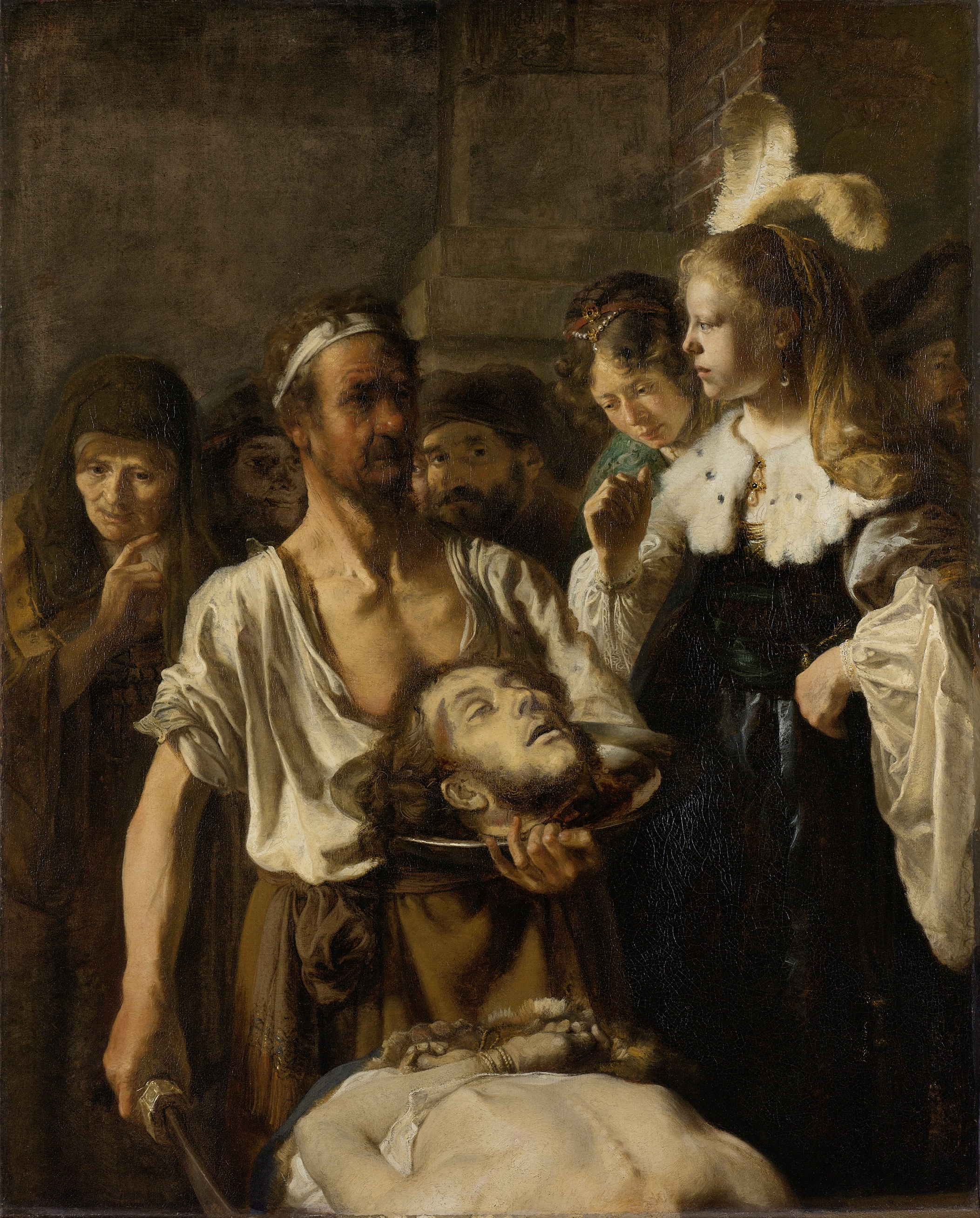
Who listens when art speaks of silence? In *Salome ontvangt het hoofd van Johannes de Doper*, the weight of fear hangs palpably in the air, an eerie testament to the moment just after the storm has passed. Look to the center, where Salome stands poised, her expression both triumphant and haunted, as if she grapples with the gravity of her request. The stark contrast of light and shadow envelops her, guiding your gaze towards the severed head resting on the platter in the foreground — a chilling focal point drenched in dark tones that evoke both revulsion and curiosity. The rich use of reds and golds in her garment contrasts sharply with the grim scene, drawing attention to the delicate balance between beauty and horror. Delve deeper, and the interplay of fear and power unfurls. The way Salome holds the platter suggests a fragile dominance; she possesses the head yet is ensnared by the moral weight it carries. Notice the subtle expressions of the onlookers, frozen in shock and disbelief, encapsulating a moment where triumph is tainted by fear and regret. This duality speaks to the human condition, illustrating how desire for power often leads to devastating consequences. During the years this piece was created, Rembrandt was grappling with personal and professional upheaval, facing financial difficulties and the loss of loved ones. Set against the backdrop of the baroque art scene in the Netherlands, where drama and emotional depth flourished, this painting reflects not only the artist’s masterful technique but also the tumult of his own life. In depicting this moment of dark revelation, he captures an eternal struggle, echoing through time.