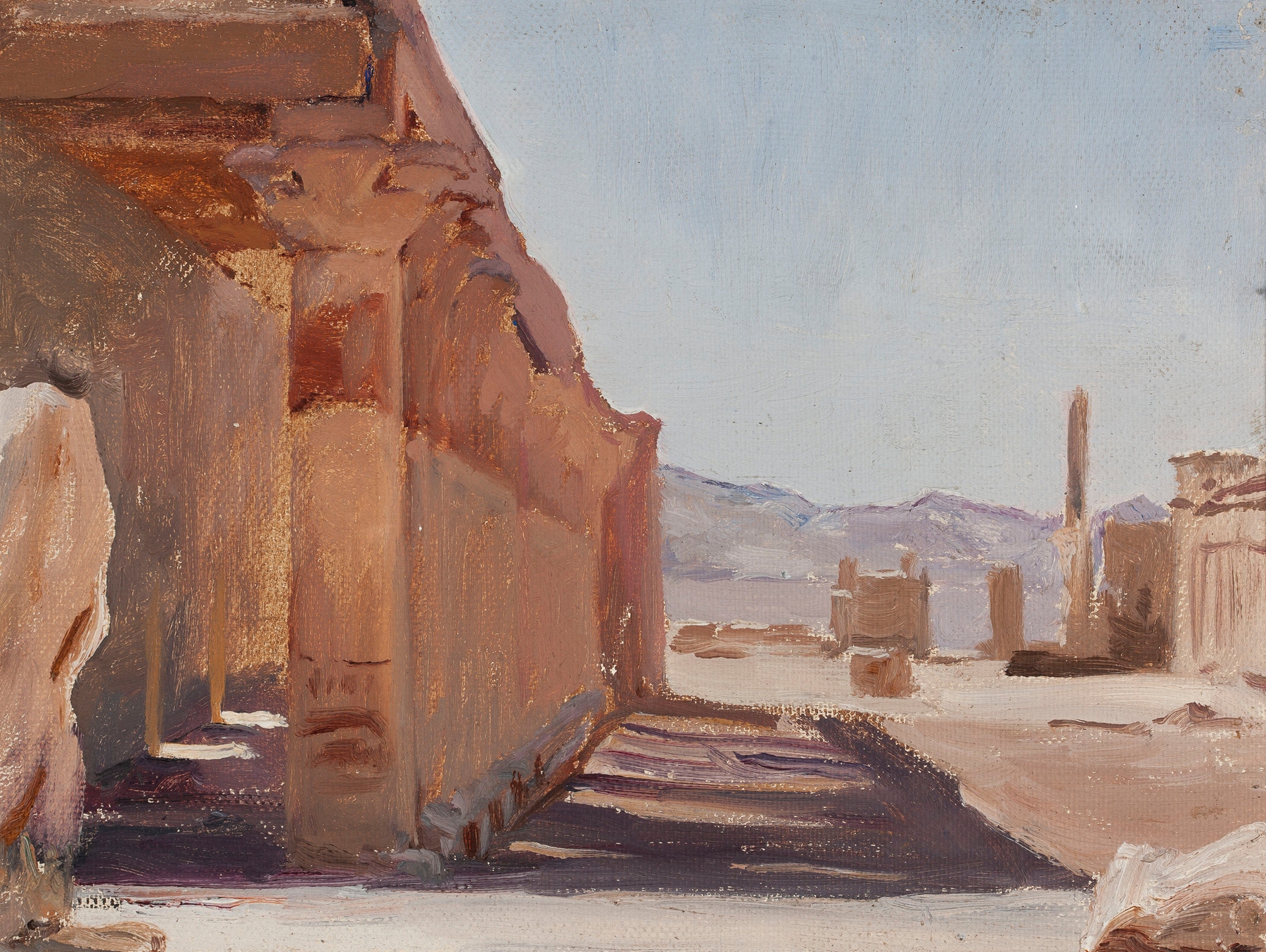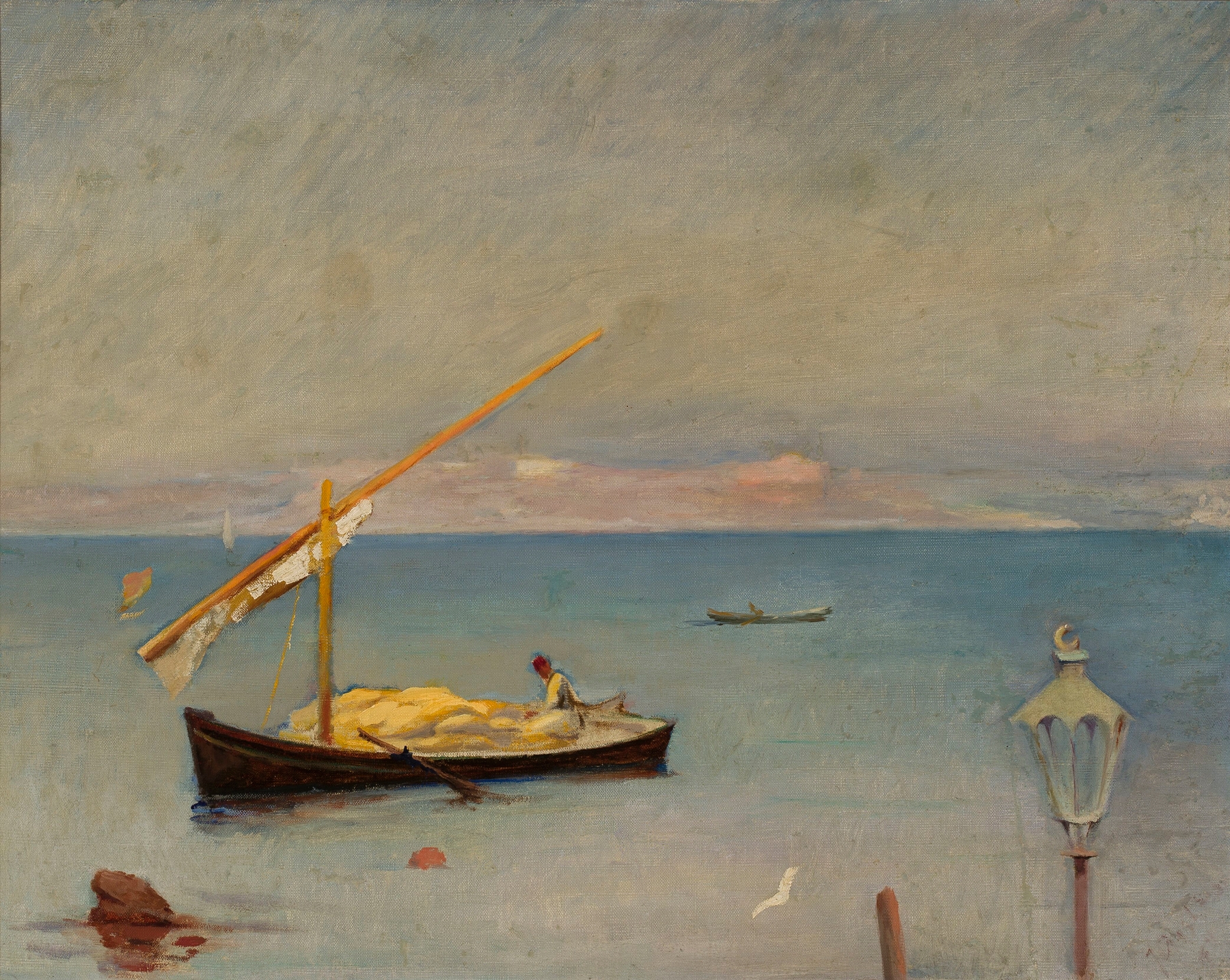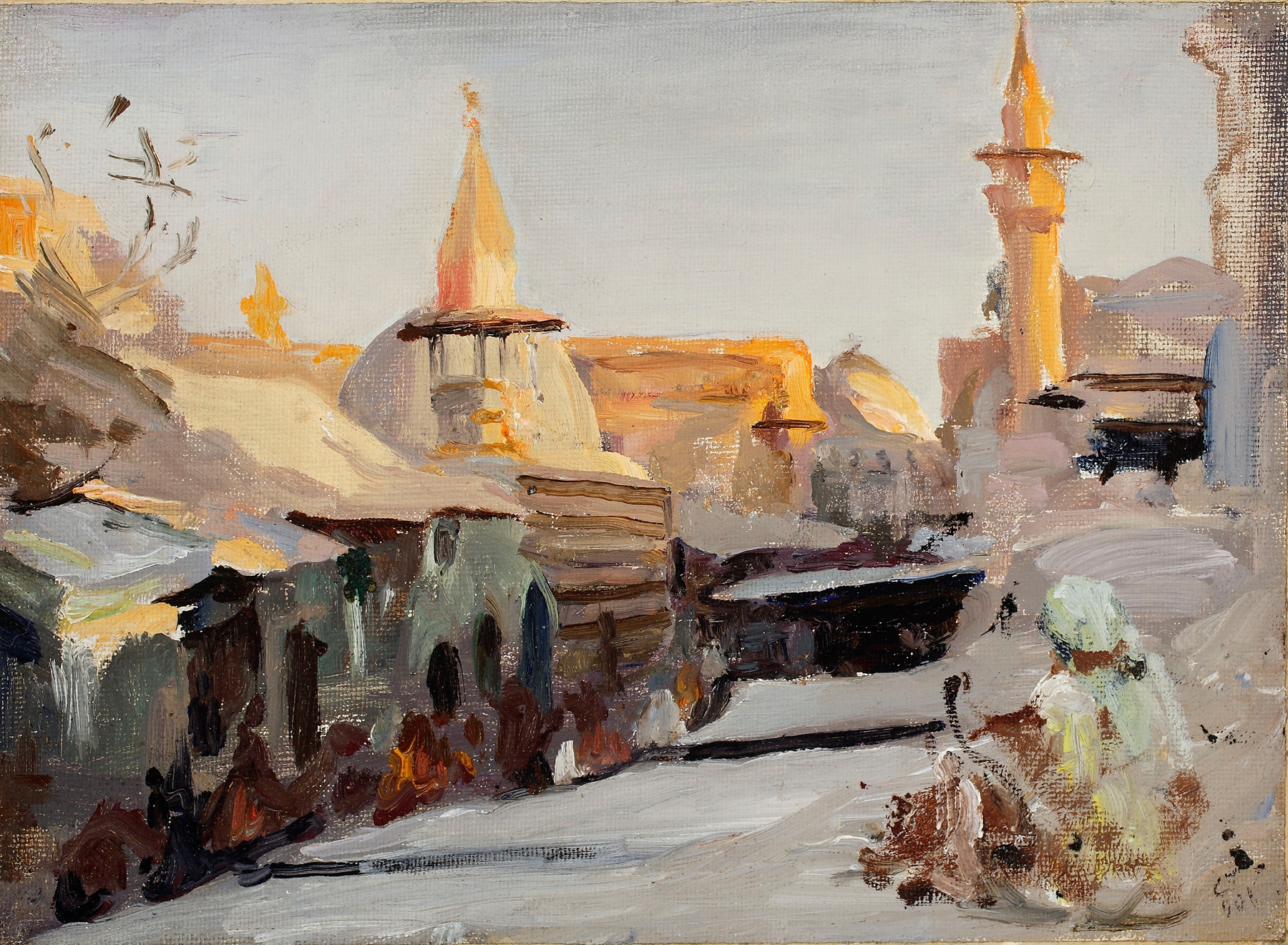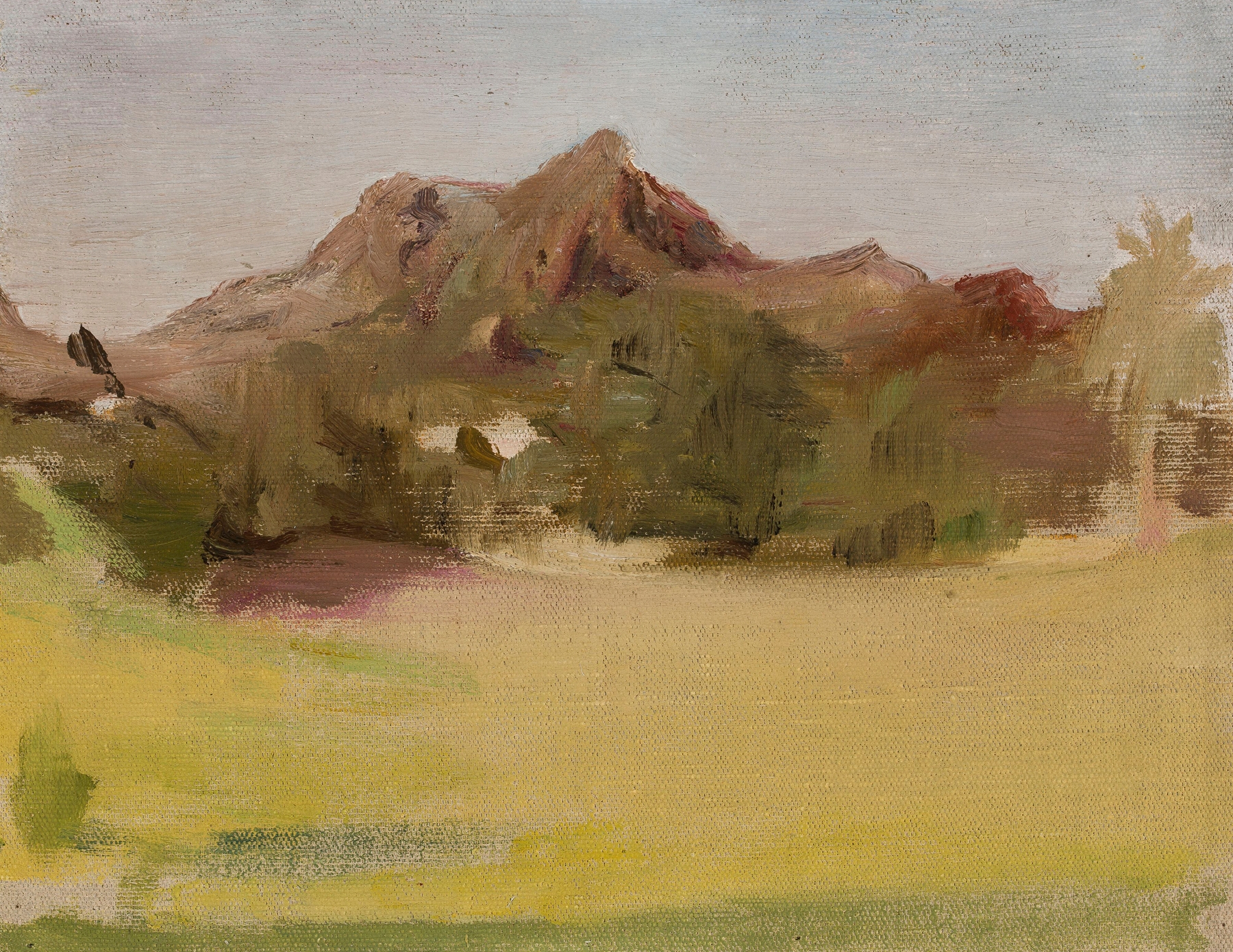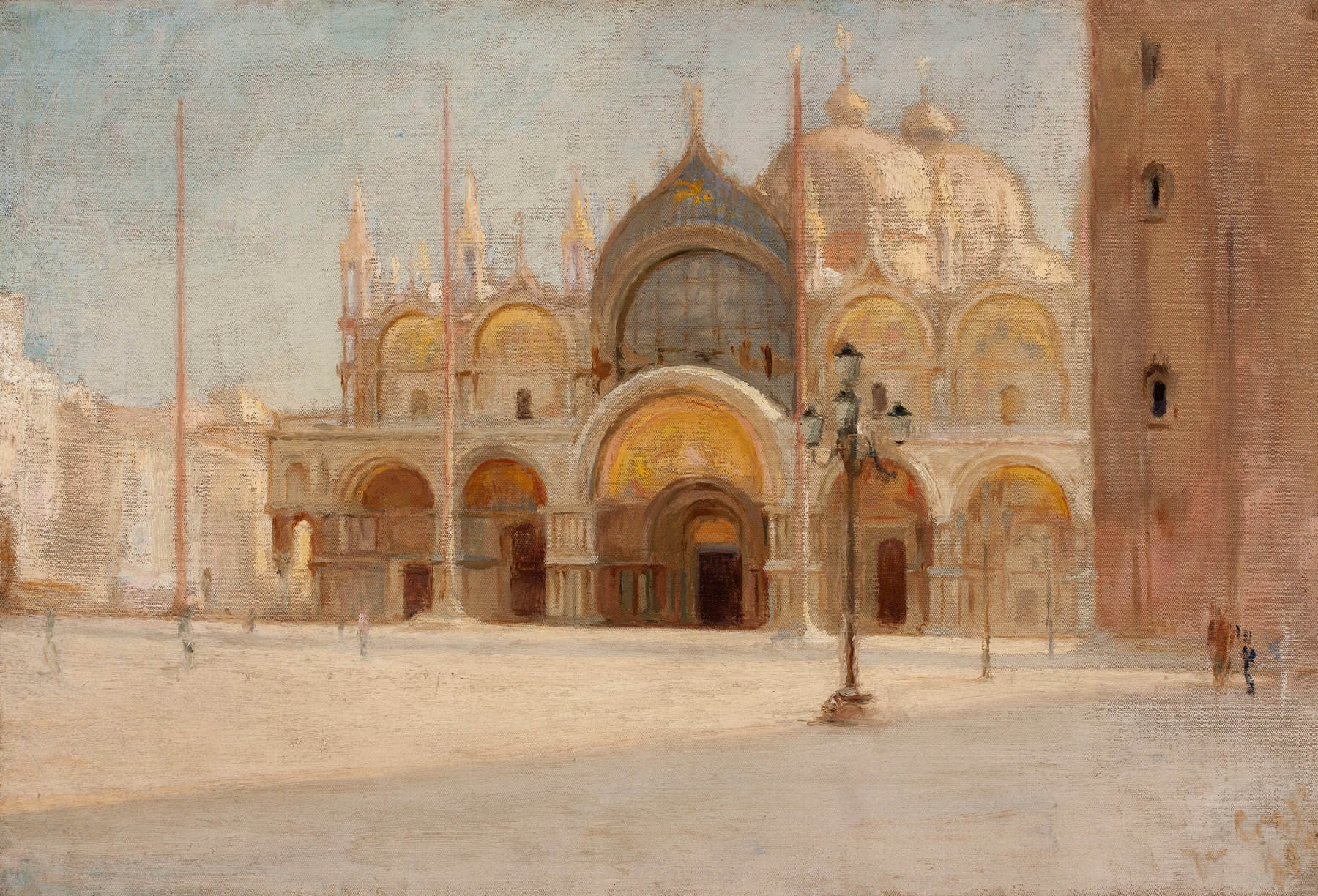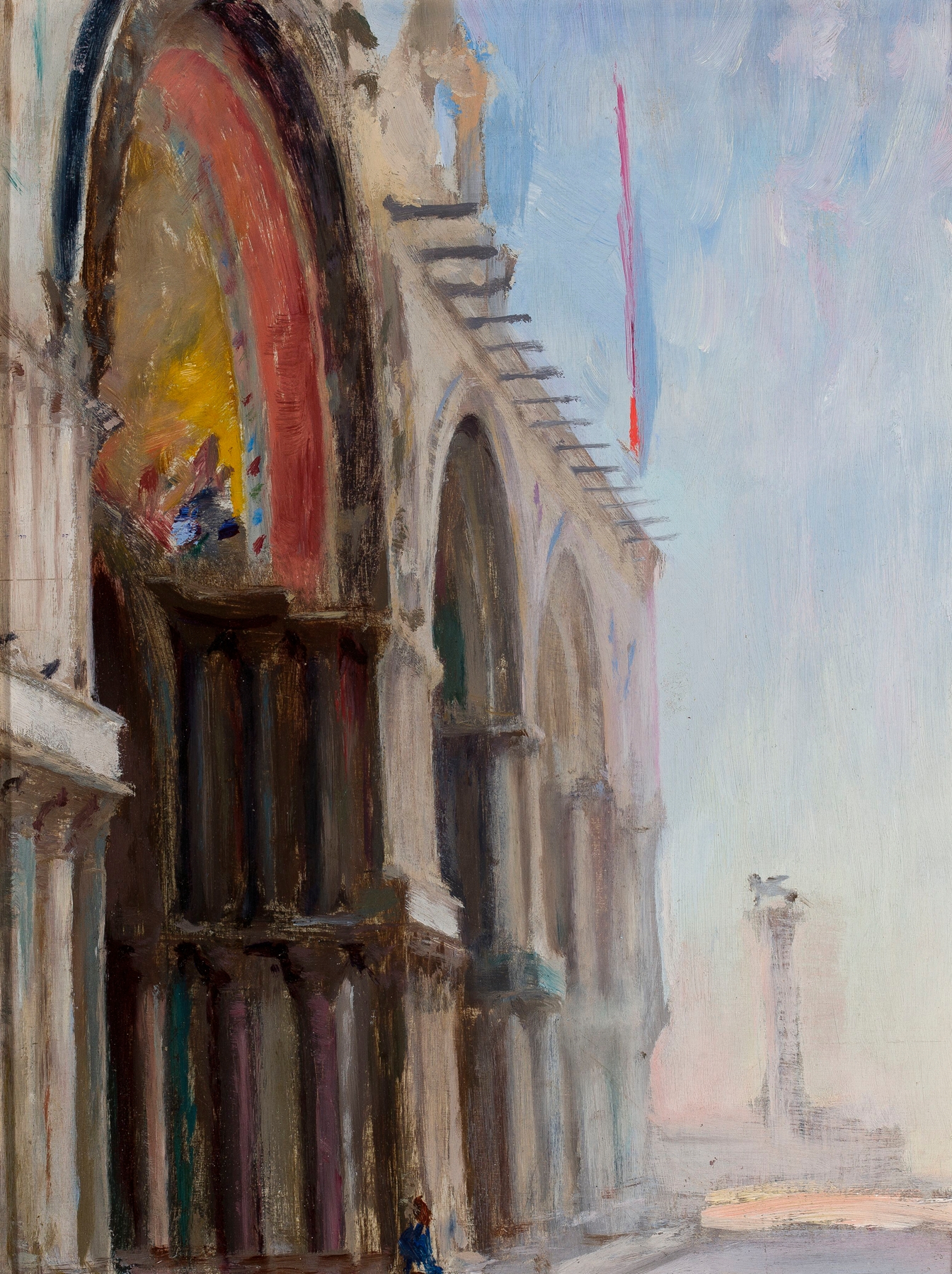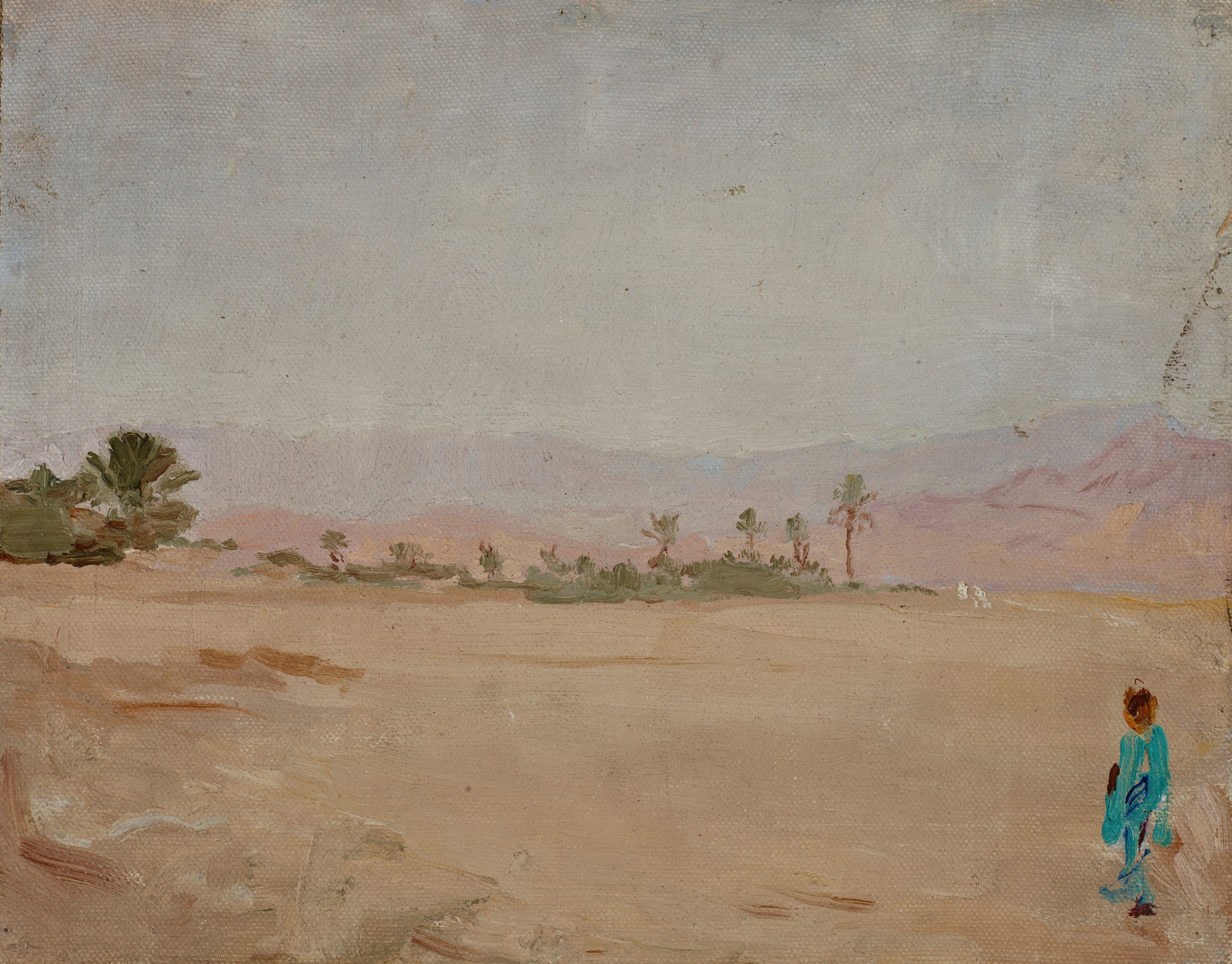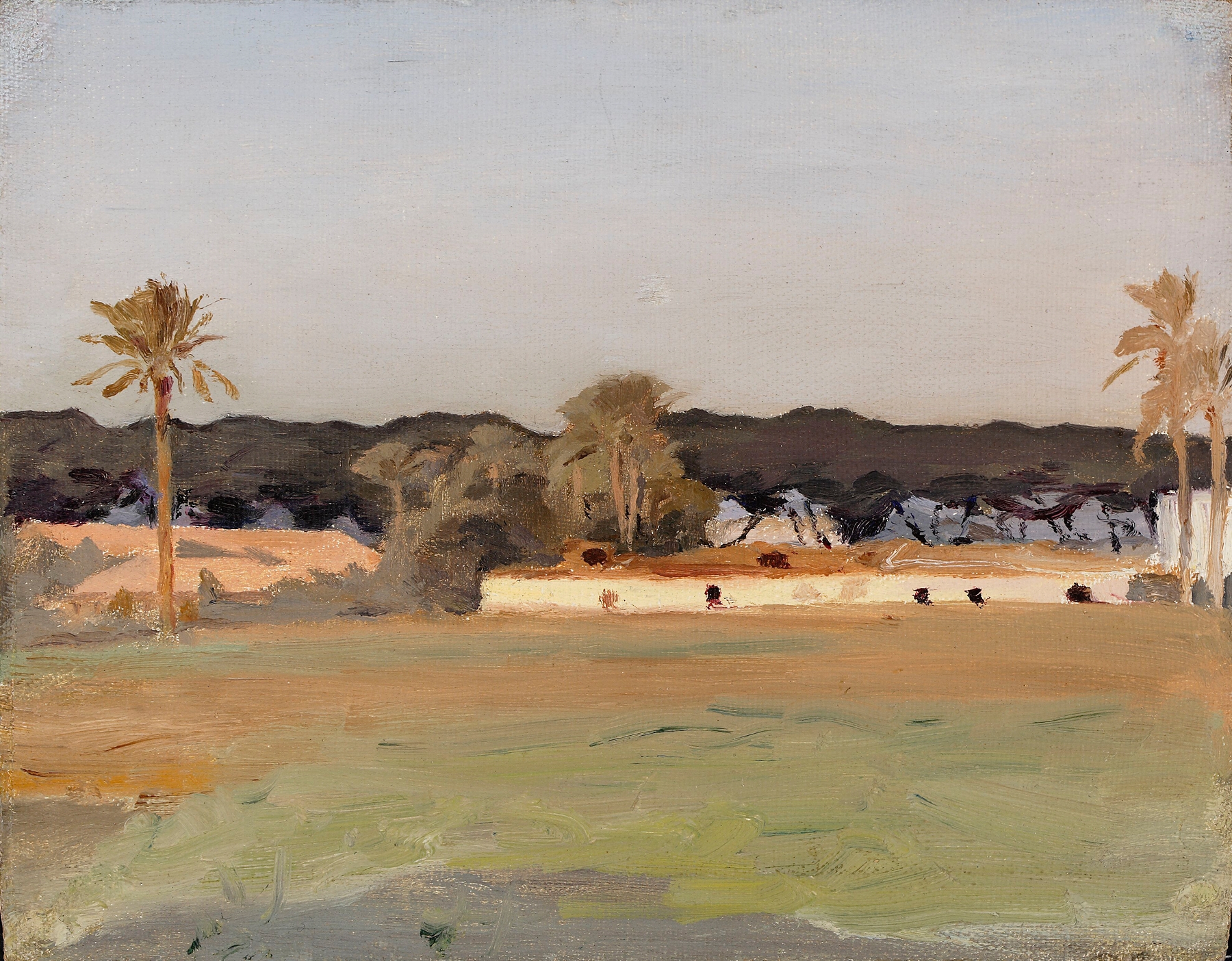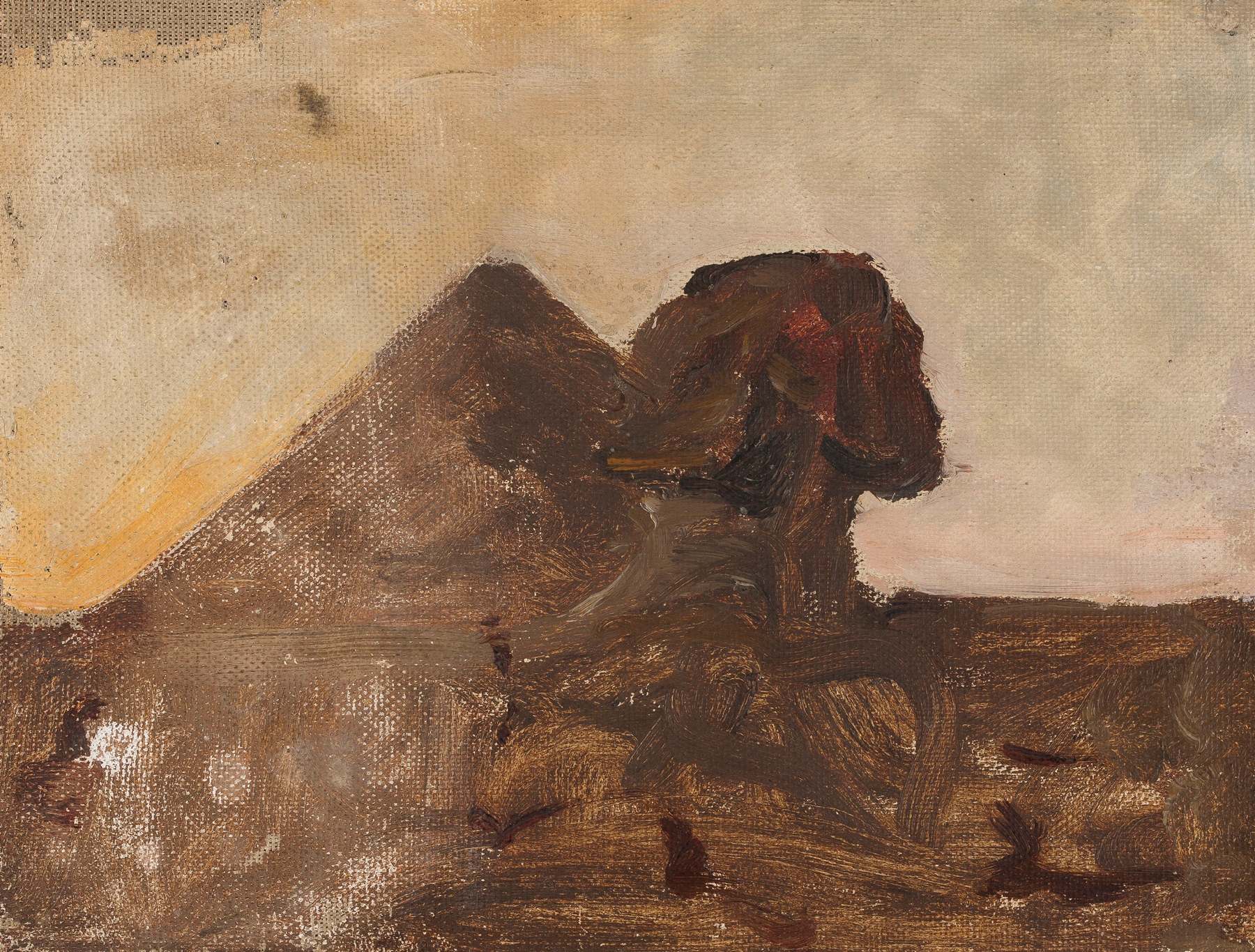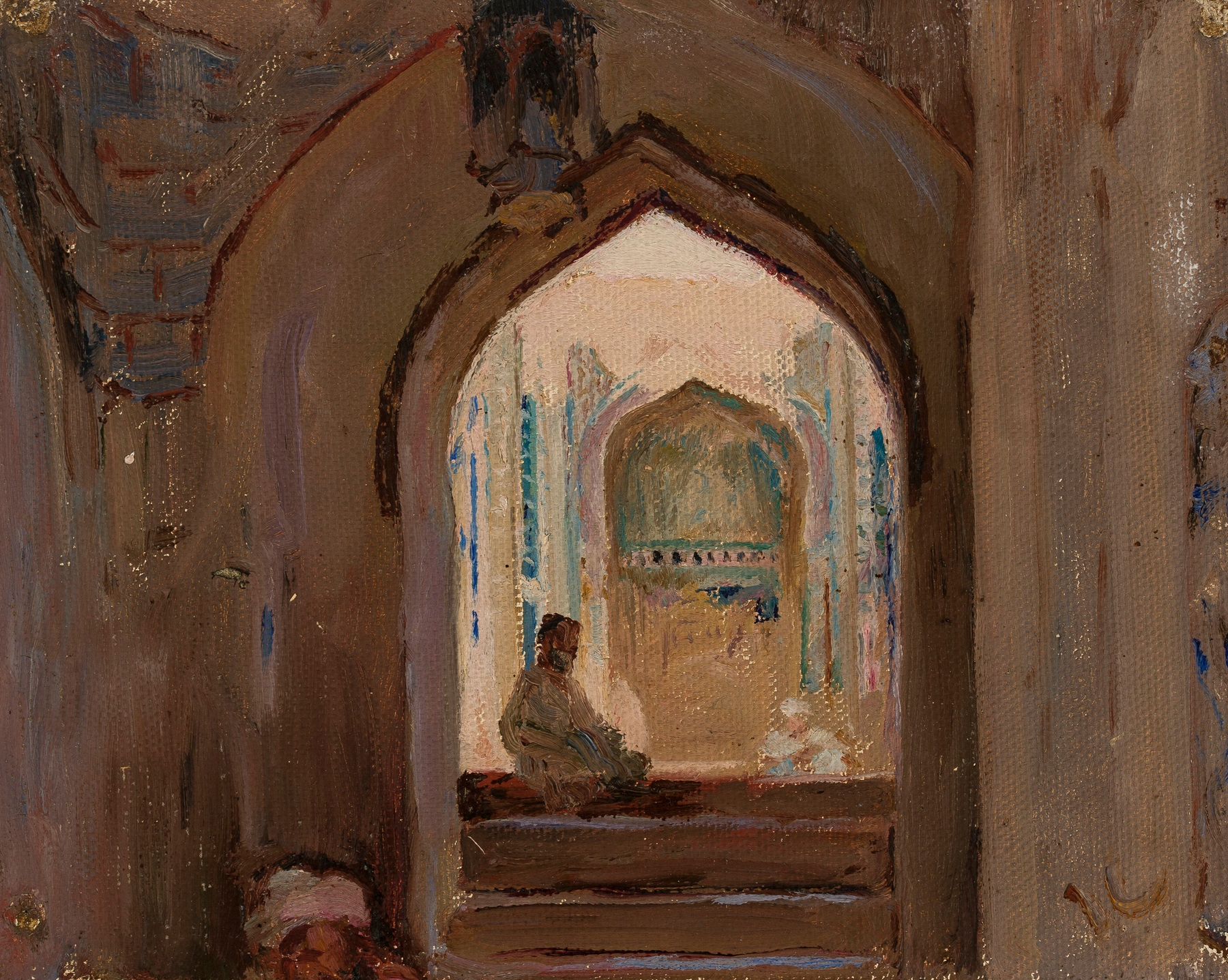
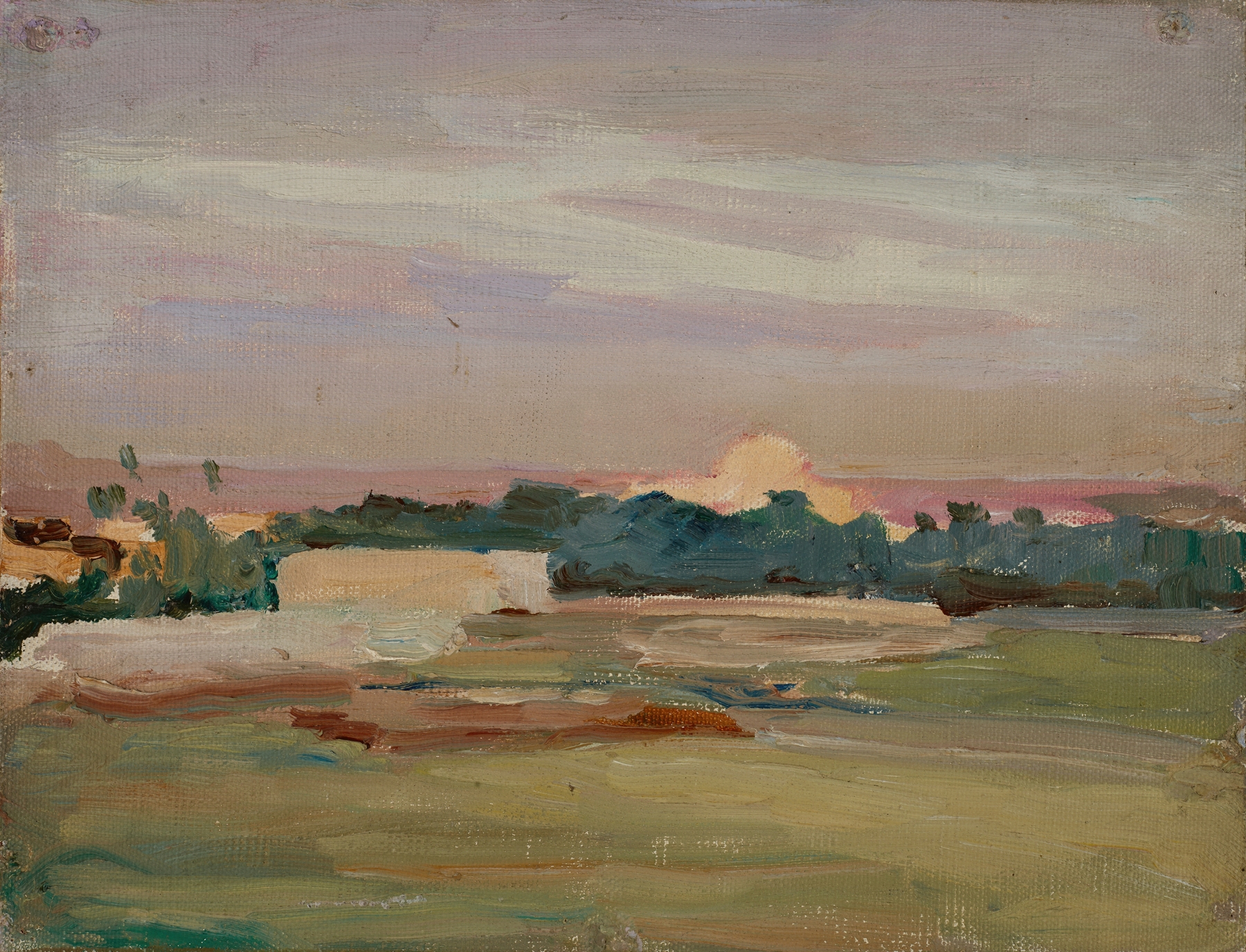
Is this a mirror — or a memory? In *Samarkand. From the journey to Turkestan*, vivid colors envelop the viewer, inviting a deep exploration of the past and its interplay with the present. The artist’s choice of palette suggests not just a place, but a feeling, where warm hues dance alongside cooler tones, evoking the essence of distant lands and their stories. Look to the center of the canvas where the architecture of Samarkand emerges, adorned with intricate details that command attention. The azure tiles and golden mosaics draw the eye in, and the interplay of light across their surfaces creates a shimmering effect that seems almost alive. The artist employs layered brushstrokes, lending depth and texture, providing a sense of movement in the stillness of the scene. Beneath the rich visual language lies a narrative of cultural reverence and nostalgia, contrasting the vibrancy of the colors with the somber weight of memory. Each element—be it the crumbling structures or the delicate shadows—whispers of a rich history steeped in beauty and decay. The juxtaposition of brightness against hints of darkness speaks to the transient nature of joy and the inevitability of loss, allowing the viewer to reflect on their own experiences of place and time. In 1912, while exploring Turkestan, Jan Ciągliński was at a crossroads in his artistic journey, transitioning from his studies in Poland to the broader influences of Eastern art. This painting emerged during a period when European artists were increasingly captivated by Eastern motifs and themes, creating a dialogue between cultures that would resonate through art movements in the years to come.