Samarkand – Shah-i-Zinda mosque From the journey to Turkestan — History & Analysis
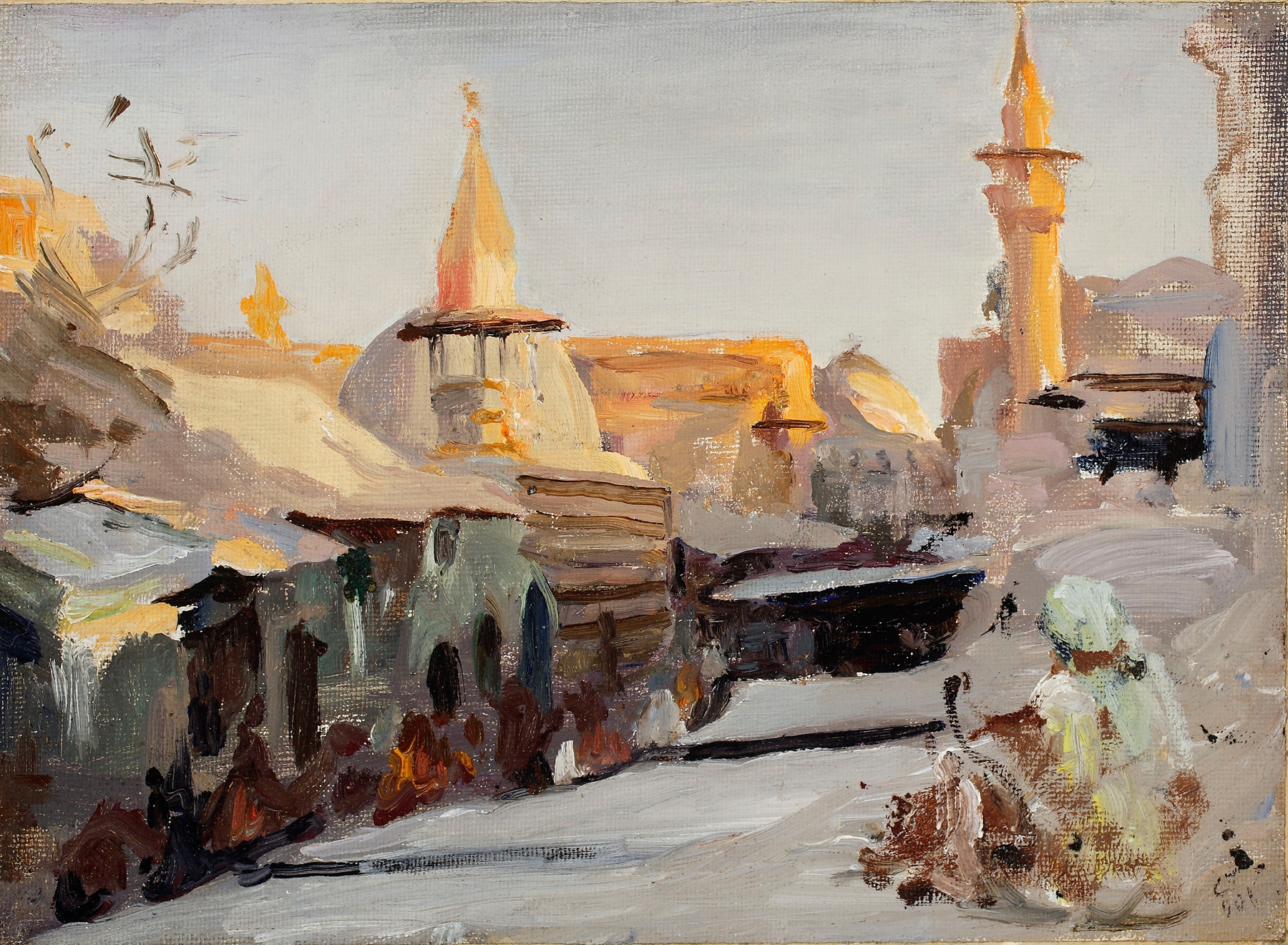
What secret hides in the quiet of the canvas? Gazing upon the intricate beauty of a mosque, one cannot help but feel the weight of legacy embedded within its walls, echoing through time and space. Focus on the vibrant tiles, each a testament to craftsmanship, glistening in hues of azure and gold. The artist carefully constructs a dynamic interplay of light and shadow, drawing the viewer’s eye to the elegant arches that frame the sacred space.
Notice the delicate patterns swirling on the surface, guiding you deeper into a world steeped in culture and spirituality. The meticulous detail invites contemplation, making every glance reveal something new. The emotional tension is palpable; this scene captures more than architecture—it reflects the intersection of history and memory. Each tile becomes a narrative, telling stories of devotion and artistry while also hinting at the transient nature of human endeavors.
The juxtaposition of the mosque's grandeur against the delicate intricacies reveals a deeper introspection about what endures and what fades in the march of time. In 1912, Jan Ciągliński painted this piece during a period of burgeoning interest in Eastern cultures within the realm of Western art. Living in Paris amidst the influences of Symbolism and Orientalism, he sought to reflect the beauty of Turkestan through the lens of his Western sensibilities. At the same time, his personal journey was marked by a search for identity, resonating with the themes of heritage and continuity found within his work.