Sant’Agnese fuori le mura, Rome — History & Analysis
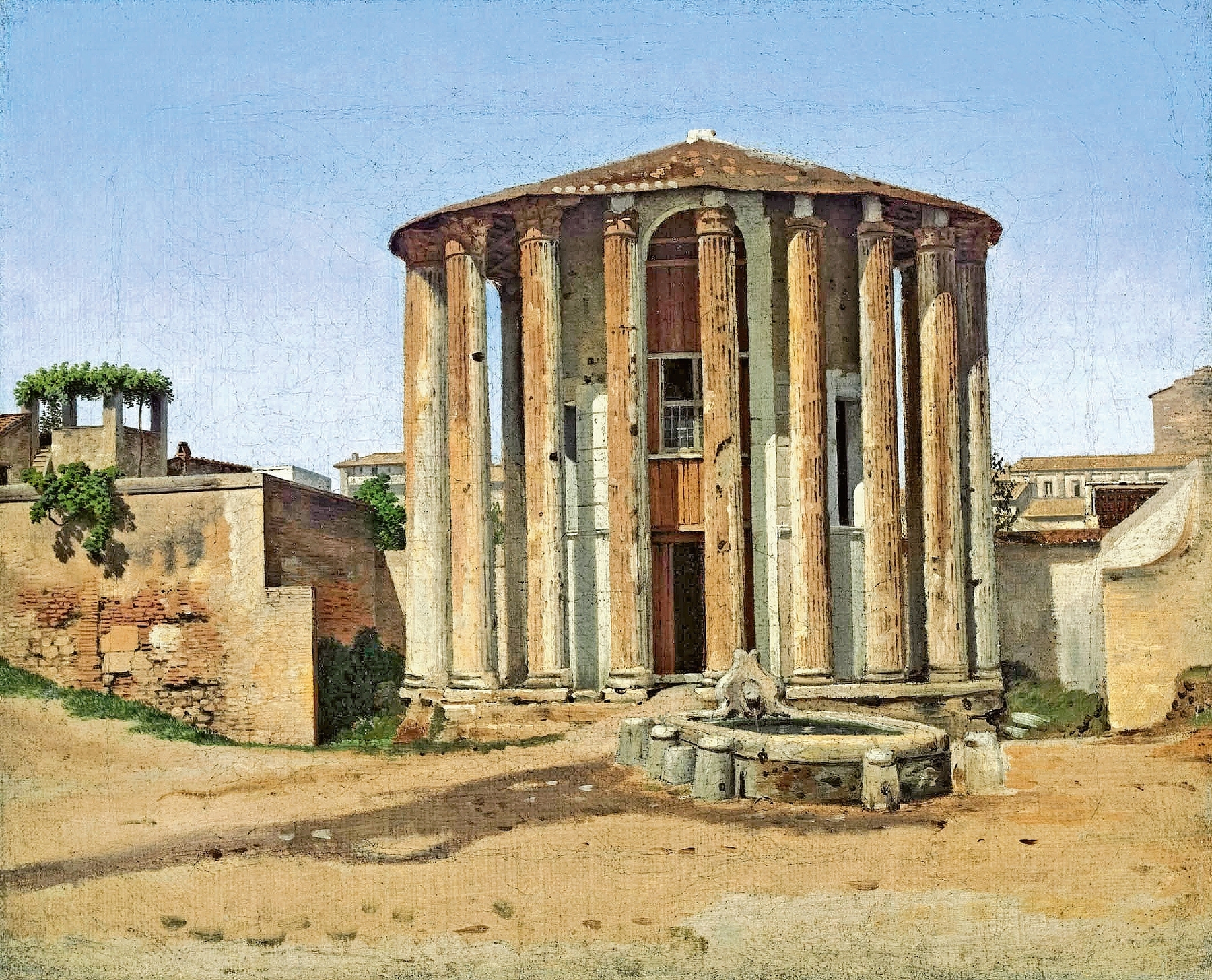
“Art reveals the soul when the world turns away.” In the quiet moments of reflection, the legacy of a place speaks louder than the bustling life that surrounds it. Christoffer Wilhelm Eckersberg’s brush captures this sentiment, allowing us to pause and ponder the significance of history etched upon the canvas. Focus first on the vivid details of the Roman landscape, where the majestic facade of the church commands attention at the center. The warm ochre and pale blue hues create a harmonious balance, beckoning your gaze upwards towards the towering dome. Notice how the play of light dances across the textured stone, illuminating the intricate carvings that tell stories of faith and perseverance.
The composition is thoughtfully arranged, drawing your eye through the architectural elements while inviting contemplation of the serene sky above. Hidden beneath the surface lies a dialogue between permanence and transience. The church stands resilient against the passage of time, a symbol of steadfastness amidst the ephemeral nature of life and human endeavors. Observe the subtle juxtaposition of the soft, ethereal clouds against the solid, enduring structure, reflecting the tension between earthly existence and spiritual aspiration.
Each stroke resonates with a sense of nostalgia, urging viewers to consider their own legacies within the broader continuum of history. Eckersberg painted this piece in 1815 while residing in Italy, amidst a burgeoning interest in the classical and romantic movements. This period marked a transitional time in his career, as he sought to harmonize his neoclassical foundations with the emerging romantic ideals. Enthralled by the beauty of the Eternal City, he captured not only the physical landscape but also the profound sense of history that permeated the air, forever intertwining his artistic journey with the legacy of the places he encountered.