Schippersgezin in de avondschemering — History & Analysis
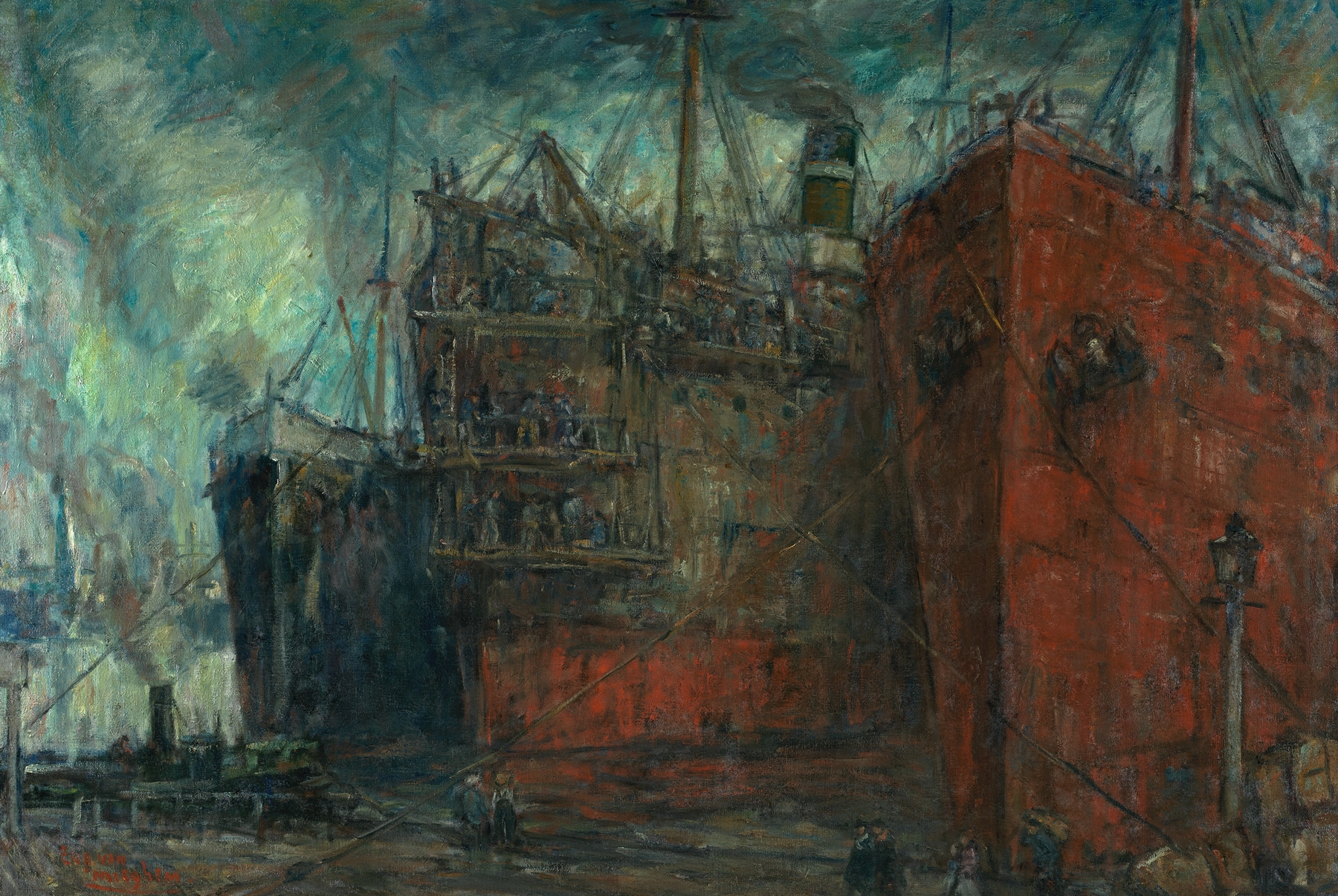
What secret hides in the quiet of the canvas? In the hushed twilight of Schippersgezin in de avondschemering, illusion dances between reality and stillness, inviting us to peer into the lives of its subjects. Look to the left, where the dim light gently illuminates the figures seated around the table, their faces softened by the encroaching shadows. Notice how the warm golden hues contrast with the cooler blues of the background, creating an intimate cocoon that envelops the family.
The artist’s brushstrokes render each detail with care—the delicate folds of the clothing, the subtle play of light on their skin, drawing us into their world while simultaneously reminding us of our distance from it. Yet, as you absorb the scene, consider the emotional undertow at play. The serene expressions mask hidden anxieties, a longing for connection that remains unspoken amidst their shared silence. Each family member is caught in their own reverie, suggesting a complex interplay of togetherness and isolation.
The illusion of harmony is pierced by the awareness of life’s relentless passage, symbolized by the fading light outside. Eugeen Van Mieghem painted this work during a period marked by social upheaval in Belgium, likely in the early 20th century. Straddling the worlds of realism and expressionism, he aimed to capture the essence of contemporary life and the struggles of working-class families in the shadow of rapid industrialization. This painting reflects not just a moment in time but a profound commentary on the emotional landscape of his era.