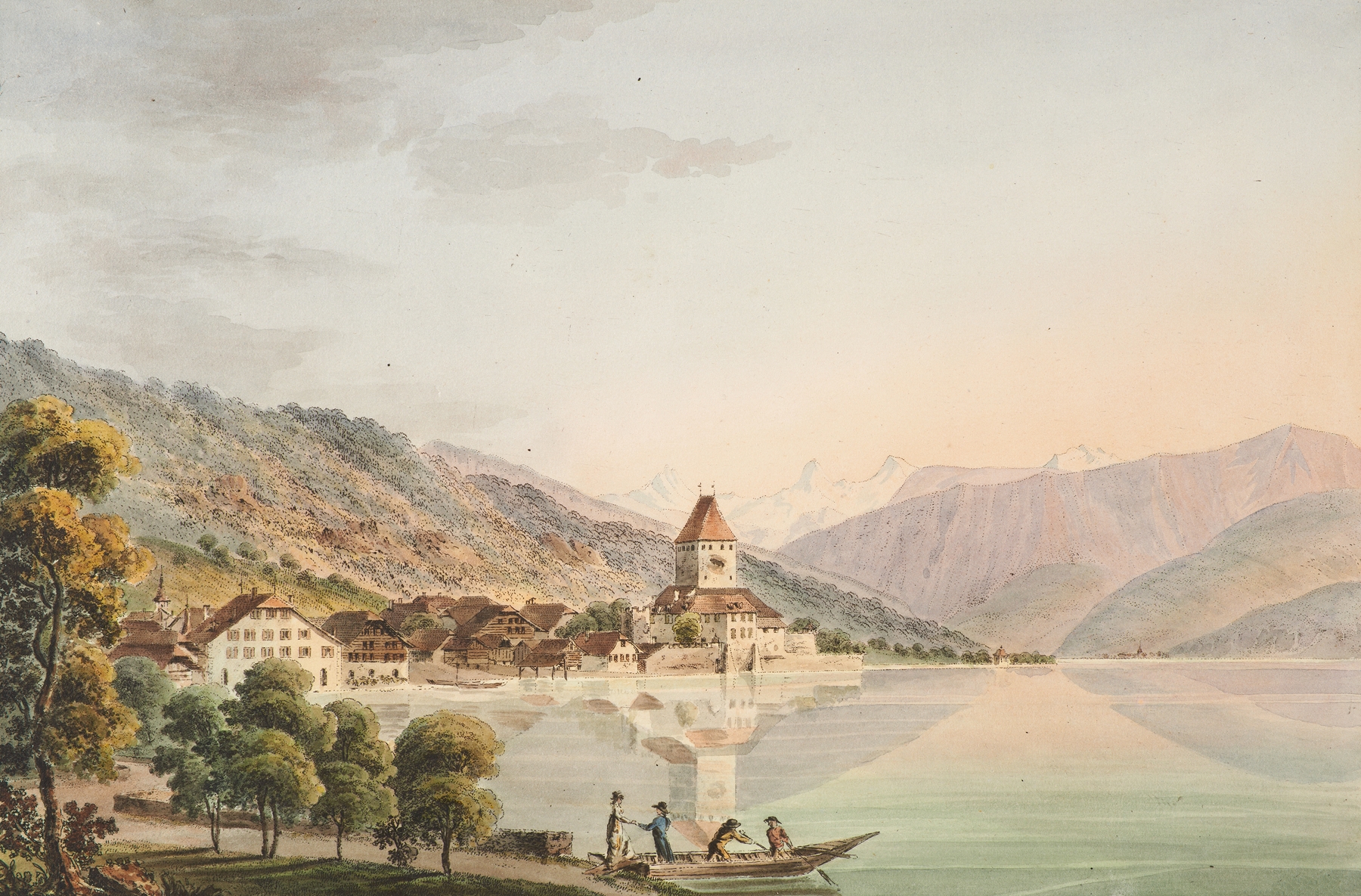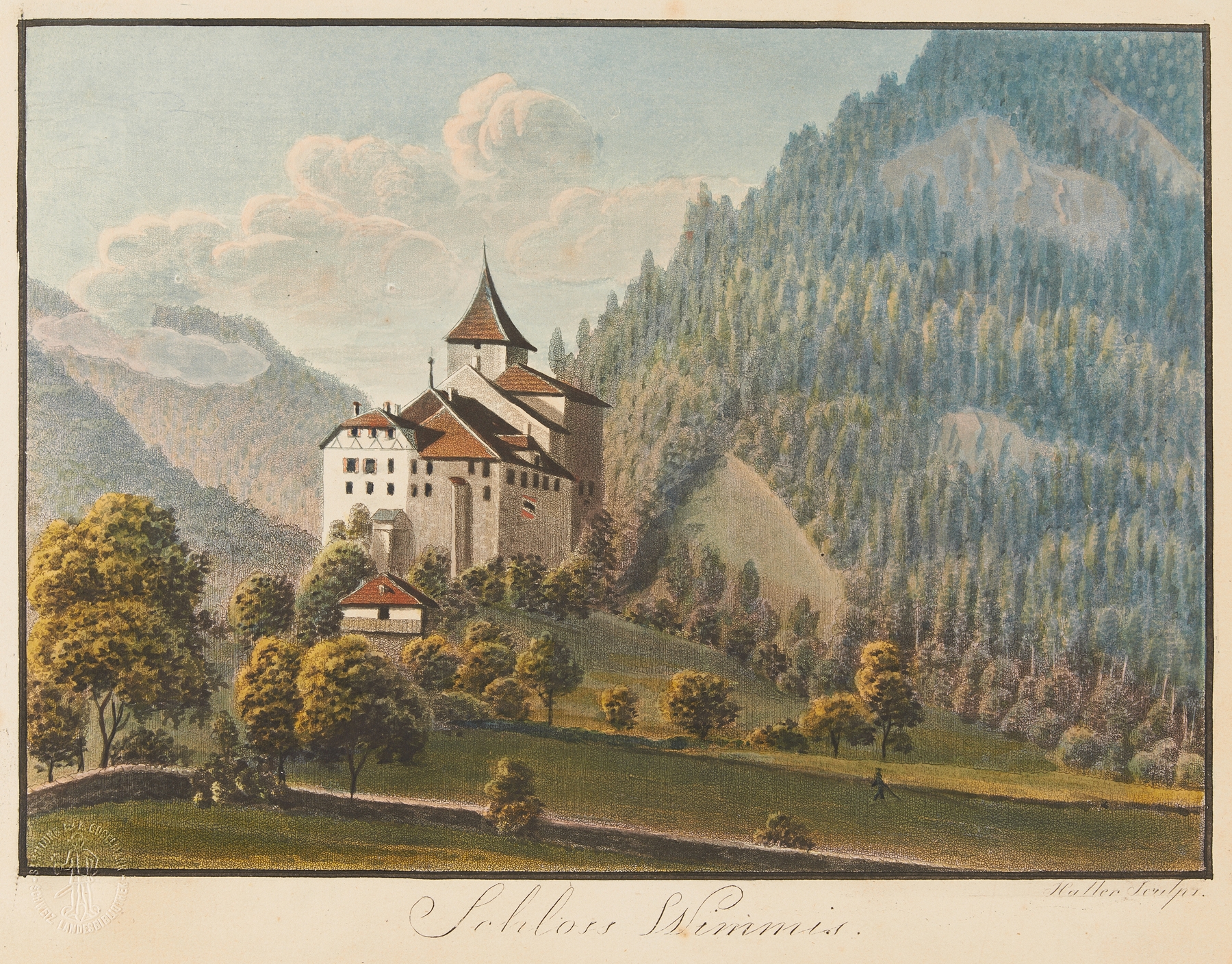
Can paint confess what words never could? In *Schloss Wimmis*, the emotional weight of decay is etched into every brushstroke, whispering stories of time and transformation. Look to the center of the composition where the castle stands resilient against an encroaching wilderness. The sturdy stone walls, rendered in muted grays, contrast sharply with the vibrant greens of moss and creeping vines, inviting the viewer to witness a dialogue between nature and architecture. Notice how the light dances across the façade, illuminating patches where time has cracked the surface, revealing the fragility beneath the grandeur. Each detail—from the gnarled branches surrounding the structure to the soft shadows cast by the crumbling turrets—encapsulates a haunting beauty. The interplay of decay and life highlights the tension between permanence and impermanence. The encroaching flora symbolizes nature’s relentless reclamation, while the castle represents human ambition, now softened by years of neglect. This juxtaposition evokes a bittersweet nostalgia, as the viewer is reminded of the inevitable passage of time and the stories held within stone walls. Look closely, and you might also notice small signs of life—perhaps a bird perched on the ledge—suggesting that even in decay, there exists a continuum of existence and rebirth. Jakob Samuel Weibel painted *Schloss Wimmis* during a period when Romanticism was deeply influencing artists’ perceptions of nature and ruin. Working in the mid-19th century, he was captivated by the picturesque, reflecting a broader cultural fascination with the sublime power of the natural world, juxtaposed against human creations. This piece, while lacking a definitive date, embodies his exploration of these themes, mirroring the anxieties and aesthetics of his era.