Sentinel of the Zouaves, before Sevastopol — History & Analysis
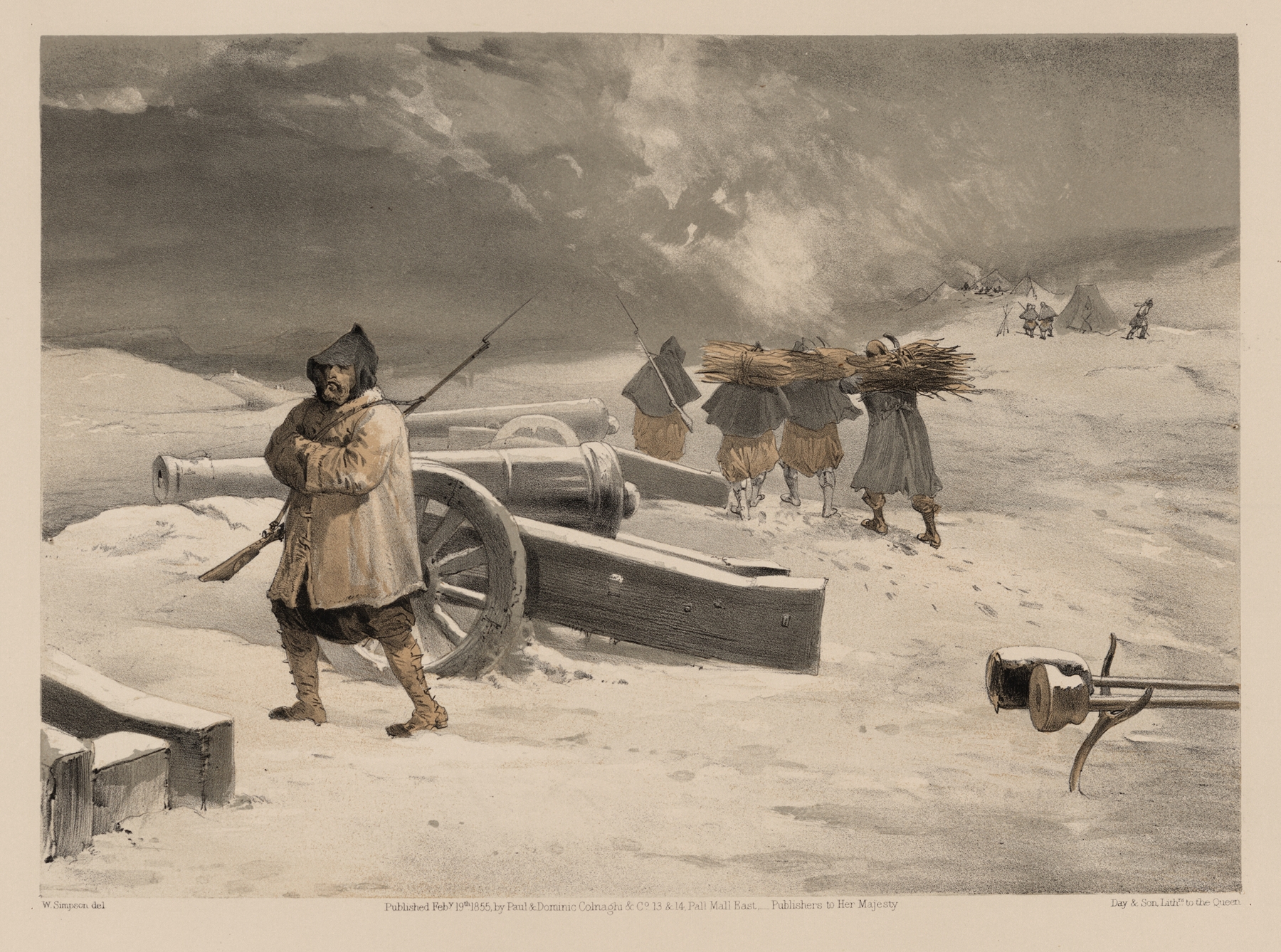
What if silence could speak through light? In the stillness of Sentinel of the Zouaves, before Sevastopol, a solitary figure stands guard, embodying the profound loneliness of war—a silence that is heavy and palpable. Look to the center of the canvas, where a Zouave soldier, draped in his distinctive uniform, stands resolute against a backdrop of muted earth tones. The light falls delicately upon his face, illuminating his weary expression while casting shadows that deepen the creases of solitude etched across his brow.
The sparse landscape stretches around him, with only a hint of the distant fortifications, enhancing the isolation that envelops him. The brushwork, both bold and refined, captures the contours of his figure, rendering him both a part of the landscape and a stark contrast to it. The soldier's stance tells a story of resilience against despair, yet the emptiness of the setting echoes an unspoken battle within. The muted colors evoke a sense of melancholy, suggesting that his watchfulness is not merely for the enemy but also for the ghosts of comrades lost and the impending dread of what lies ahead.
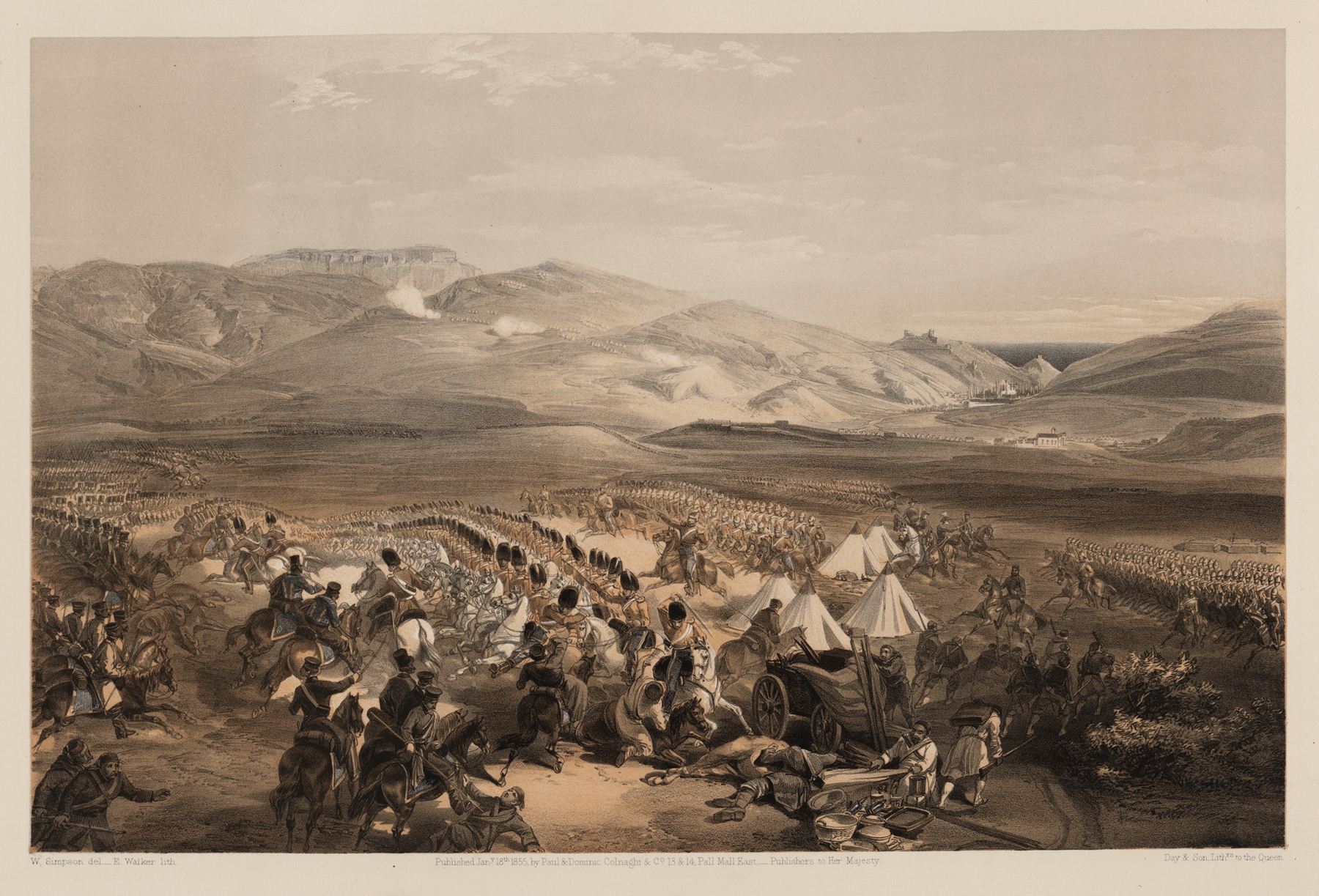
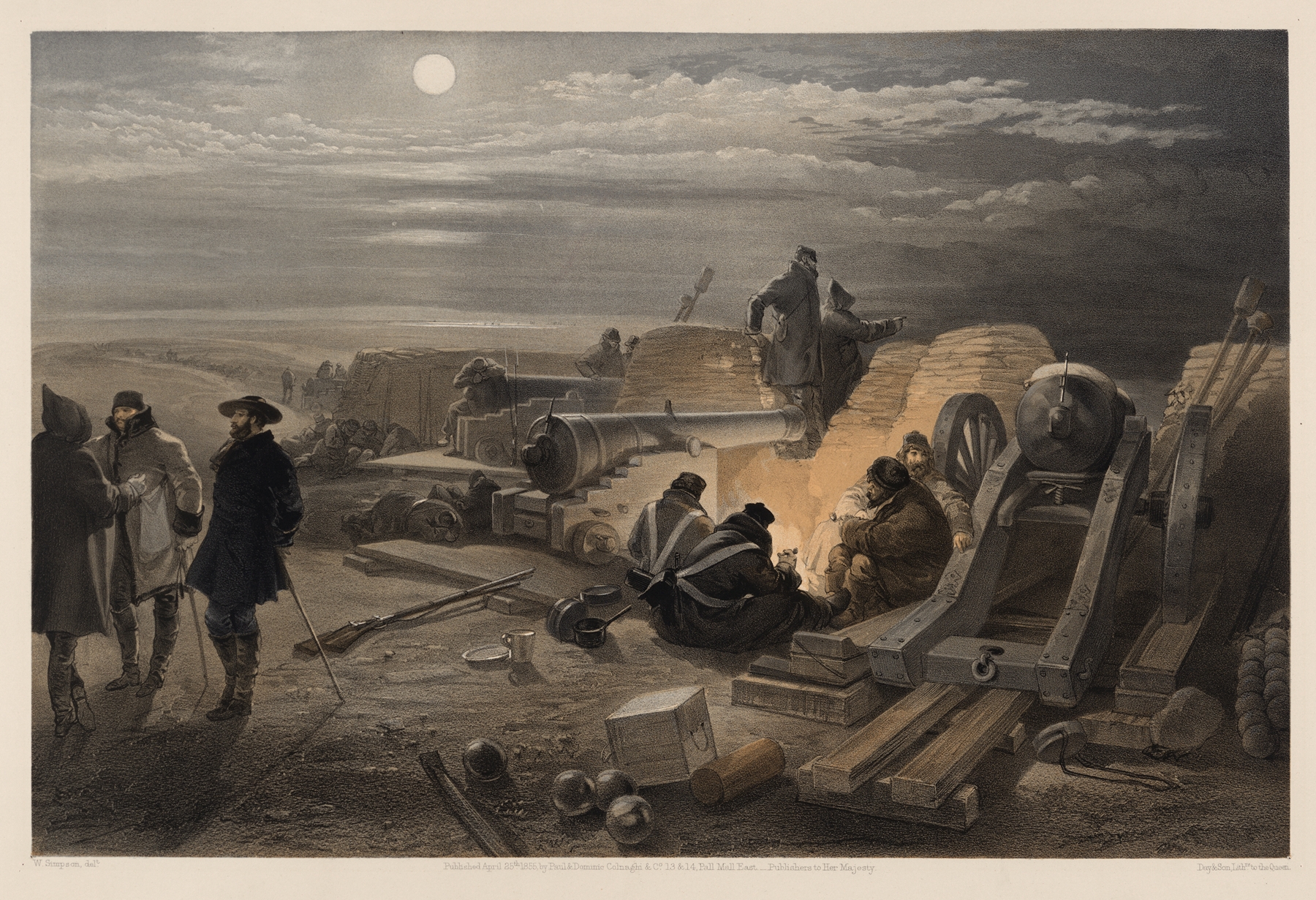
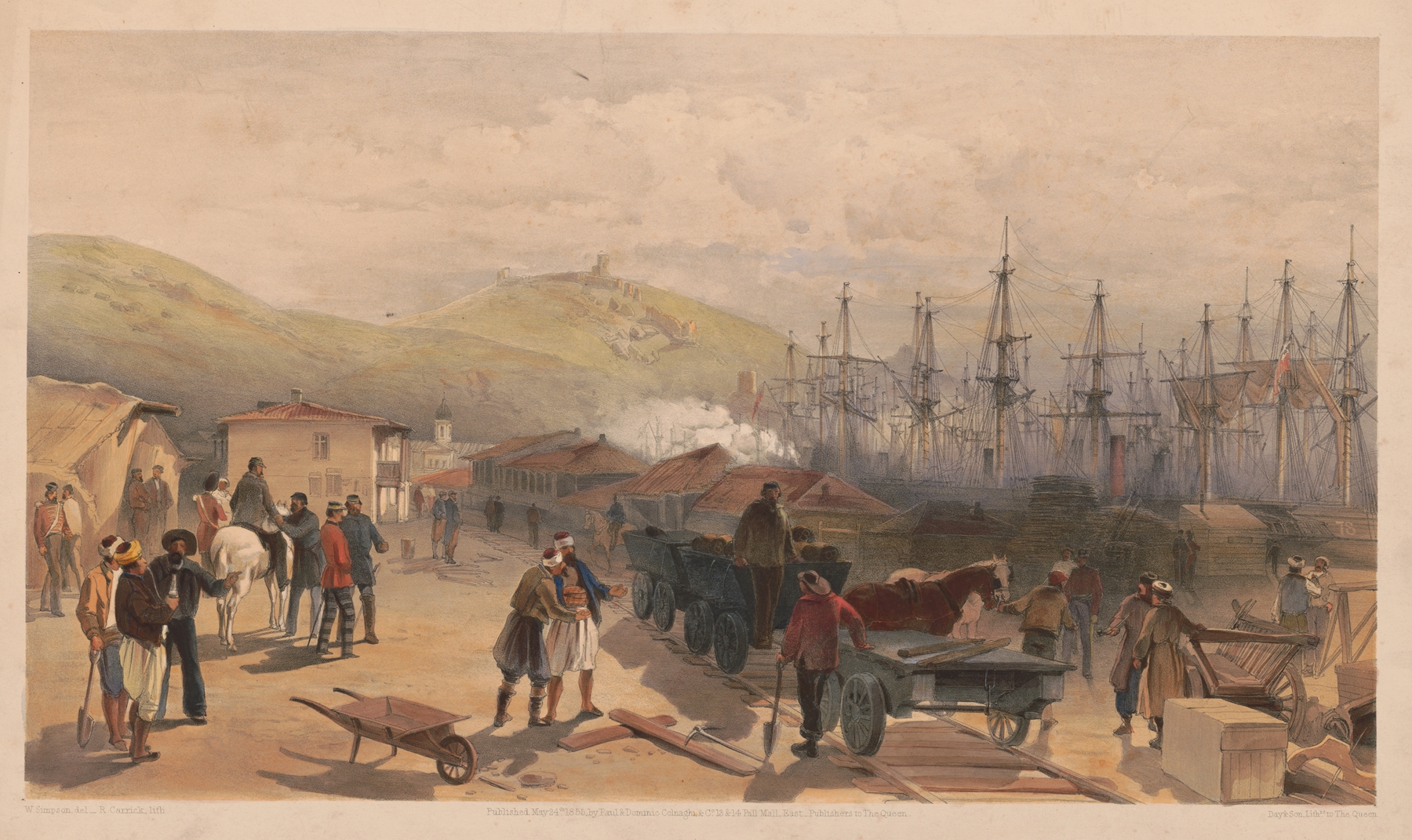
Each detail—the tattered edges of his uniform, the slight droop of his shoulders—speaks to the weight of his solitude, amplifying the emotional depth of the moment captured. Created in 1855 during the Siege of Sevastopol, the artist found inspiration amid the tumultuous backdrop of the Crimean War. William Simpson, a war correspondent, used his skills to document the harsh realities faced by soldiers, while his paintings reflected the broader sentiments of a society grappling with the horrors of conflict. In this work, he not only chronicled the physical presence of the Zouave but also the profound inner turmoil that defined the soldier's experience during this pivotal time.