Spring landscape from Rozdół — History & Analysis
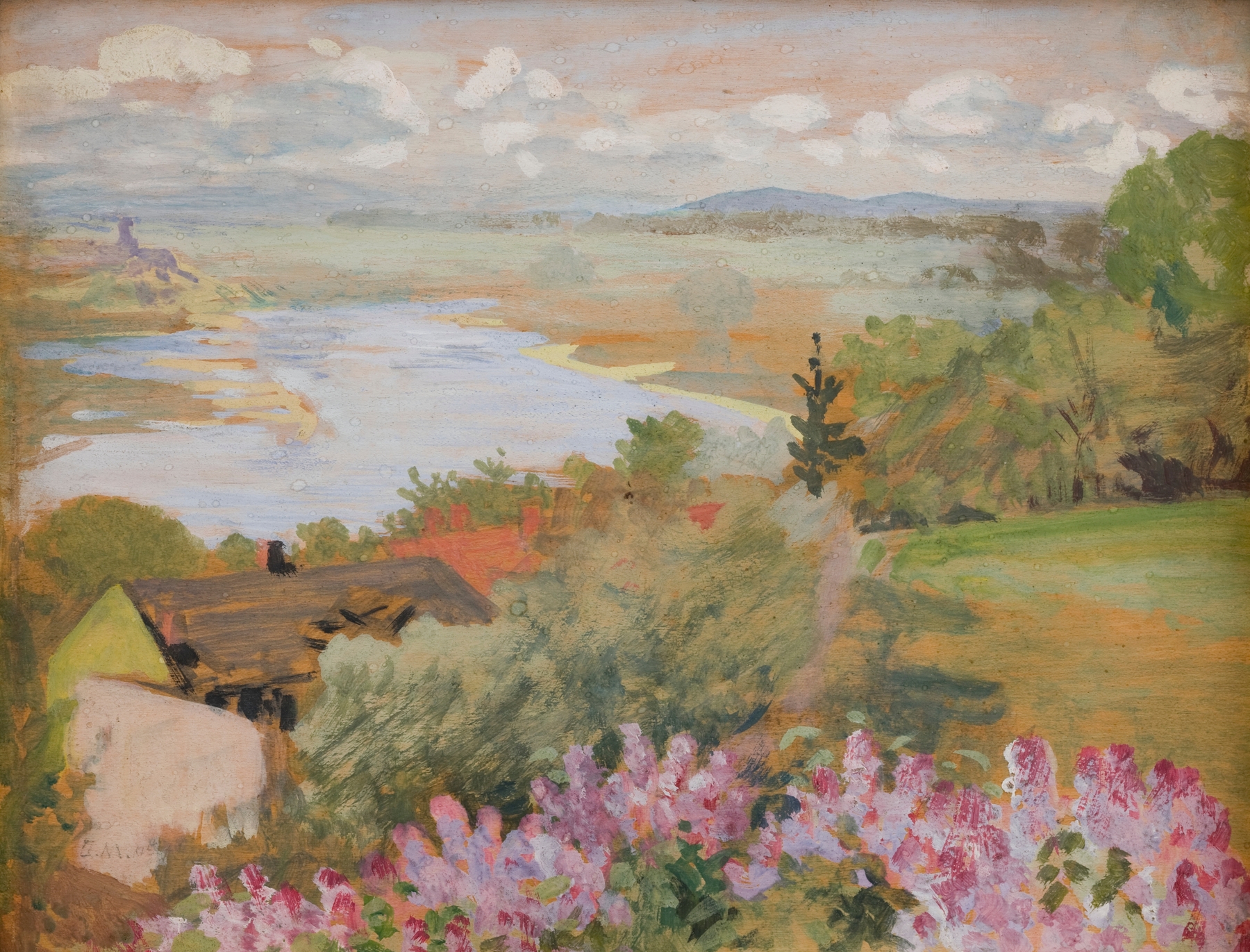
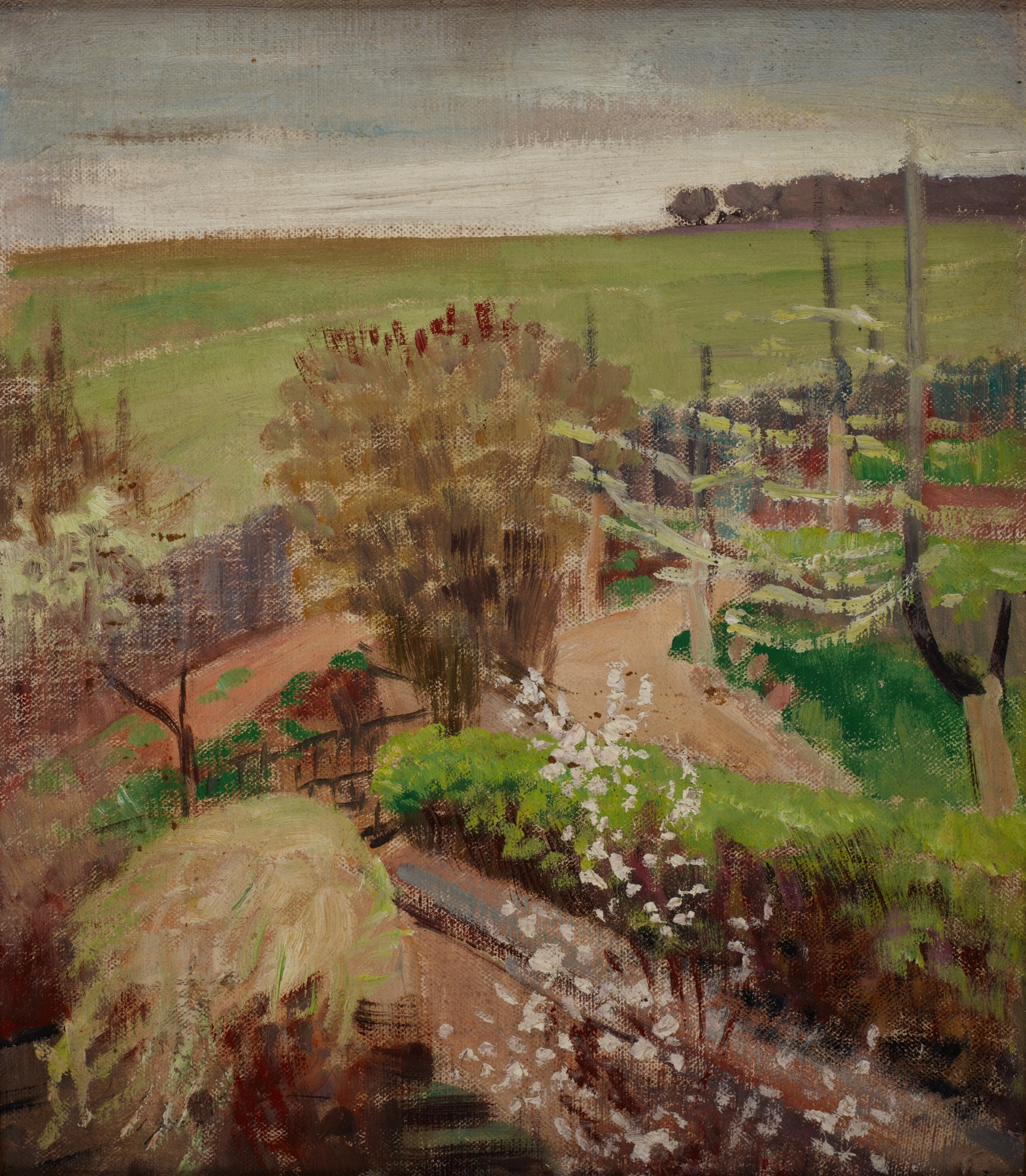
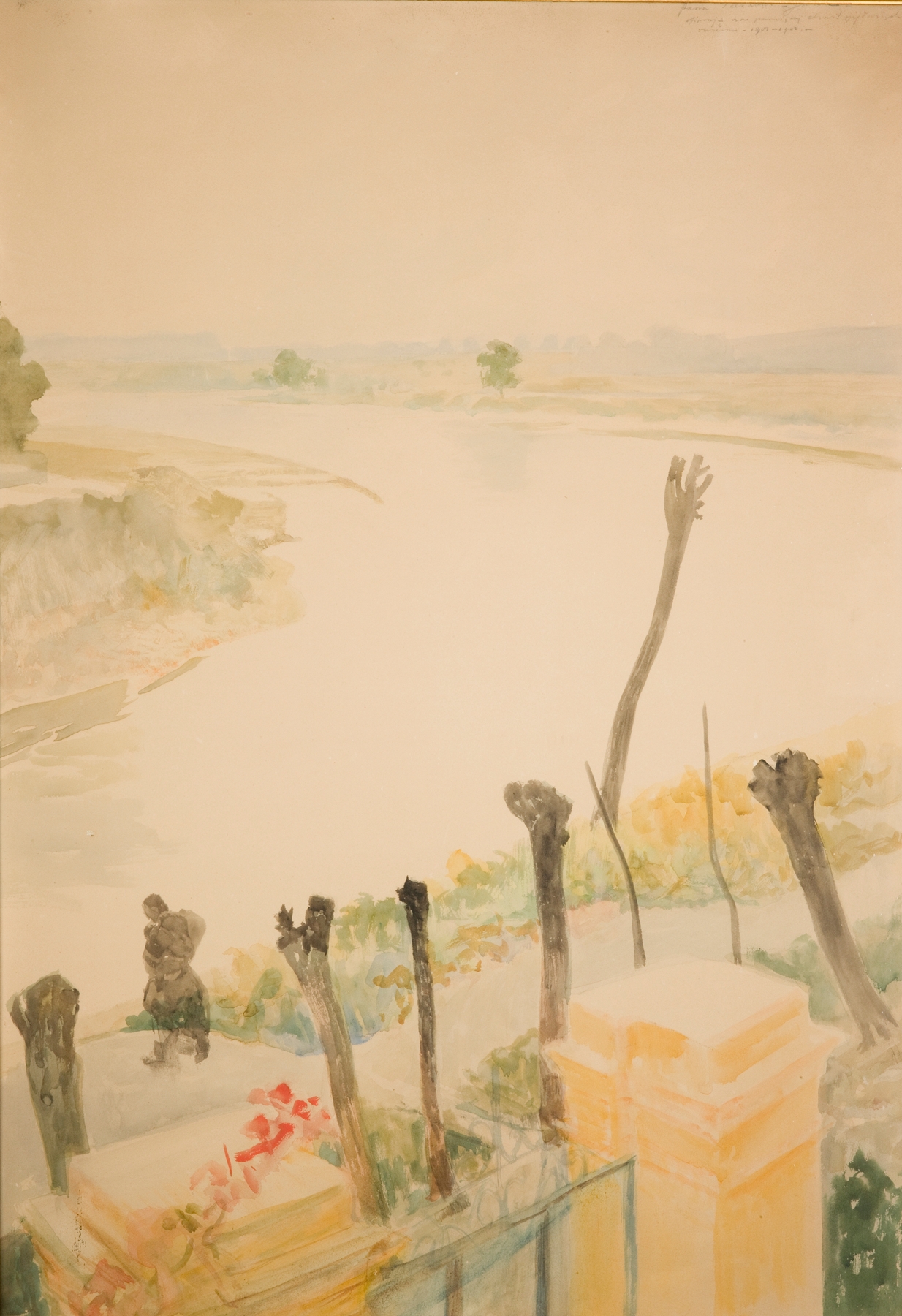
“To paint is to remember what time wants us to forget.” In a world that rushes forward, art becomes a bridge to moments suspended in time, offering reflections of beauty and quiet contemplation. Look to the lower left corner, where soft hues of green and gold merge in a gentle embrace, capturing the essence of spring. The rolling hills are painted with such delicate strokes that they almost breathe, inviting you to wander through their undulating forms. Notice how the light cascades over the landscape, illuminating the blossoms and casting gentle shadows that play against the vibrant palette.
Each element, from the distant trees to the meandering brook, is thoughtfully arranged, guiding the viewer’s gaze through a serene, pastoral symphony. Beneath the surface of this idyllic scene lies a juxtaposition between tranquility and transience. The blooming flowers symbolize life and renewal, while the encroaching shadows hint at the inevitability of change and decay. One can sense the fleeting nature of beauty, captured in a moment that will soon fade, emphasizing the artist’s desire to immortalize what is often overlooked.
The lush colors evoke a sense of nostalgia, as they remind us of the ephemeral joys that spring brings, and how they are destined to dissolve into memory. Created in 1884, this piece reflects a pivotal time for Jacek Malczewski, who was firmly establishing his career in Poland's art scene. The country was undergoing significant political and social transformations, and artists like him sought to express their identity through their work. This painting emerges during a period of increased appreciation for natural beauty and romanticism in art, serving as a testament to both the personal and collective experiences of a time steeped in change.