Studieblad met het hoofd van een oude vrouw en twee handen — History & Analysis
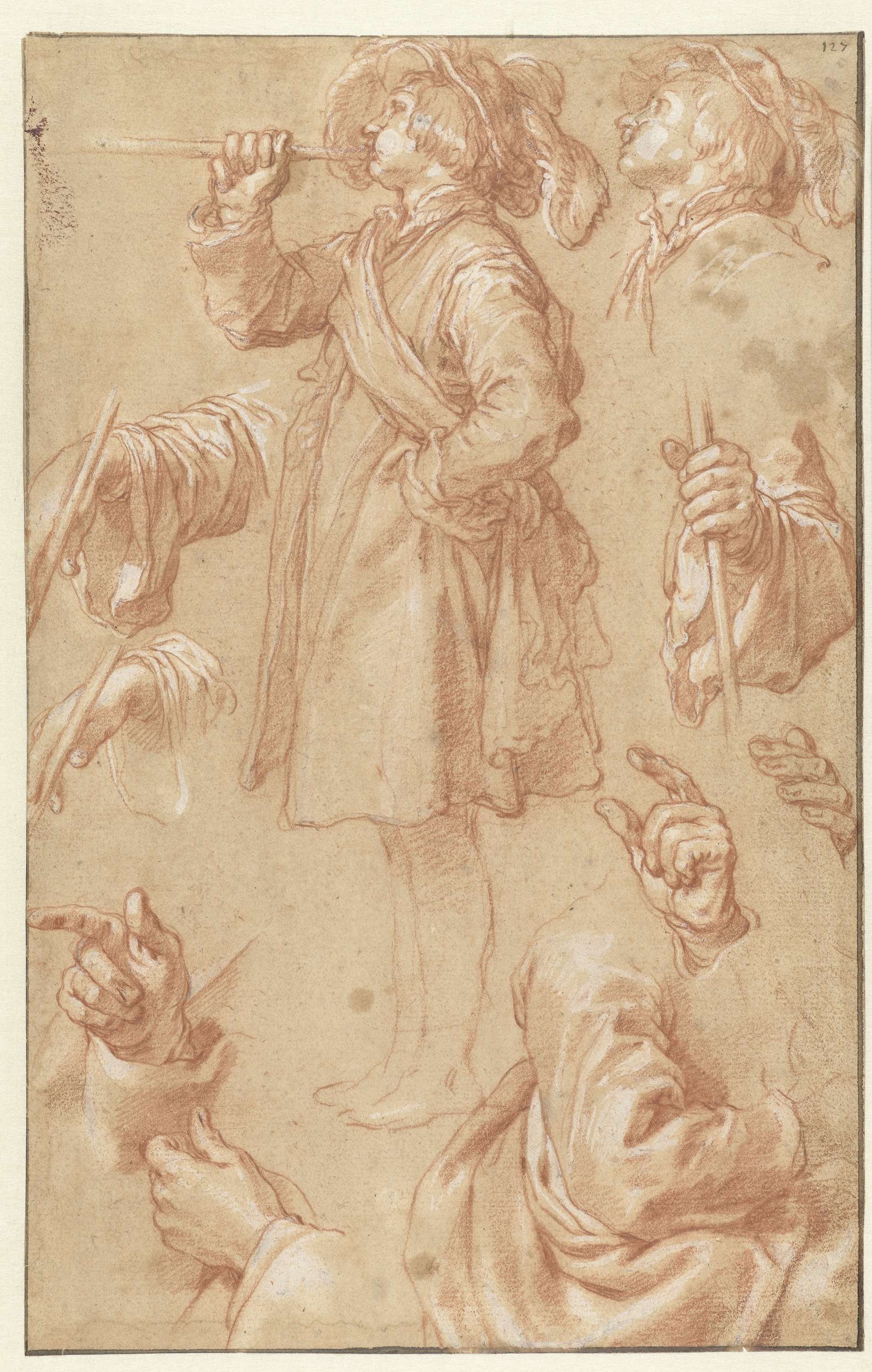
Can paint confess what words never could? In the quietude of the past, an old woman's visage captures a world of unspoken stories, each wrinkle a testament to time's passage and the nostalgia it carries. Look closely at the expressive face, where the gaze seems to reach beyond the canvas. Notice how the soft, muted tones blend seamlessly, with strokes that evoke the texture of aging skin.
The artist's delicate touch captures the light as it dances across her features, highlighting the deep-set eyes and the thoughtful furrows of her brow. The inclusion of two hands, gently resting, suggests a moment of reflection, grounding the composition and inviting the viewer to ponder the weight of her experiences. The contrast between light and shadow evokes a palpable sense of intimacy and vulnerability. The warm hues cradle her form, creating a serene atmosphere that belies the complexities of her life.
Each stroke reveals more than just a face; it conveys the essence of memory, the bittersweet nature of nostalgia, as if the subject is both present and lost, reminding us of the passage of time and the stories left untold. Abraham Bloemaert painted this work during the late Renaissance in the Netherlands, a period marked by profound artistic growth and a resurgence of interest in human emotion and character. Amidst the flourishing art scene, Bloemaert honed his craft, often exploring themes of human frailty and the beauty of aging. This painting stands as a testament to his ability to transcend mere representation, inviting the viewer into a deeper understanding of the human experience.