Studies for "The Martyrdom of Saint Symphorien" (Lictors, Stone Thrower, and Spectator) — History & Analysis
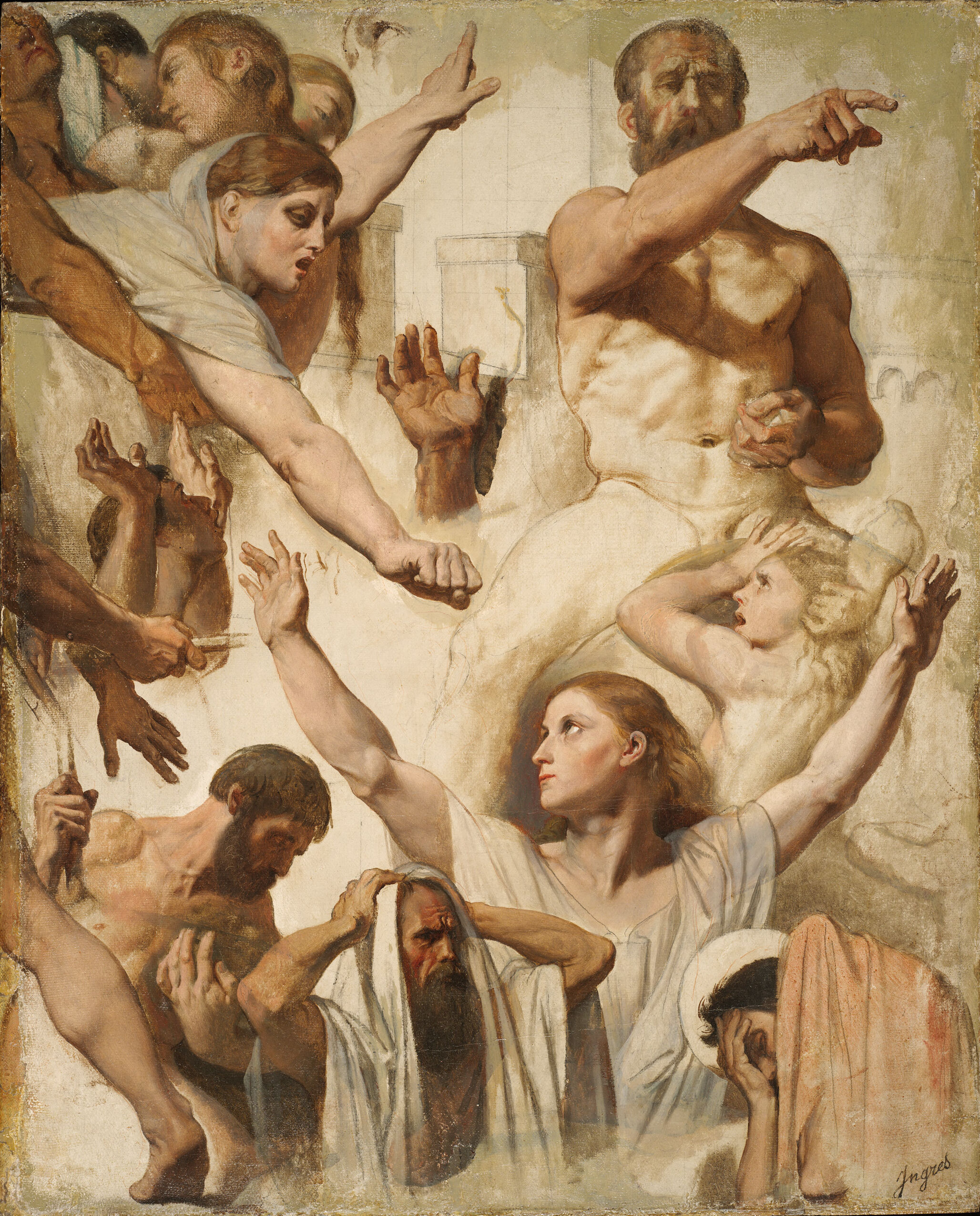
A tense moment hangs in the air. A stone flies through the sunlight, its trajectory marked by desperation and fury, as lictors move in a flurry of motion, faces contorted in a mixture of duty and grave concern. Spectators gather, their eyes wide with a blend of anticipation and horror, capturing the palpable weight of impending sacrifice. Look to the left at the figure of the stone thrower, muscles taut with effort, his body poised in mid-action, reflecting the tension of the scene.
Notice how the light casts stark shadows, accentuating the lictors' determined expressions, their postures suggesting both control and chaos. The muted palette of earth tones contrasted with splashes of red hints at the blood soon to be shed, immersing the viewer in a visceral tableau that breathes both violence and artistry. The juxtaposition between the force of the stone and the hesitation of the onlookers evokes a deep sense of longing—longing for resolution, for understanding, as the fate of the martyr hangs in the balance. Each figure, from the lictors to the spectators, embodies a complex emotional state; the lictors are torn between duty and morality, while the witnesses oscillate between horror and anticipation.
The composition draws us into their collective moment, challenging our own responses to violence and sacrifice. In 1833, Ingres was deeply engaged with themes of classical history and human emotion, reflecting a period where Romanticism was taking hold. Working in Paris, he sought to convey the struggles of the human spirit through meticulous line and form, embracing the tensions of his times—both in the world of art where neoclassicism clashed with the burgeoning romance, and in the broader sociopolitical landscape of France. The studies for this piece capture not only the drama of martyrdom but also the artist's own desire to elevate the human experience through passionate storytelling.