Studies for "The Martyrdom of Saint Symphorien" (Saint, Mother, and Proconsul) — History & Analysis
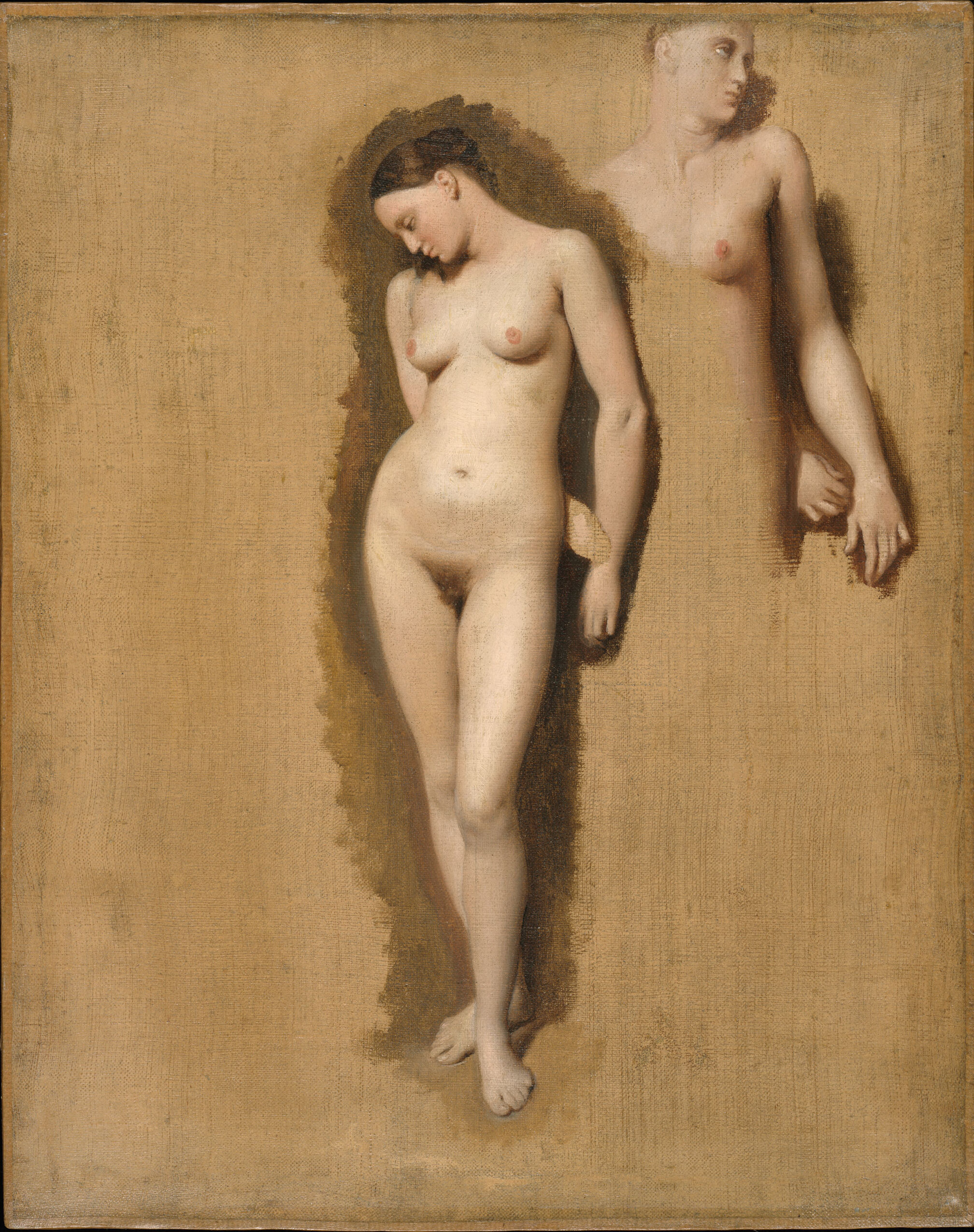
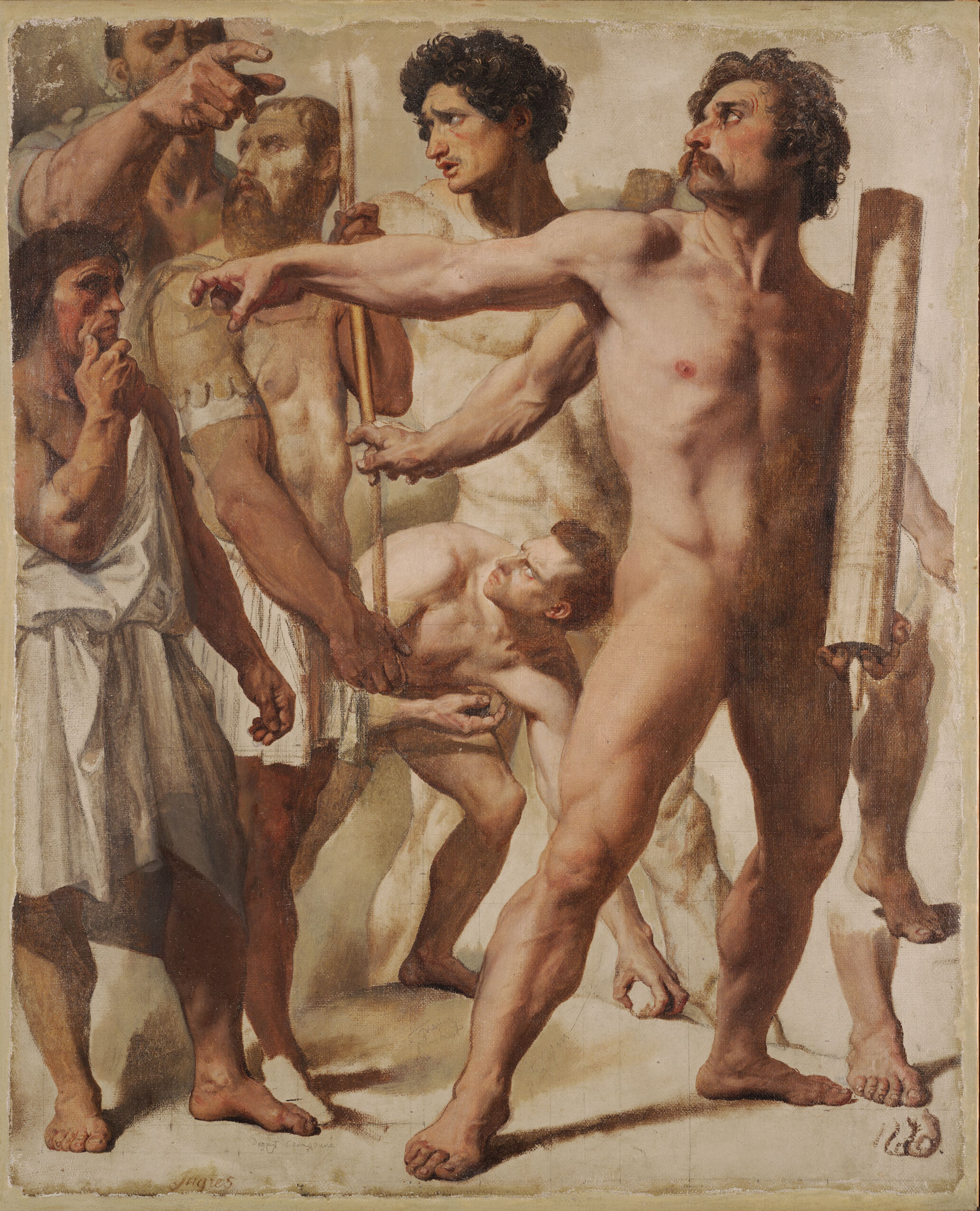
A dimly lit chamber, heavy with anticipation, unfolds before us. A mother clutches her son’s hand, eyes glistening with unshed tears, while a steely proconsul looms nearby, his expression a mask of ruthless authority. The tension is palpable, a stark clash between love and power, as light struggles to break through the shadows that envelop their fates. Look to the left at the anguished face of the mother, her features contorted by grief and desperation. Notice how Ingres captures the delicate interplay of light and shadow, highlighting the texture of her garments and the sheen of her skin.
The careful draftsmanship and muted palette evoke a sense of intimacy, inviting viewers into this private moment of despair. The arrangement of figures leads the eye towards the central conflict, emphasizing both the emotional weight and the dramatic stakes at hand. In this study, contrasts abound: the softness of maternal love collides with the harshness of political might. The mother’s outstretched hand symbolizes not just her sorrow but also a plea for mercy, while the proconsul stands resolute, embodying the cold inevitability of fate.
Subtle gestures and expressions weave a narrative of sacrifice, revealing deeper themes of loss and defiance that transcend the immediate scene. In 1833, while immersed in the Neoclassical tradition, Ingres created these studies amidst a landscape of political and social upheaval in France. The artist was exploring the tension between emotion and idealized forms, a pursuit reflective of a society grappling with its identity. This work serves as a precursor to his larger composition, capturing the essence of a martyrdom that would echo through history, infused with poignant human experience.