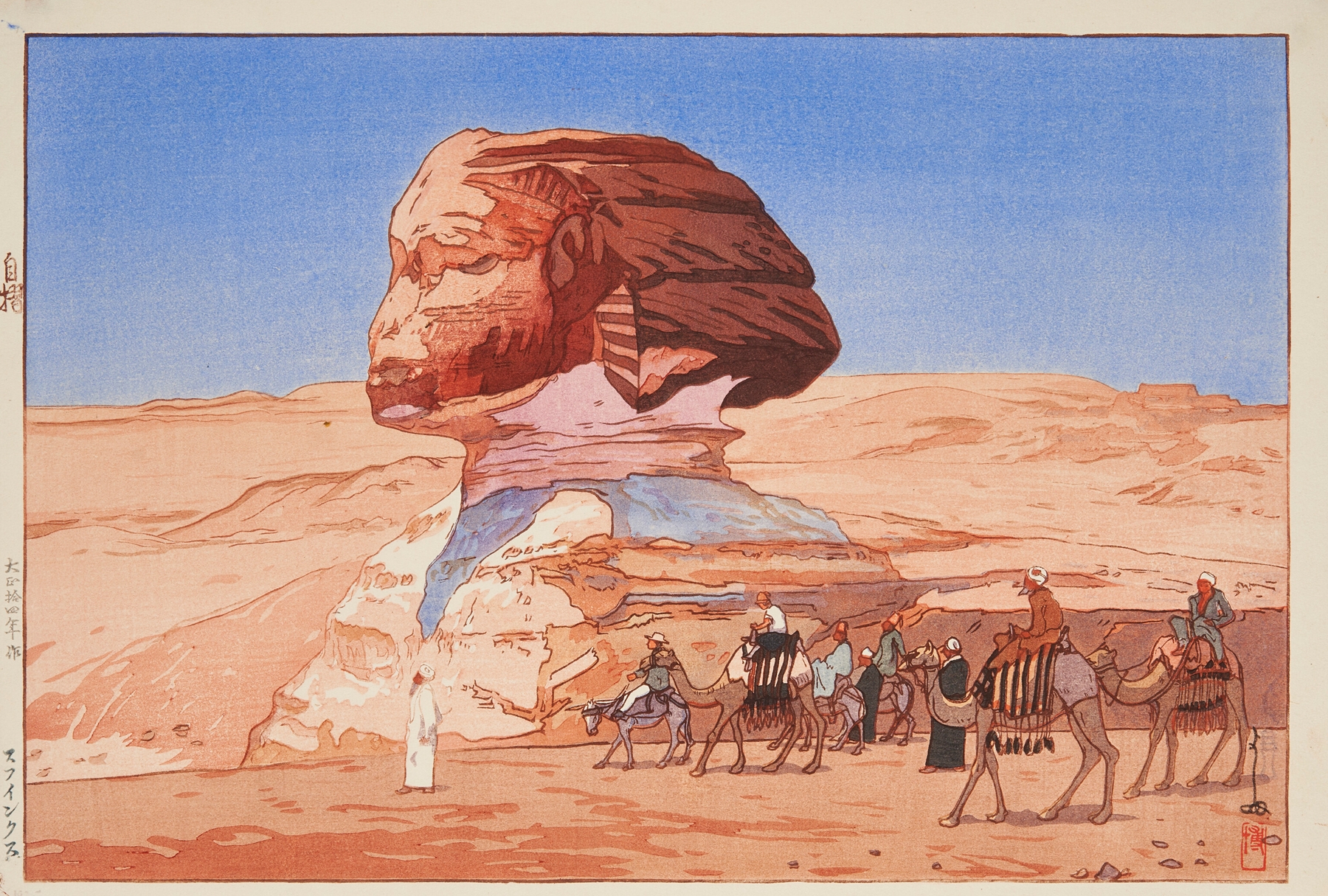
Sufuinkusu (Sphinx, day) — History & Analysis
Can beauty exist without sorrow? The vibrant hues of a sunlit landscape can evoke joy, yet they often whisper of deeper, unspoken narratives. Look to the center, where the magnificent Sphinx rises against a backdrop painted in rich aquamarines and soft ochres. The play of light across its ancient stone reveals textures that seem to breathe, imbued with a warmth that contrasts against the cool sky.
Notice how the artist employs intricate brushwork to depict the shifting sands, each stroke a testament to the enduring presence of time, while gentle shadows hint at the secrets held within the figure. The juxtaposition of the Sphinx’s steadfastness against the ephemeral beauty of the surrounding landscape speaks volumes. This tension encapsulates the struggle between permanence and transience — a reminder that even in beauty, there exists the shadow of loss. The play of light and color not only captivates the eye but also invites reflection on the histories that linger in this still moment.
In 1925, when this piece was created, Yoshida Hiroshi was deeply immersed in the Shin-hanga movement, blending traditional Japanese techniques with Western perspectives. Working in his studio in Tokyo, he sought to capture the essence of Japan’s natural and historical beauty during a time of social change and modernization. This piece stands as a culmination of his explorations, reflecting both the grandeur of ancient monuments and the delicate interplay of color that characterizes his artistry.