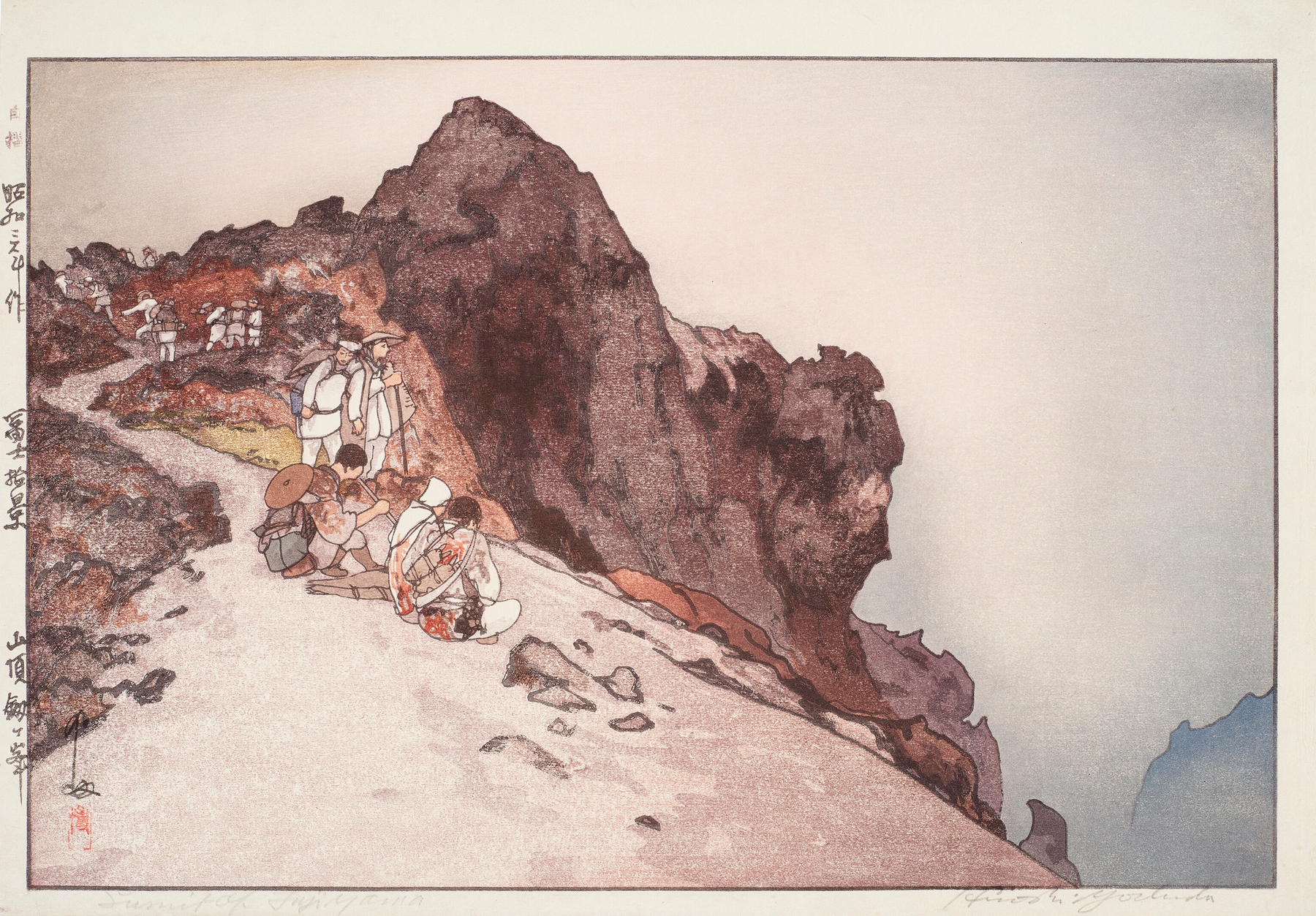
Summit of Mount Fuji — History & Analysis
“The canvas doesn’t lie — it simply waits.” This stillness envelops us, inviting reflection and reverie in its serene depths. It speaks to the dreams we carry, whispering the promise of distant horizons and the possibility of escape. Look to the horizon, where the majestic peak of Mount Fuji rises majestically, bathed in the soft glow of dawn. Notice how the delicate brushwork captures the subtle gradients of blue and violet in the sky, melding seamlessly into the purity of the snow-capped summit.
The composition draws our gaze upward, reinforcing the mountain's stature as it stretches beyond the canvas, a metaphor for aspiration and transcendence. Amid this tranquil scene lies a profound contrast: the stillness of nature juxtaposed with the fleeting moments of human existence. Low-lying clouds curl gently around the base, hinting at mystery while grounding the viewer in the earthly realm. The light spills over the landscape, illuminating not just the mountain but also our dreams, suggesting a journey that rises from the mundane to the sublime—a pilgrimage toward greatness.
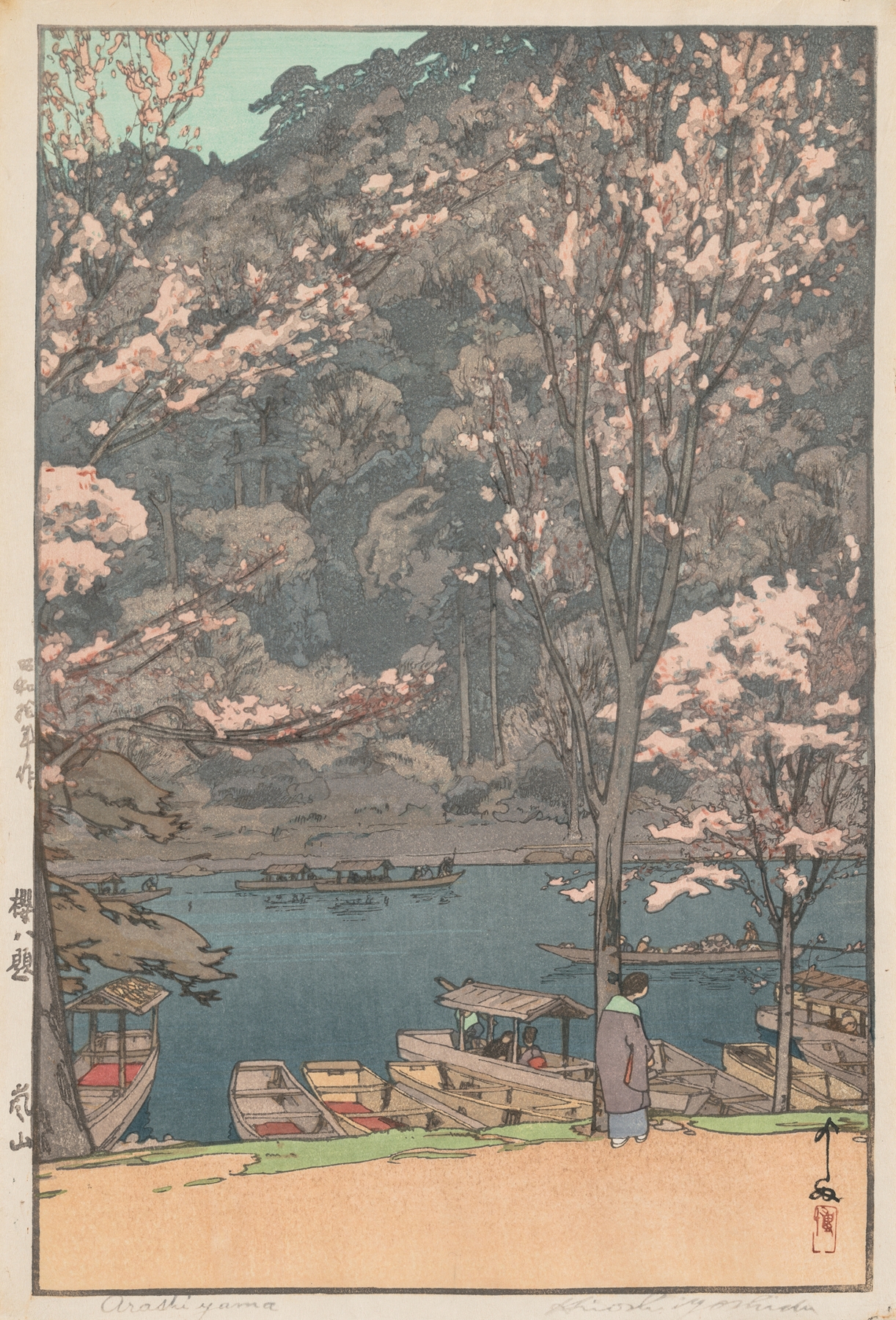
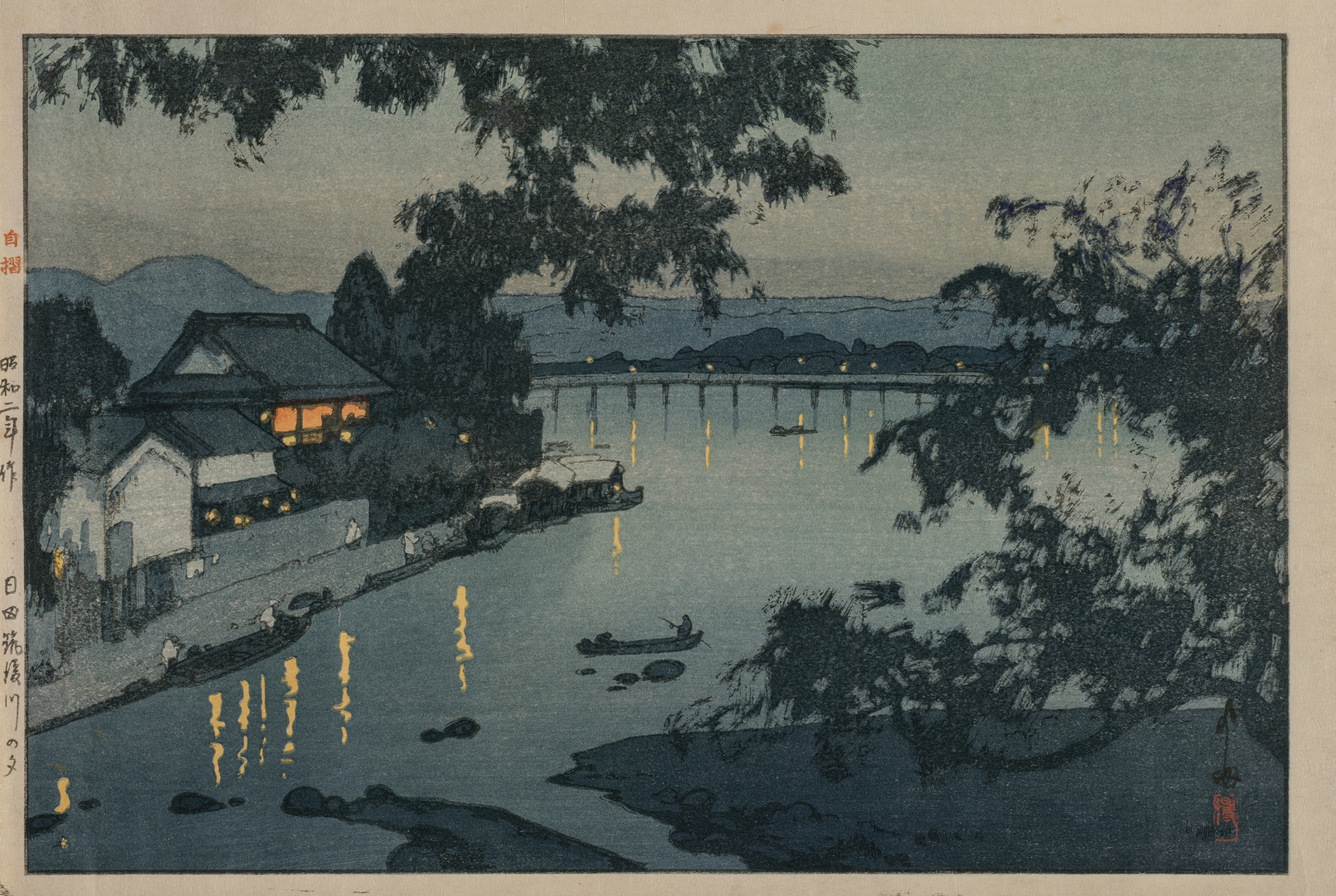
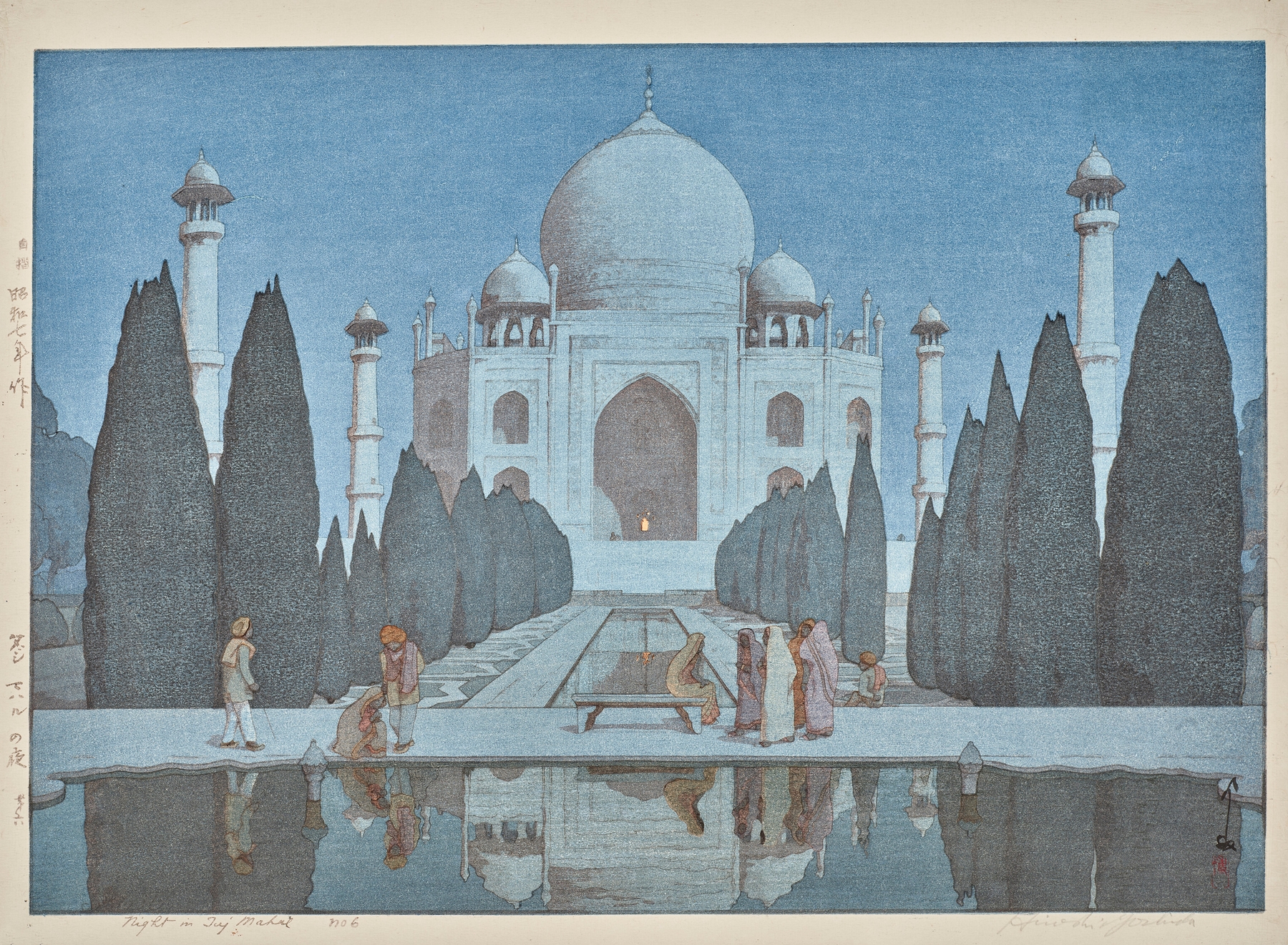
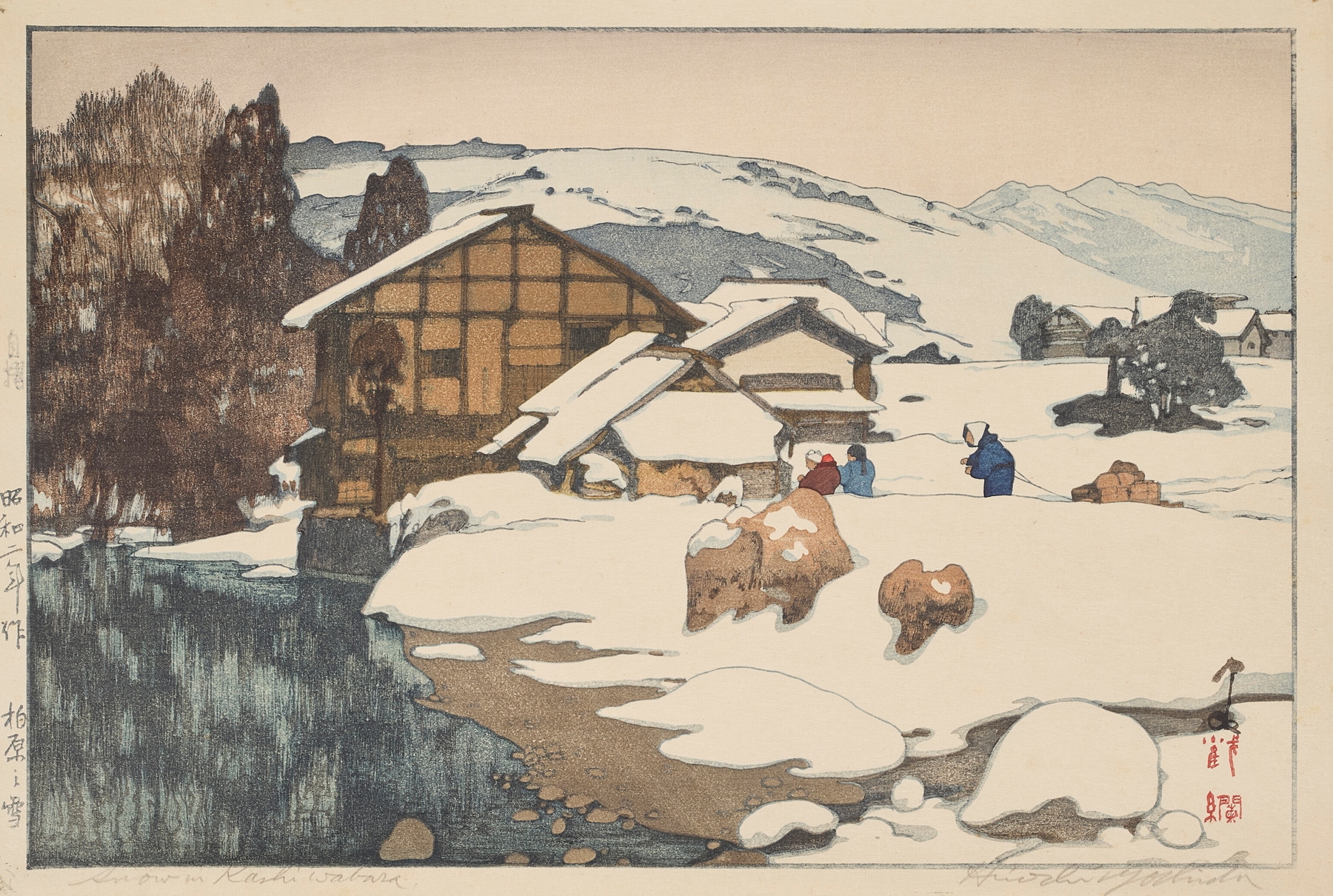
In 1928, during a period of artistic experimentation and modernization in Japan, the artist crafted this piece while reflecting on both tradition and change. The early 20th century marked a time when many artists were exploring the intersection of Western influences and indigenous culture, prompting Hiroshi to blend traditional techniques with a modern sensibility. This painting embodies that dialogue, capturing a timeless icon while resonating with the aspirations of a nation in flux.