Susannah Powell Mason (Mrs. Jonathan Mason) — History & Analysis
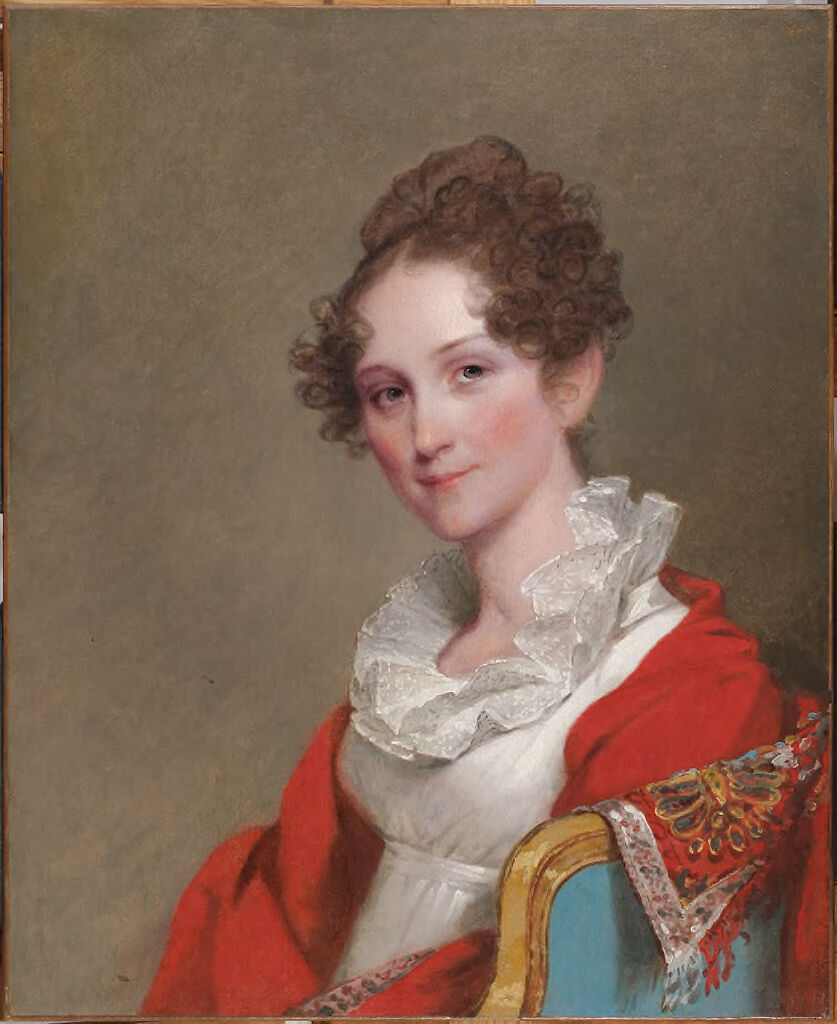
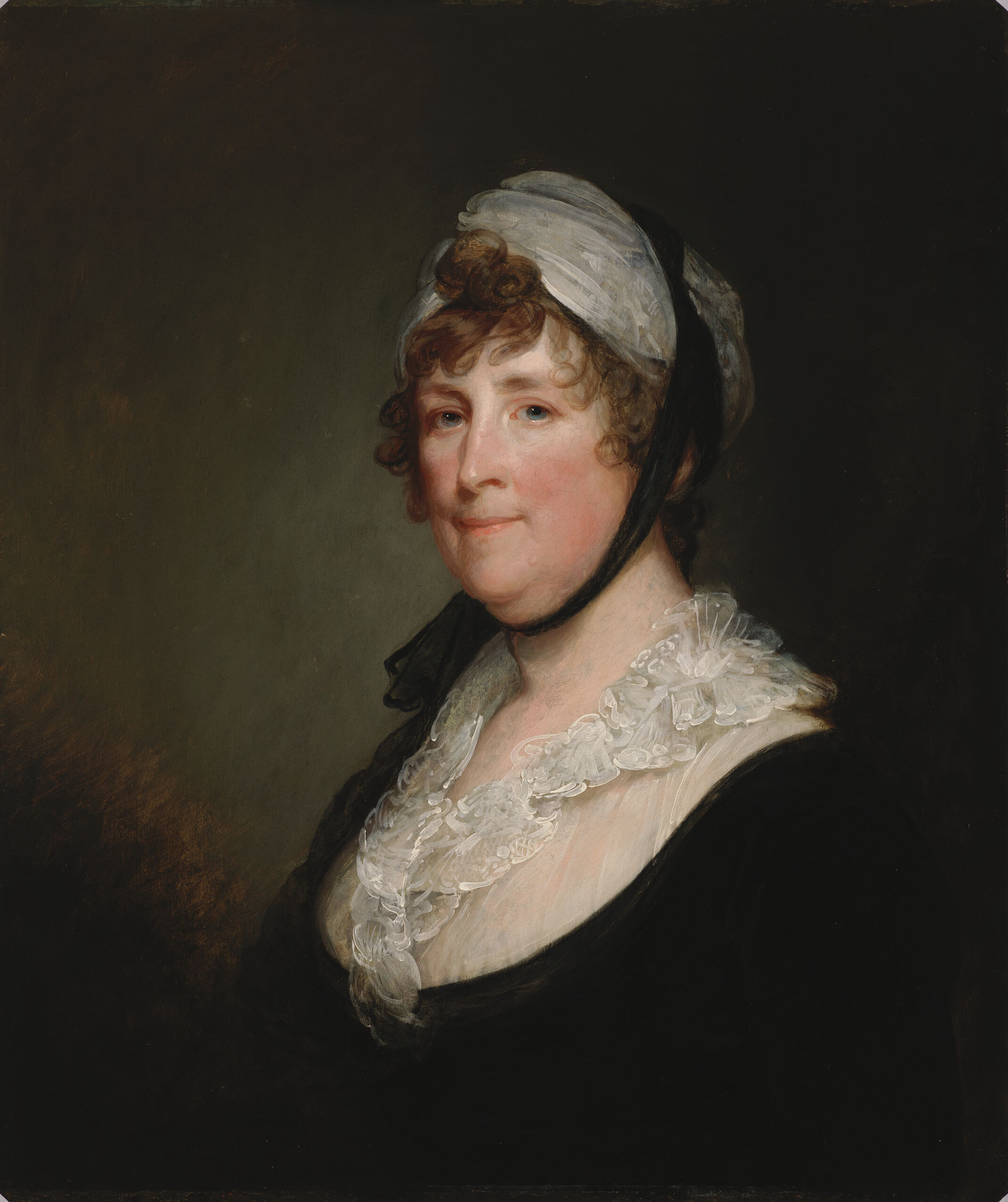
“Under the brush, chaos becomes grace.” In Susannah Powell Mason, Gilbert Stuart captures a moment of poised vulnerability that transcends time. The expression on the subject's face is steeped in an unnameable fear, an emotional resonance that invites the viewer to ponder the complexities hidden beneath her calm exterior. Look to the right at the delicate lace collar framing Mrs. Mason's neck; its intricate design flutters like a whisper of her inner turmoil.
Notice how the soft, natural light falls upon her face, accentuating the gentle slope of her chin and the slight furrowing of her brow. The rich, dark background contrasts beautifully with her pale complexion, drawing the eye toward her compelling gaze, which seems to hold both invitation and reticence. Within this portrait, layered meanings emerge: the tension between societal expectations and personal identity is palpable. The interplay of light and shadow serves to highlight the dichotomy of her outward grace and inner fear, suggesting a battle between societal obligation and the desire for autonomy.
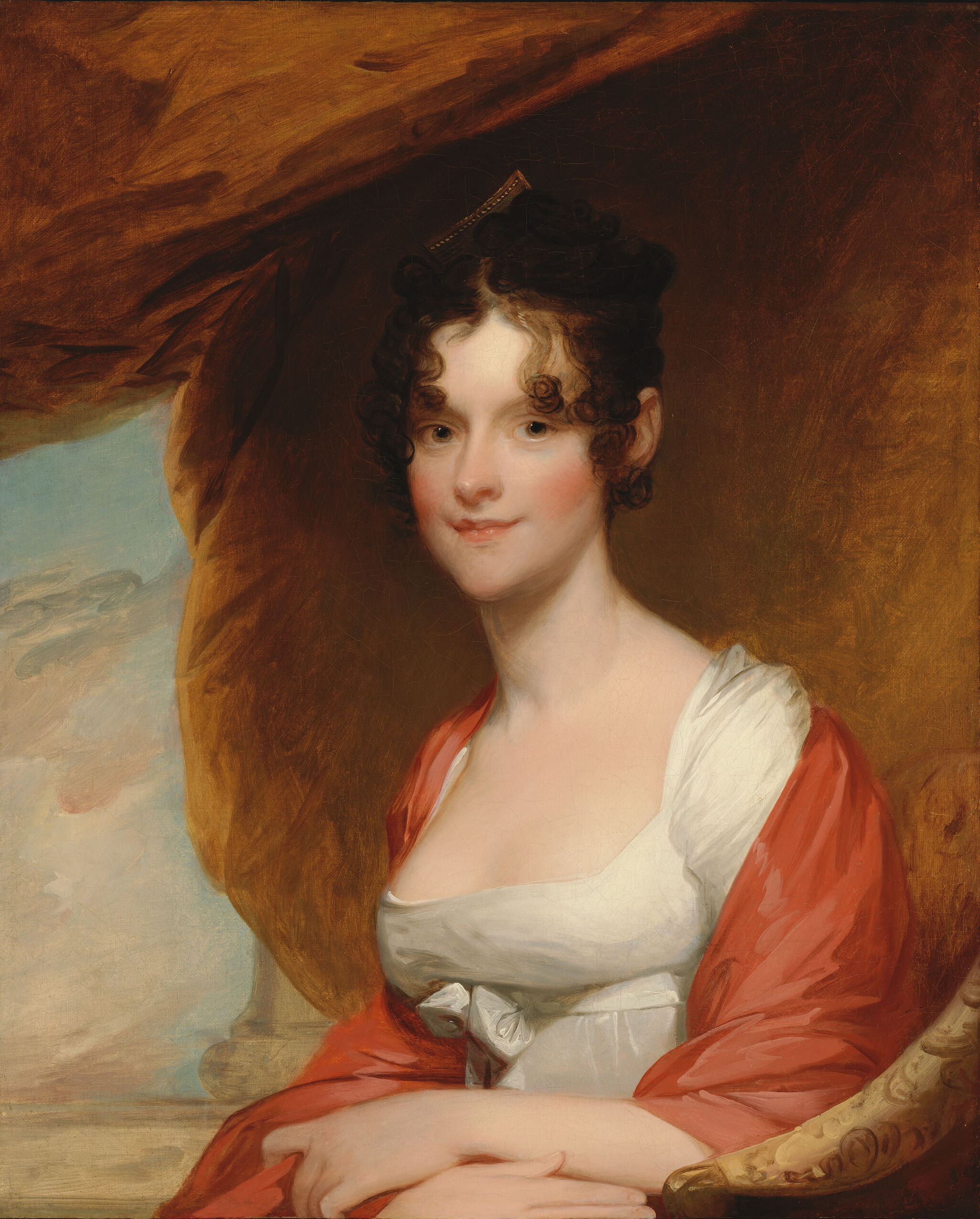
The subtle positioning of her hands—a gentle clasp—implies a fragility that adds depth to her character, hinting at the anxieties hidden beneath her composed demeanor. In 1805, during the early years of the American Republic, Gilbert Stuart was well-established in the art world, known for his portraits that combined psychological insight with technical mastery. Creating this work in Boston, he was part of a burgeoning artistic movement that sought to define a national identity, yet he remained deeply aware of the personal stories that lay beneath the surface of his subjects, making them universal even amidst the intimate details of their lives.