The Blacksmith’s Shop, Hingham — History & Analysis
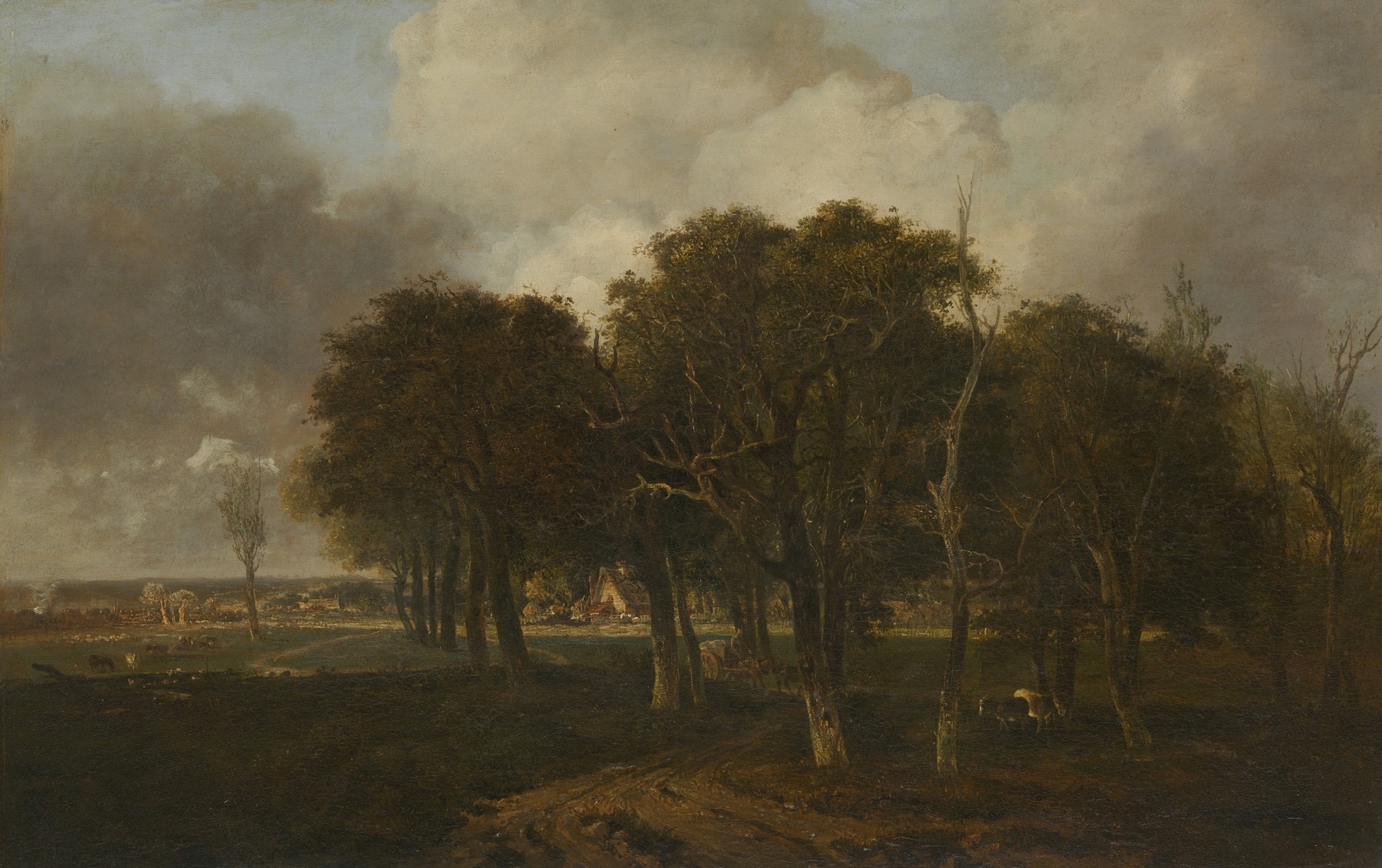
“Sometimes beauty is just pain, disguised in gold.” In the delicate balance between strength and fragility, the world reveals itself through layers of illusion. How do we navigate the intricate web of our existence, much like a blacksmith molding raw metal into something formidable yet beautiful? Focus first on the central figure, the blacksmith, as he toils diligently over the anvil. Notice how the warm glow of the forge contrasts with the cooler tones surrounding him, emphasizing his labor against a backdrop of shadows.
The rich, earthy palette encapsulates the essence of hard work and craftsmanship, inviting the viewer to appreciate the sweat and dedication embodied in every stroke of Crome's brush. Each detail, from the molten metal to the blackened tools, draws you deeper into this intimate space, revealing the artistry not only in the work but in the way light dances upon the surfaces. Look closely at the faces of the onlookers caught in this moment; their expressions oscillate between admiration and awe, hinting at a silent reverence for both the creation and the creator. This scene is more than mere labor; it encapsulates the tension between the mundane and the extraordinary, suggesting that beneath the surface of everyday toil lies an undercurrent of artistic brilliance.
The illusion of strength in the blacksmith's forge is juxtaposed against the vulnerability of the human experience, pointing to the fragility hidden behind the facade of resilience. In the period between 1807 and 1809, Crome painted this work while living in Hingham, a time characterized by the Industrial Revolution's early impact on English society. As traditional crafts began to shift under the weight of mechanization and change, the artist sought to capture the beauty and dignity of manual labor, reinforcing a connection to nature and craftsmanship that spoke to both personal and collective identity in an evolving world.