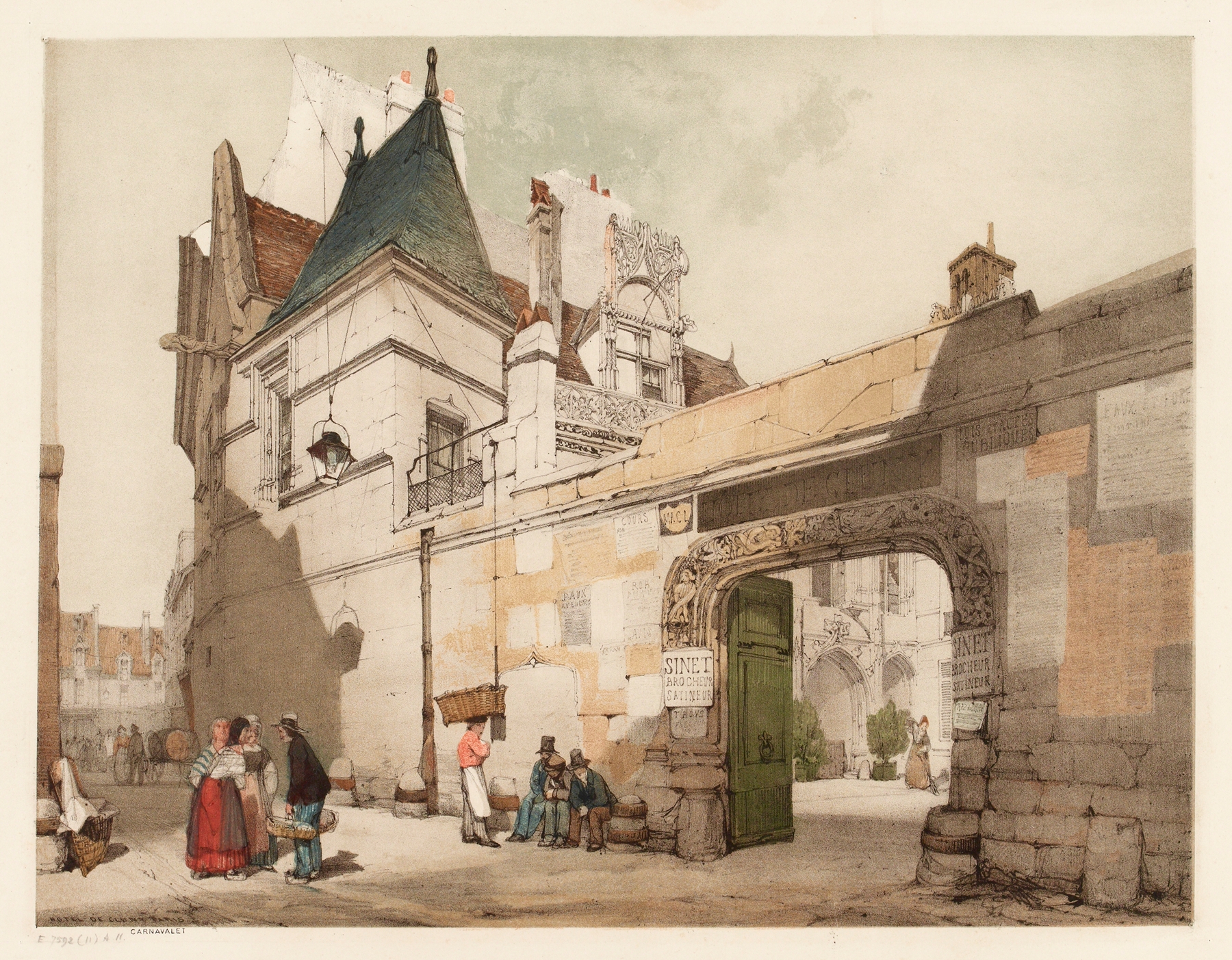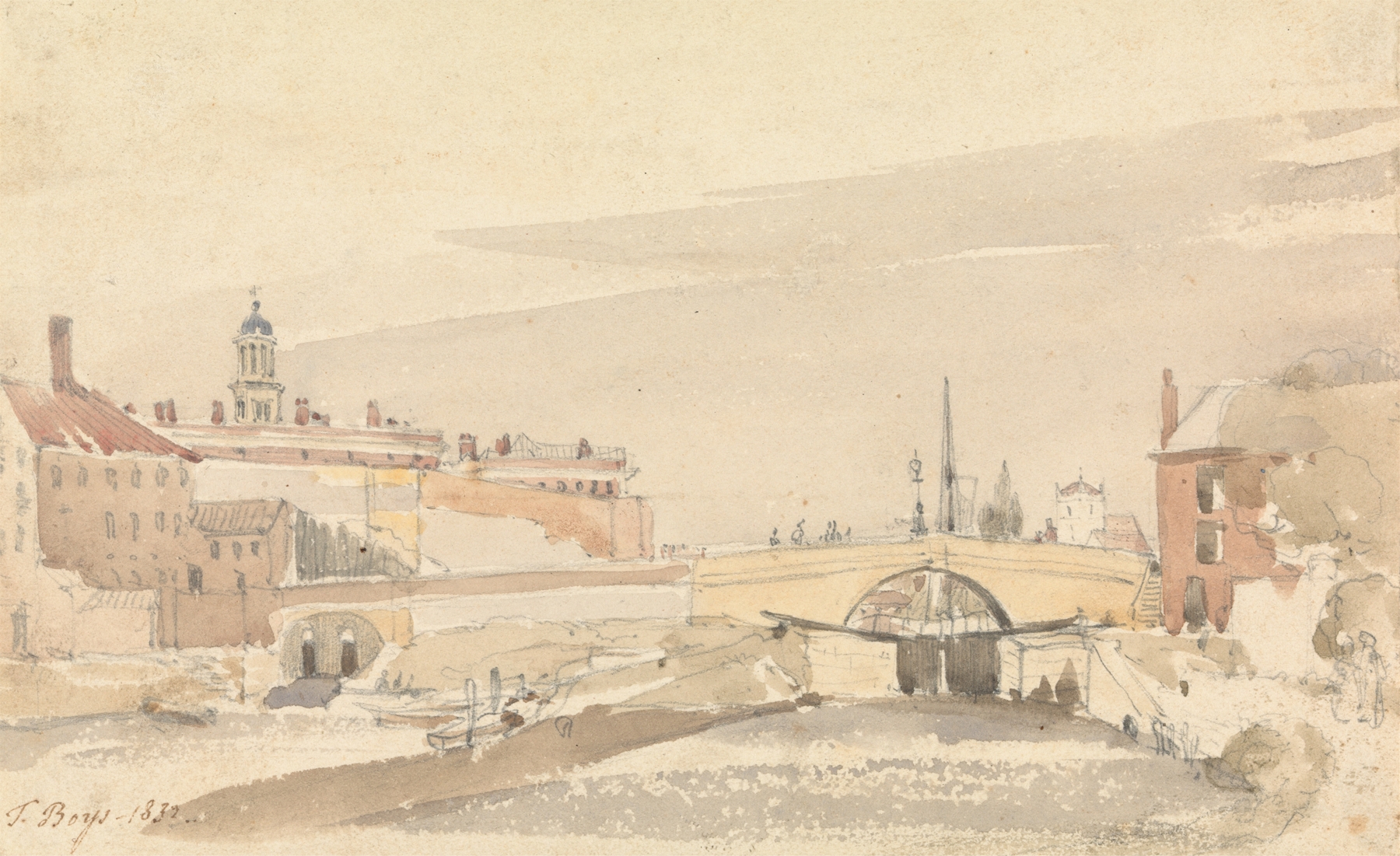
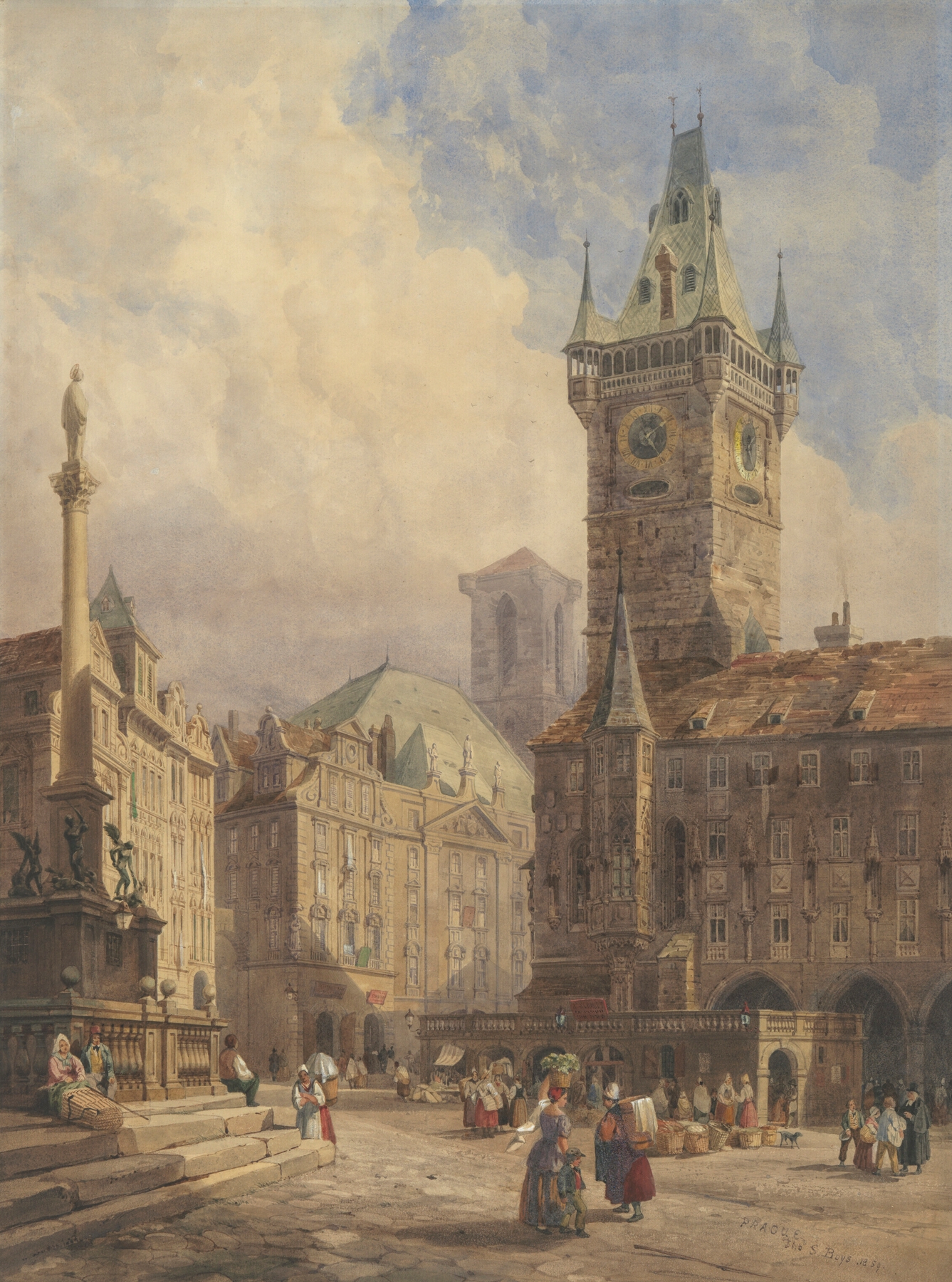
Is this a mirror — or a memory? The gentle ripples on the water's surface reflect not just the scene before us, but the passage of time itself, inviting contemplation on what has been lost and what remains. To truly appreciate the artwork, look to the center, where the arches of the Castle Mills Bridge rise majestically, framed by the soft hues of an overcast sky. Notice how the artist employs delicate brushwork to convey the texture of the weathered stone—a testament to both time and nature. The muted palette of blues and grays evokes a sense of stillness, while splashes of green in the foliage remind us that life persists even in the shadows of history. Within this serene landscape, there lies an emotional tension—the bridge, symbolizing both connection and separation, links the past to the present. The water below, flowing steadily, hints at the inevitable passage of time, while the distant figures, small and indistinct, represent the fleeting nature of human existence. This juxtaposition of permanence and transience encapsulates the longing for lost moments, suspended in the embrace of nature. In 1839, Boys painted this work amid a burgeoning interest in landscape painting. Living in an era where the Industrial Revolution was reshaping the British landscape, he sought to capture the beauty of rural life and historical structures before they vanished. This period marked a significant transition in art, as artists increasingly turned their attention to the emotional resonance of their subjects, reflecting broader societal changes that would forever alter the English countryside.