The Custom House at Greenock, Scotland — History & Analysis
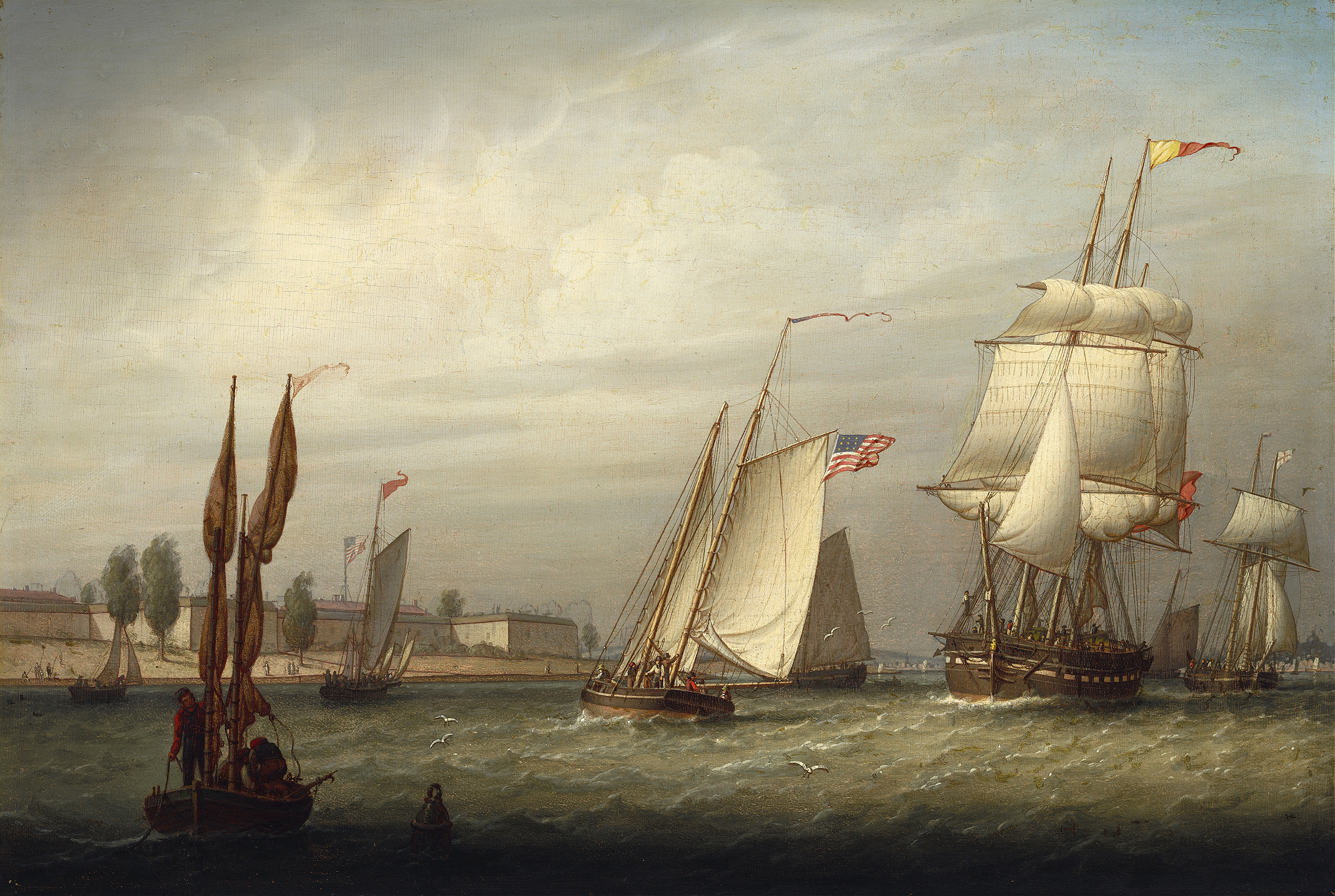
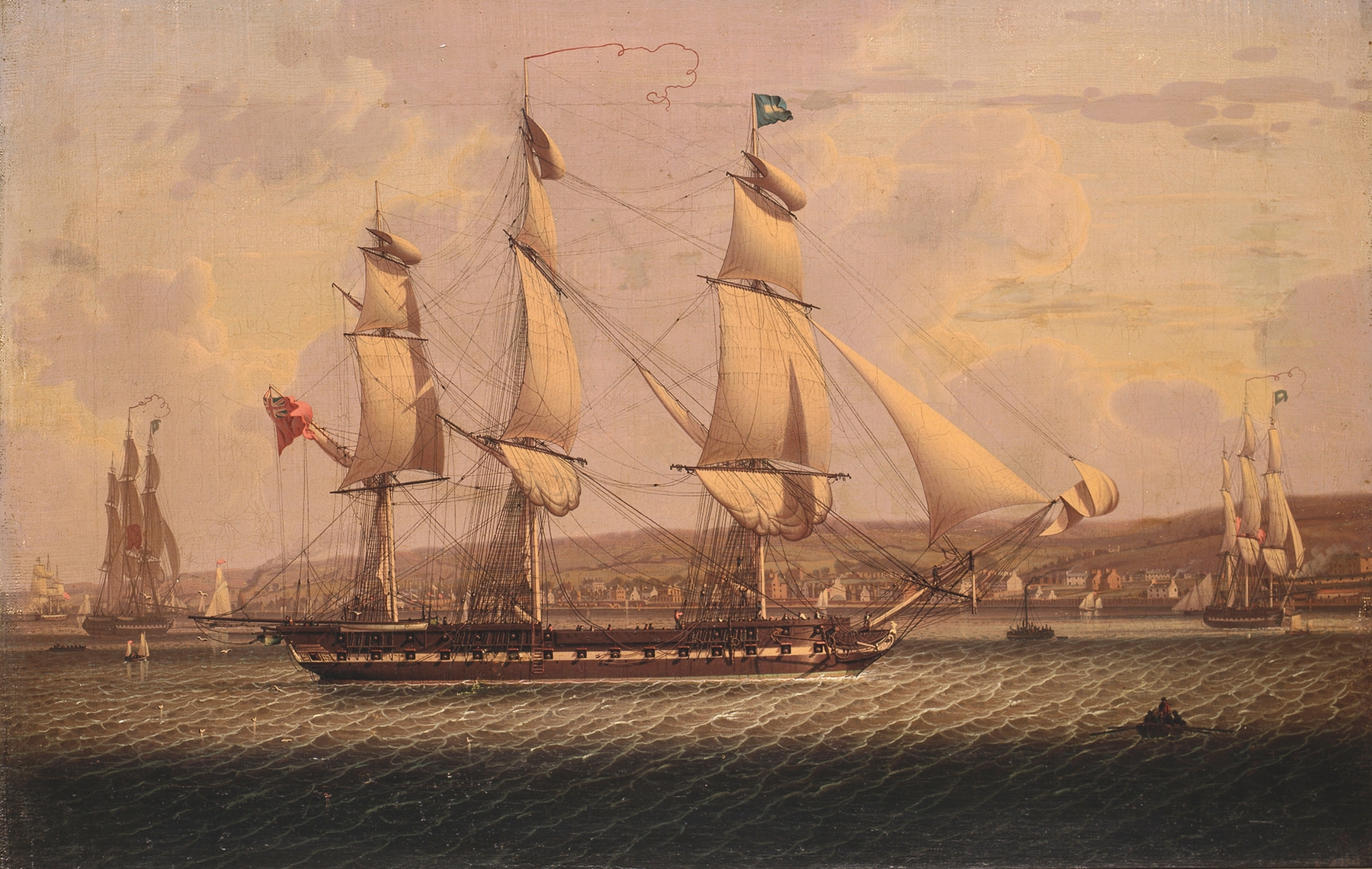
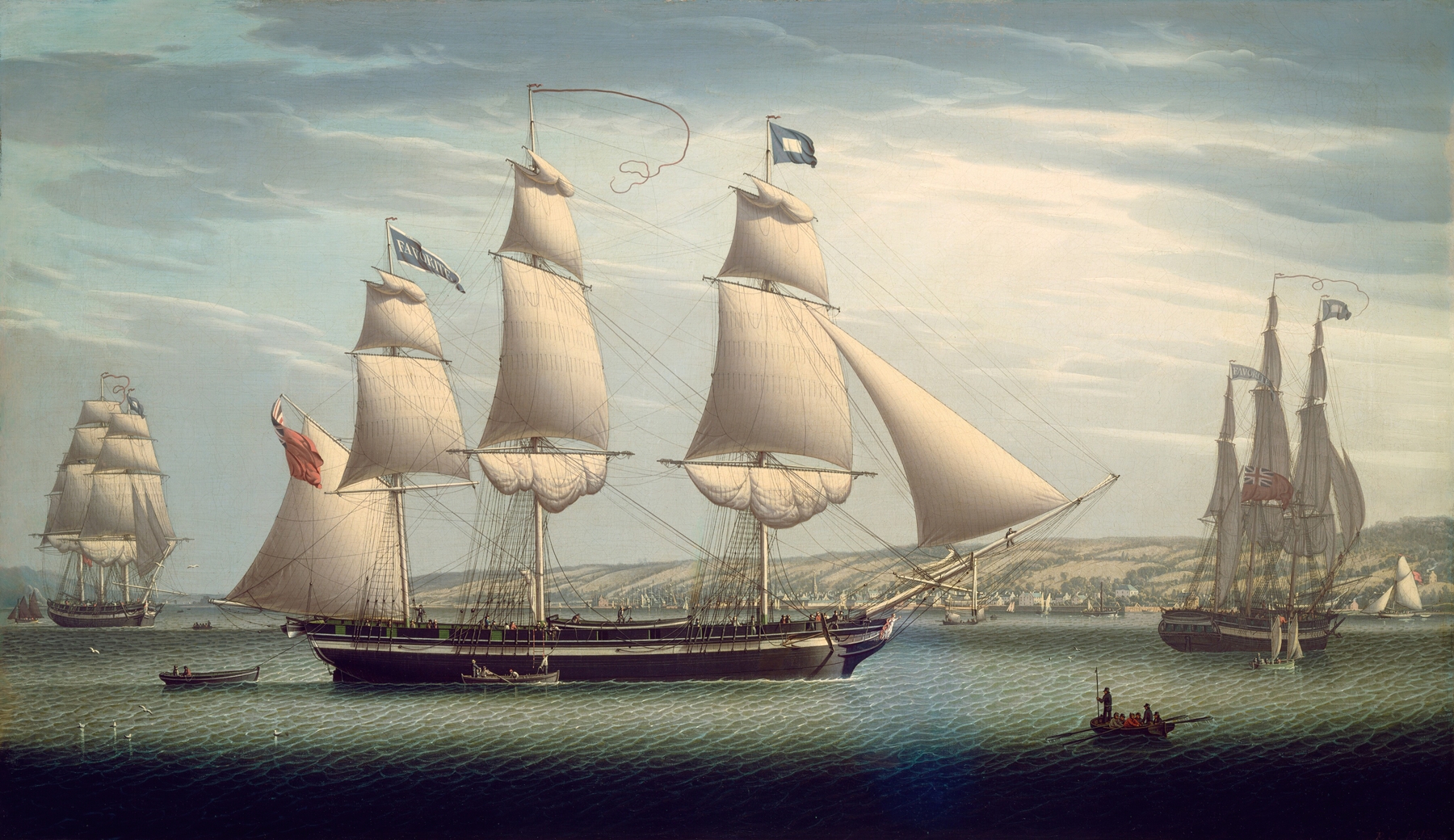
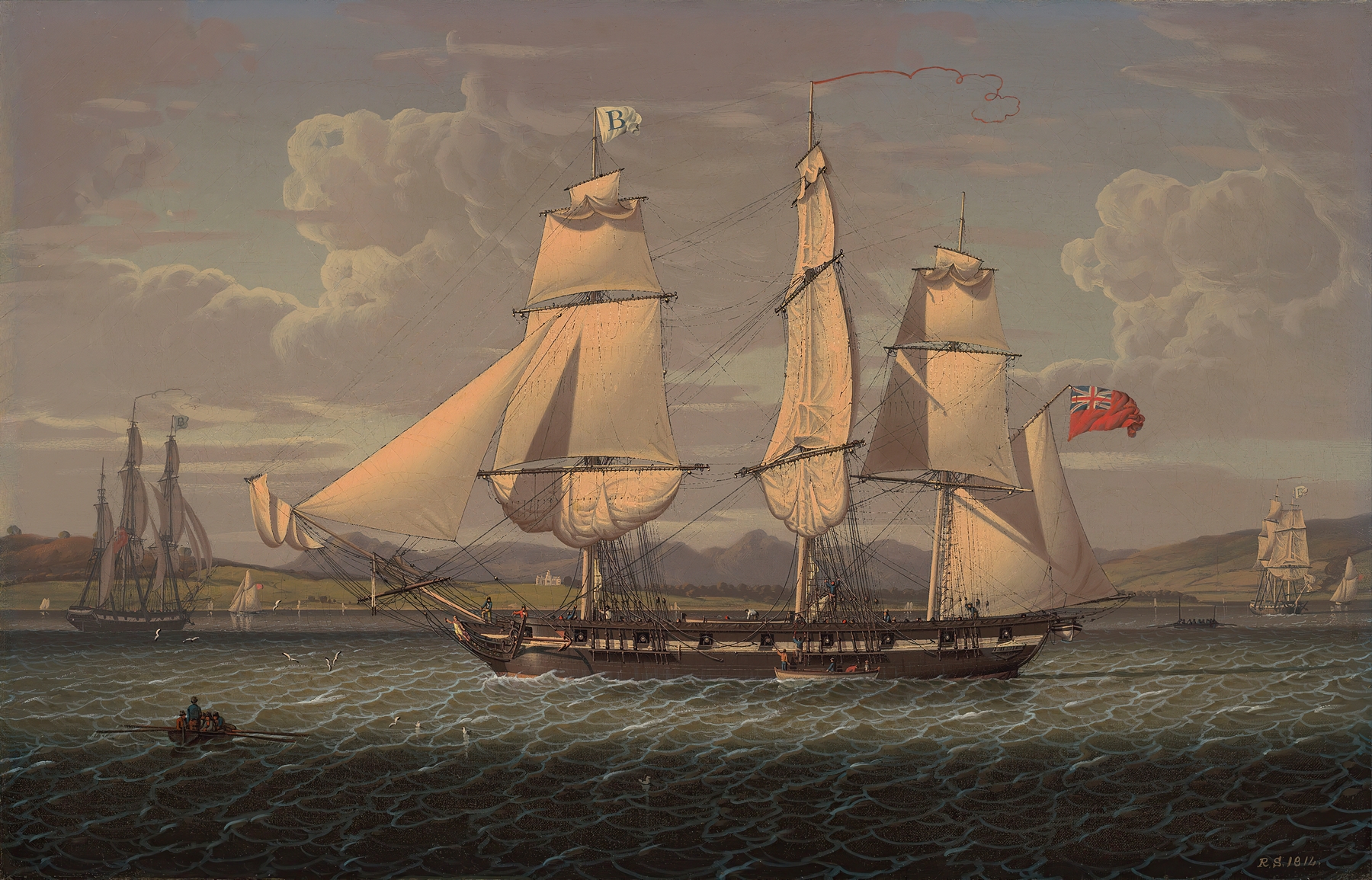
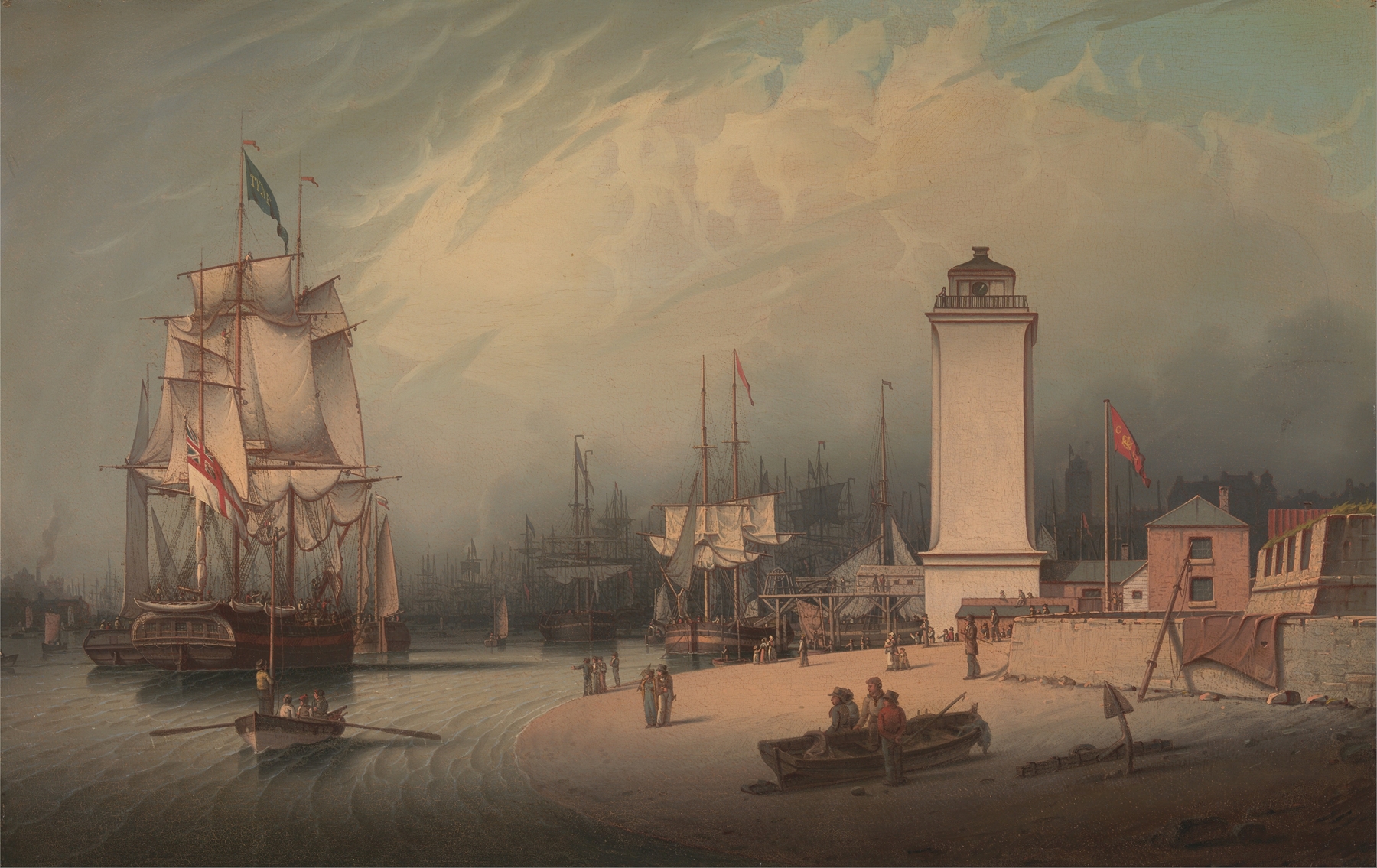
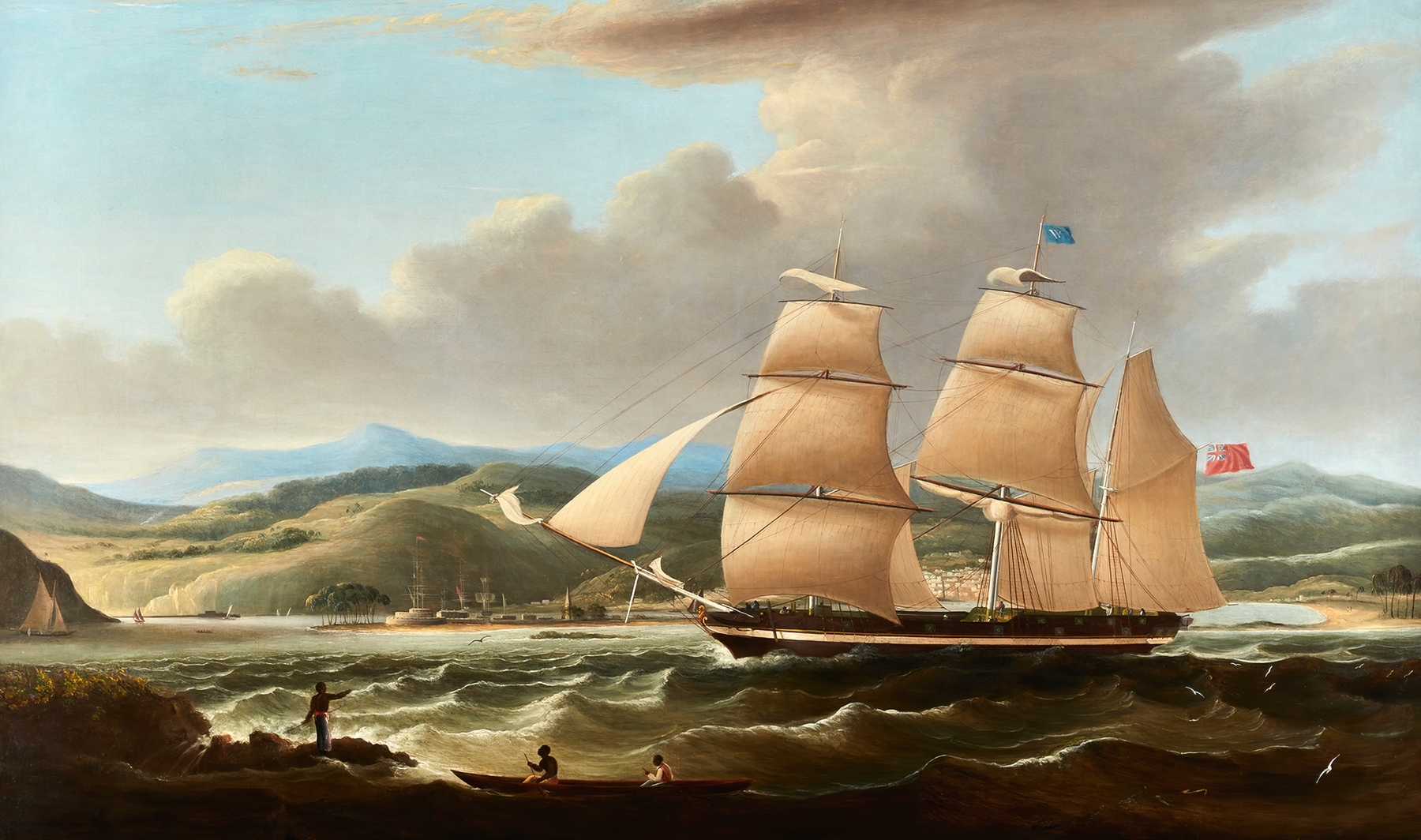
Could a single brushstroke hold eternity? In The Custom House at Greenock, Scotland, Robert Salmon captures not just a building, but the very essence of an era on the brink of transformation. This artwork reverberates with the whispers of progress, hinting at the revolutionary changes that were reshaping society in the early 19th century. Look closely at the foreground, where the vibrant blue of the water contrasts dramatically with the warm ochres of the custom house. Notice the way the light dances upon the surface of the waves, reflecting the golden glow of the setting sun.
The meticulous brushwork imbues the scene with a palpable sense of movement, as though the ships are poised to set sail toward new horizons, embodying the spirit of exploration and commerce that defined the age. The composition draws the eye toward the imposing structure, anchoring the viewer’s gaze amidst a backdrop of bustling life. Beneath the surface, the painting resonates with themes of industry and change. The juxtaposition of the serene water and the stately architecture evokes a tension between nature and human endeavor, signaling the transition from a pastoral landscape to one dominated by commerce and trade.
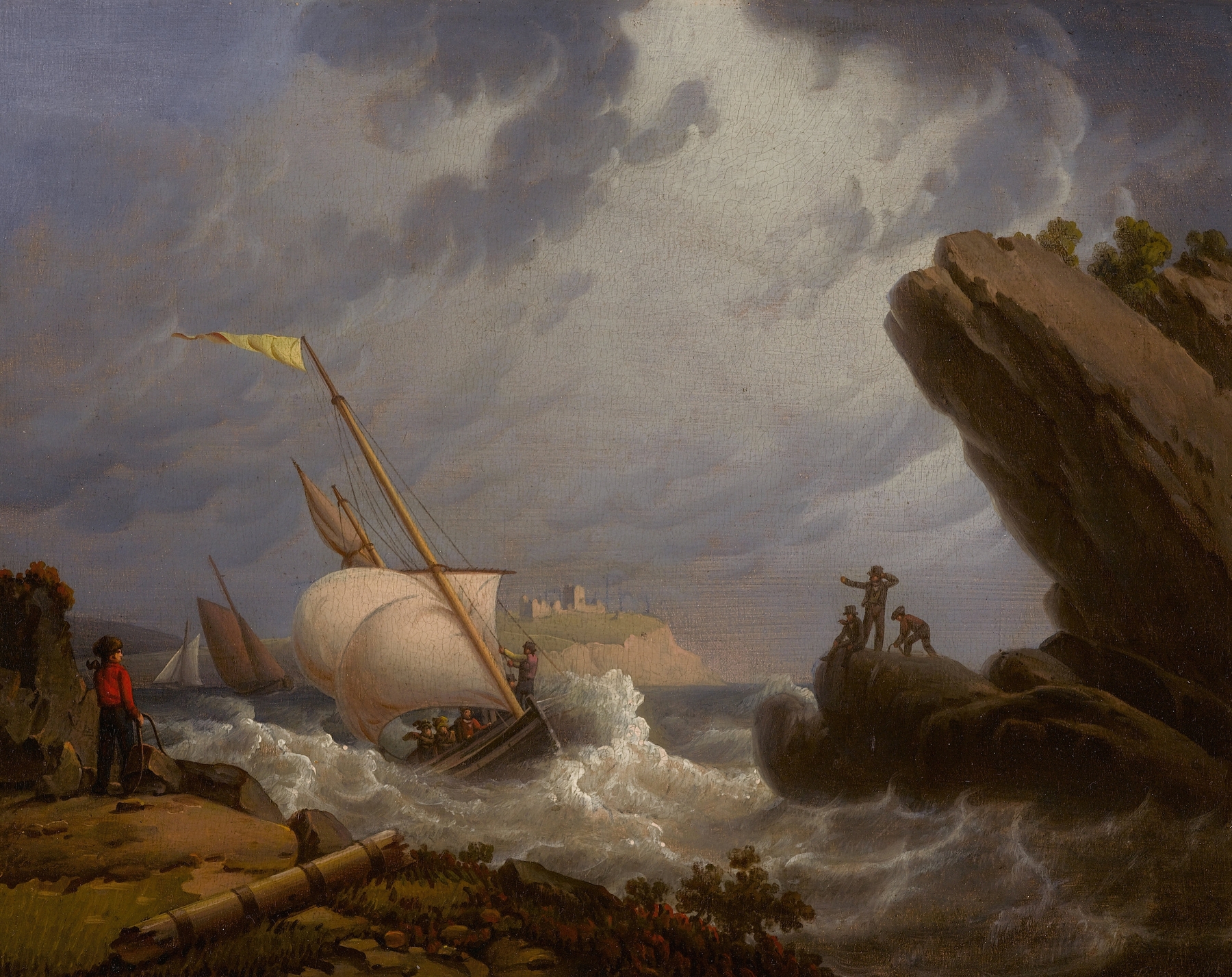
The clouds swirling above hint at an impending storm, perhaps a metaphor for the upheaval brought on by the Industrial Revolution, where every vessel represents hope and ambition amid uncertainty. In 1828, Salmon was living in Scotland, having already established himself as a notable marine painter. This period was marked by significant developments in shipbuilding and trade, as ports like Greenock transformed into bustling hubs of activity. In this context, Salmon's work not only serves as a visual record of the landscape but also reflects the broader historical narrative of an age poised on the cusp of modernity.