The Hermitage, Effect of Snow — History & Analysis
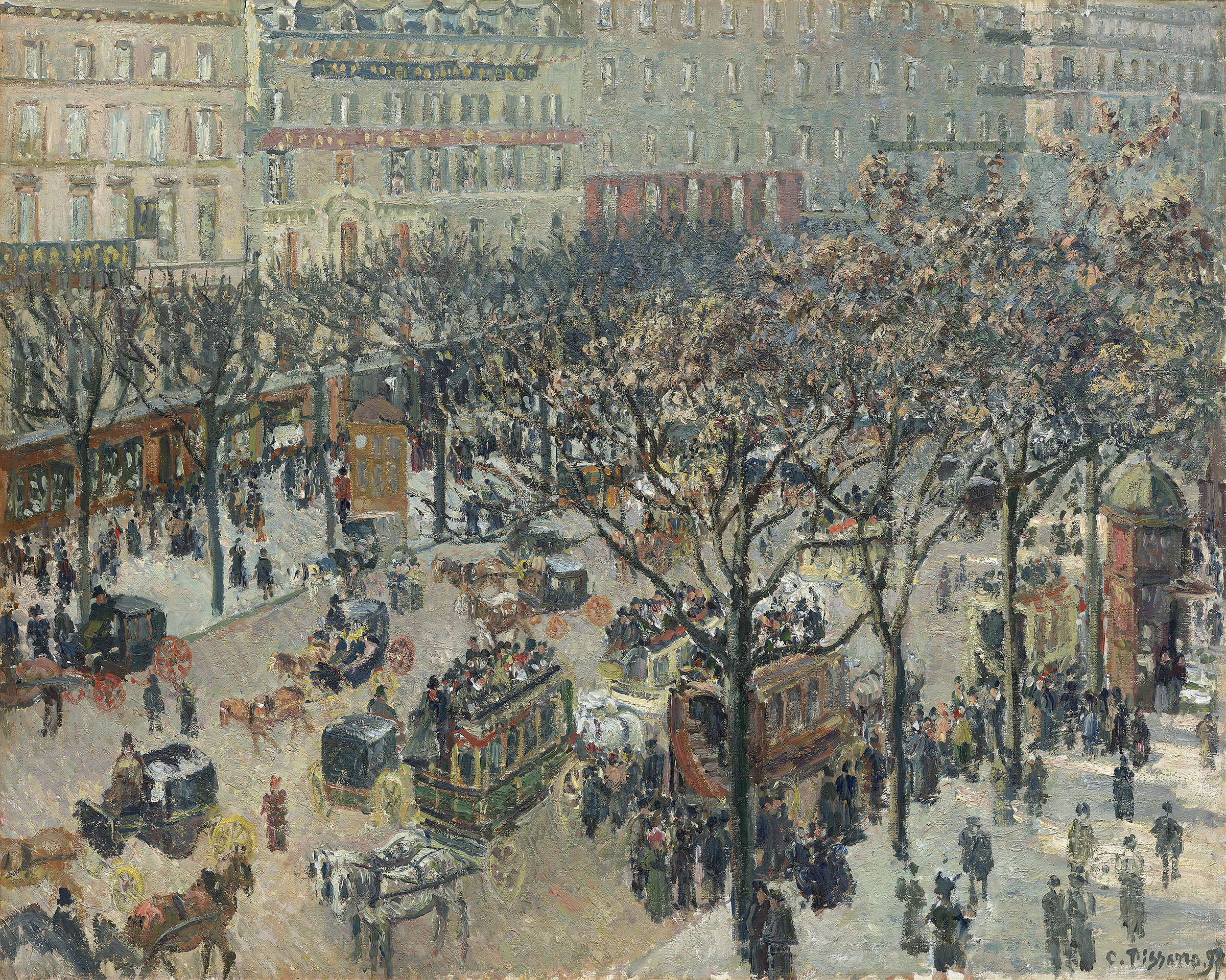
Who listens when art speaks of silence? In The Hermitage, Effect of Snow, the canvas whispers of winter's embrace and the quiet hope that blooms beneath its chill. Look to the bottom left, where the delicate strokes of white create a soft blanket of snow, inviting you into a serene landscape. The buildings emerge through this snowy veil, their muted colors harmonizing with the cool palette of blues and grays.
Notice how the light dances on the snow, casting gentle shadows that elongate across the ground, as if time itself hesitates to intrude upon this tranquil moment. Beneath the surface, the contrast of warmth and cold evokes a sense of longing and renewal. The leafless trees, stark against the wintry backdrop, stand as silent witnesses to the passage of time, symbolizing resilience in the face of adversity. Each brushstroke carries a weight of emotion, suggesting that even in the depths of winter, there lies an undercurrent of hope for the coming spring—a reminder that life persists.
In 1874, Camille Pissarro painted this work while living in France, a time when the Impressionist movement was beginning to take hold as a rebel force against the rigidity of traditional art. With the world of art in flux, Pissarro found inspiration in the everyday scenes of rural life and nature, capturing fleeting moments in time. This piece reflects his dedication to exploring the effects of light and atmosphere, showcasing both his evolving technique and his sensitive response to the environment.