The Pond at Montfoucault, Effect of Winter — History & Analysis
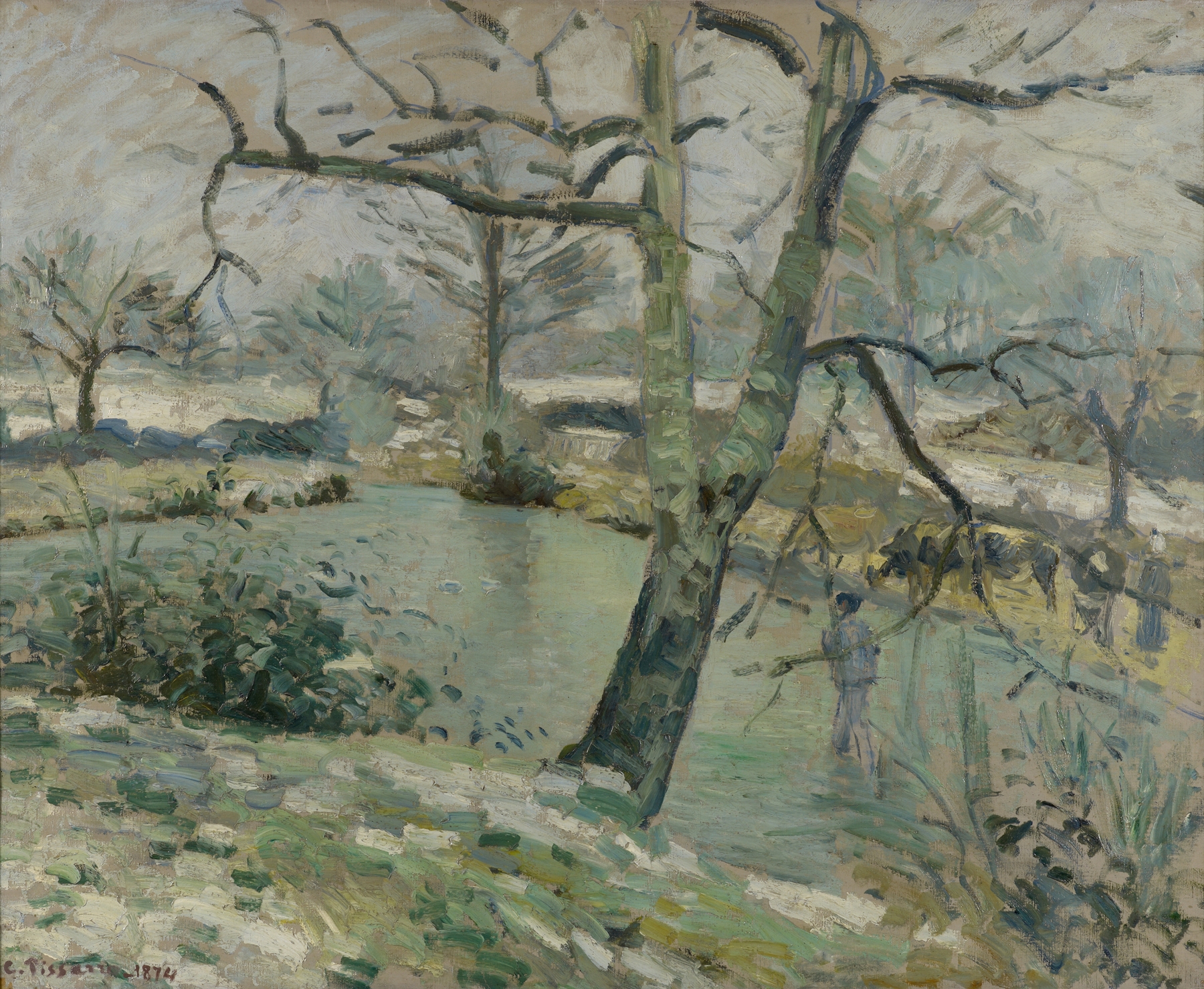
Did the painter know this moment would outlive them? In *The Pond at Montfoucault, Effect of Winter*, Camille Pissarro captures an ephemeral chill, the kind that whispers of fleeting days yet resonates across time. The canvas breathes life into a simple landscape, reminding us that every stroke of paint is an act of creation and preservation. Look to the left, where a delicate fringe of bare trees frames the pond, their gnarled branches stretching out like skeletal fingers. The water reflects the cool hues of winter, mirroring the muted grays and blues that saturate the sky. Notice how the light falls upon the shimmering surface, creating a luminous line that beckons the viewer to the stillness of the scene. Pissarro employs a soft palette that emphasizes the tranquility and solitude of the moment, drawing our eyes toward the central focus: the frozen expanse that binds the earthly and the ethereal. Examine the understated tension within the painting—while the icy stillness conveys a sense of quietude, it also hints at the harshness of winter's grip. The contrast between the living trees and the dormant pond raises questions about resilience and the cycles of nature. Each brushstroke, layered and intentional, suggests a deeper narrative of change, reminding us that even in stillness, life ebbs and flows. Pissarro created this work in 1874 while living in France during a period marked by the rise of Impressionism. The artist was dedicated to capturing the essence of everyday life and its natural surroundings, and this painting reflects his commitment to portraying the changing seasons and their effects on the landscape. At this time, the movement was gaining momentum, with artists experimenting with light and color, paving the way for a new era in art history.