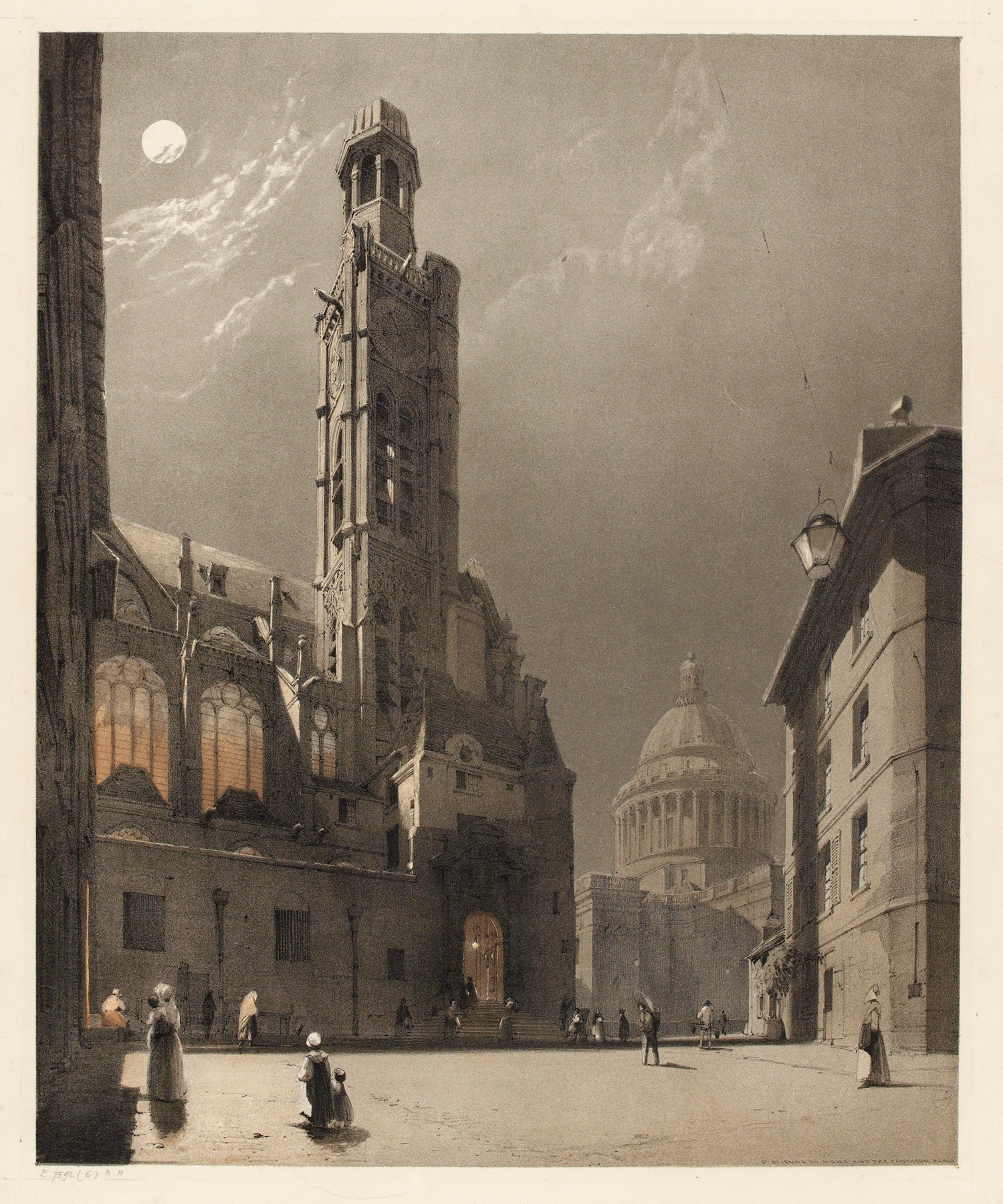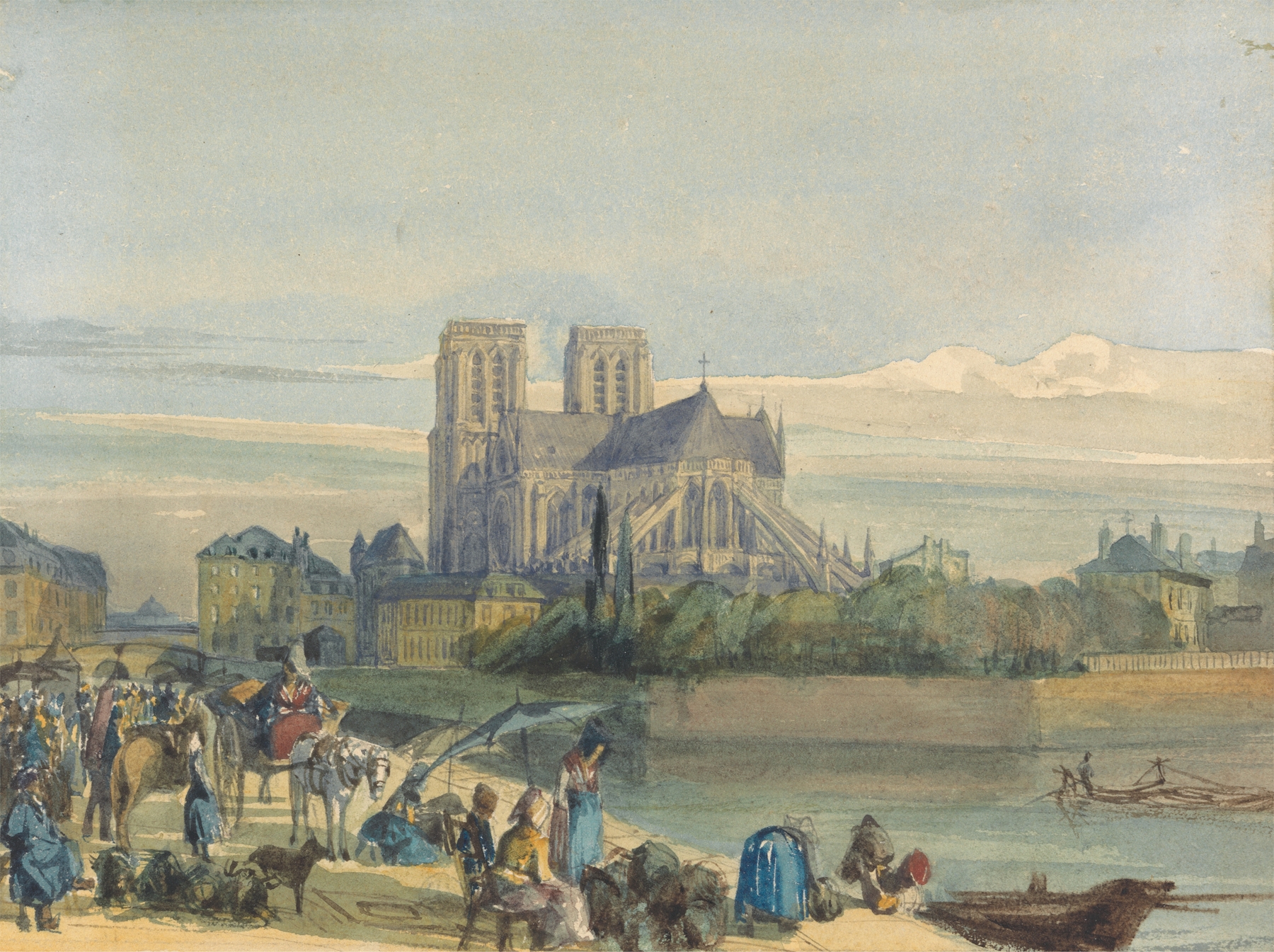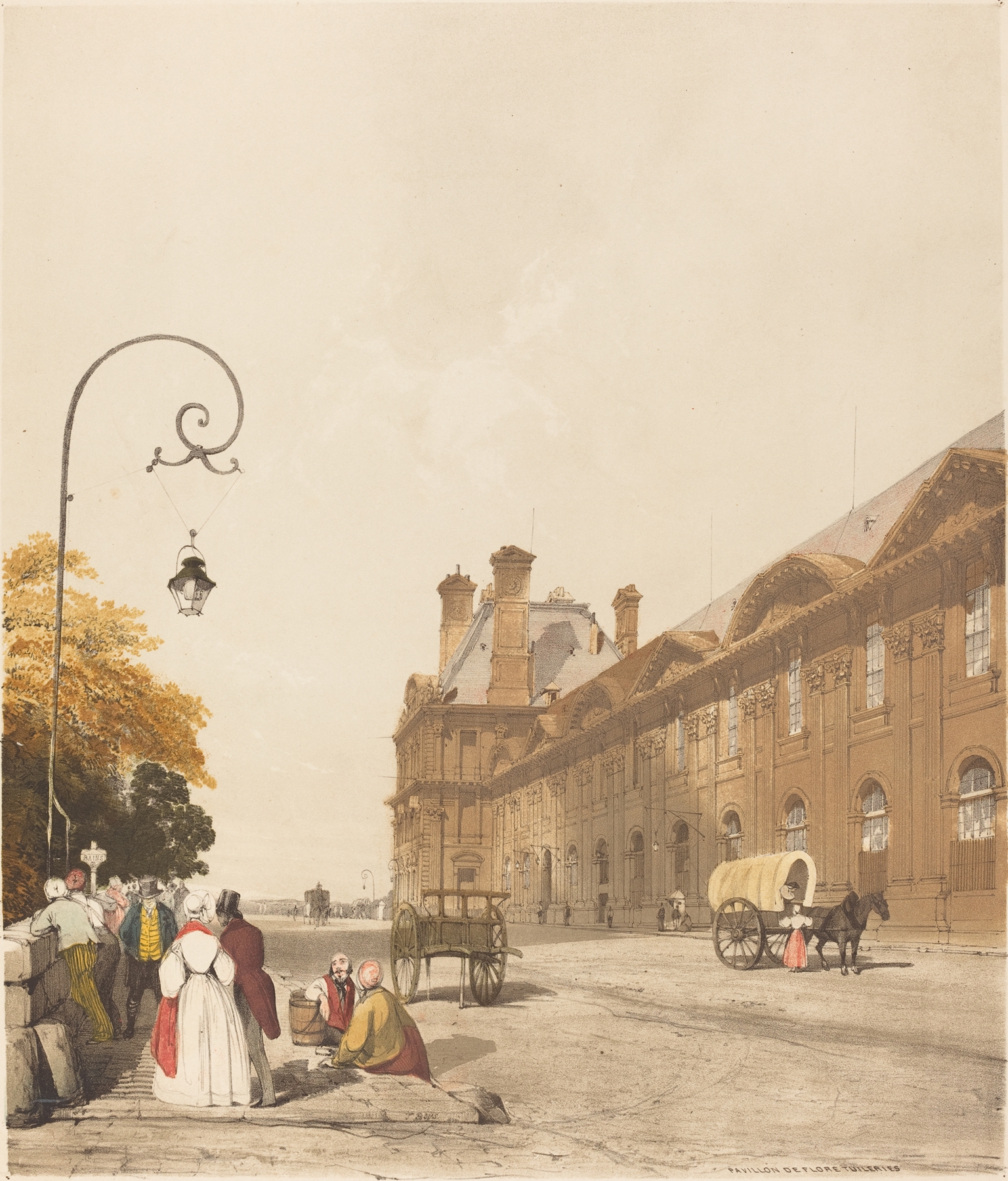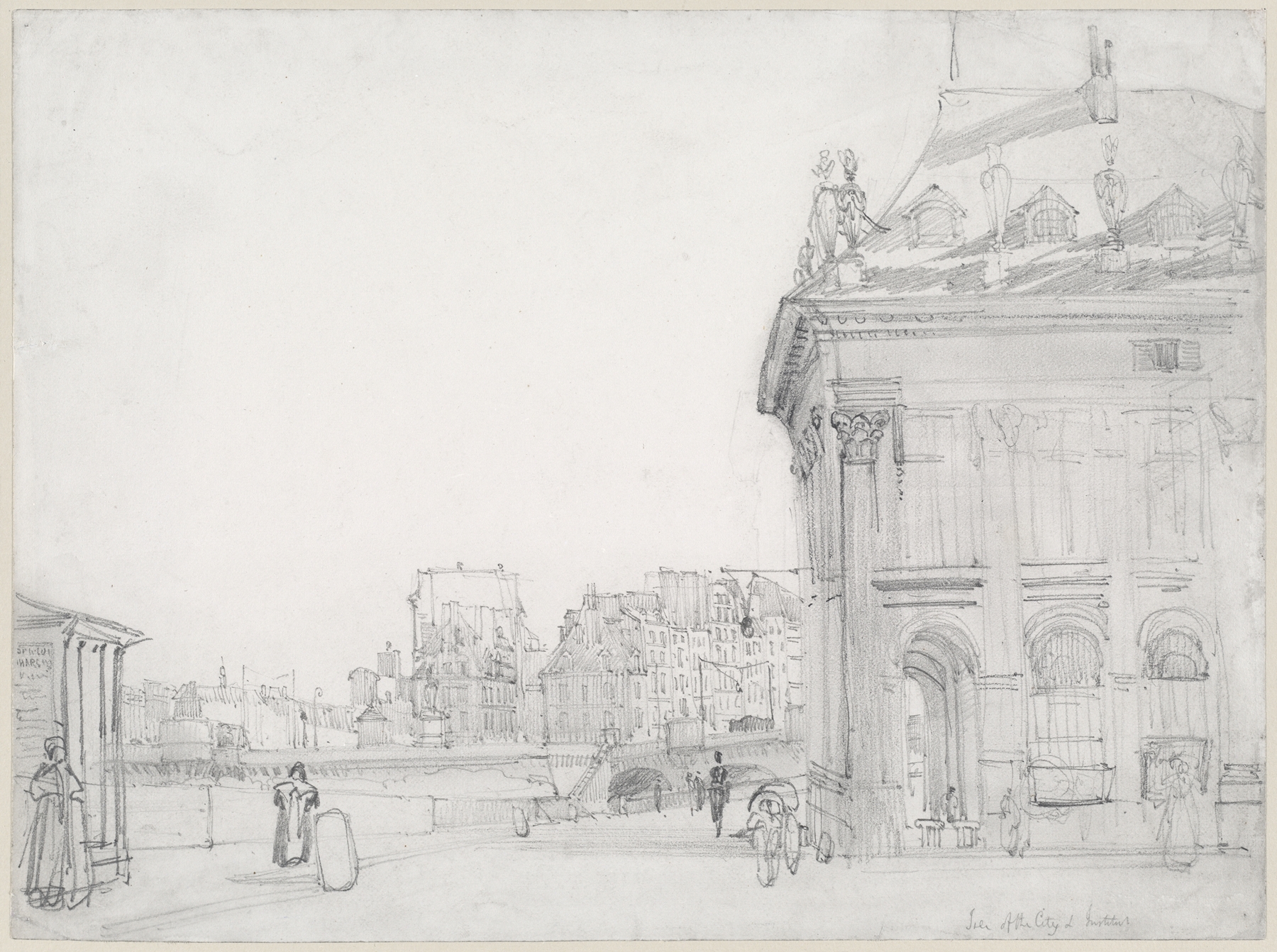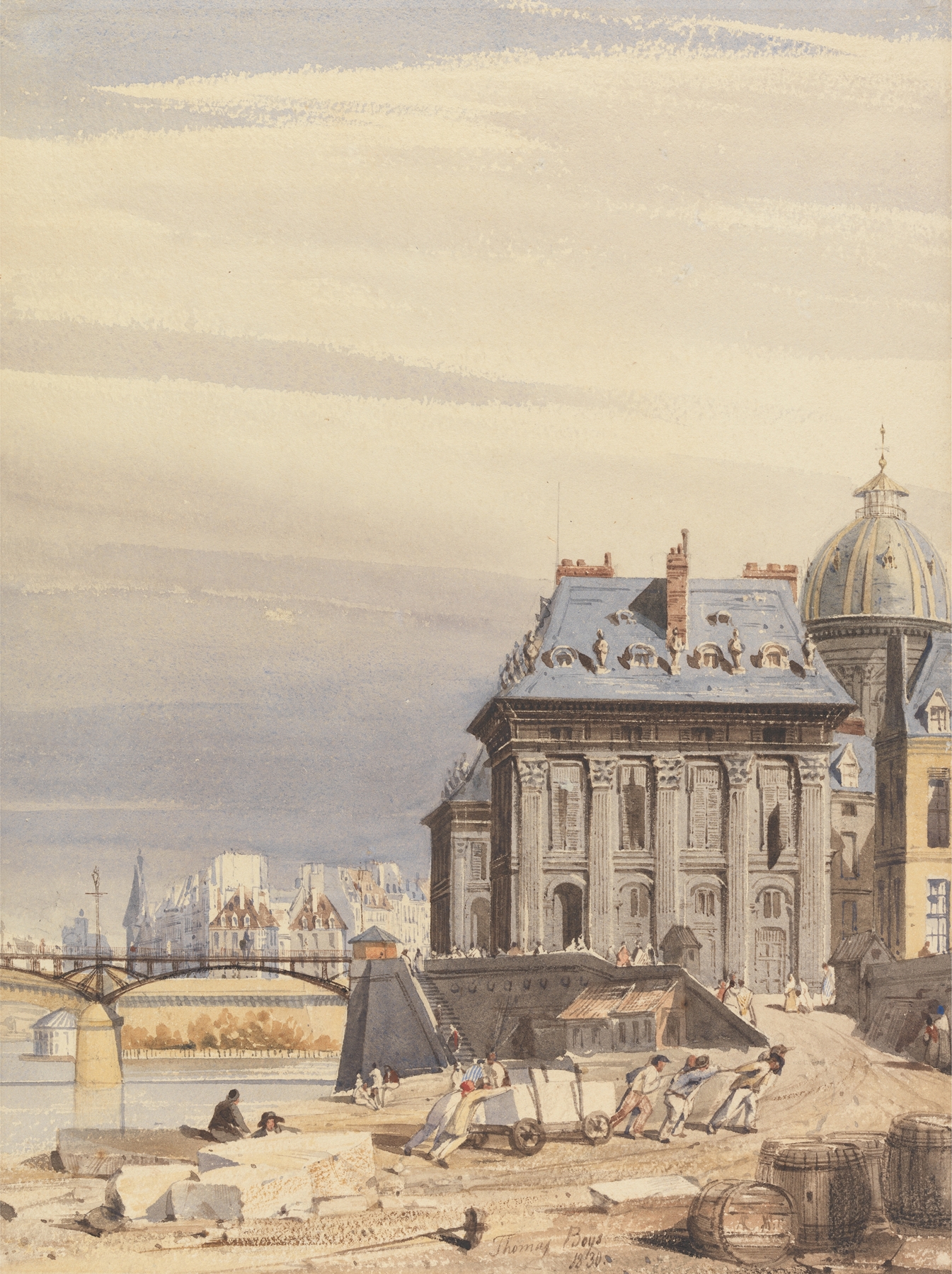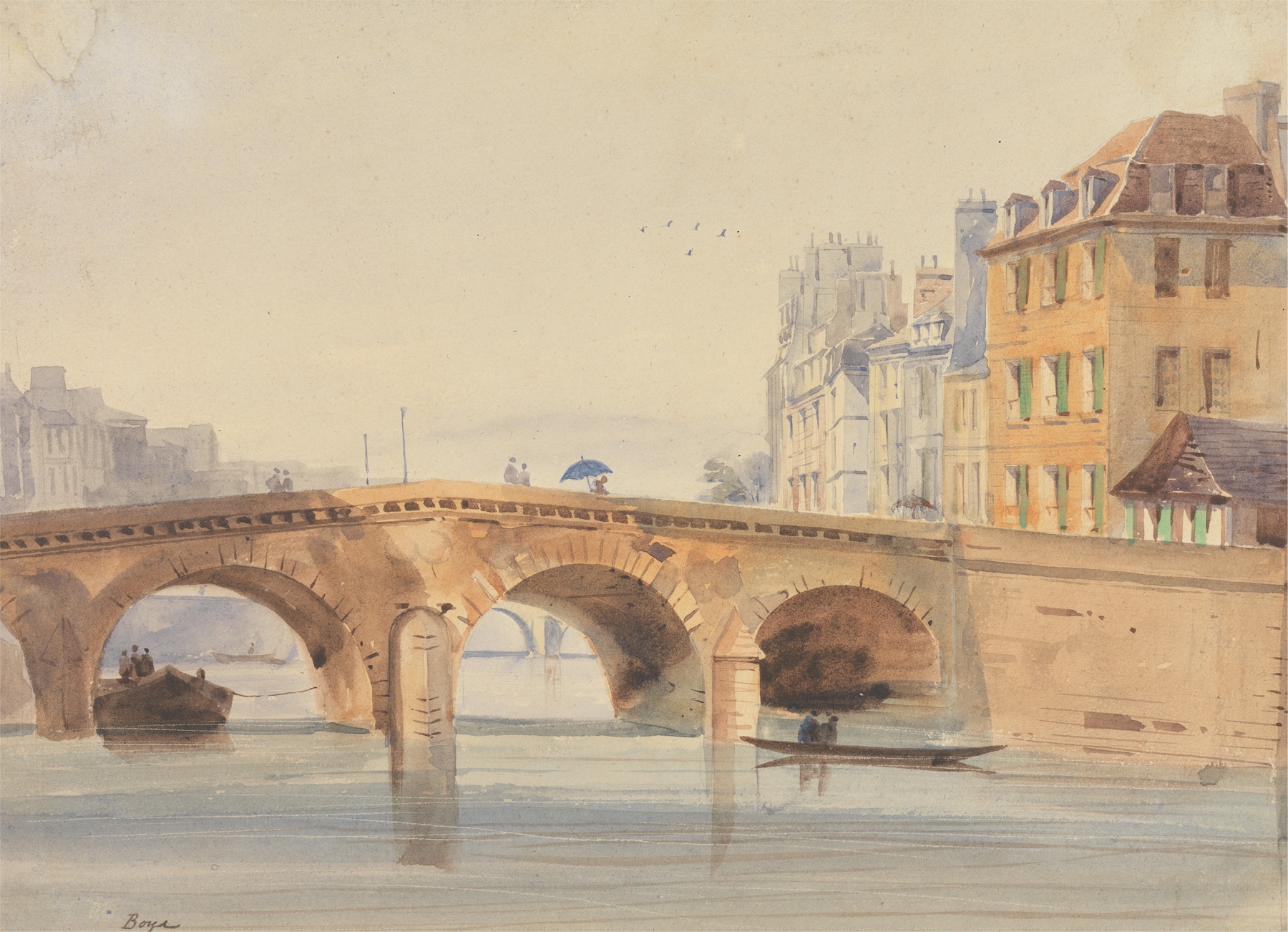
What secret hides in the quiet of the canvas? In the stillness of *The Pont Neuf*, a delicate balance emerges between human presence and the weight of history, inviting us to ponder the stories etched upon its surface. First, look to the foreground, where figures stroll leisurely across the famed bridge. Notice how the subtle interplay of light and shadow serves to highlight their movements, each gesture captured with a sense of intimacy. The palette of warm ochres and cool blues creates a serene atmosphere, enveloping the scene in a tranquil embrace. The bridge itself, rendered with meticulous attention, stands as a triumph of architectural form, suggesting strength and stability amidst the fluidity of life around it. Yet, beneath this calm exterior lies a rich tapestry of contrasts. The juxtaposition of the solid stone bridge against the fleeting figures evokes a poignant tension: the eternal versus the ephemeral. Additionally, the reflections in the water hint at the duality of existence, suggesting that while human moments are transient, the essence of the structure remains steadfast. Each detail, from the rippling water to the distant skyline, encapsulates an underlying message about the permanence of place and the impermanence of time. Painted in a period when the Romantic movement influenced many artists, Boys captured this scene during the mid-19th century in England. His work often reflected a fascination with landscapes and urban settings, as he sought to depict the profound connections between people and the environments they inhabit. As Europe underwent rapid changes due to industrialization, his art remained a testament to the enduring beauty of iconic structures, even amidst the tide of transformation.