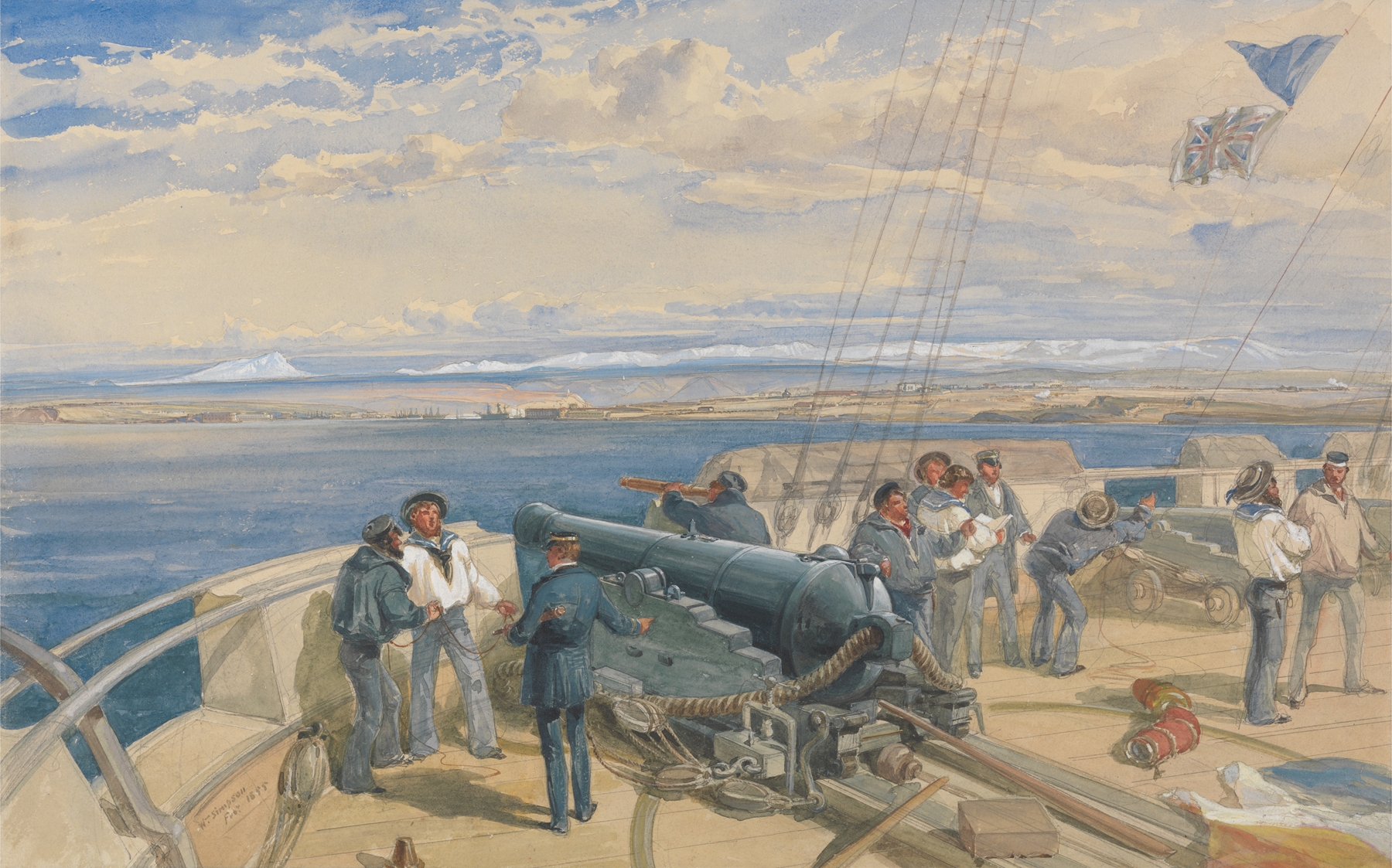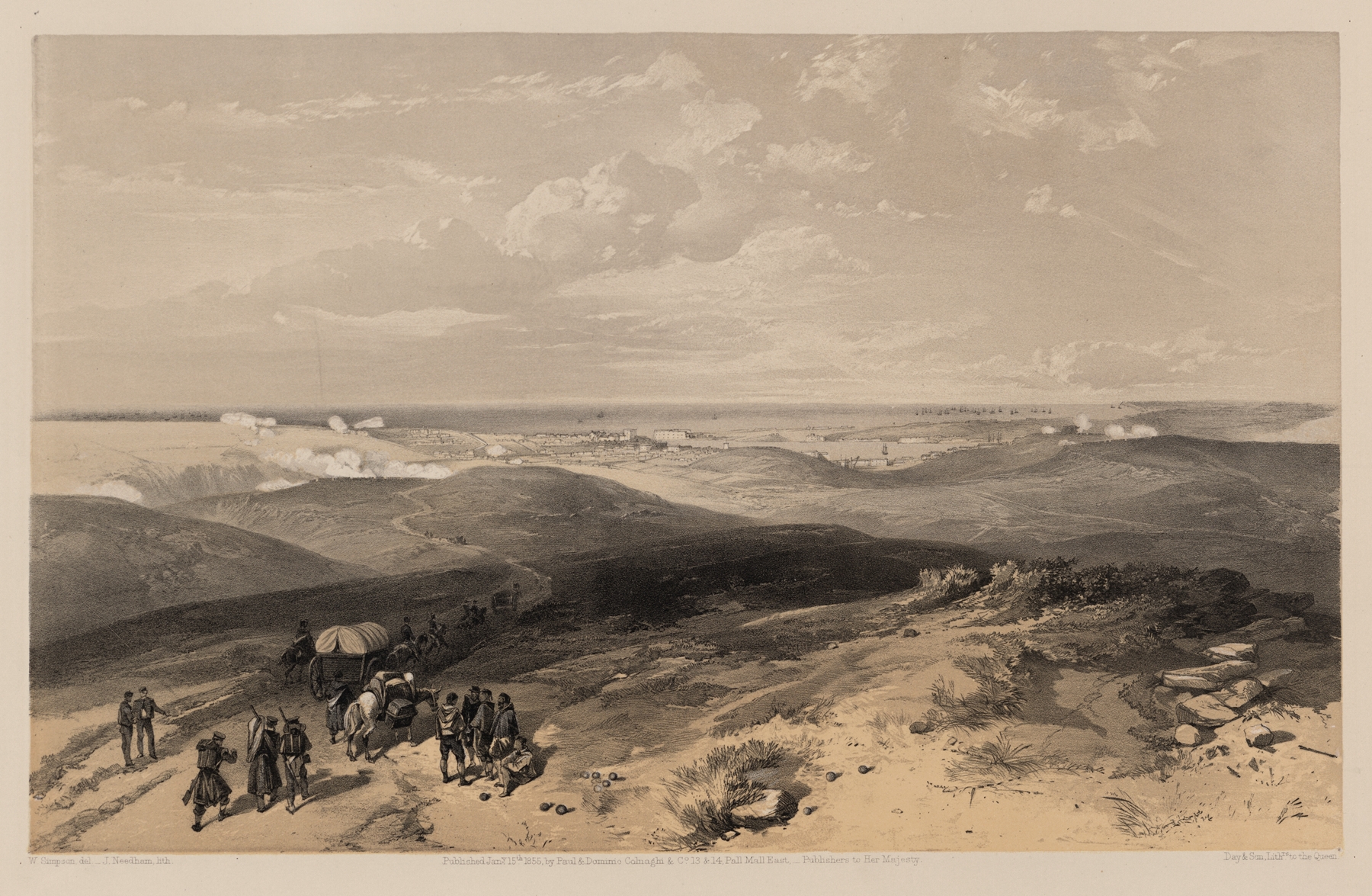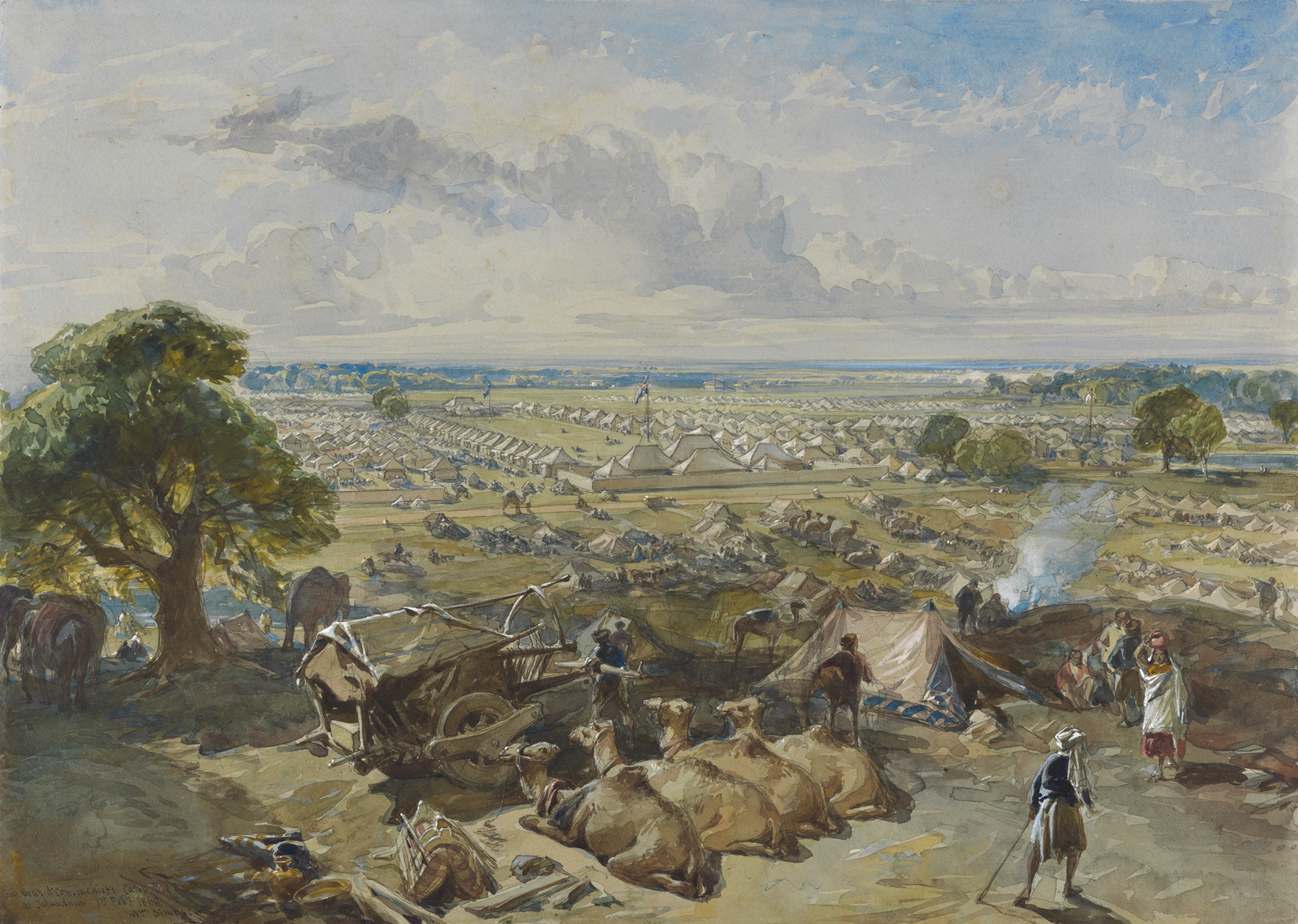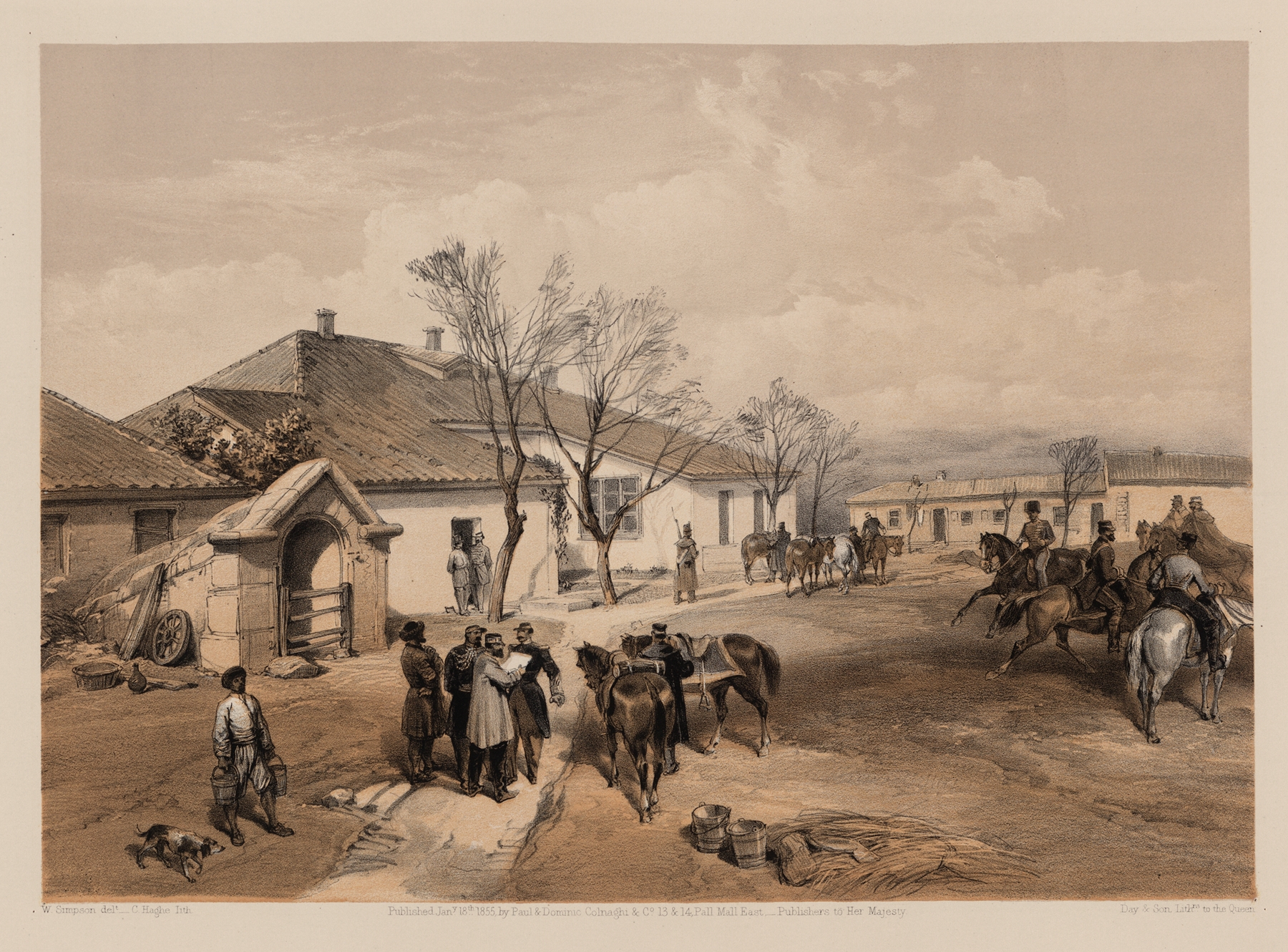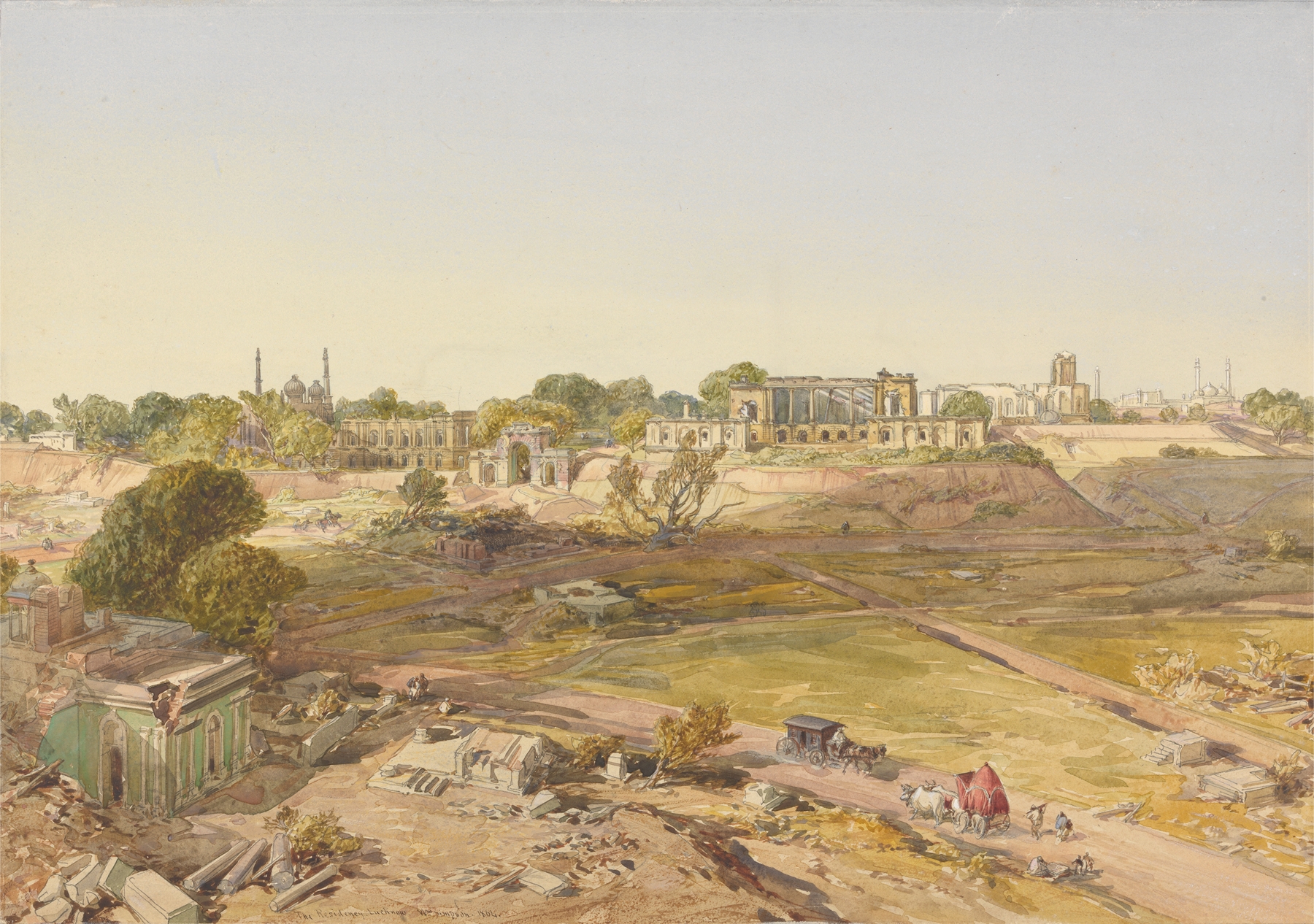
Can paint confess what words never could? The drama of violence and survival unfolds in a silent yet evocative tableau that resonates with historical weight. Focus on the foreground where the crumbling remnants of the Residency draw your gaze. The muted palette of grays and browns conveys decay, while flecks of red echo the violence that once ravaged this place. Notice the way light struggles to penetrate the gloom, casting long shadows that hint at both despair and resilience. The figures, though small against the backdrop, speak volumes as they gather amid the ruins, their postures reflecting a mix of determination and vulnerability. Hidden beneath the surface of this work lies a profound commentary on the impact of conflict and the human spirit. The contrasting light and shadow not only define the physical space but also symbolize the struggle between hope and despair. Each detail—the tattered flags, the scattered debris—serves as a reminder of a tumultuous past, inviting the viewer to contemplate the stories of those trapped within its walls. In this moment, the artist captures not just a scene of devastation but the enduring essence of survival against the odds. In 1864, during a period of significant upheaval in British India, the artist created this piece while grappling with the echoes of the Indian Rebellion of 1857. As a war correspondent, he witnessed the violence firsthand, translating his experiences into a visual narrative that would inform the perception of colonial strife. This artwork emerged from a complex interplay of personal experience and broader historical turmoil, marking a poignant chapter in the evolving narrative of art and conflict.