The San Ángel Goatherd — History & Analysis
“The canvas doesn’t lie — it simply waits.” Each stroke, each hue calls forth the past while simultaneously inviting viewers to step into a living tableau of simplicity and harmony. Focus on the serene goatherd, whose figure stands poised amid a vibrant landscape. Look to the left, where the verdant hills roll gently under a canopy of soft blue sky, wisps of clouds are painted with delicate precision. Notice how the warm earth tones of the ground contrast with the cool greens of the foliage, creating a visual dialogue that draws your eye across the canvas.
The play of light across the boy’s face brings a tender humanity to the scene, highlighting his communion with nature. Beyond the idyllic setting lies a deeper narrative. The contrast between the goatherd’s solitude and the expansive landscape evokes a sense of both peace and isolation, inviting introspection. The goats, scattered around him, symbolize innocence and simplicity, while the distant mountains serve as a reminder of life’s challenges.
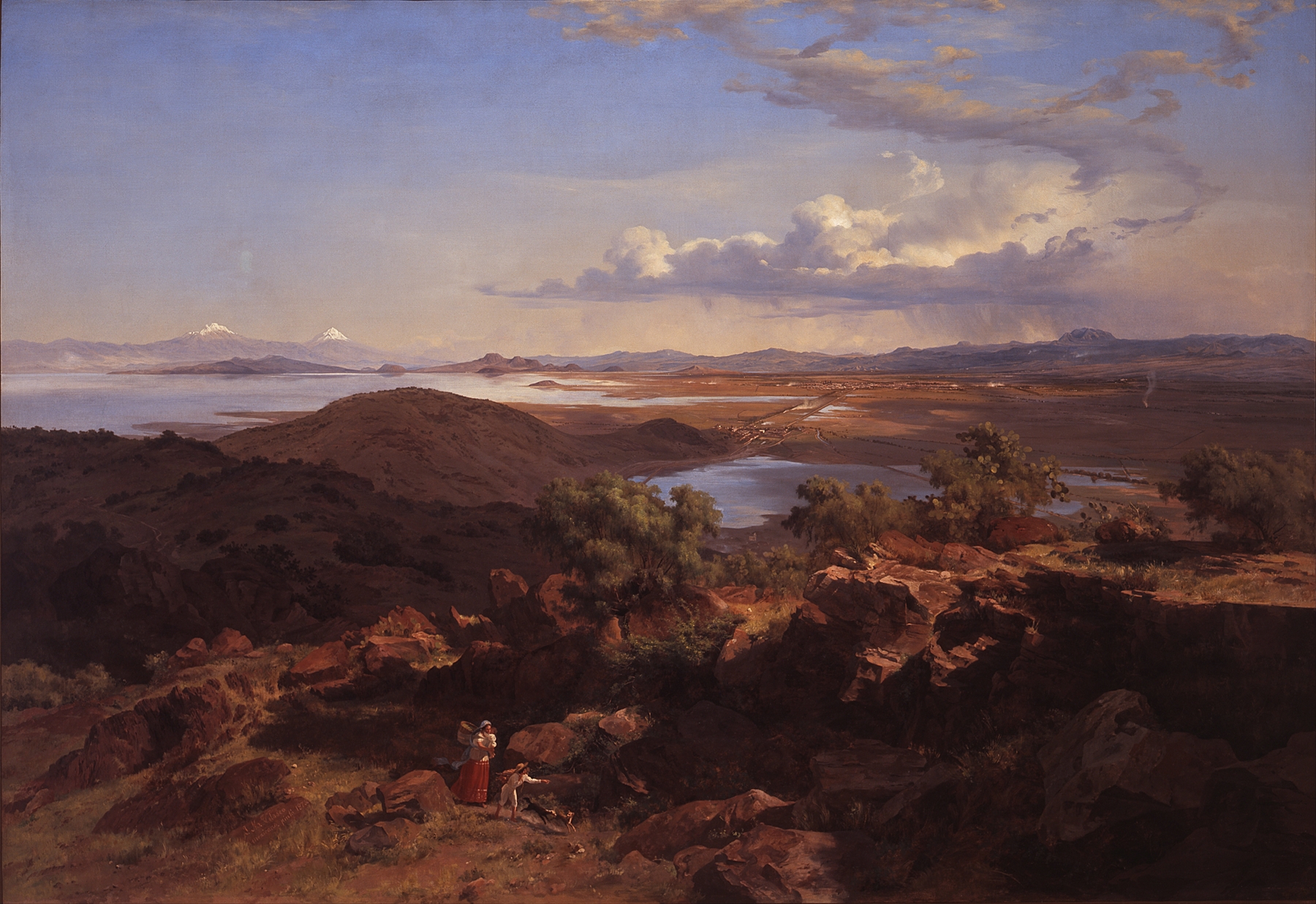
This tension between tranquility and the weight of existence underscores the timeless connection between humanity and nature, reflecting the artist's reverence for the Mexican landscape. In 1863, during a period of political disruption in Mexico, Velasco sought solace in his art, capturing the essence of his homeland. Working from his studio in Mexico City, he aimed to elevate the natural beauty of the region, a response to the rapid changes in society. His dedication to landscape painting helped establish a national identity at a time when the country was grappling with its own definition, making this piece a significant contribution to the era’s artistic discourse.