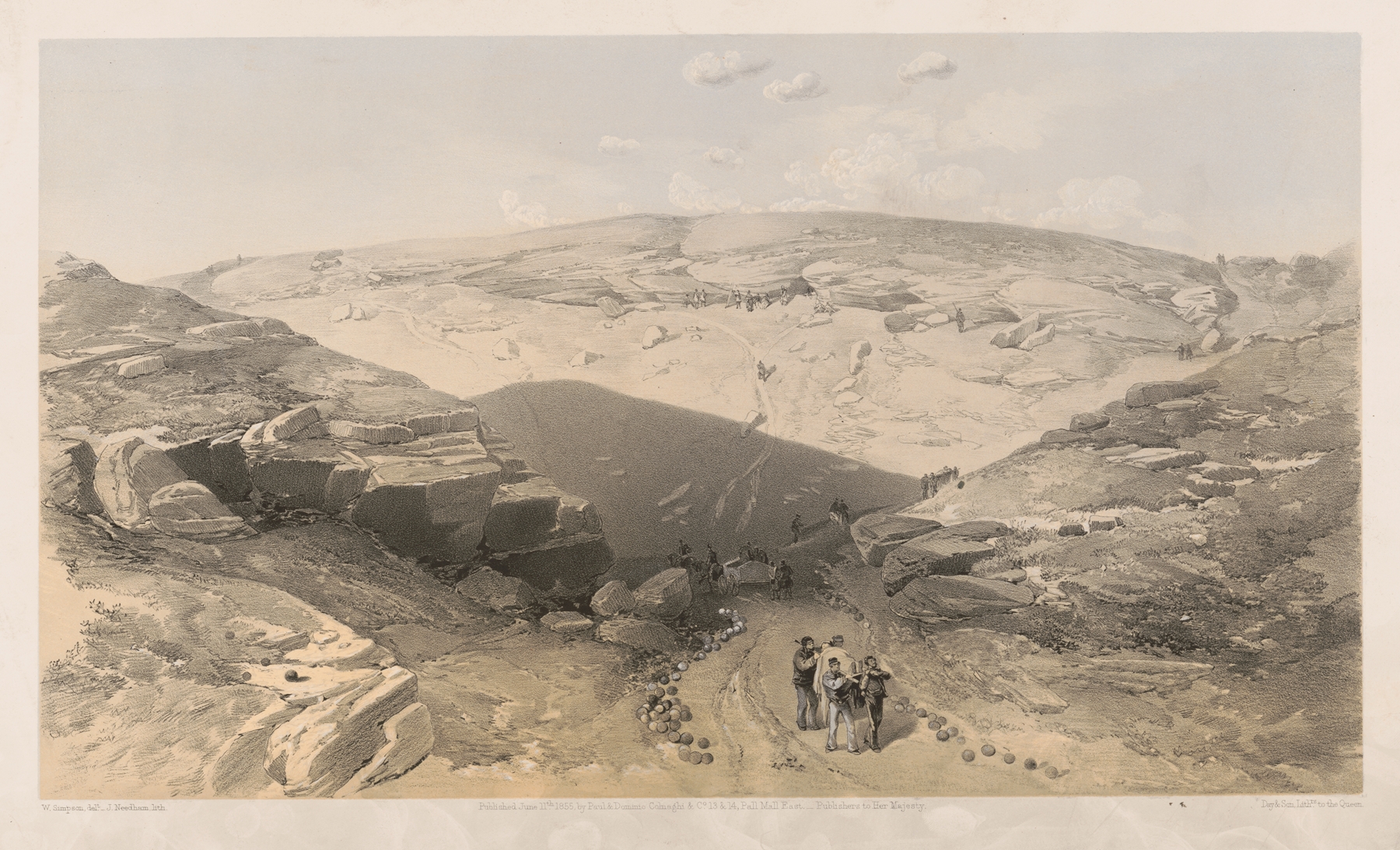
The valley of the shadow of death Caves in the Woronzoff Road behind the 21 gun battery — History & Analysis
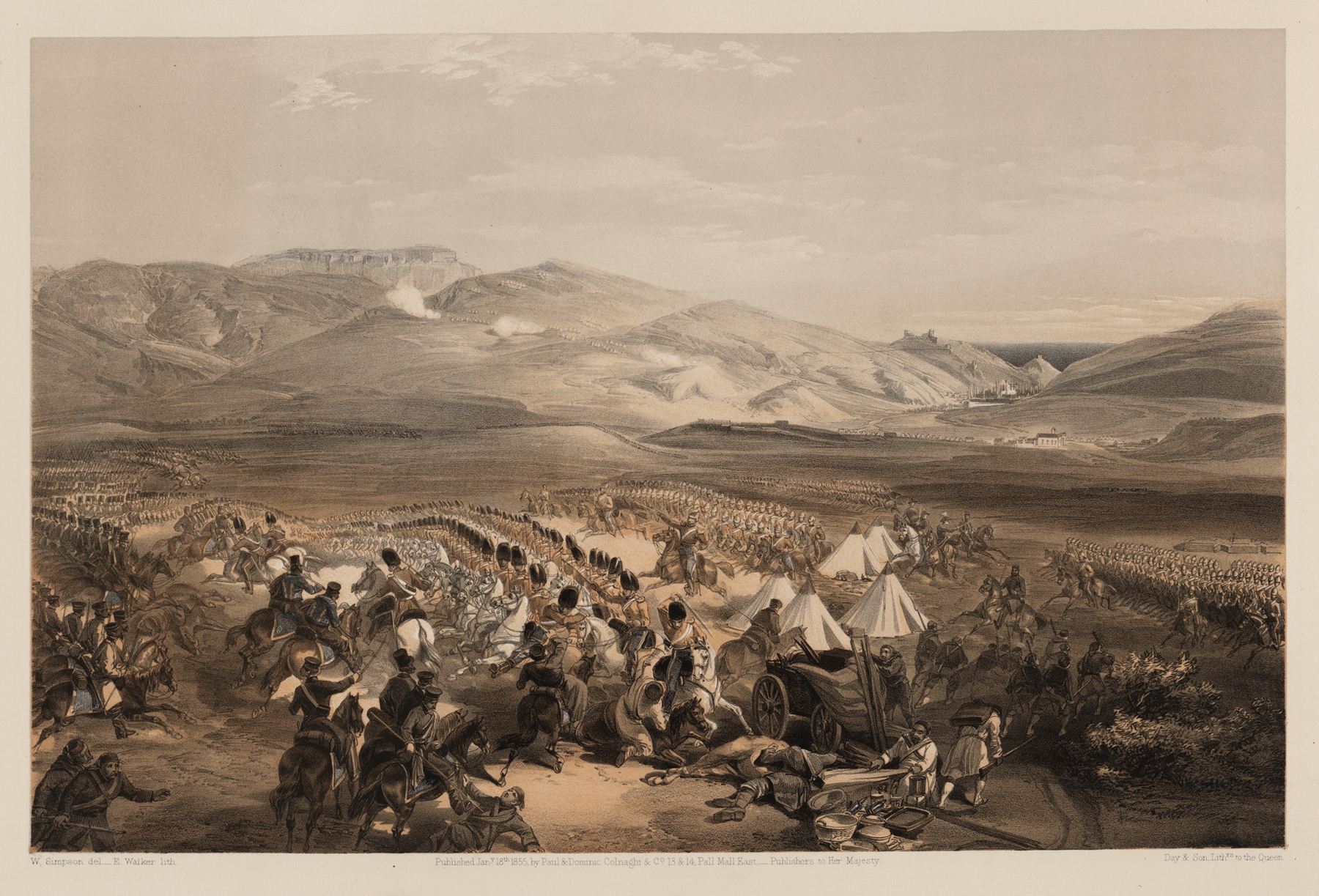
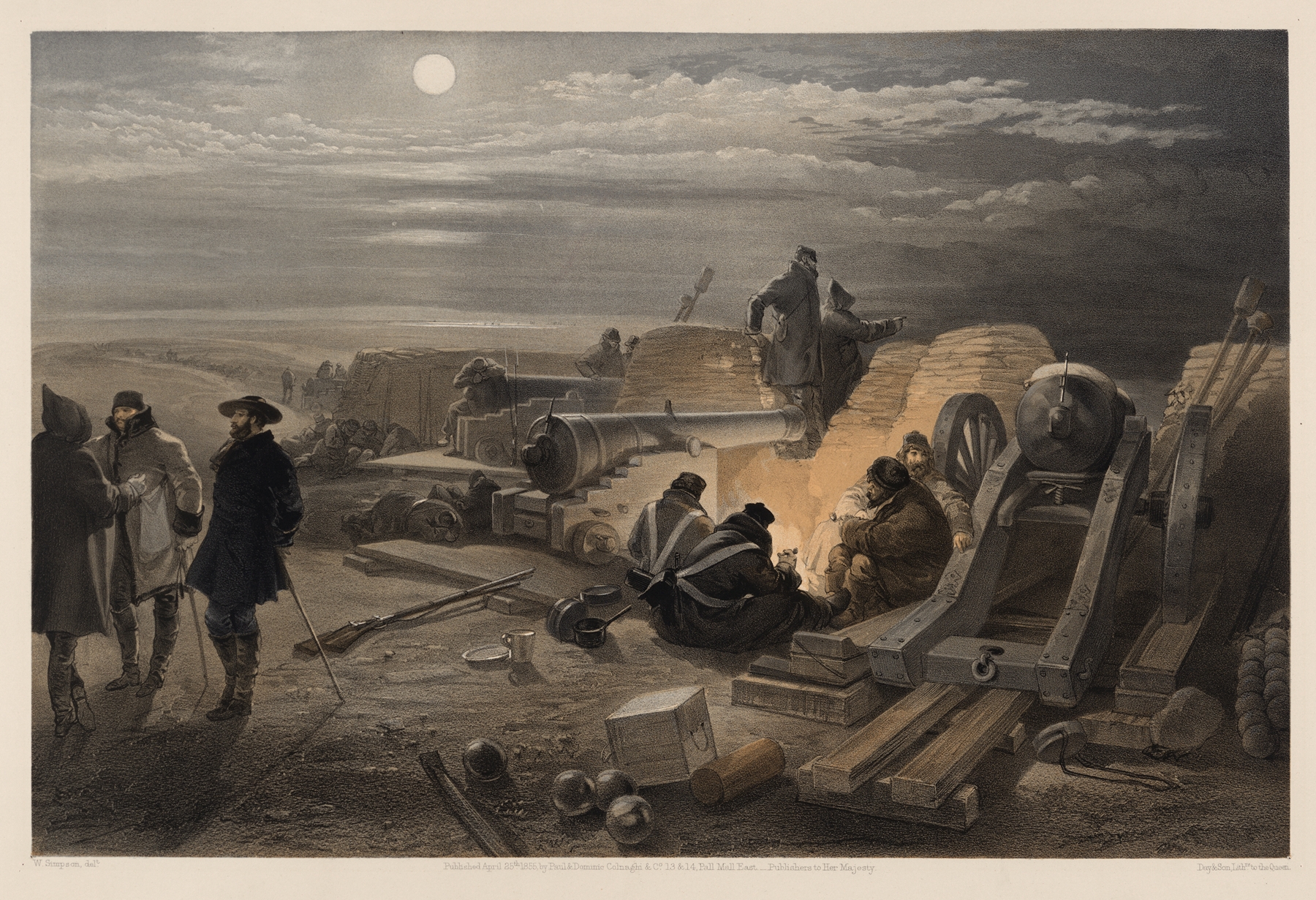
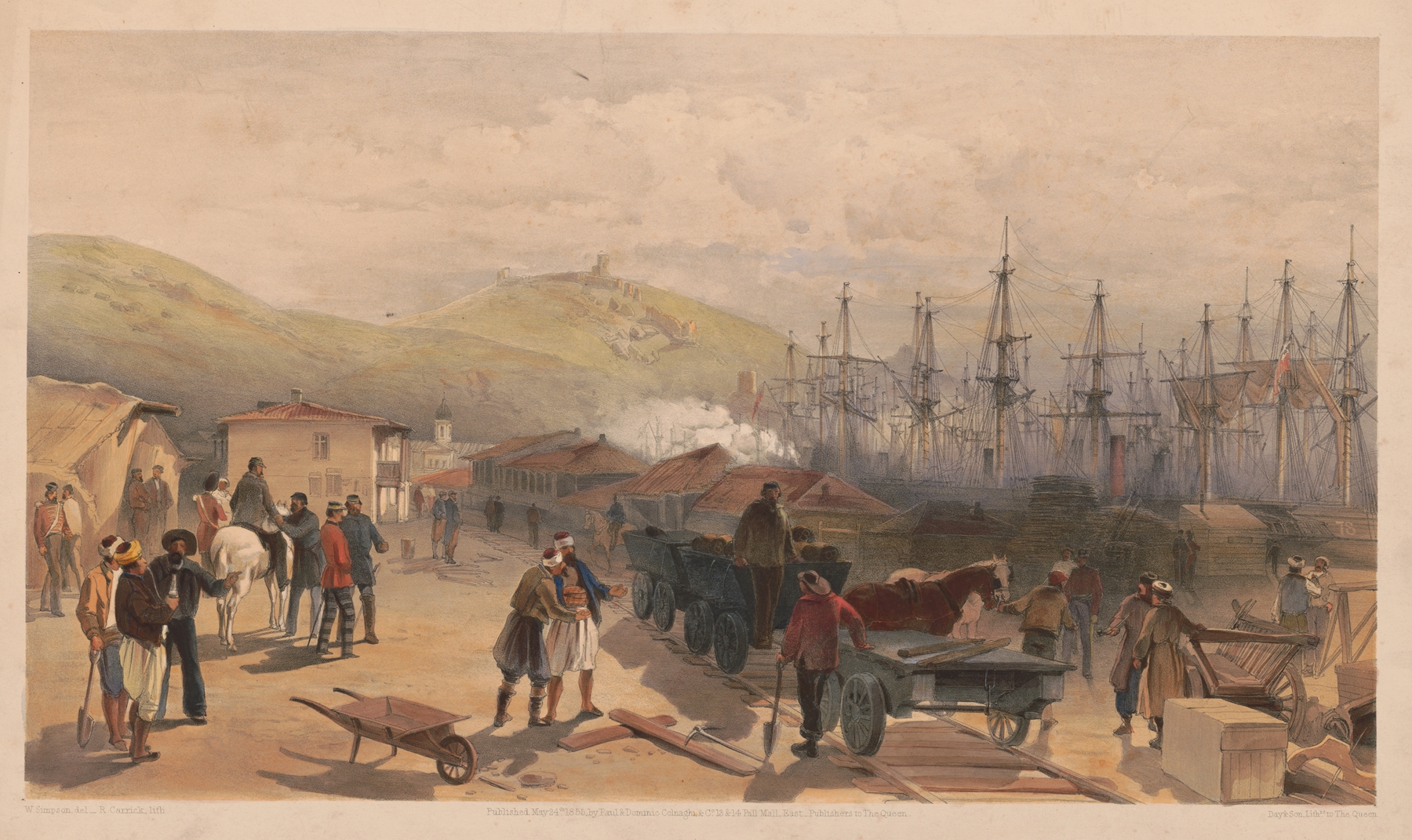
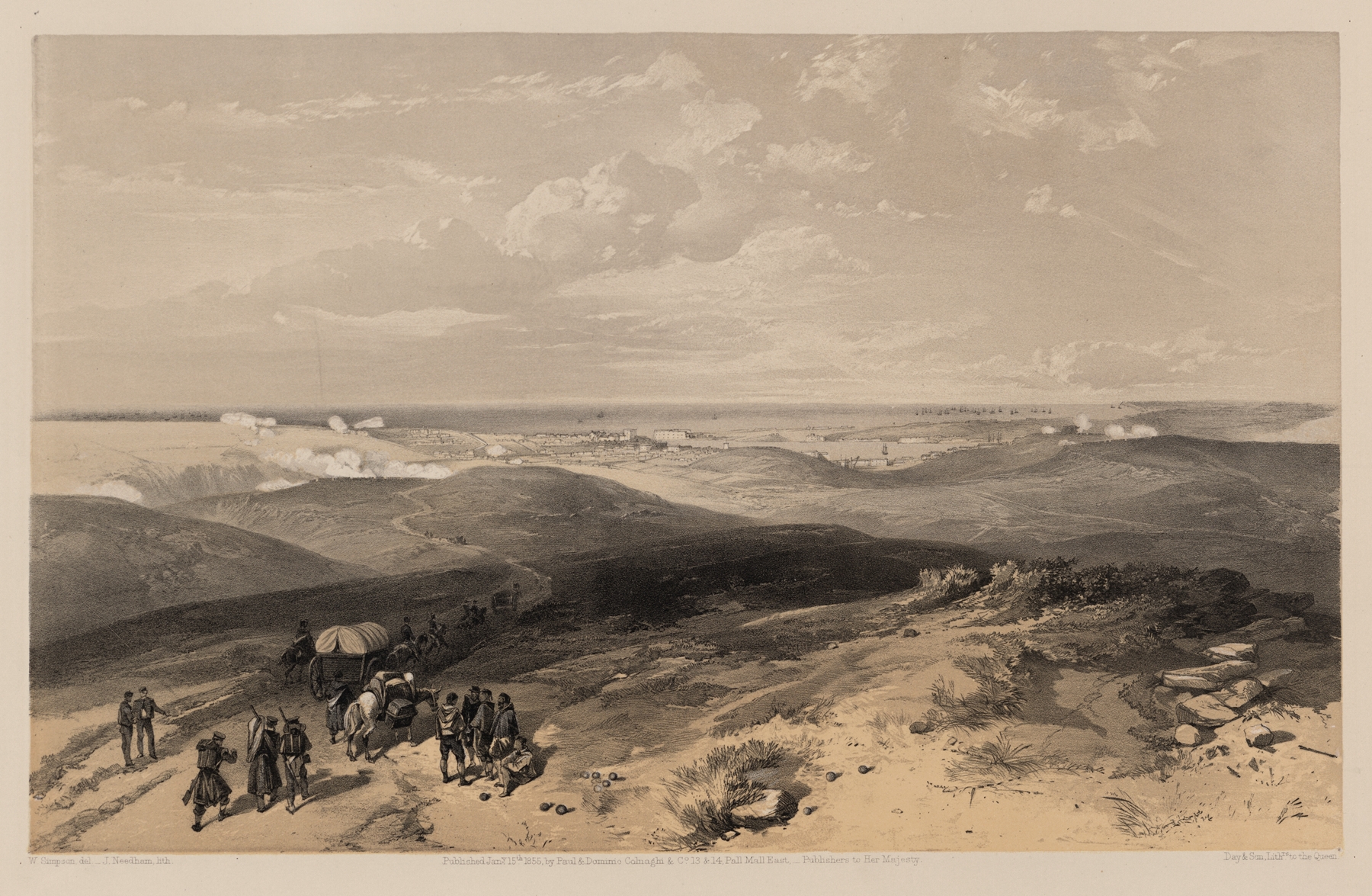
Did the painter know this moment would outlive them? In a world where shadows cast long and the echoes of conflict reverberate through time, a scene steeped in emptiness emerges — a reminder of loss and the lingering effects of war. Look to the center of the canvas where the stark valley opens up, leading the eye through a desolate landscape. The muted browns and grays of the earth contrast sharply with the ominous shadows creeping along the hillsides. The interplay of light and darkness suggests more than just a barren land; it invites contemplation on the void that remains after conflict. Note the meticulous brushwork that captures the rugged terrain, each stroke a testament to the artist’s commitment to realism, allowing viewers to feel the weight of the silence in this haunting scene. In the absence of human figures, the painting amplifies the emotional tension of solitude and the aftermath of battle. The scattered cannonballs, remnants of conflict, speak of violence that has left this place forsaken. Yet, the serene beauty of the valley serves as a paradox; it is both a place of profound loss and one that prompts reflection on the nature of existence itself. This duality evokes a sense of melancholy, as the viewer is left to ponder what once was and what can never be reclaimed. William Simpson created this poignant work in 1855, during the Crimean War, while he served as an official war artist. Capturing the grim realities of battlefield life, he sought to convey not only the events unfolding before him but also the emotional resonance of those moments. At this time, the art world was beginning to grapple with the consequences of war, and Simpson's focus on realism marked a significant shift toward documenting history through a personal lens, one that would resonate for generations to come.