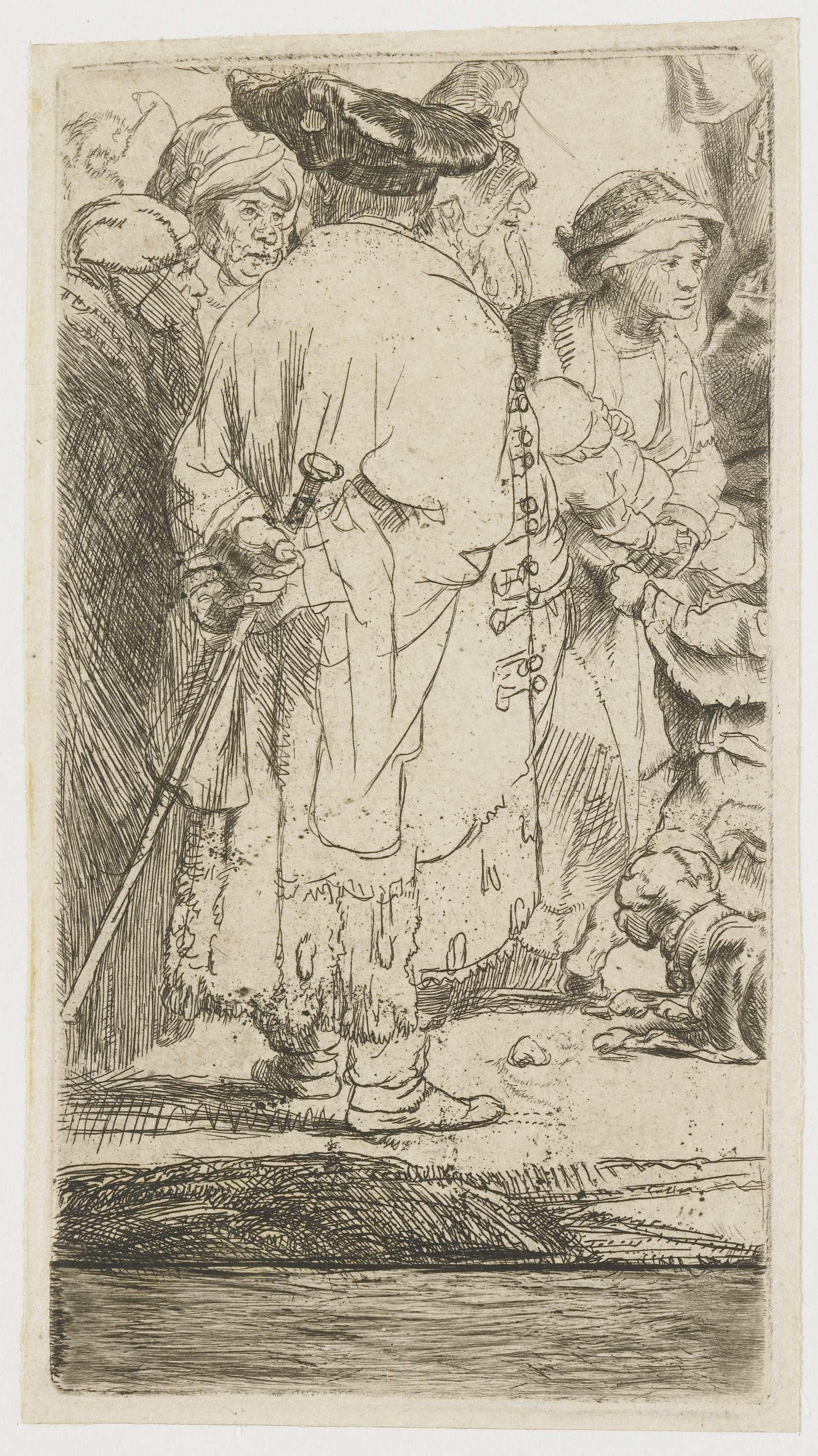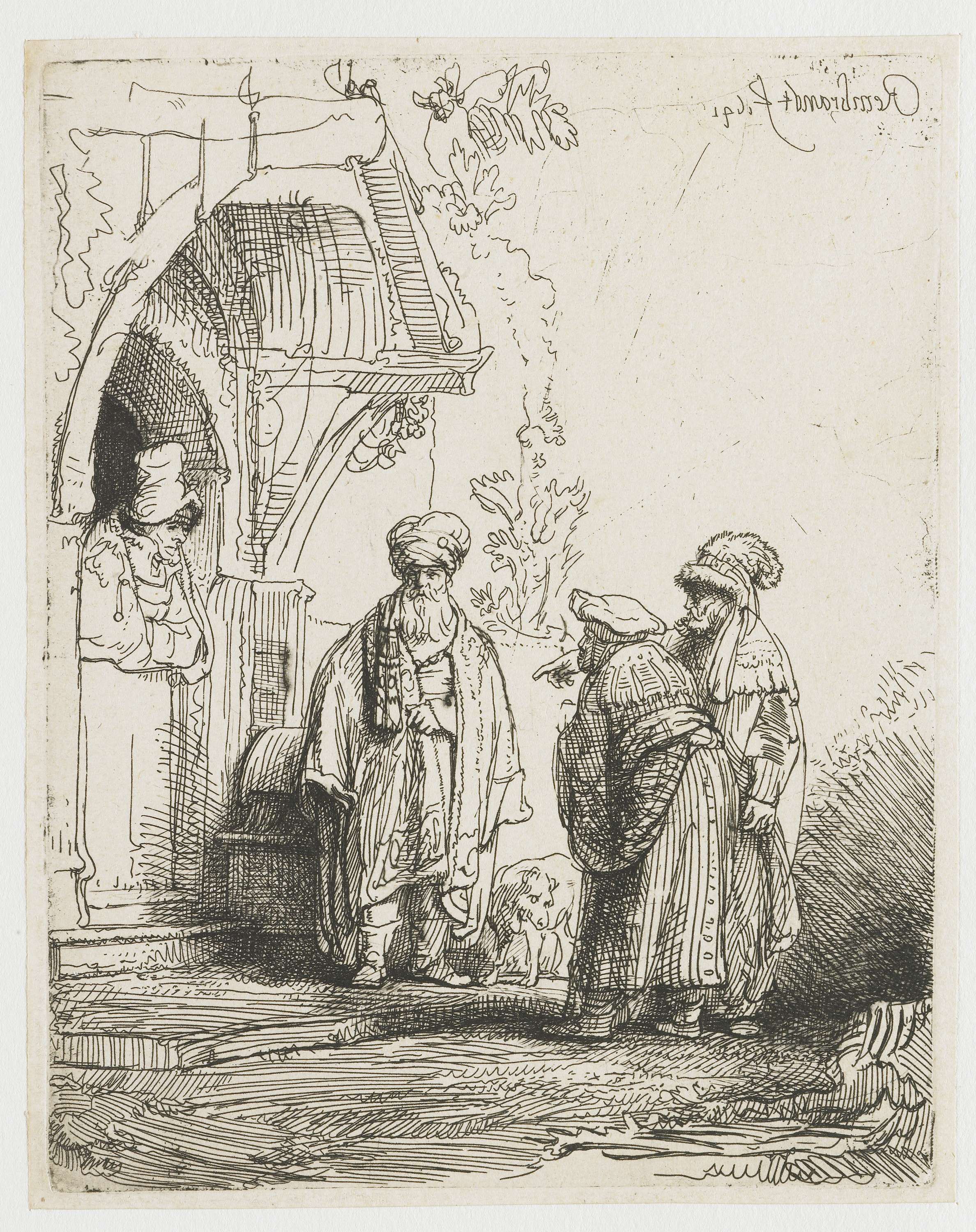
Three oriental figures (Jacob and Laban?) — History & Analysis
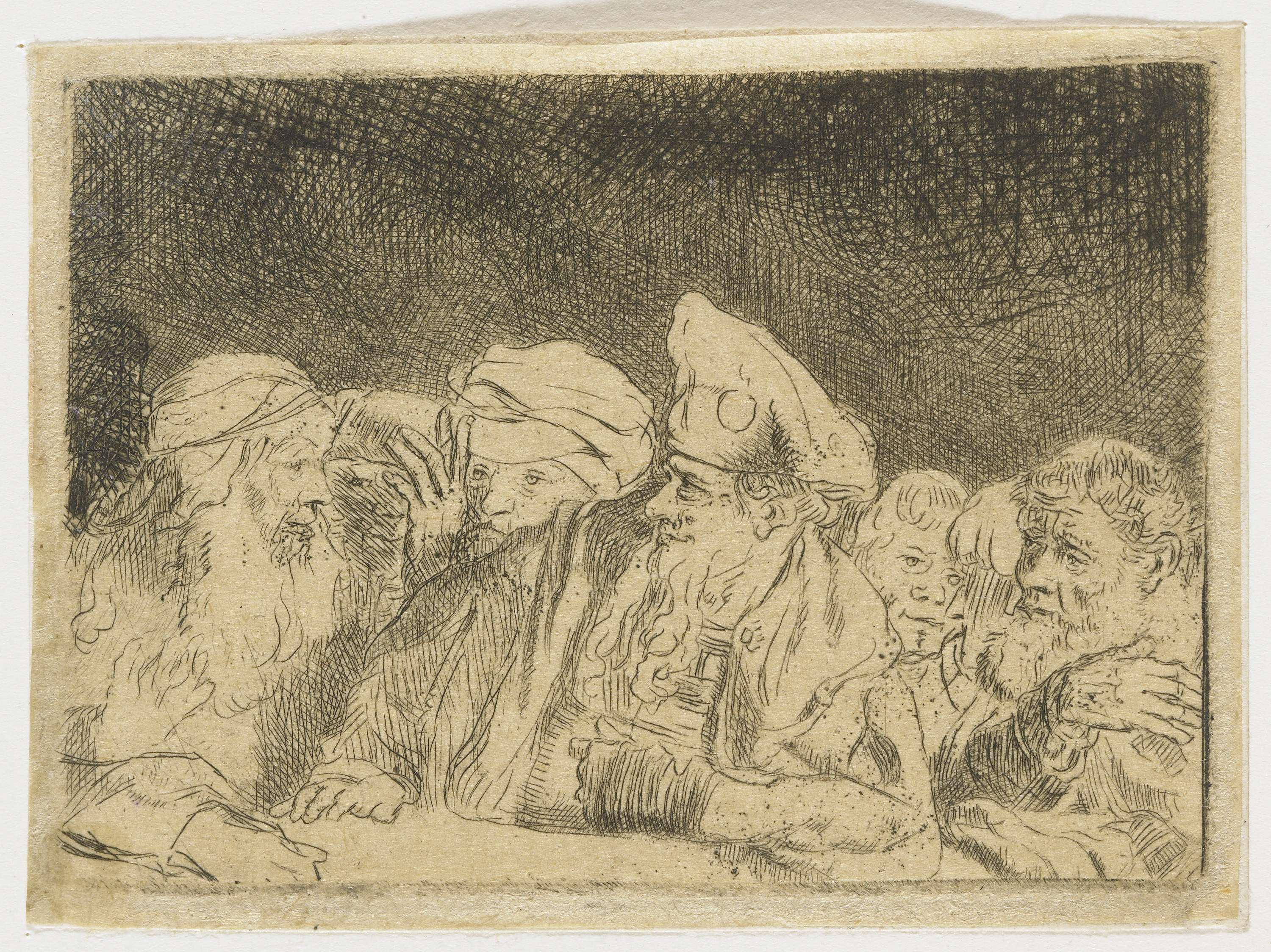
“Every silence here is a confession.” In Three Oriental Figures, shadows dance intricately, revealing and concealing the secrets of the soul. The interplay of light and dark beckons us to enter a world where unspoken truths linger, hinting at the weight of choices made and the burdens carried. Look closely at the three figures positioned at the center; their expressions are enigmatic, capturing a moment of tension. Notice how the light falls upon the fabric of their garments, accentuating rich hues of emerald and gold, while their skin tones shimmer softly in contrast.
The delicate rendering of each fold and drape directs your gaze from the figures’ faces to their hands, subtly gesturing the silent dialogue taking place. The chiaroscuro technique emphasizes the depth of emotion, where shadows create a sense of intimacy and isolation. Amidst the vibrancy, the abyss of shadow lingers, suggesting the complexities of human relationships. The figures' downcast eyes speak of contemplation, perhaps even regret, hinting at unsaid words or unfinished business.
The juxtaposition of their ornate attire against the dark background amplifies the tension between wealth and the weight of existence — a reminder that even in opulence, one can be shrouded in darkness. In 1641, Rembrandt created this work during a period of personal and professional turmoil, having recently suffered the loss of his beloved son. The Dutch Golden Age was in full swing, yet the artist grappled with the shifting tides of success and failure. This painting reflects not only his mastery of light and shadow but also his intimate exploration of the human condition amid the complexity of life’s fleeting moments.