Unloading the hay barge — History & Analysis
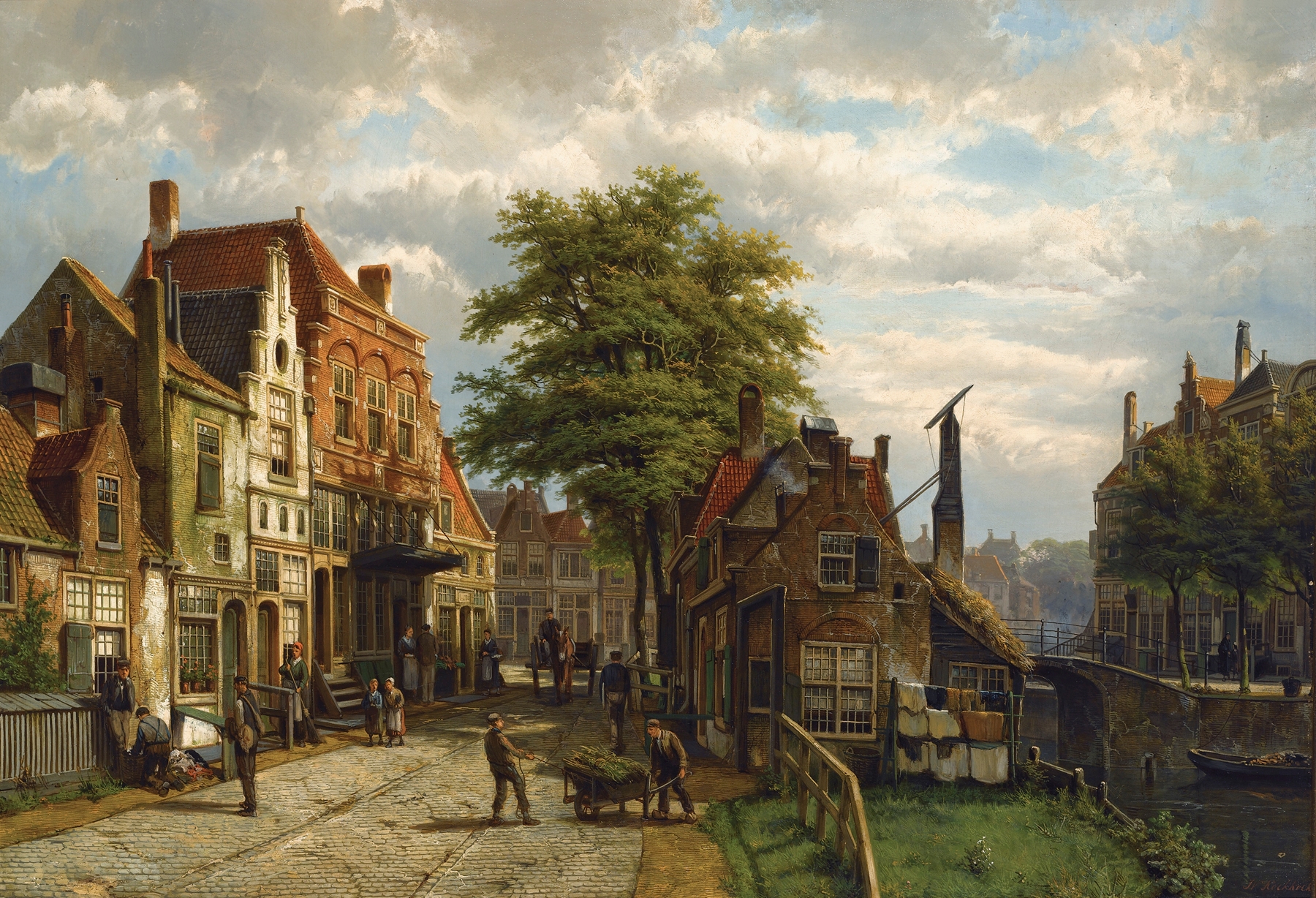
Did the painter know this moment would outlive them? In a world of fleeting instances, art captures the awe of existence in a single frame. Look to the lower left where laborers engage in the earnest task of unloading bales of hay, their bodies straining under the weight of the harvest. Notice how the warm golden hues of the sun illuminate their forms, casting elongated shadows that stretch across the canvas. The composition leads your gaze upwards, where wispy clouds hover above an expansive sky, a testament to the ongoing cycle of nature’s bounty and human toil.
The painter’s delicate brushwork breathes life into the scene, blending the details of hay, water, and figures into a harmonious whole. Beneath the surface of this idyllic moment lies a rich tapestry of emotion. The juxtaposition of hard labor and the serene backdrop evokes a sense of respect for both the individuals and the land they work. Each figure, though seemingly isolated in their tasks, contributes to a collective essence of community and resilience.
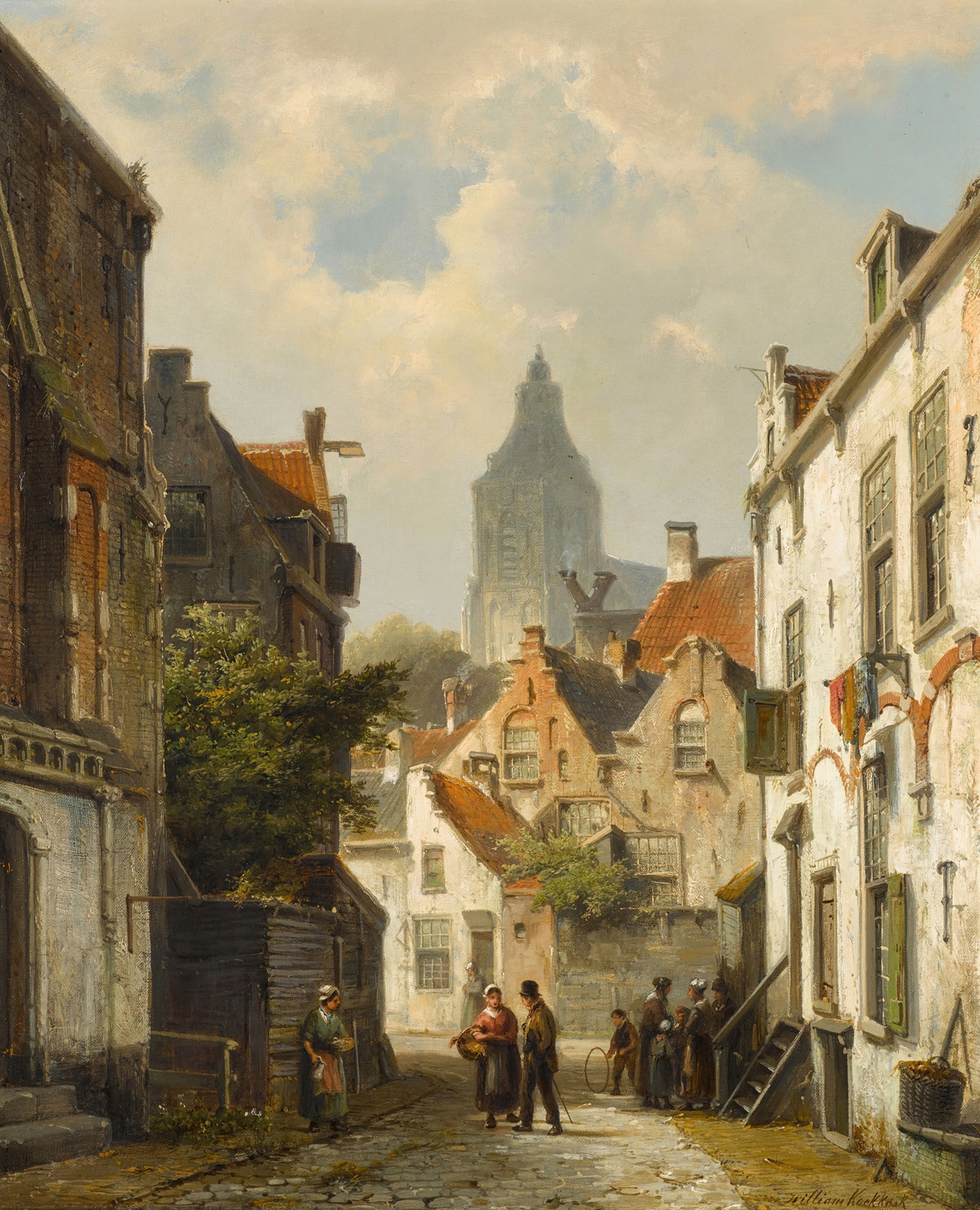
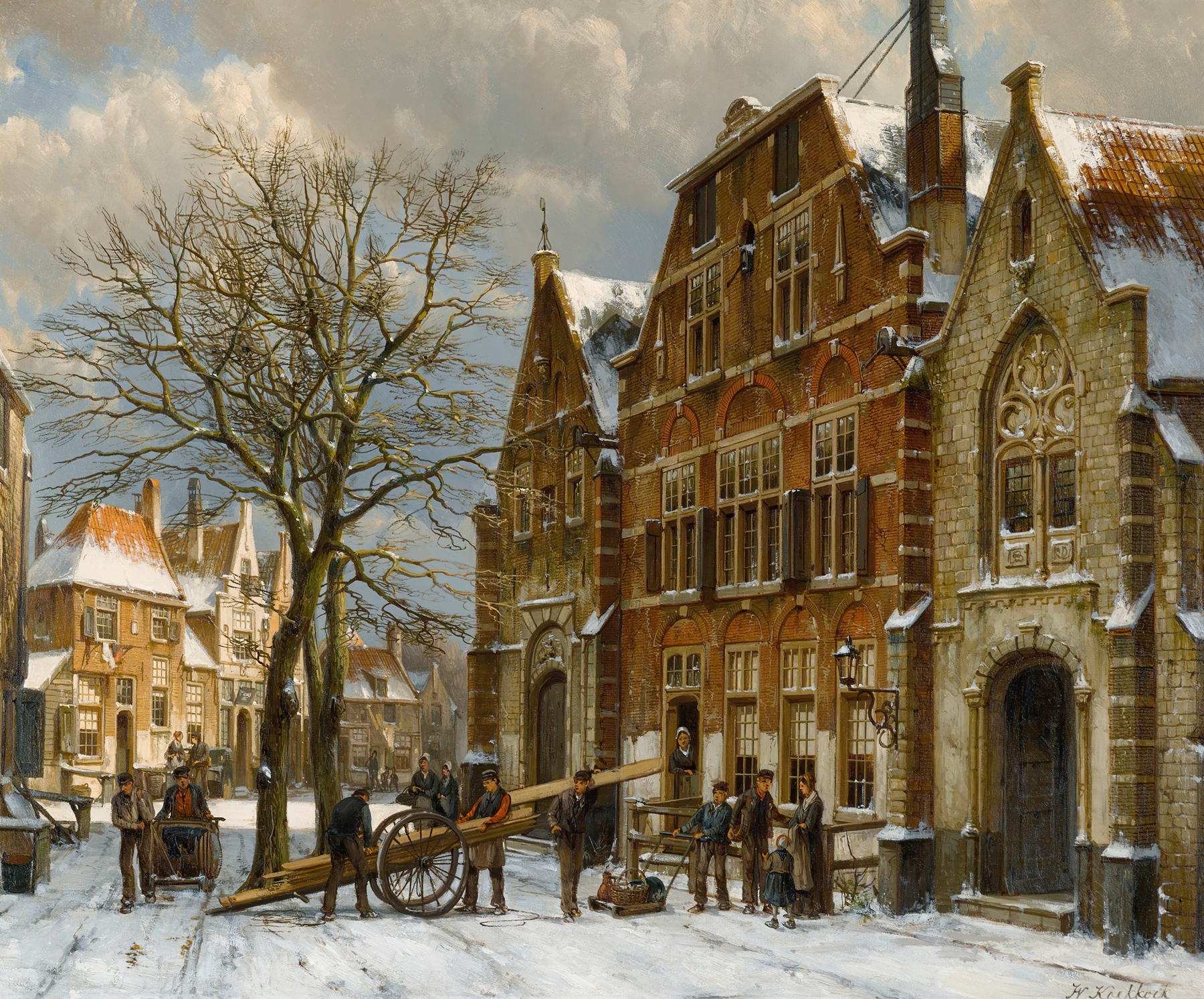
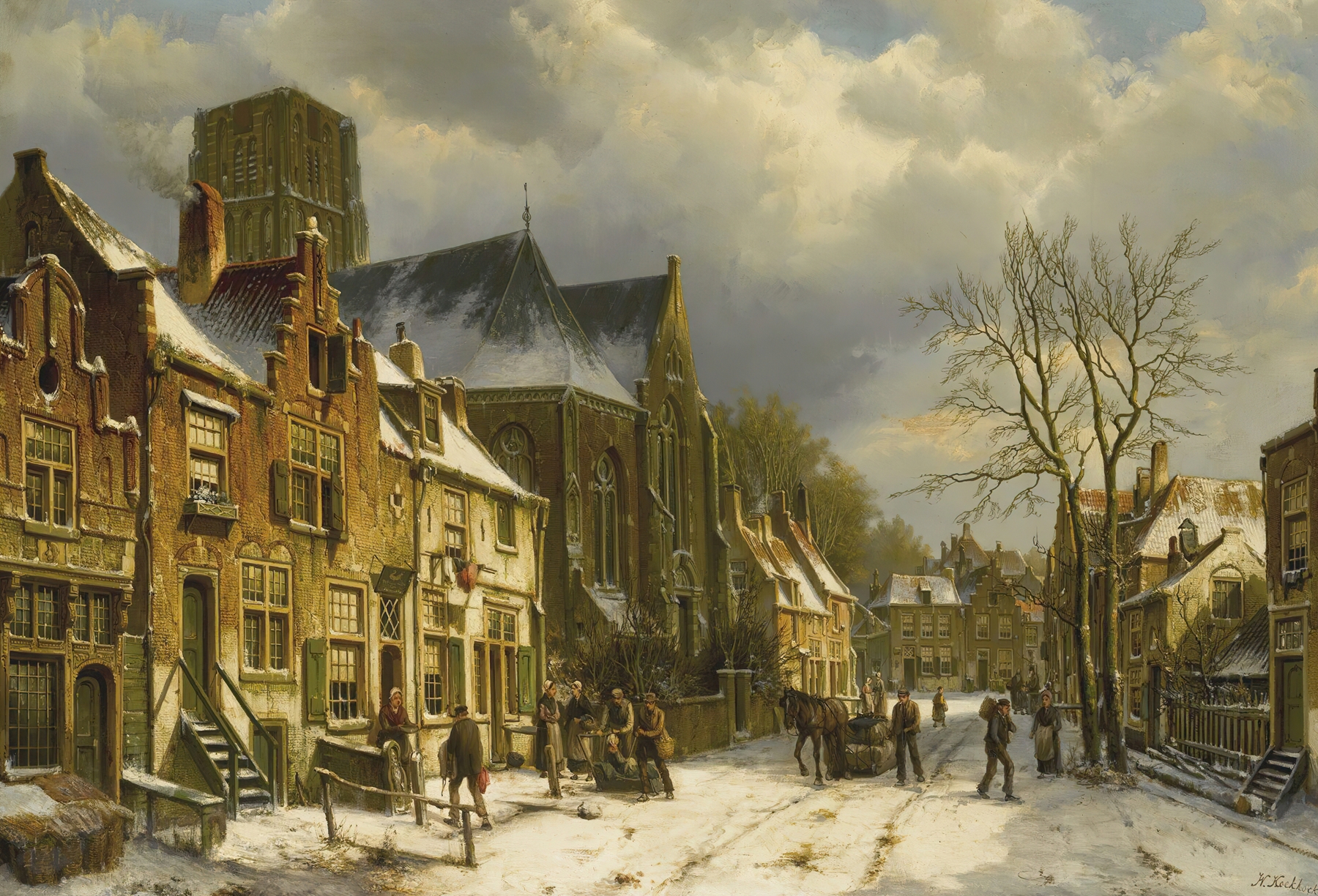
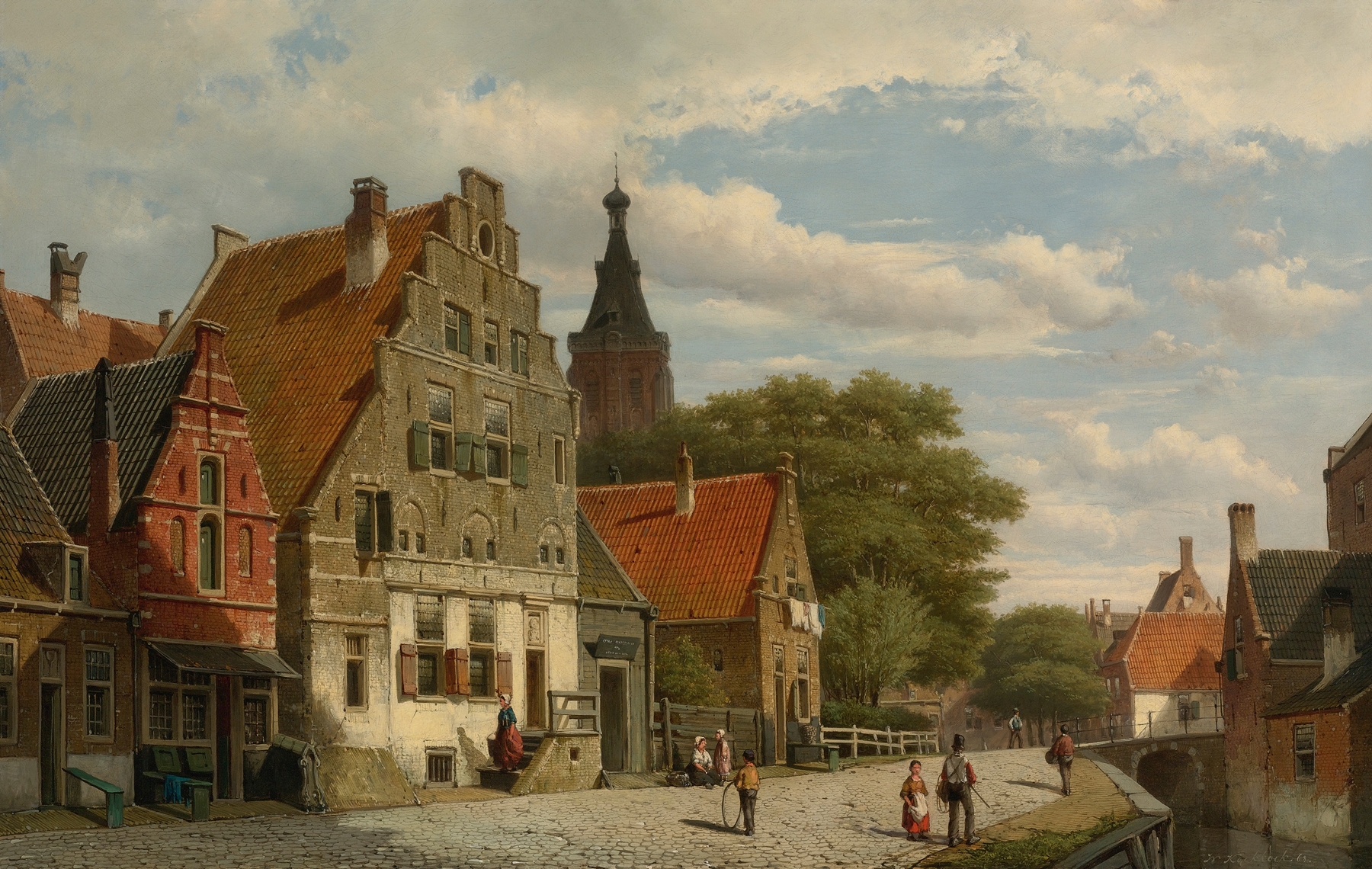
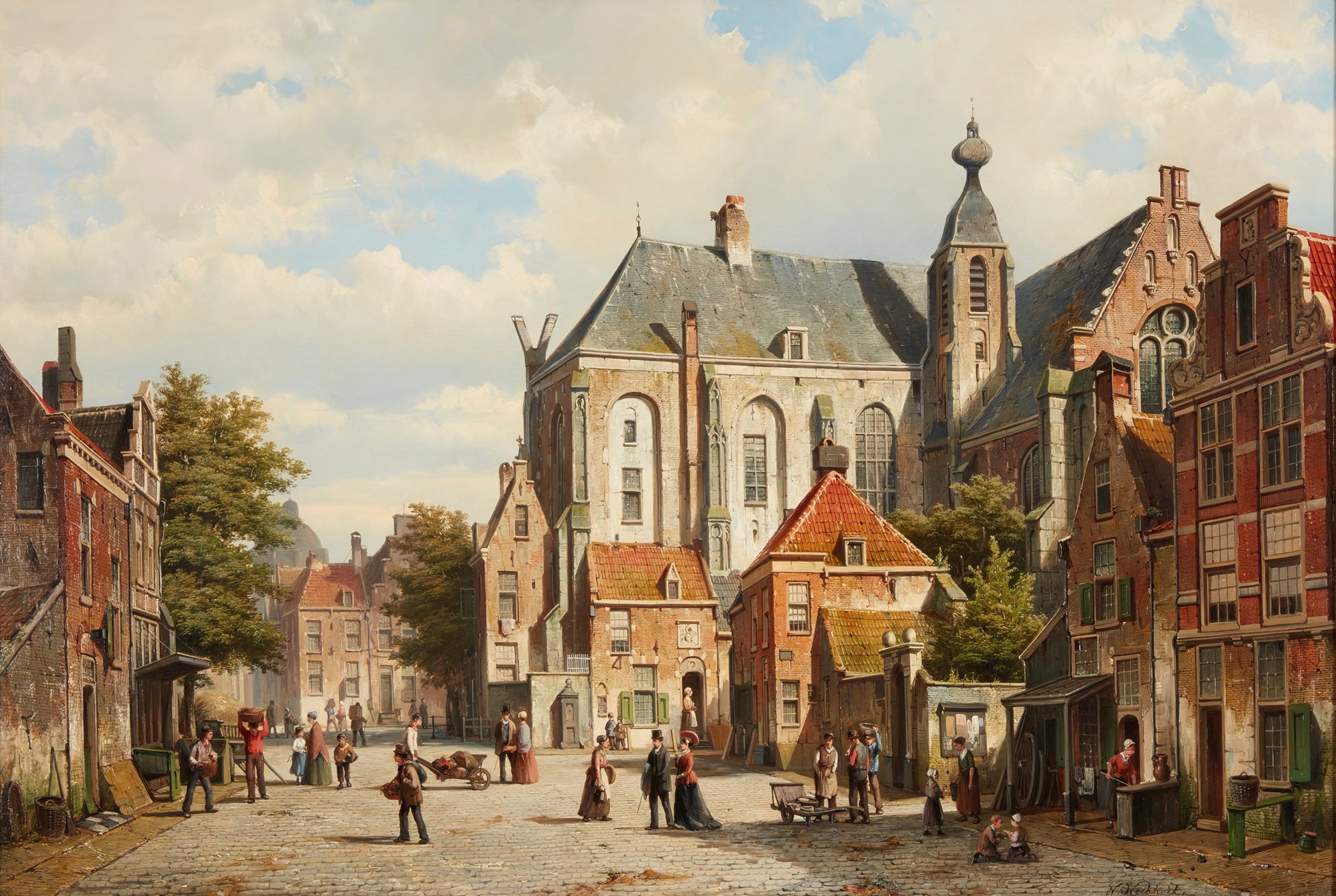
The vibrant colors suggest not just the warmth of the day but the enduring spirit of those who make their living from the earth, echoing themes of perseverance and gratitude. Willem Koekkoek painted this scene during a time when Dutch artists were increasingly focused on the connections between human life and the natural world. Known for his detailed depictions of rural landscapes, Koekkoek worked in the mid-19th century, a period marked by industrialization and change. This focus on pastoral scenes reflects a nostalgia for agrarian life amidst the shifting tides of modernity, making his work both a celebration of the present and a tribute to the past.