Untitled (Shinnecock Hills, Long Island) — History & Analysis

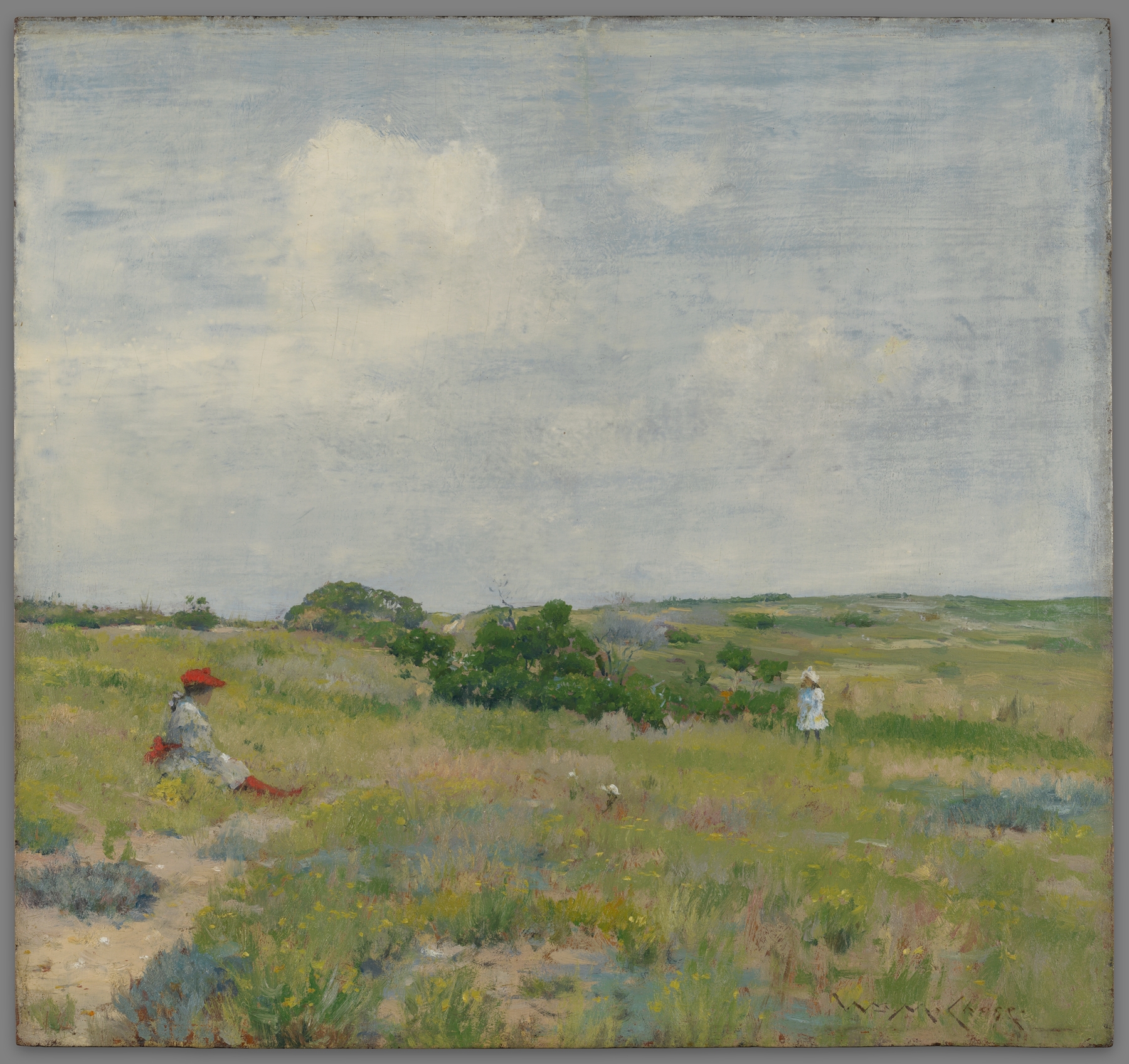
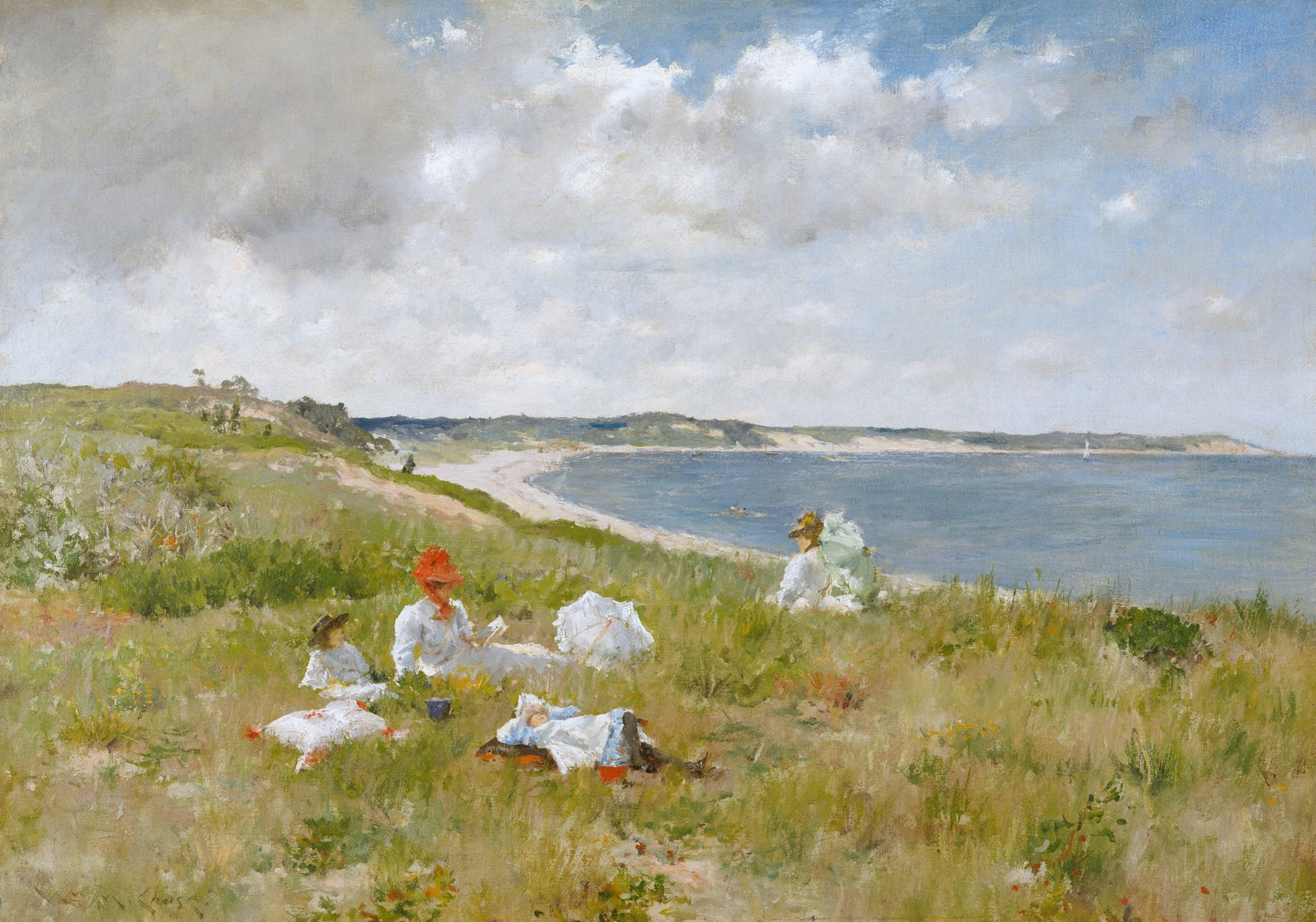
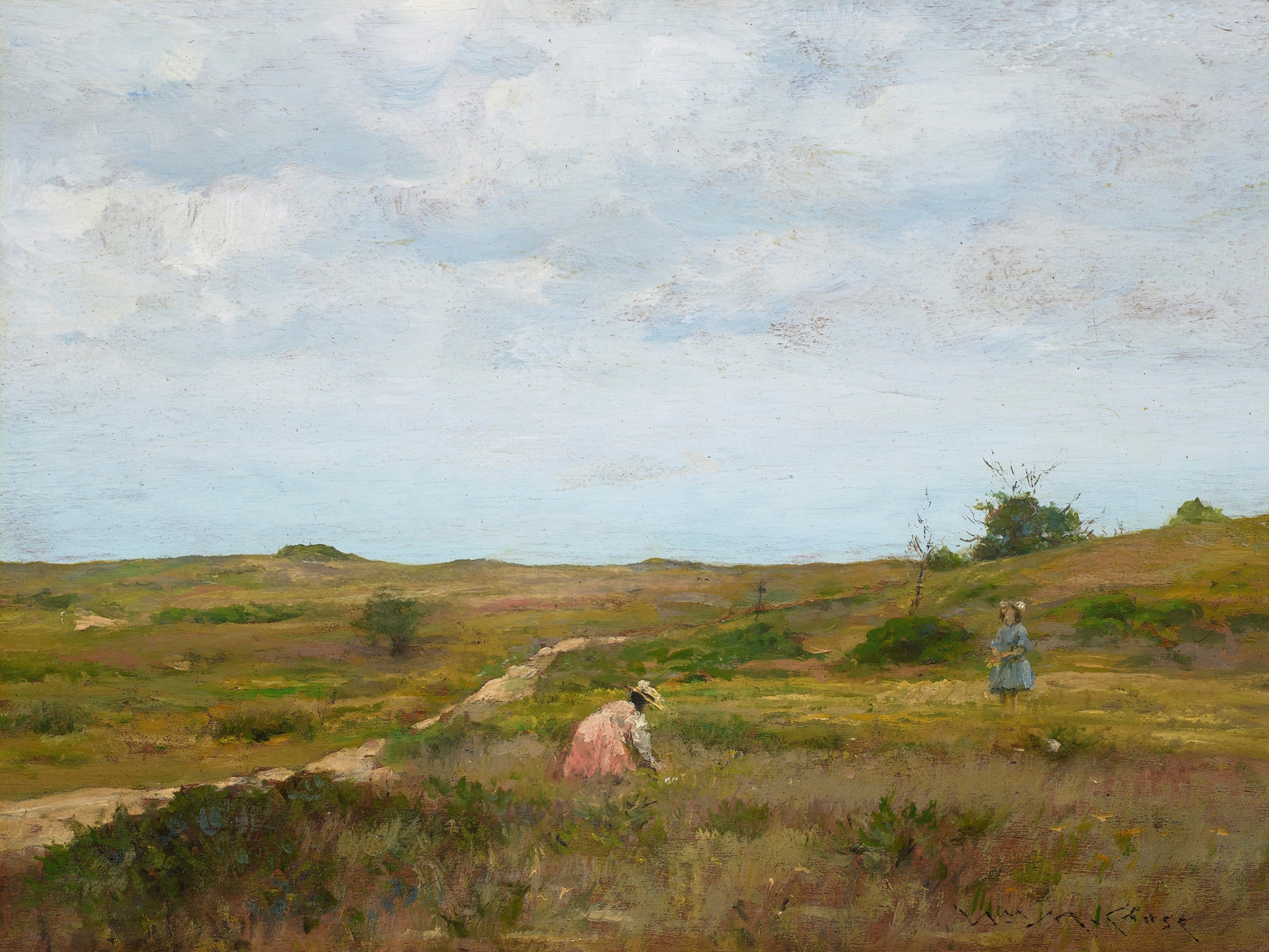
When did color learn to lie? In the delicate interaction between the serene landscape and the chaos below its surface, we are invited to explore the hidden tensions that dwell in nature’s beauty. Look to the foreground, where verdant greens blend seamlessly with lively bursts of violet and amber. The brushstrokes are loose and energetic, almost playful, as they capture the essence of sunlight dancing across the creamy hills.
Pay attention to the subtle interplay of light and shadow that Chase masterfully constructs; it draws our gaze deeper into the painting, revealing the undulating topography that surges with life. Yet, beneath this aesthetic charm lies an unsettling profundity. The vibrant colors mask an underlying violence, a tension between the idyllic façade of the Shinnecock Hills and the potential for upheaval in nature. The swirling clouds above, hefty and foreboding, hint at a storm that may soon disrupt the tranquility, while the wild brushwork suggests an untamed force lurking just outside the observer’s comfort.
This duality challenges the viewer to reconsider the harmony often associated with landscapes and prompts an unsettling but necessary introspection about nature’s unpredictable temperament. William Merritt Chase painted this work around 1906 during a time when American art was transitioning, seeking a distinctive voice separate from European influences. Working in Shinnecock Hills, a quaint artists' colony on Long Island, he was heavily involved in the Impressionist movement, capturing not just the beauty of the landscape but also its complexity. This period marked a profound exploration of color and light, reflecting both personal and societal shifts as artists began to embrace a more expressive interpretation of their surroundings.