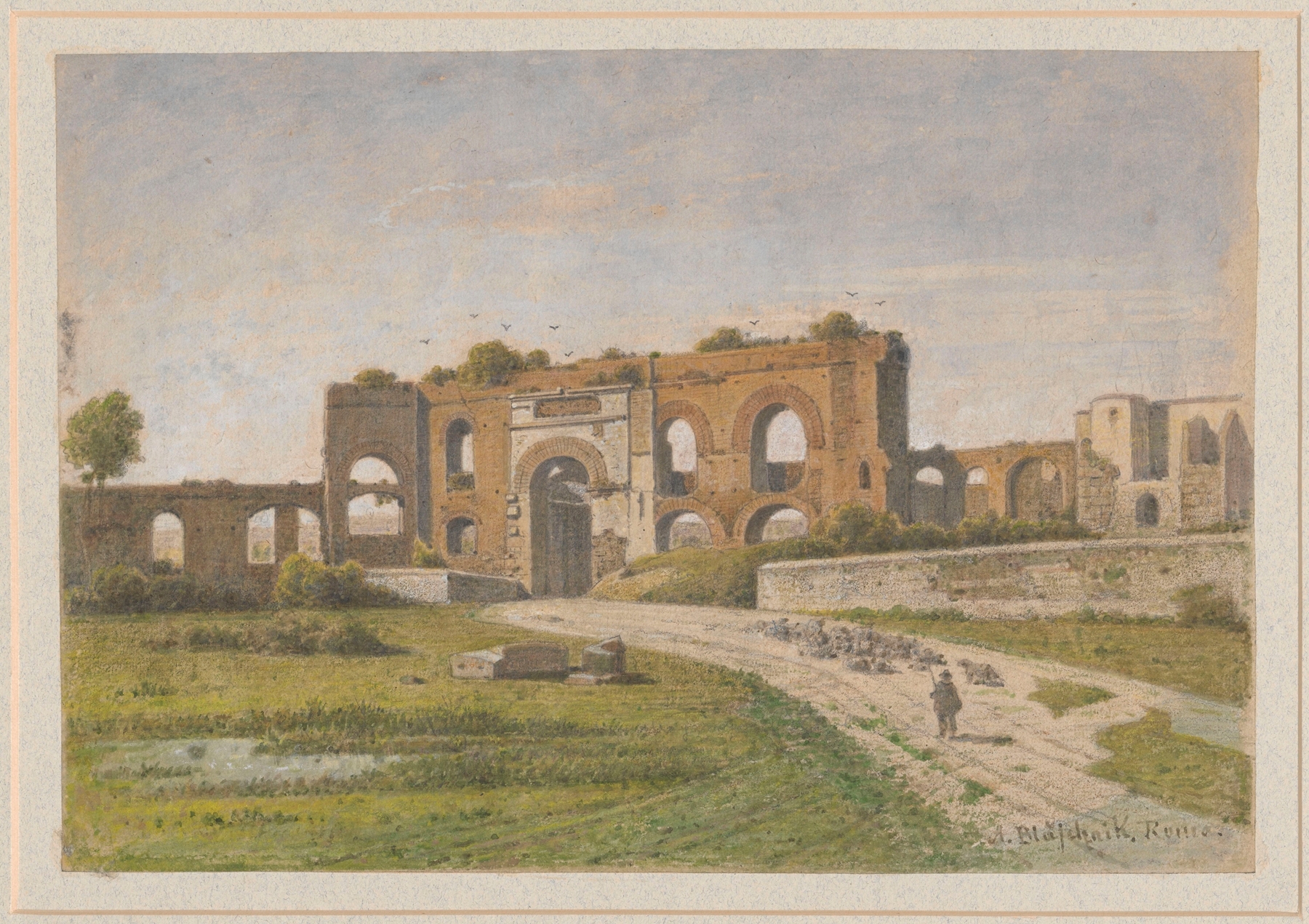
View of a fragment of aqueduct by Porta Maggiore in Rome, view from the side of Piazza di Porta Maggiore — History & Analysis
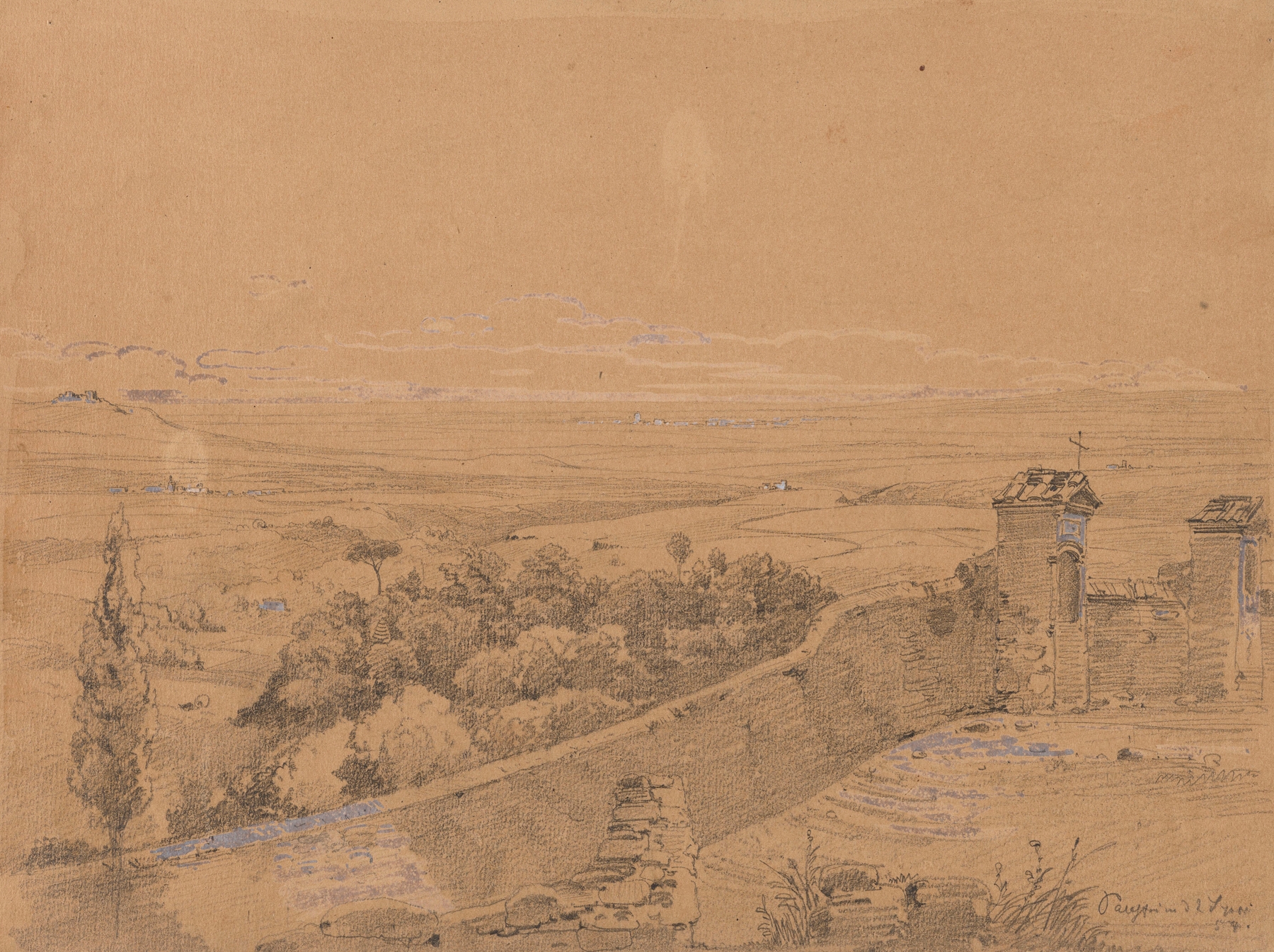
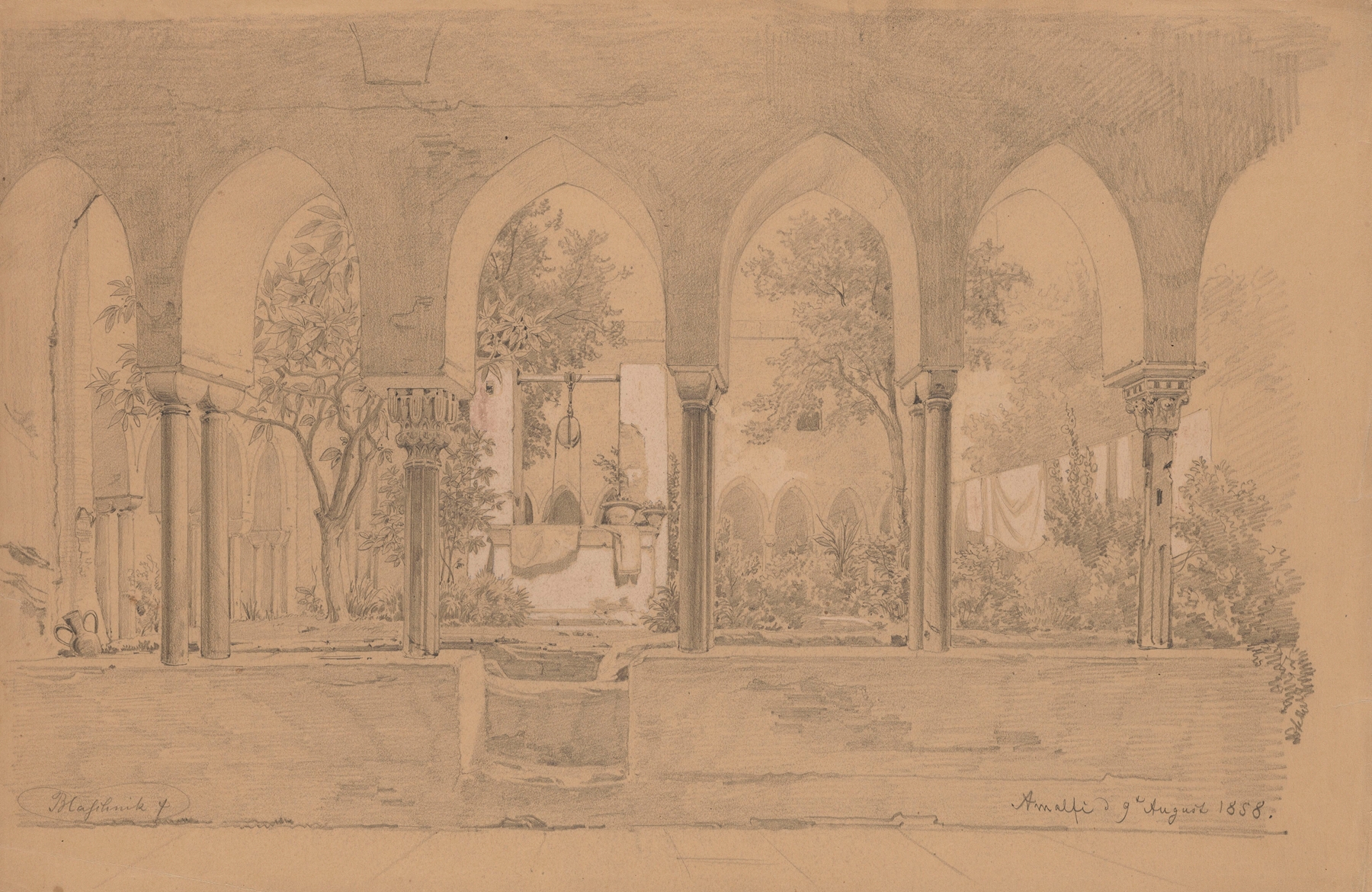
Who listens when art speaks of silence? In *View of a fragment of aqueduct by Porta Maggiore in Rome, view from the side of Piazza di Porta Maggiore*, a quiet dialogue unfolds between ancient stone and the weight of time. Each arch stands resolute, a testament to the passage of years, while the lush backdrop of greenery breathes life into the structure’s stoic stillness. Look to the center where the aqueduct arcs gracefully across the canvas, its weathered stones catching the gentle light that filters through the surrounding foliage. The artist’s brushstrokes bring out a rich palette of earthy tones, from soft ochres to deep umbers, showcasing both the majesty and decay of this architectural marvel. The careful attention to detail in the moss-covered stones invites the viewer to explore the texture and history embedded in each fragment, while the composition draws the eye upward, emphasizing the grandeur of the aqueduct against the sky. Hidden within the serene landscape is a poignant contrast, a reflection on the illusion of permanence. The interplay between the enduring structure and the ephemeral qualities of nature speaks to the transient experience of beauty. The aqueduct, once a lifeline for the city, now serves as a silent sentinel, inviting contemplation about the passage of time and the stories etched into stone. The looming shadows hint at forgotten whispers, evoking a sense of nostalgia that resonates deeply. Arthur Blaschnik painted this work between 1853 and 1860 during a time of burgeoning interest in the romanticized views of classical architecture. Living in Rome, he was immersed in a city rich with history, where the past and present coalesced. This period in art saw a shift towards capturing the emotional weight of landscapes, a movement that Blaschnik adeptly embodied, thus connecting viewers to the timeless allure of urban ruins.