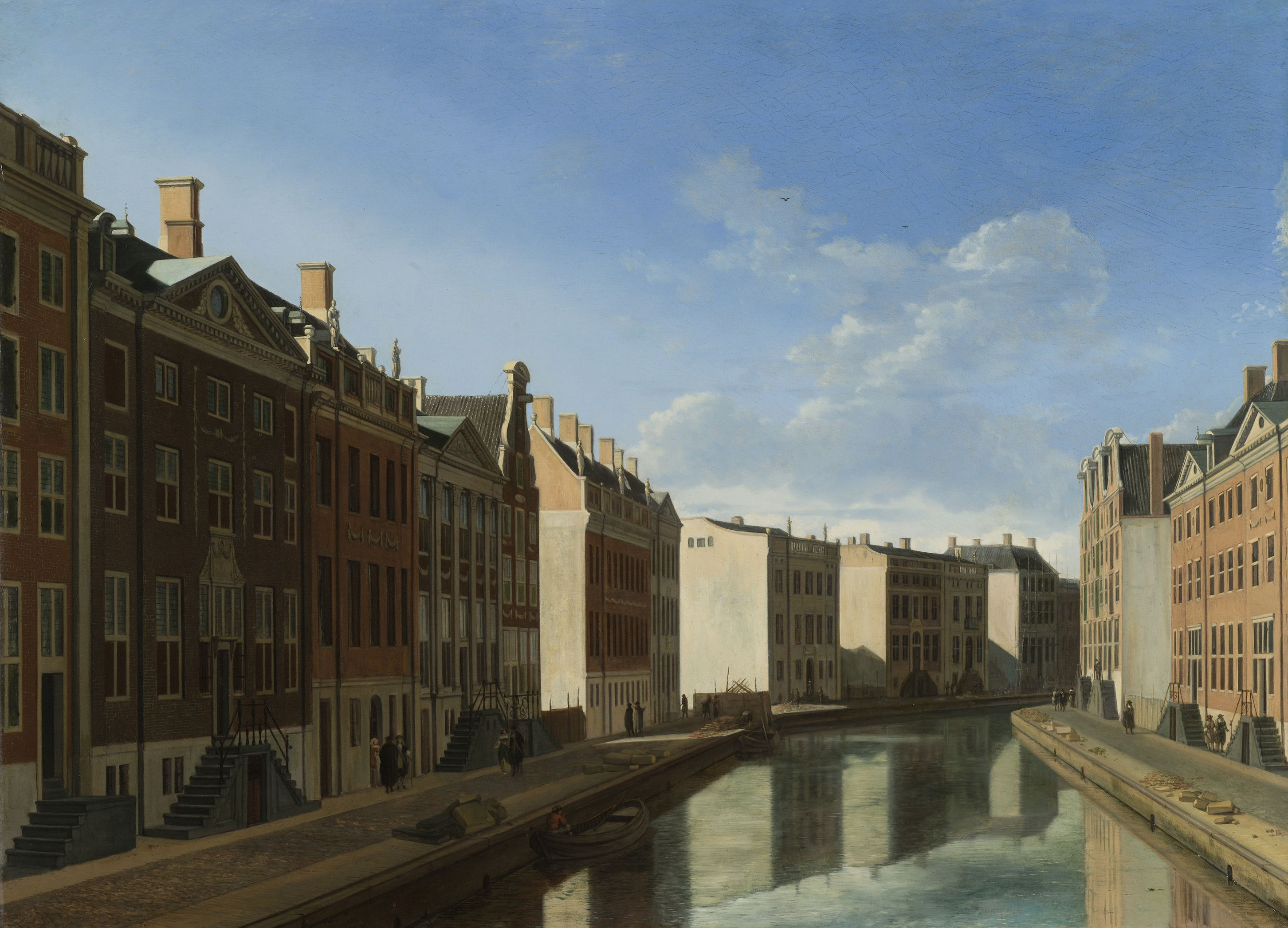
View of the Golden Bend in the Herengracht — History & Analysis
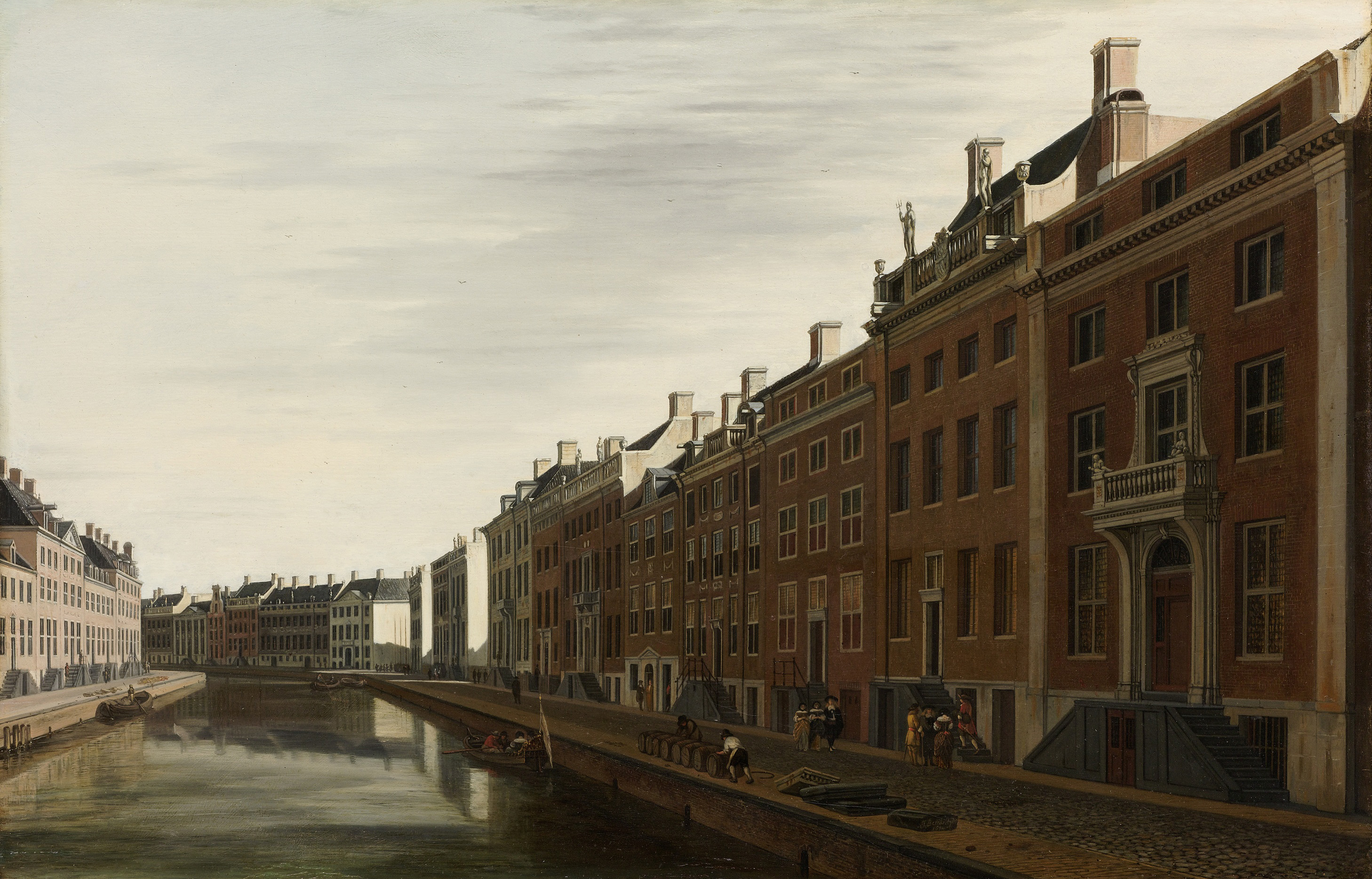
“To paint is to remember what time wants us to forget.” In the stillness of View of the Golden Bend in the Herengracht, a veil of nostalgia wraps the viewer, echoing an unfulfilled yearning for the past. Look to the left, where the elegant canal bends, its shimmering surface reflecting the warm glow of the afternoon sun. Notice how the careful strokes delineate the architecture, each building telling its own story, yet part of a harmonious whole. The palette, dominated by soft golds and gentle blues, invites tranquility, while the delicate interplay of light and shadow imbues the scene with a lively vibrancy, reminiscent of a fleeting moment captured in time.
Beyond the surface lies a deeper commentary on urban life and the passage of time. The water, a metaphor for memory, flows patiently, holding the weight of years and stories beneath its placid exterior. The lush greenery and the inviting façades of the houses speak to a once-thriving community, contrasting the richness of history with the inevitable erosion of life’s vibrancy. Each detail, from the scattering of boats to the presence of distant figures, evokes a sense of yearning for connection and continuity.
The artist created this piece during the late 17th century, a period marked by the Dutch Golden Age's flourishing art scene. Living in Haarlem, Berckheyde was deeply influenced by the rise of realism and urban landscape painting. As society transformed, so too did the artist's work, reflecting a burgeoning interest in capturing the essence of contemporary life, blending personal emotion with the broader narrative of a rapidly changing world.