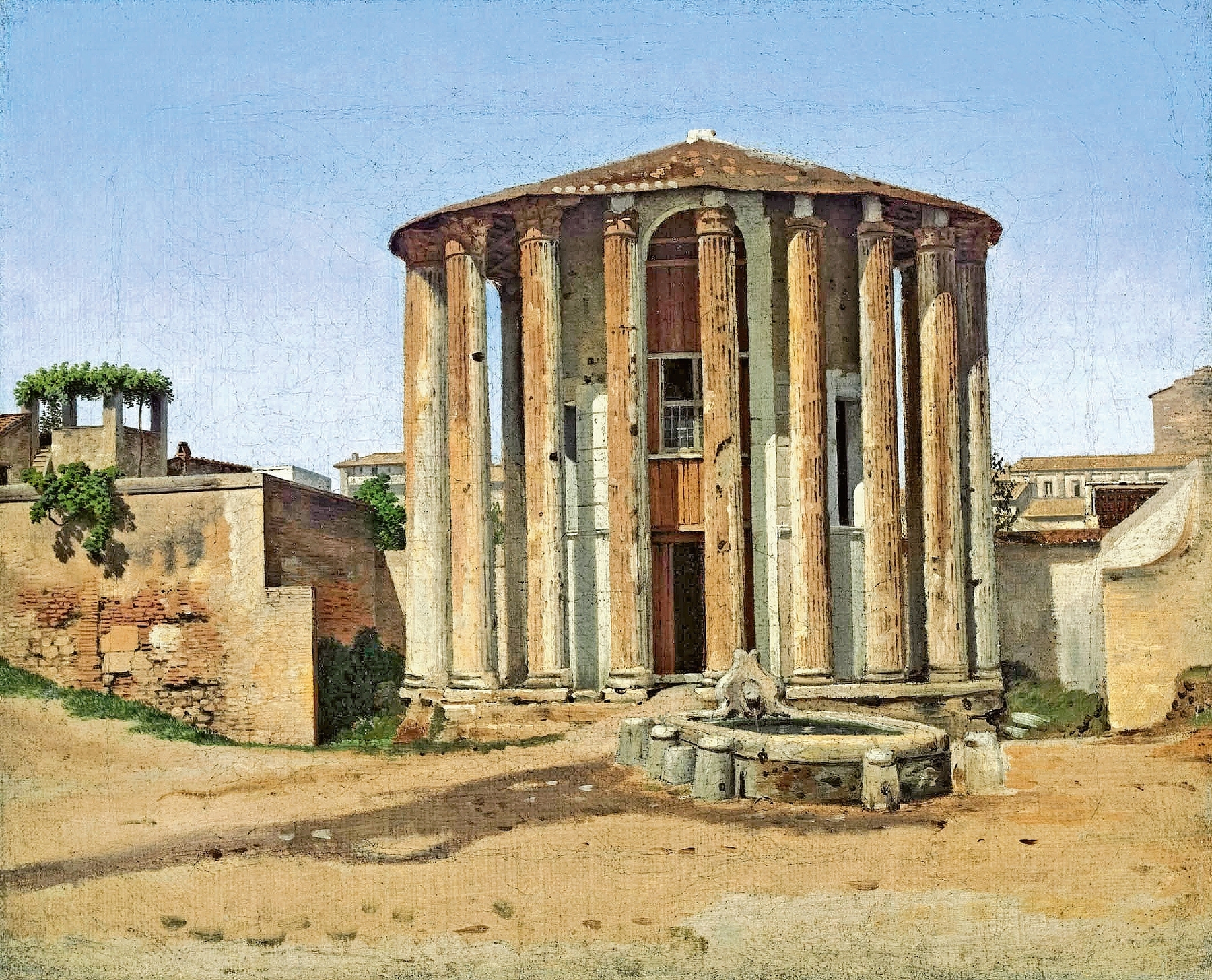
View of the Via Sacra, Rome — History & Analysis
Could beauty survive in a century of chaos? As the shadows of conflict loom over the ancient stones, this painting invites us to ponder the resilience of art amidst turmoil. Focus first on the sweeping perspective that draws your gaze down the Via Sacra, the heart of Rome's ceremonial life. Notice the way the sunlight filters through the trees, each beam illuminating the weathered ruins while casting deep shadows that hint at the history etched in the very ground.
The delicate brushwork and soft color palette evoke a sense of calm, creating a stark contrast to the violent histories that the stones have witnessed. In the foreground, two figures engaged in conversation seem oblivious to the echoes of the past, embodying a moment of tranquility in a city steeped in legacy. The juxtaposition of the serene figures against the grandeur of the crumbling architecture reflects the tension between personal experience and historical weight. This interplay suggests that beauty, though vulnerable, persists even in the shadow of destruction — a testament to the enduring spirit of civilization.
In 1814, Eckersberg was immersed in the artistic landscape of Copenhagen, when Europe was recovering from the Napoleonic Wars. This period was characterized by a longing for the classical ideals that had shaped Western thought. As he painted this iconic view, Eckersberg sought to capture the essence of Rome, a city that represented both beauty and the scars of conflict, reflecting his desire to reconcile the past with the present.