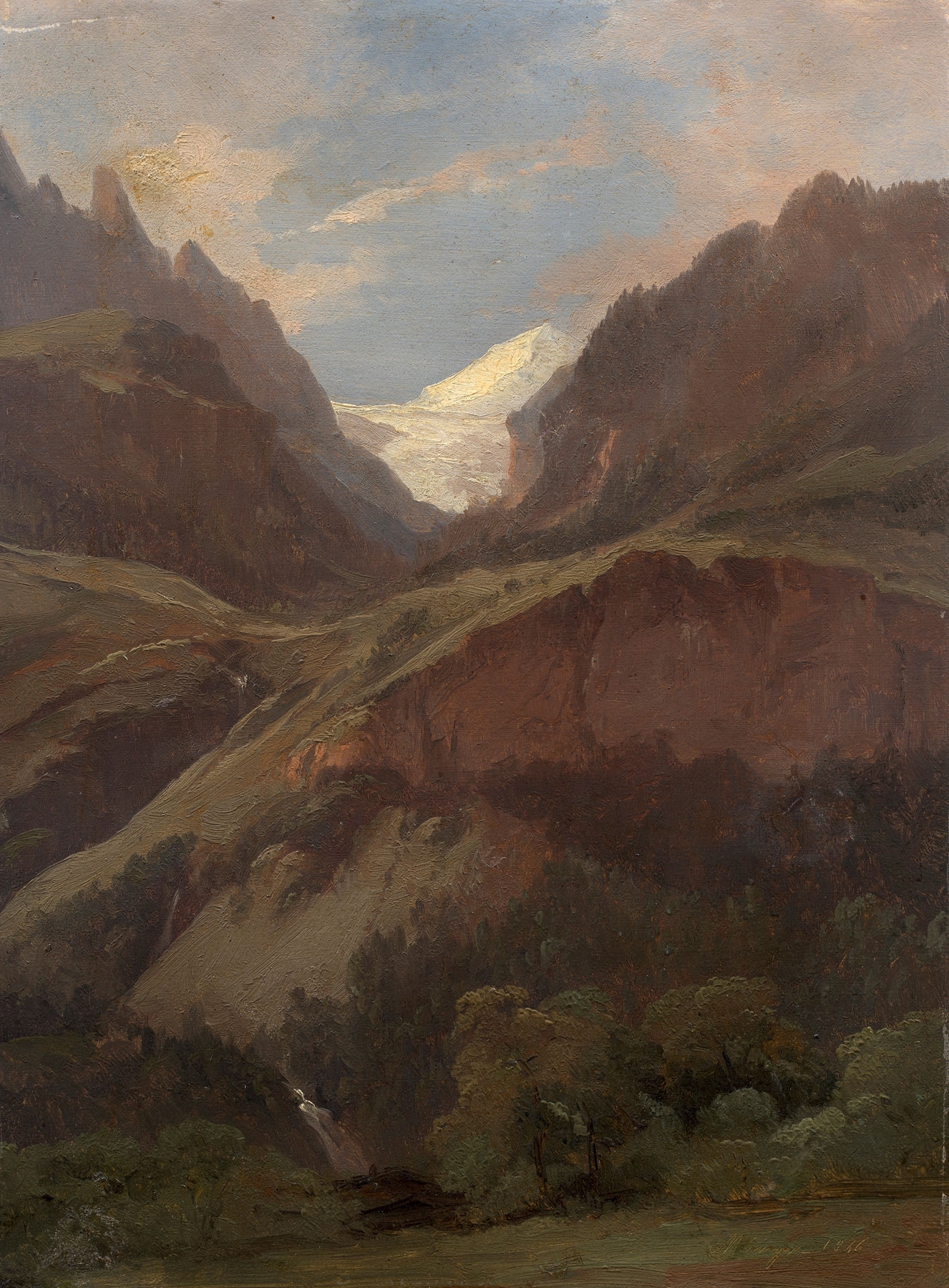
View of the Wetterhorn and the Reichenbach from Meiringen — History & Analysis
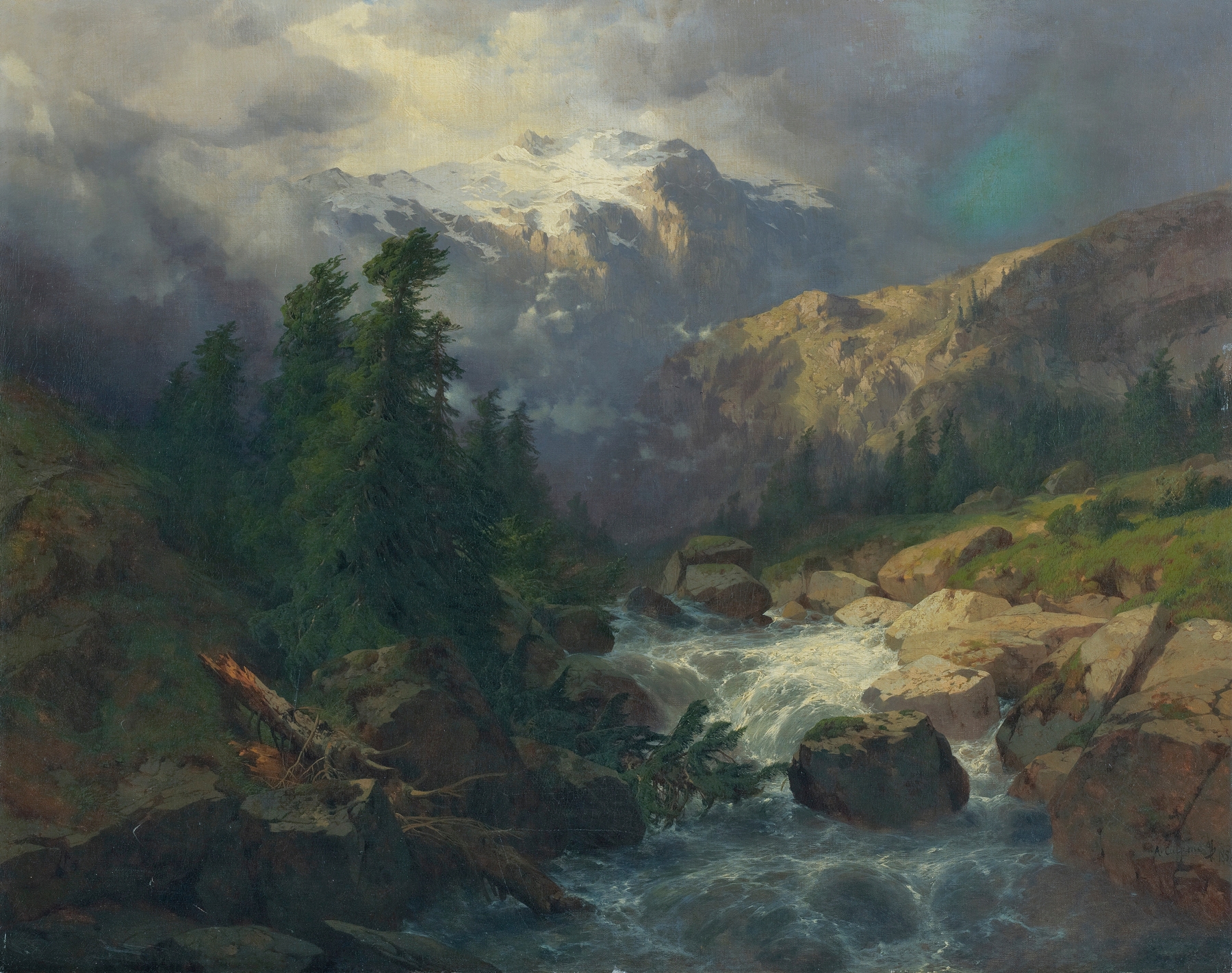
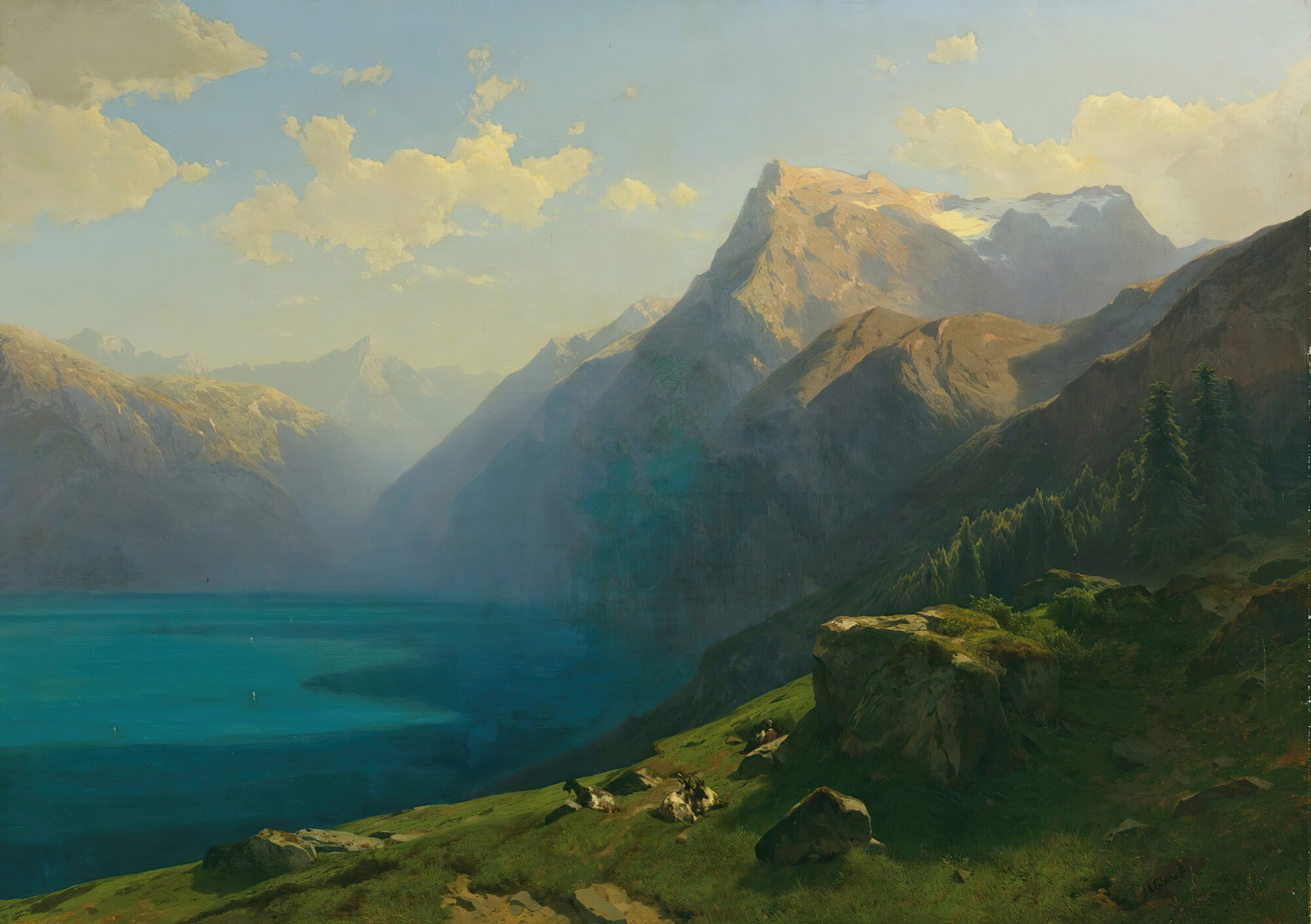
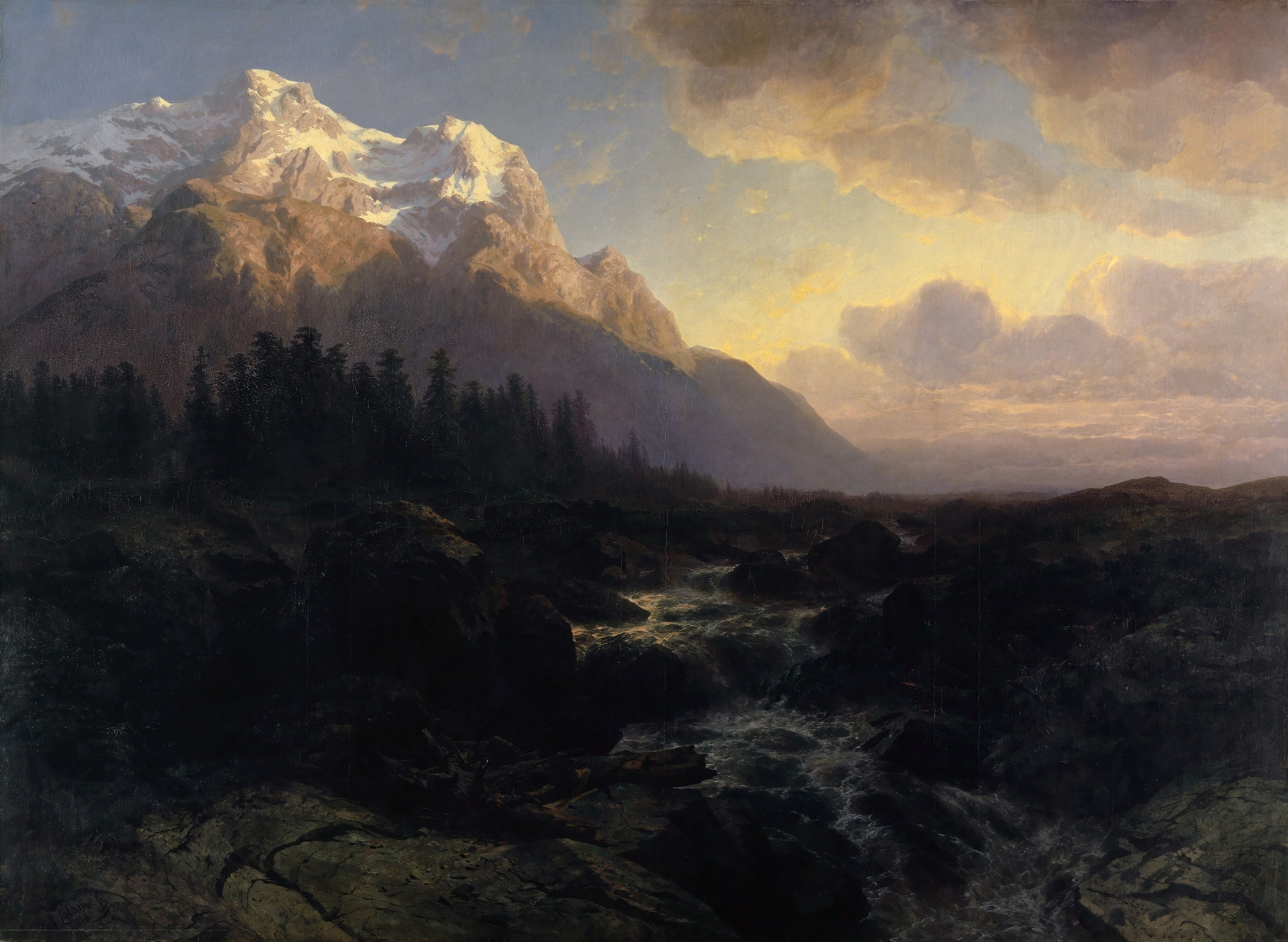
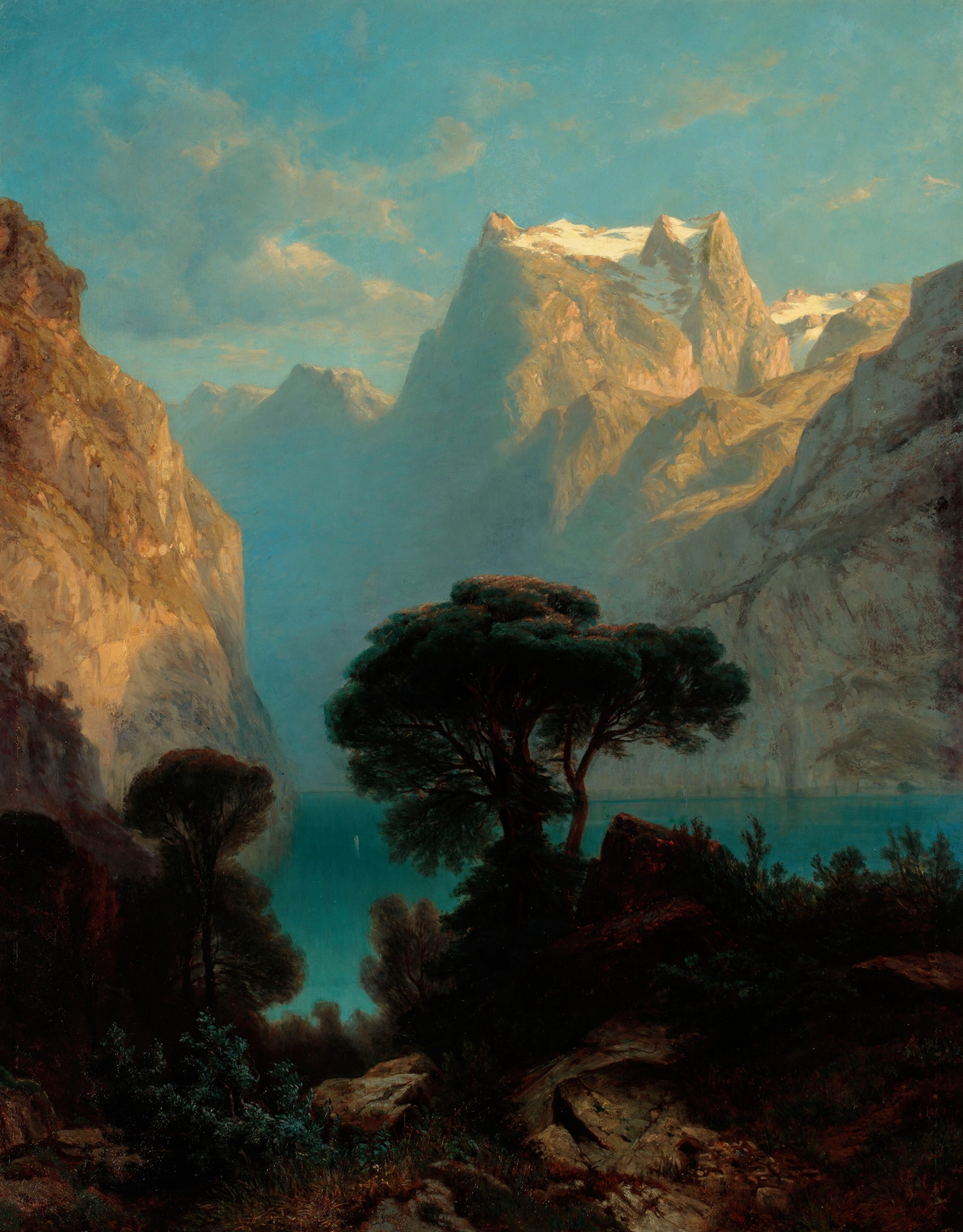
Where does light end, and longing begin? In the midst of towering peaks and sweeping valleys, the interplay of nature's grandeur and human emotion becomes palpable. Look to the foreground, where a serene river winds its way through lush, green meadows dotted with wildflowers. Notice how the light falls upon the rocky outcrops, illuminating their rugged surfaces and creating a delicate balance between softness and strength. The sky, a brilliant gradient of blues and whites, frames the majestic Wetterhorn, capturing the eye and drawing it upwards towards the awe-inspiring heights.
The artist’s brushwork, fluid yet precise, invites the viewer to immerse themselves fully in this breathtaking landscape. Delve deeper into the contrasts presented in this piece. The calmness of the water reflects the chaos of the jagged mountains, creating a dialogue between tranquility and turbulence. The vibrant greens of the meadows serve as an antidote to the stark, icy peaks above, symbolizing the harmony that exists between different elements of nature.
This juxtaposition evokes feelings of nostalgia and yearning—one cannot help but feel the pull of adventure and the allure of the unknown that these majestic landscapes embody. In 1846, Alexandre Calame painted this piece during a period when Swiss landscapes were gaining prominence in the art world, attracting travelers and artists alike. Living in Switzerland, he was inspired by the dramatic topography of the Alps, which reflected his deep appreciation for nature. At this time, the Romantic movement was flourishing, emphasizing emotion, nature, and the sublime, all of which resonate powerfully in this captivating representation of the Swiss landscape.