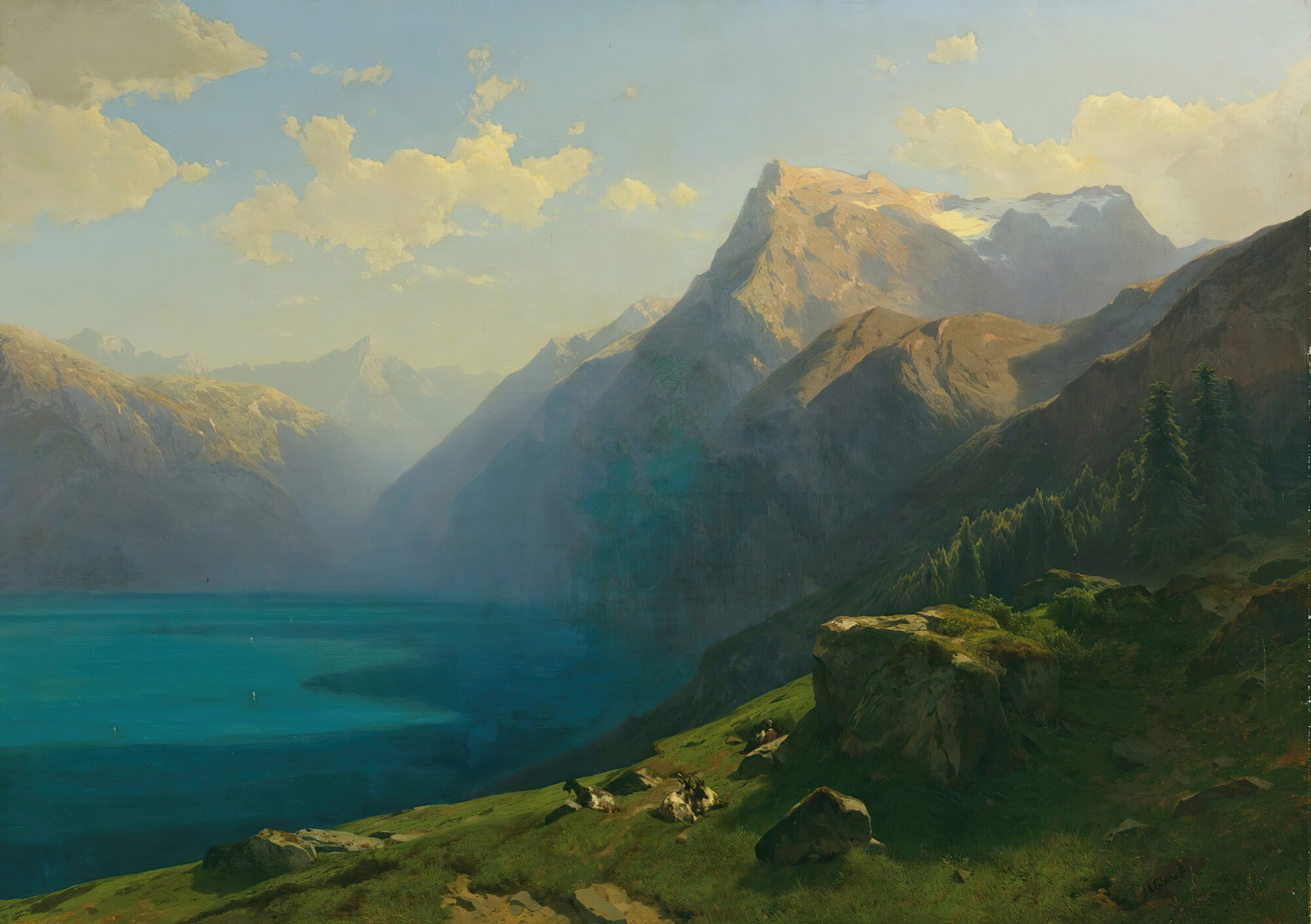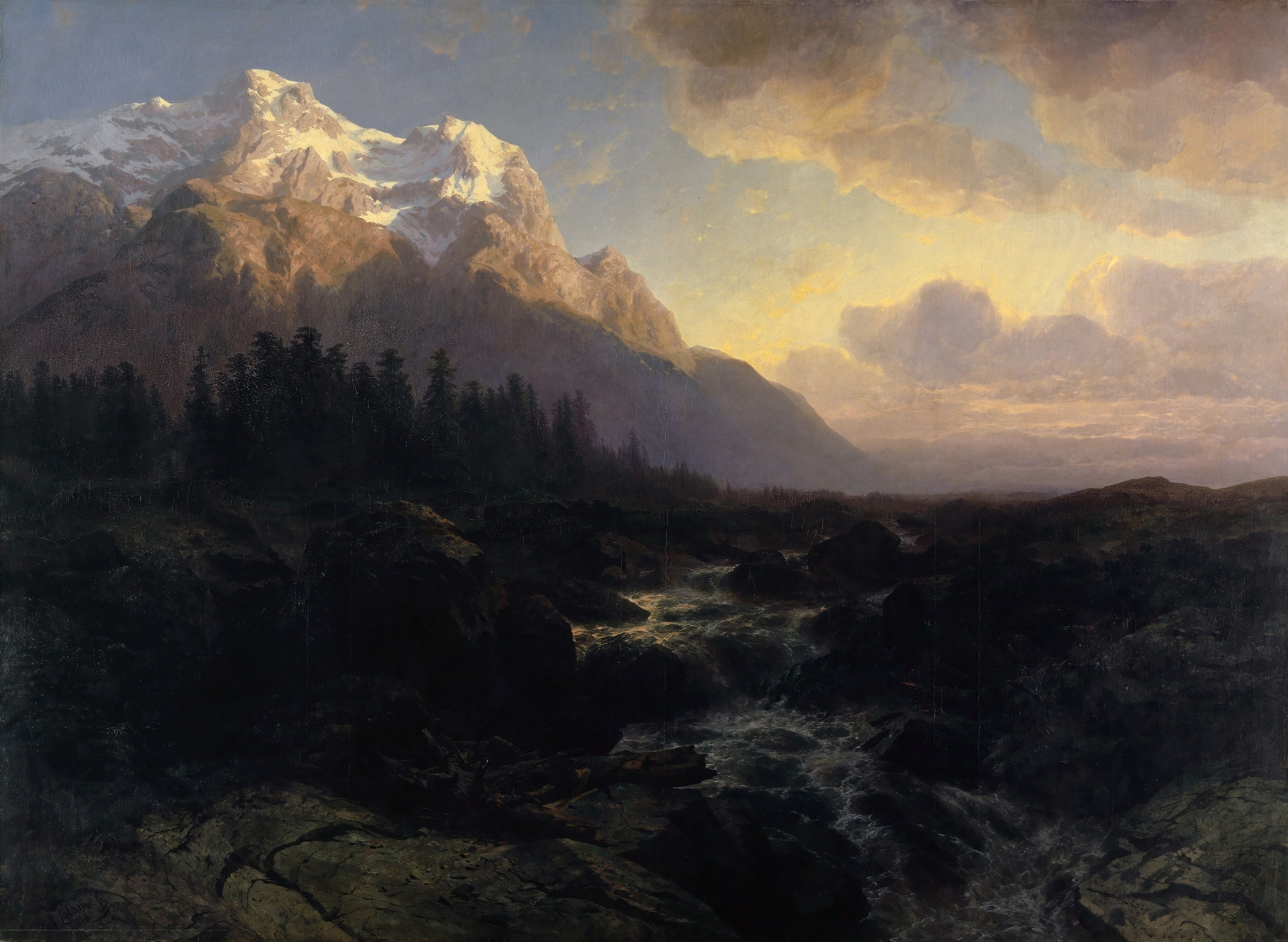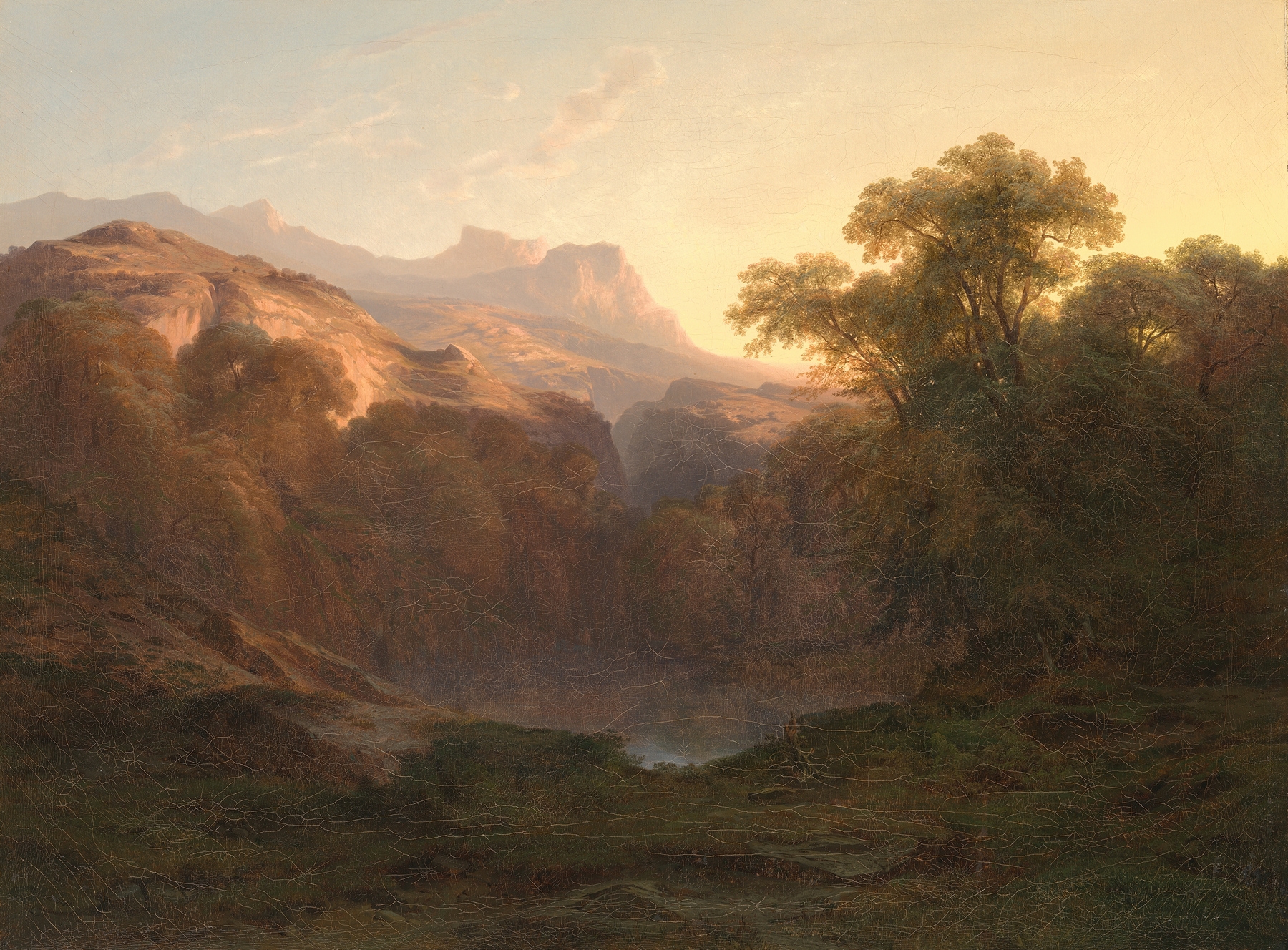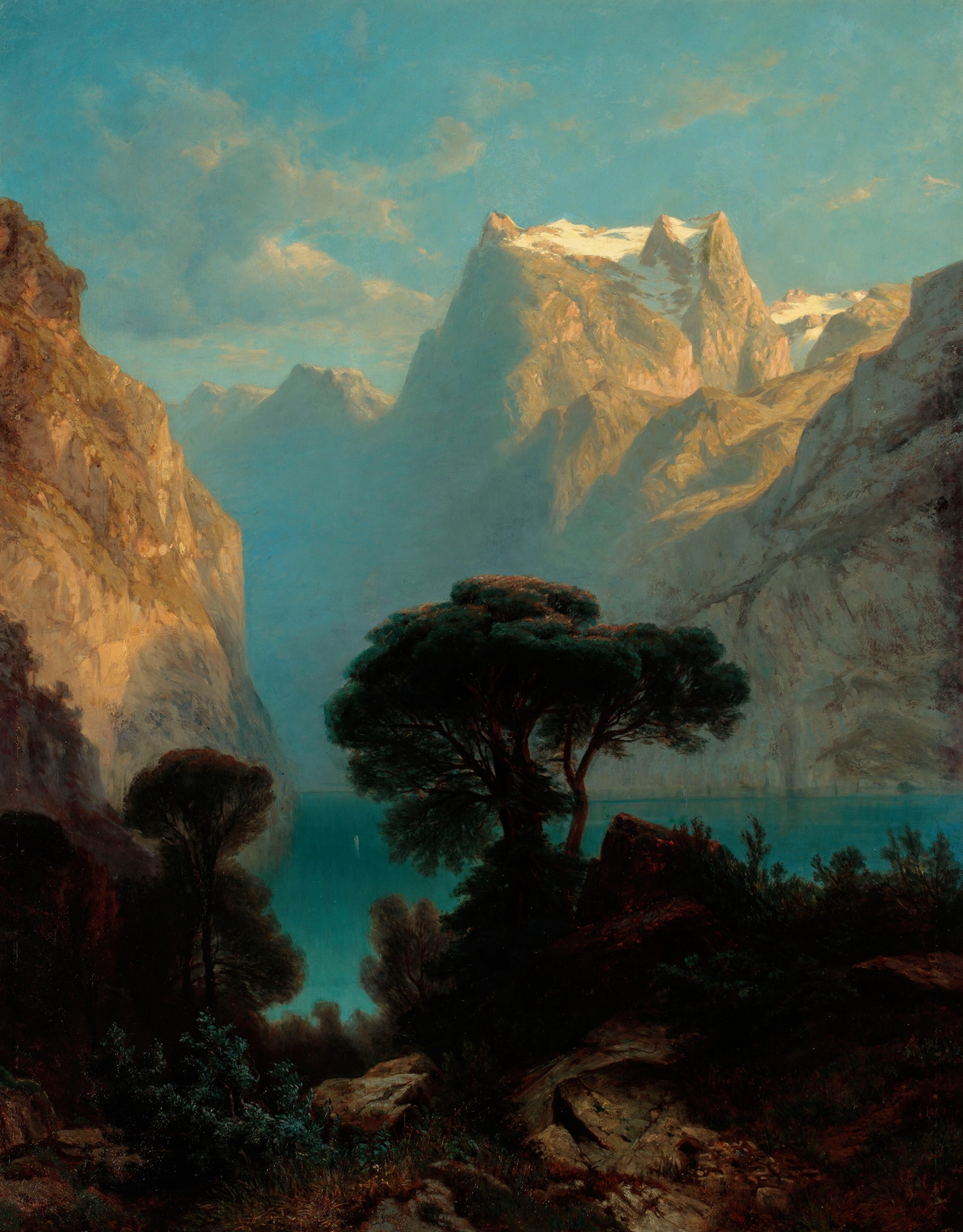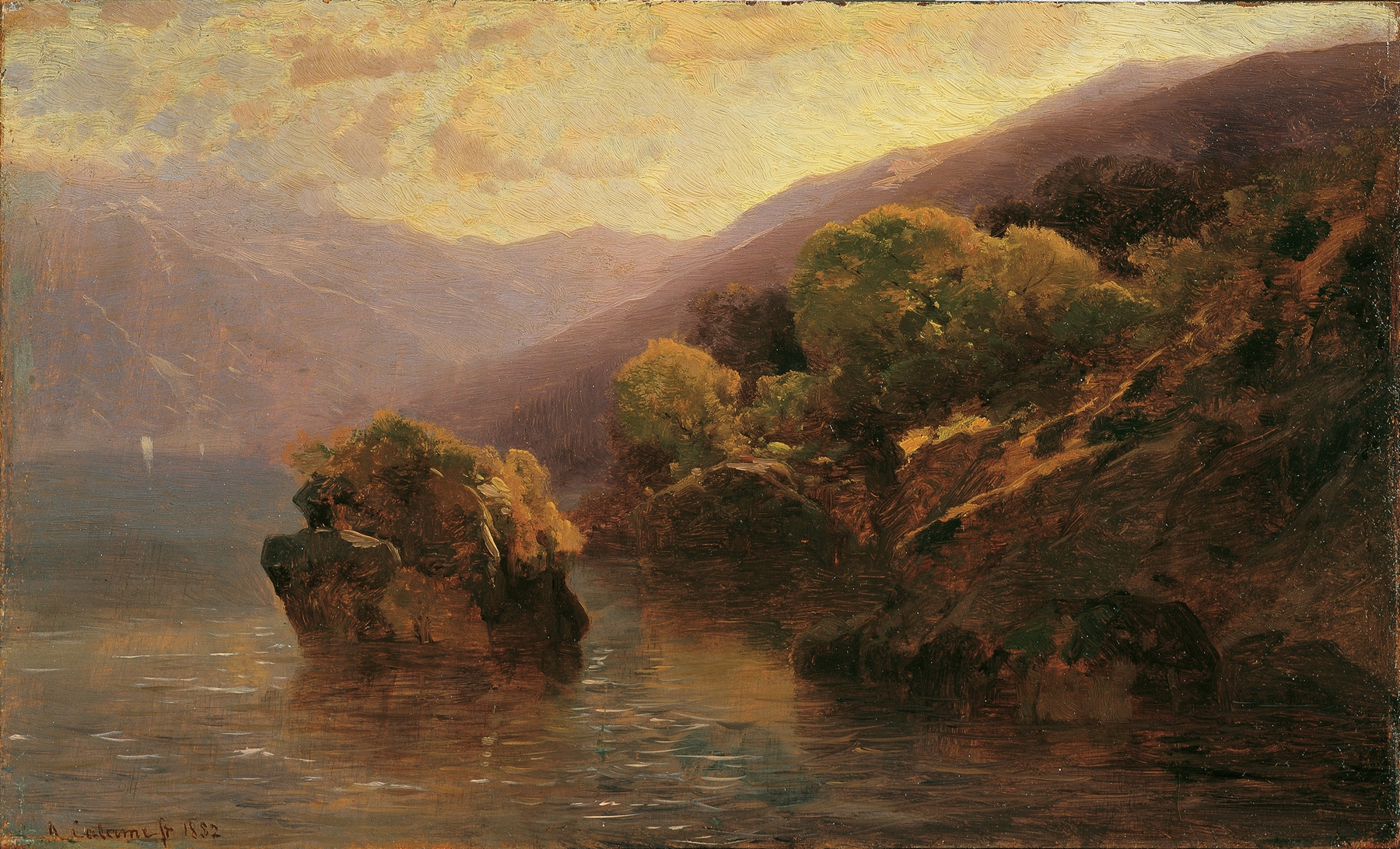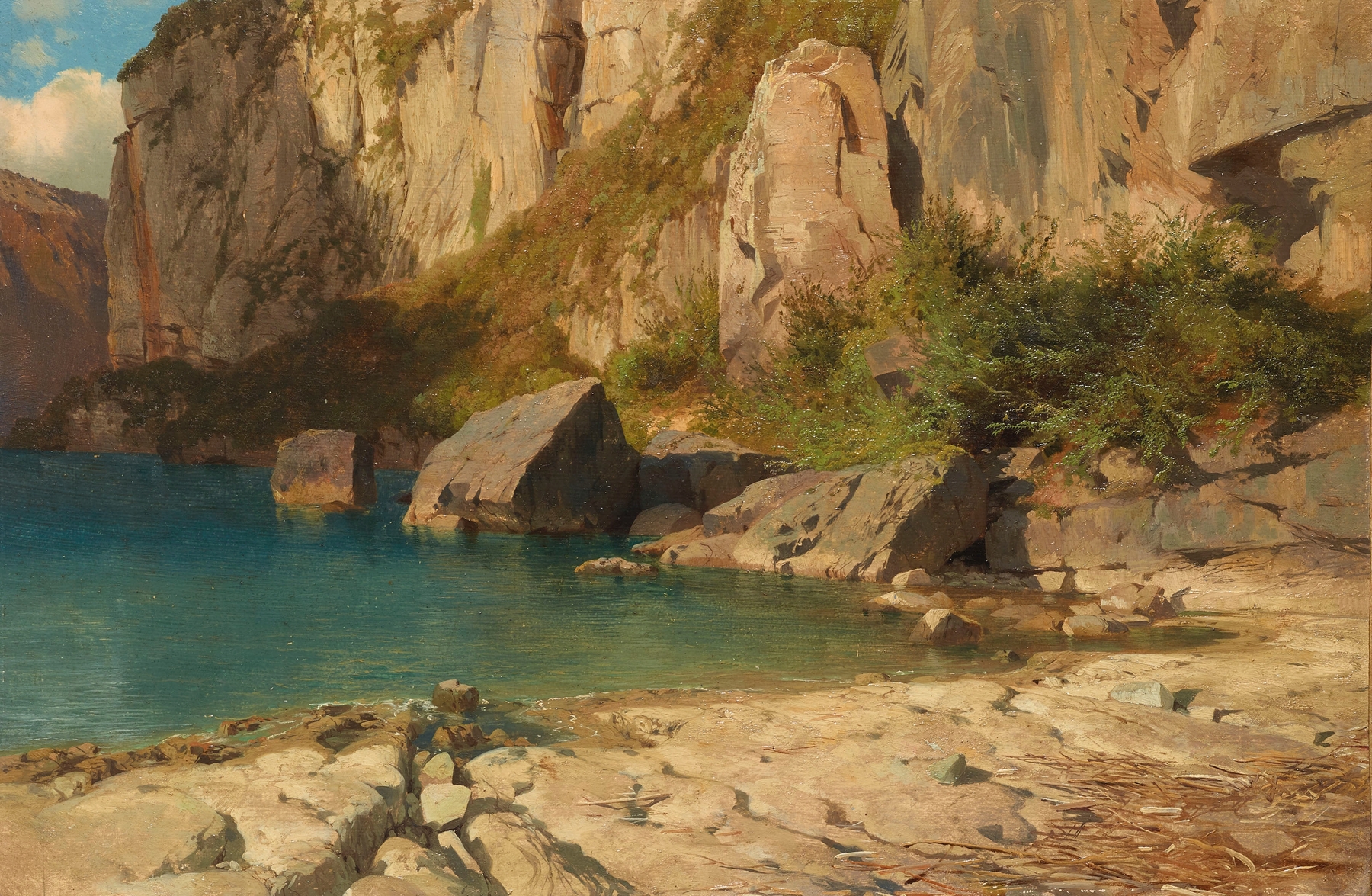
“Under the brush, chaos becomes grace.” In this moment of creation, faith breathes life into nature, transforming rugged landscapes into a symphony of tranquility. Look to the foreground, where the rocky outcrops seem to emerge from the canvas, solid and tangible. Notice how the warm golden hues of the sun-drenched cliffs contrast with the cool, serene blue of the lake that cradles them. The artist employs a delicate balance of light and shadow, capturing the fleeting essence of a moment in time, urging the viewer to immerse themselves in the idyllic tranquility of the scene. Delve deeper into the painting, and you’ll uncover the emotional tension that lies between the serene lake and the dramatic mountains in the background. The juxtaposition of the calm waters and the towering peaks invokes a sense of faith—a belief that beauty exists even in the most tumultuous surroundings. Calame subtly suggests that nature is a refuge, a place where chaos gives way to peace, reflecting the inner struggles of the viewer's own existence. In 1854, while in Switzerland, the artist painted this work during a period of profound connection to the landscape around him. As a prominent figure in the Romantic movement, he sought to evoke emotions through nature's sublime beauty, mirroring a growing cultural desire to find solace and inspiration outside the confines of urban life. This specific piece encapsulates the harmony he found in the serene vistas of Vierwaldstättersee, illustrating a moment where faith and beauty intertwine.