Village Au Bord De Rivière — History & Analysis
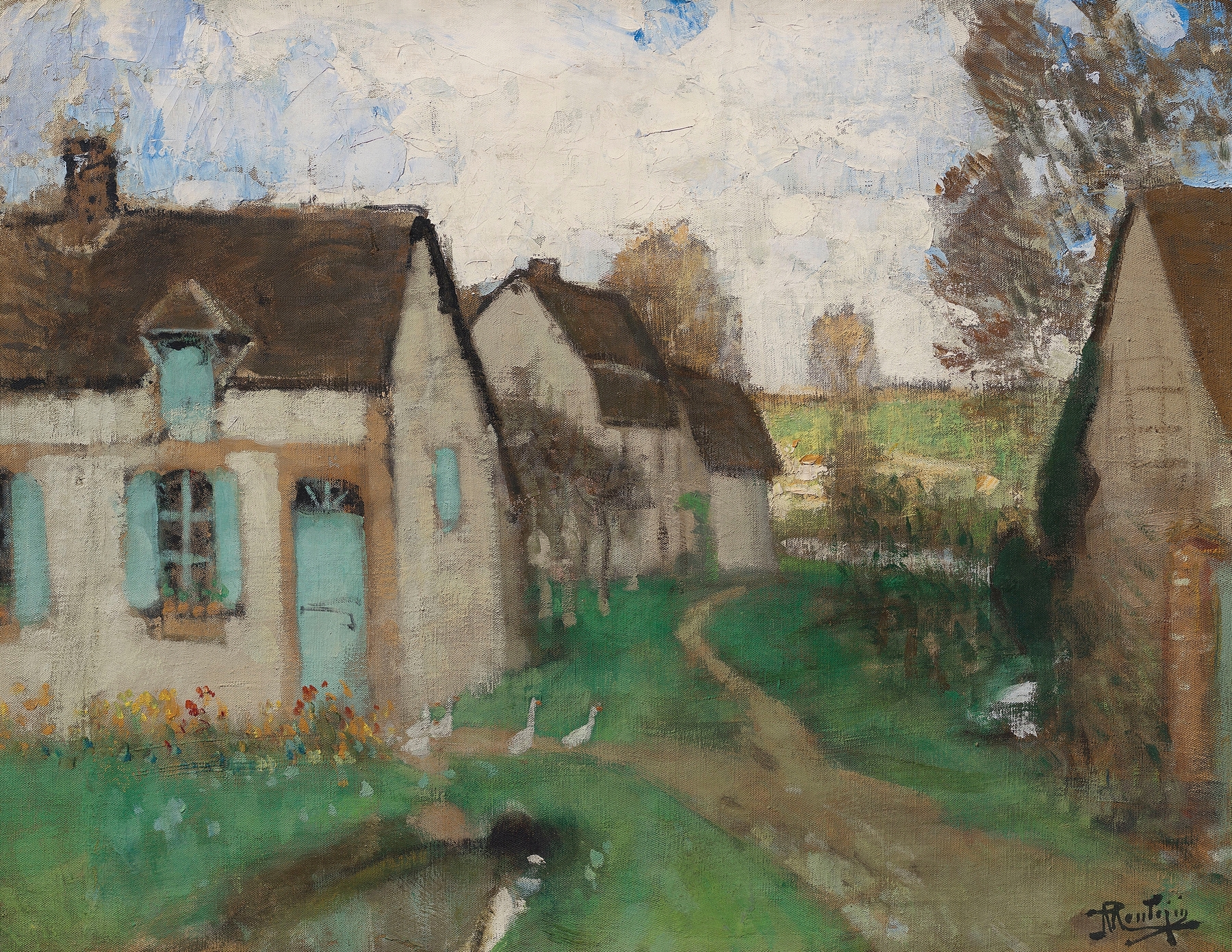
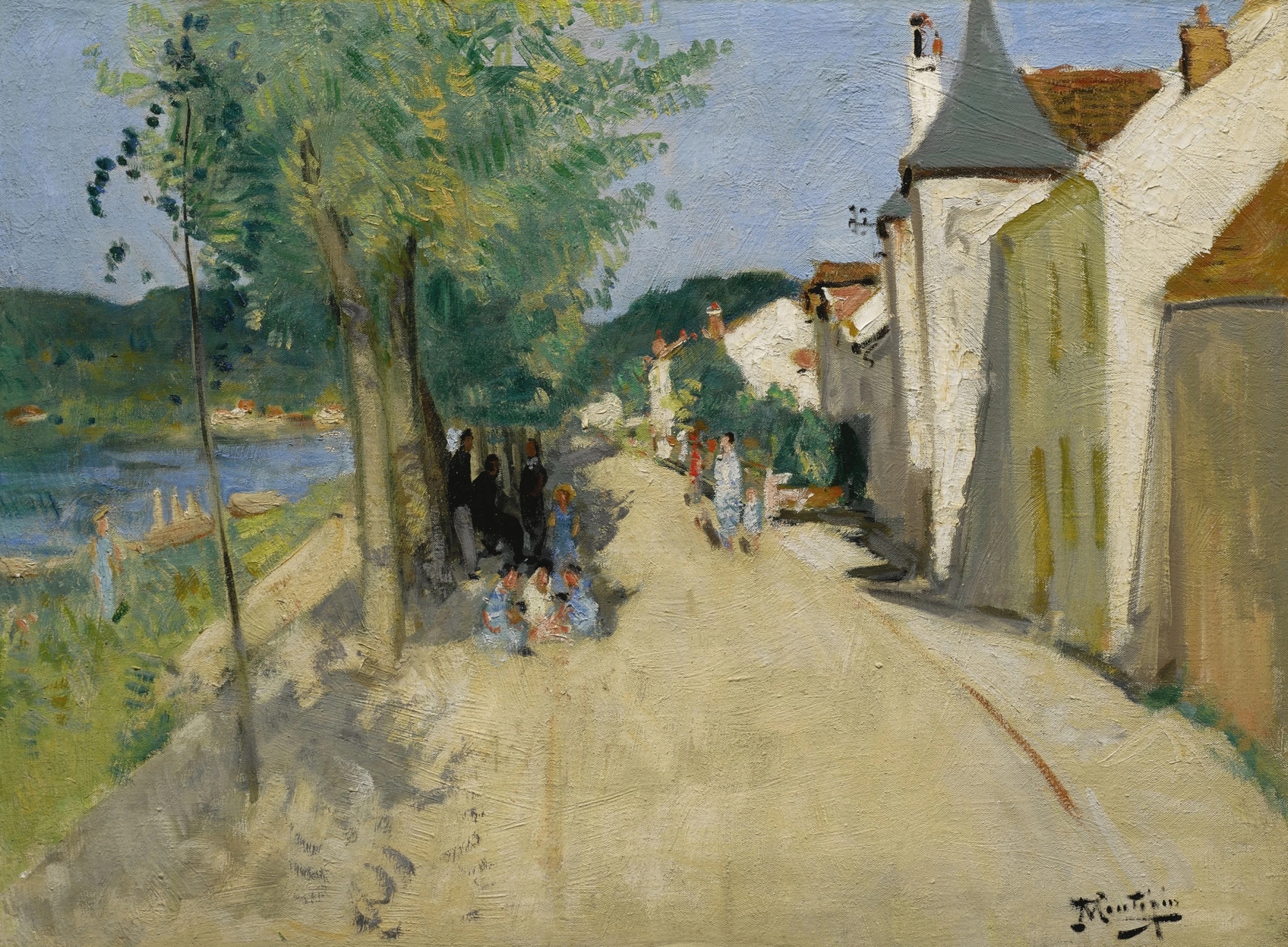
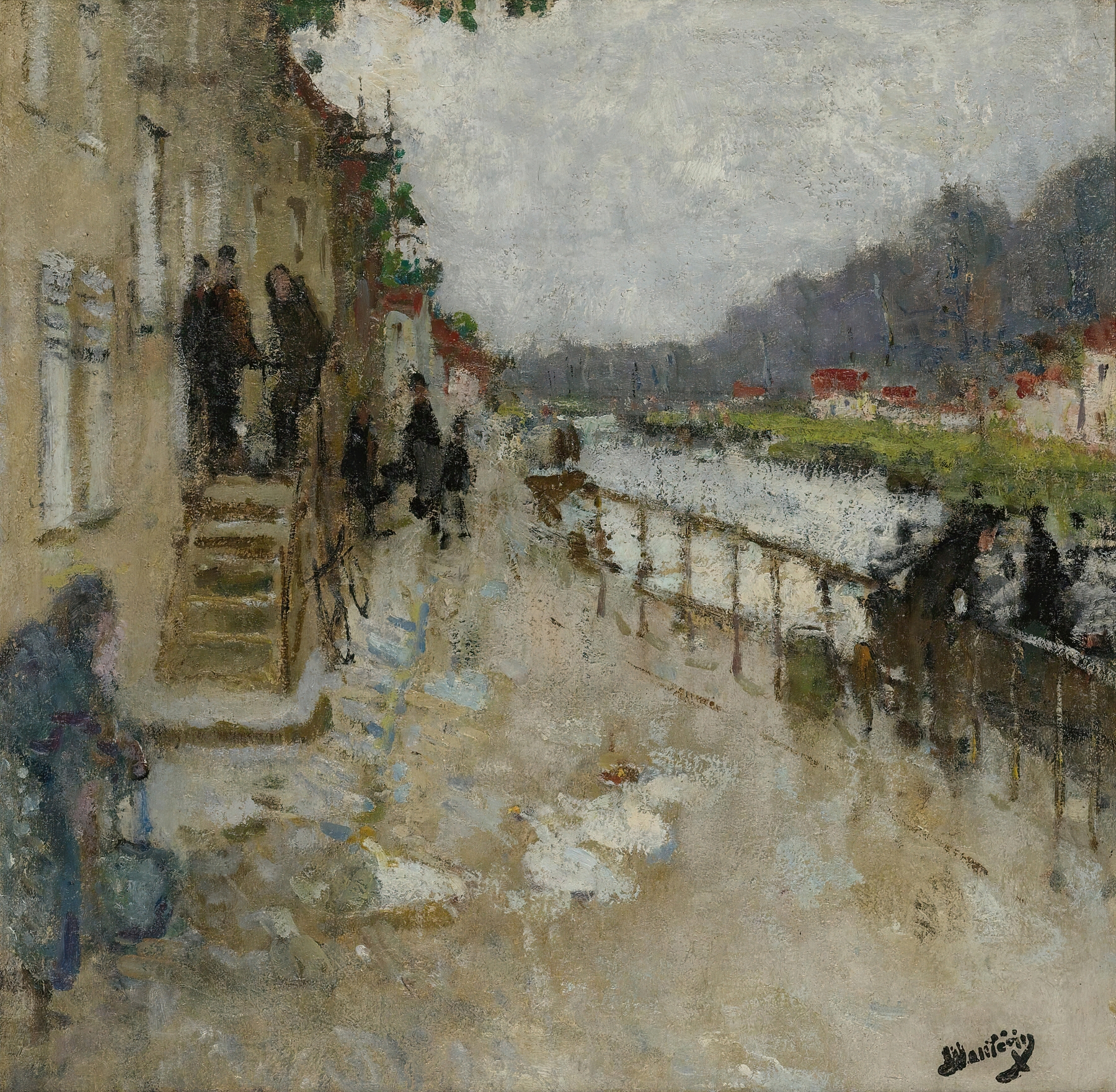
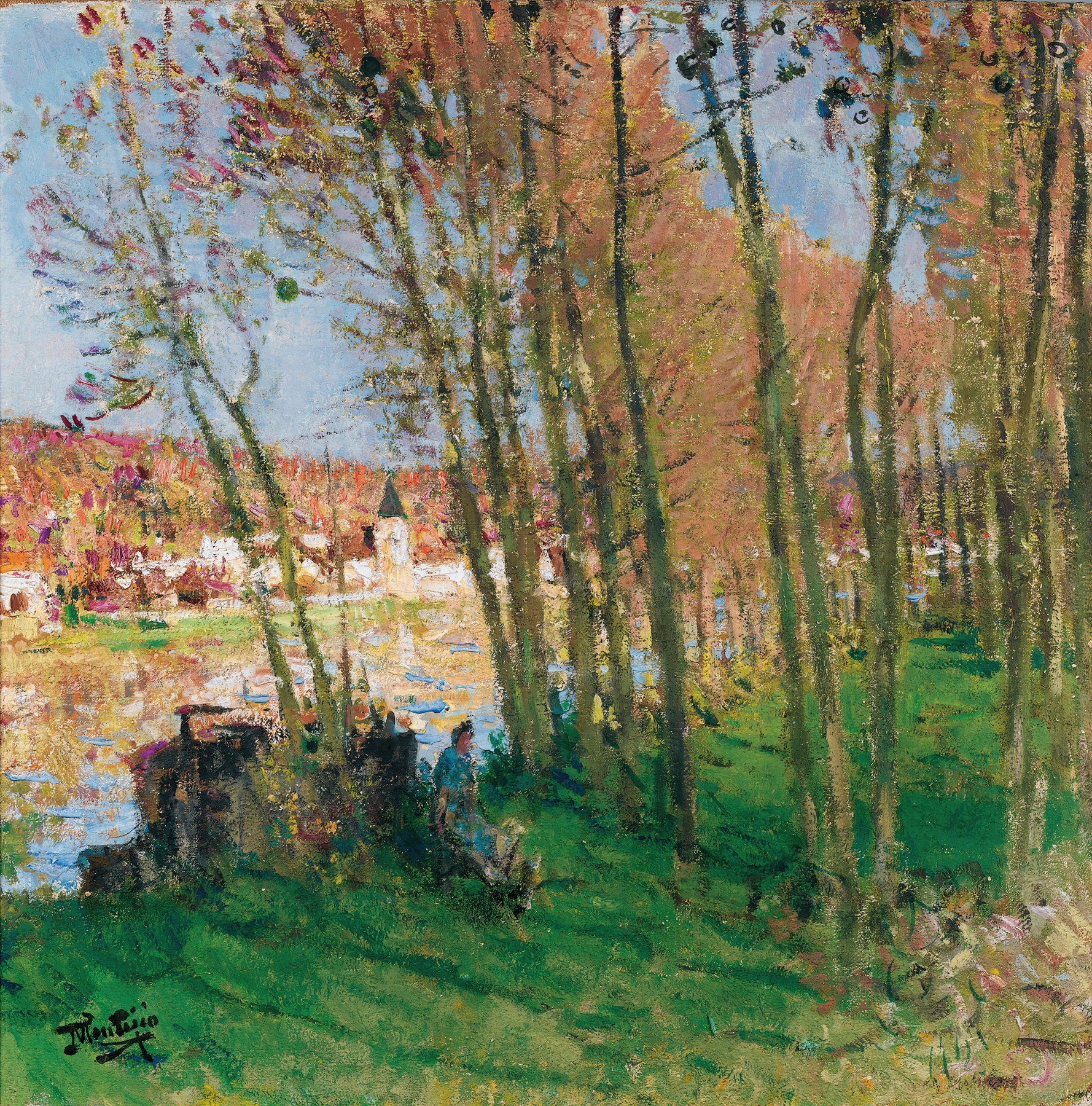
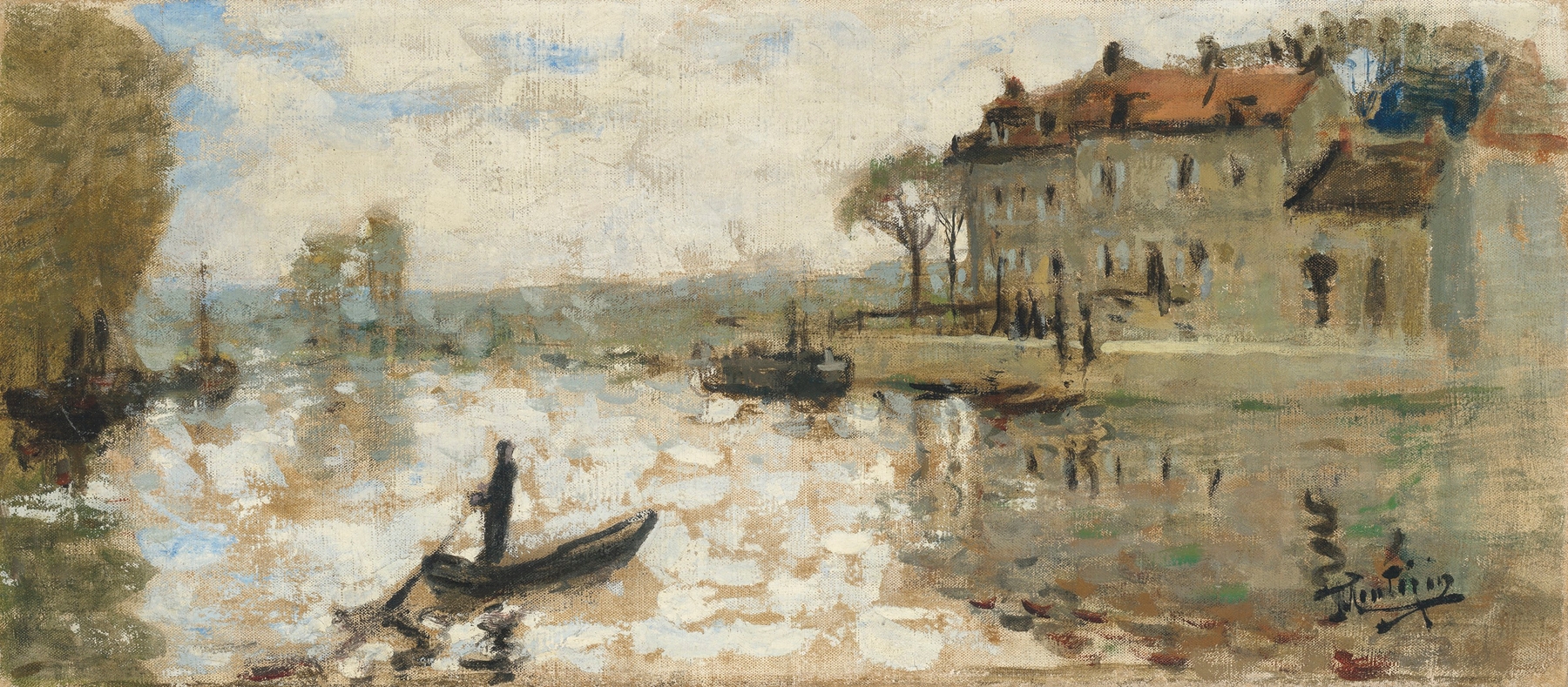
Did the painter know this moment would outlive them? A snapshot of tranquility, a fleeting peace captured on canvas, invites us into a world that breathes nostalgia and loss. Look to the left at the lush greenery, where the trees arch gracefully over the river's edge, their leaves kissed by the golden light of a setting sun. Notice how the brushstrokes blend harmoniously, creating a soft transition between the vibrant greens and the deeper blues of the water.
The small village, nestled against the bank, draws the eye with its warm, earthen tones, legs of cottages standing firm against the ebb of time. Montézin’s choice of a muted palette evokes a sense of longing, as if he is pleading with the viewer to remember moments now faded but still alive in memory. The shimmering surface of the river reflects not only the light but the fragility of the scene—a reminder of life’s impermanence. Here, the calm juxtaposed with the inevitable flow of the water suggests a deeper narrative of change, urging us to ponder what has been lost.
Each cottage stands as a testament to human presence, yet the encroaching shadows hint at the quiet inevitability of abandonment, tying the landscape's beauty to an undercurrent of melancholy. In this work, created during the early 20th century, Montézin was navigating the tensions of a rapidly modernizing world. Painting from his studio in Paris, he engaged with Impressionism’s legacy while forging his own path. This period was marked by a shift toward capturing not just the physical world, but the emotional experiences intertwined with it — a reflection of a poignant longing for a simpler past amidst the chaotic pulse of contemporary life.