Villagers On A Sunlit Dutch Street — History & Analysis
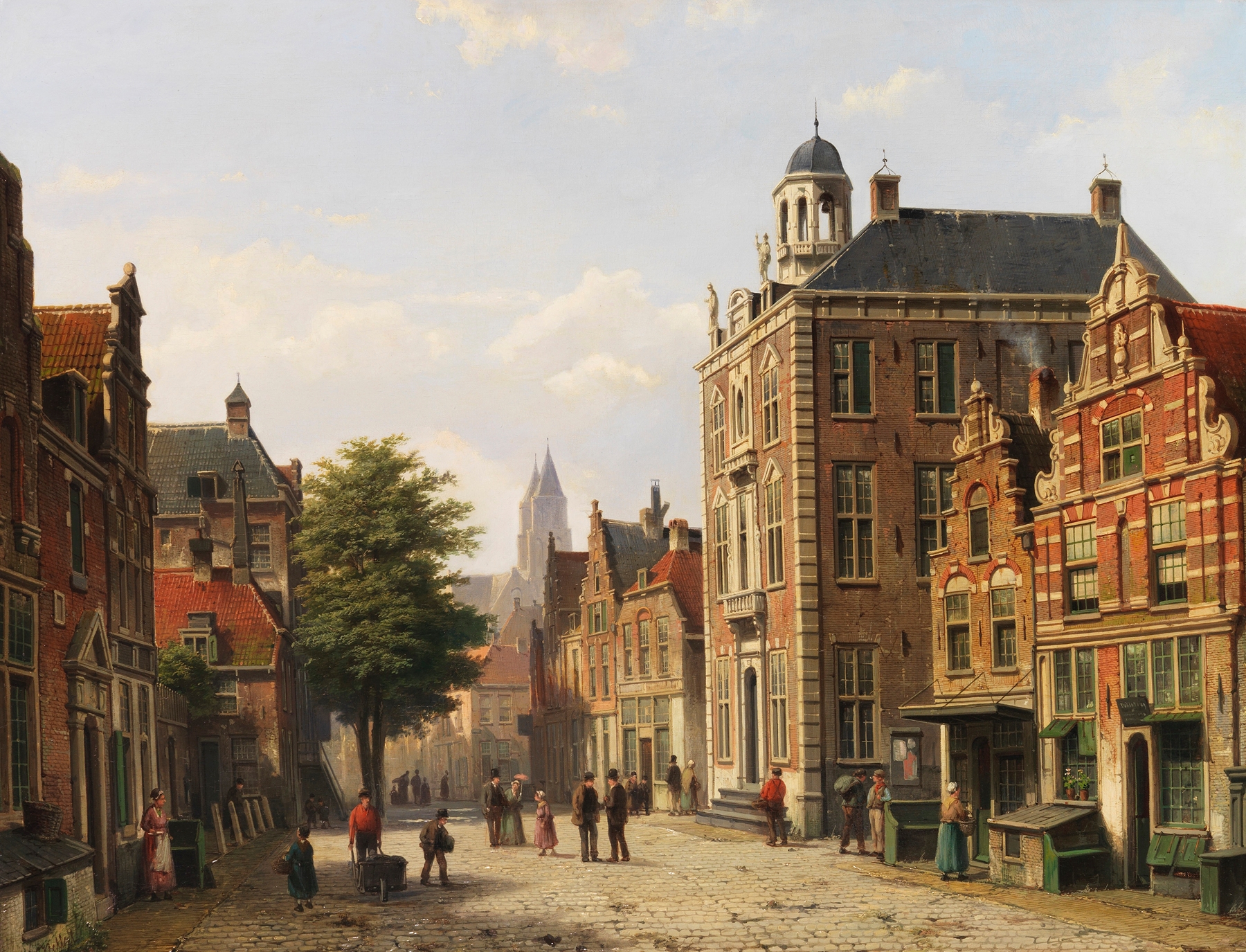
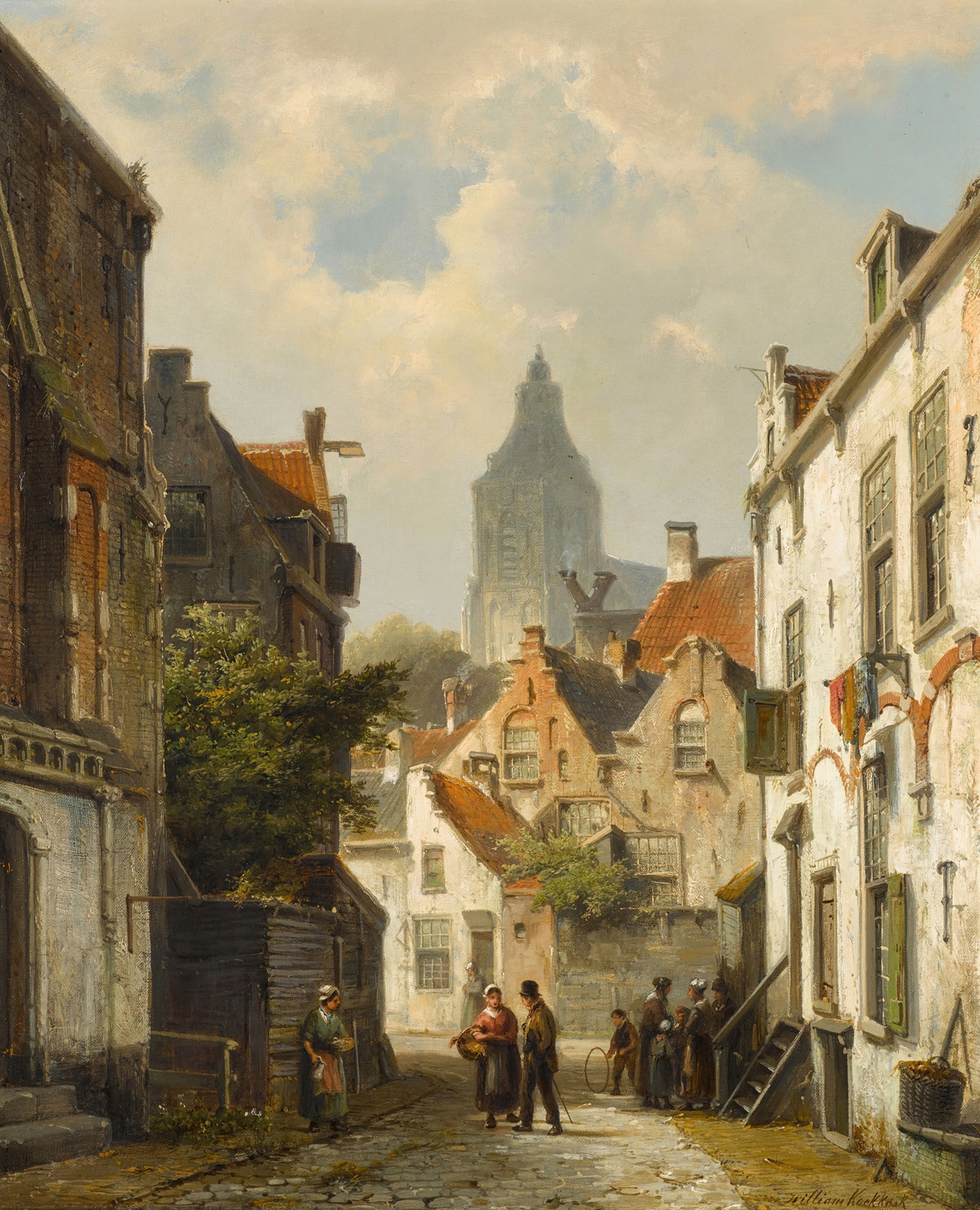
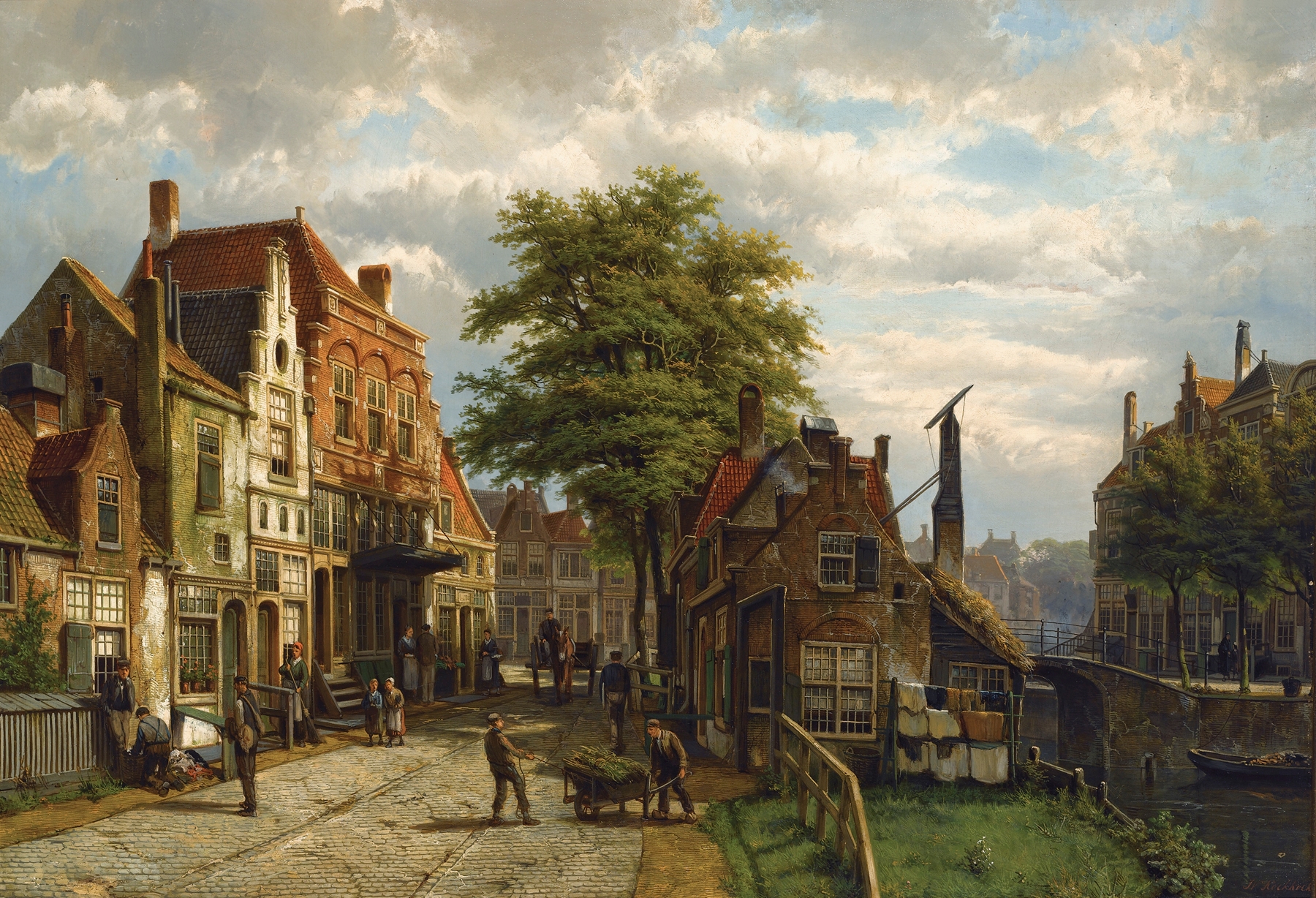
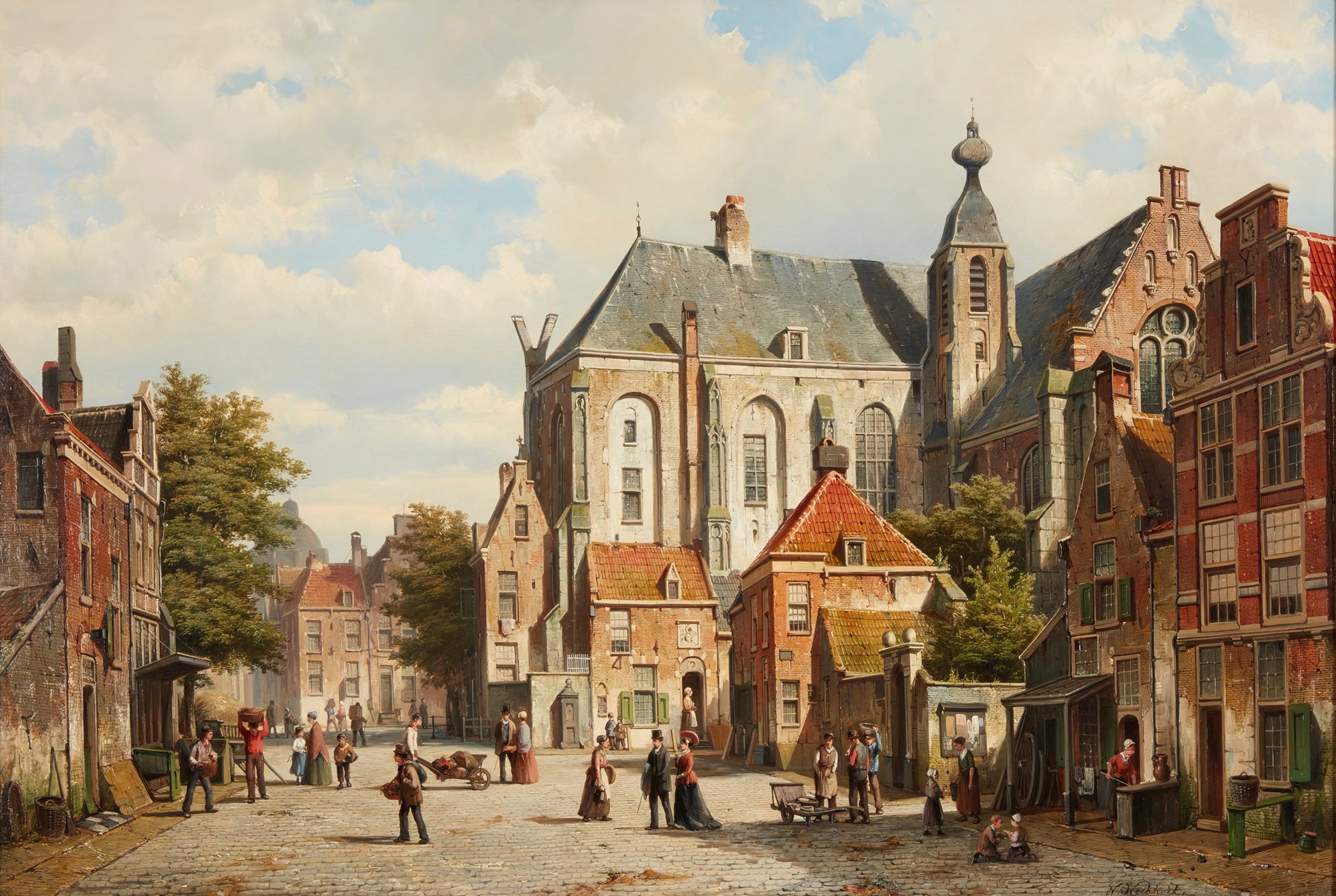
Can beauty exist without sorrow? This question lingers in the air as you gaze upon a serene moment captured in the heart of a bustling village. Look to the left at the gentle interplay of light and shadow as it dances across the cobblestone street, softly illuminating the faces of the villagers. The brushwork is delicate, allowing each figure to emerge from the background with subtlety.
Notice how the warm hues of golden sunlight contrast with the cool blues of the shadows, creating a harmony that envelops the scene, inviting the viewer into a world both peaceful and vibrant. Within this tranquil depiction lies an undercurrent of emotional tension. The villagers, engaged in daily tasks, embody a simplicity that belies the complexities of human experience. Their expressions—some smiling, others lost in thought—speak of life’s joys and burdens, suggesting that within every serene moment, echoes of sorrow may reside.
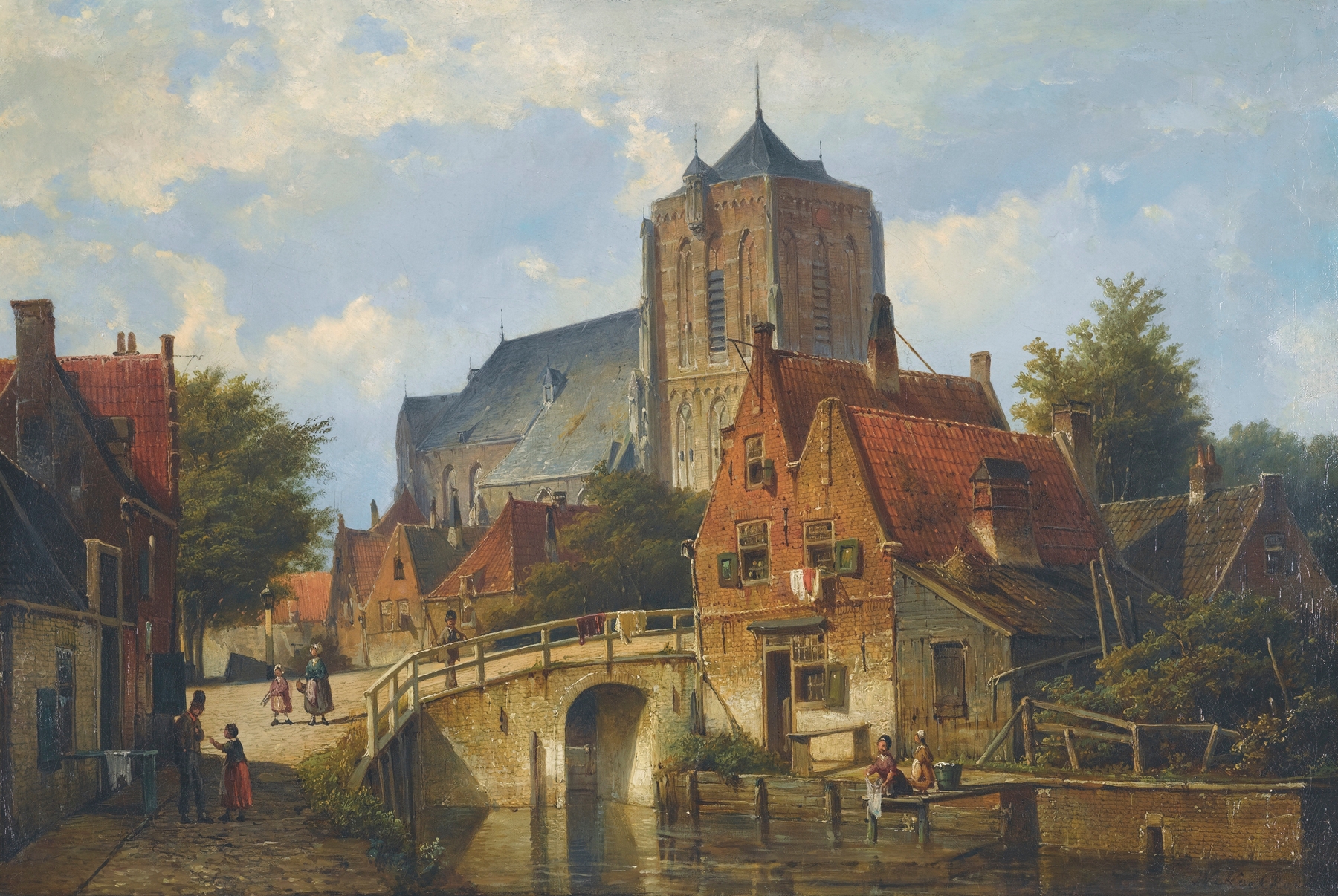
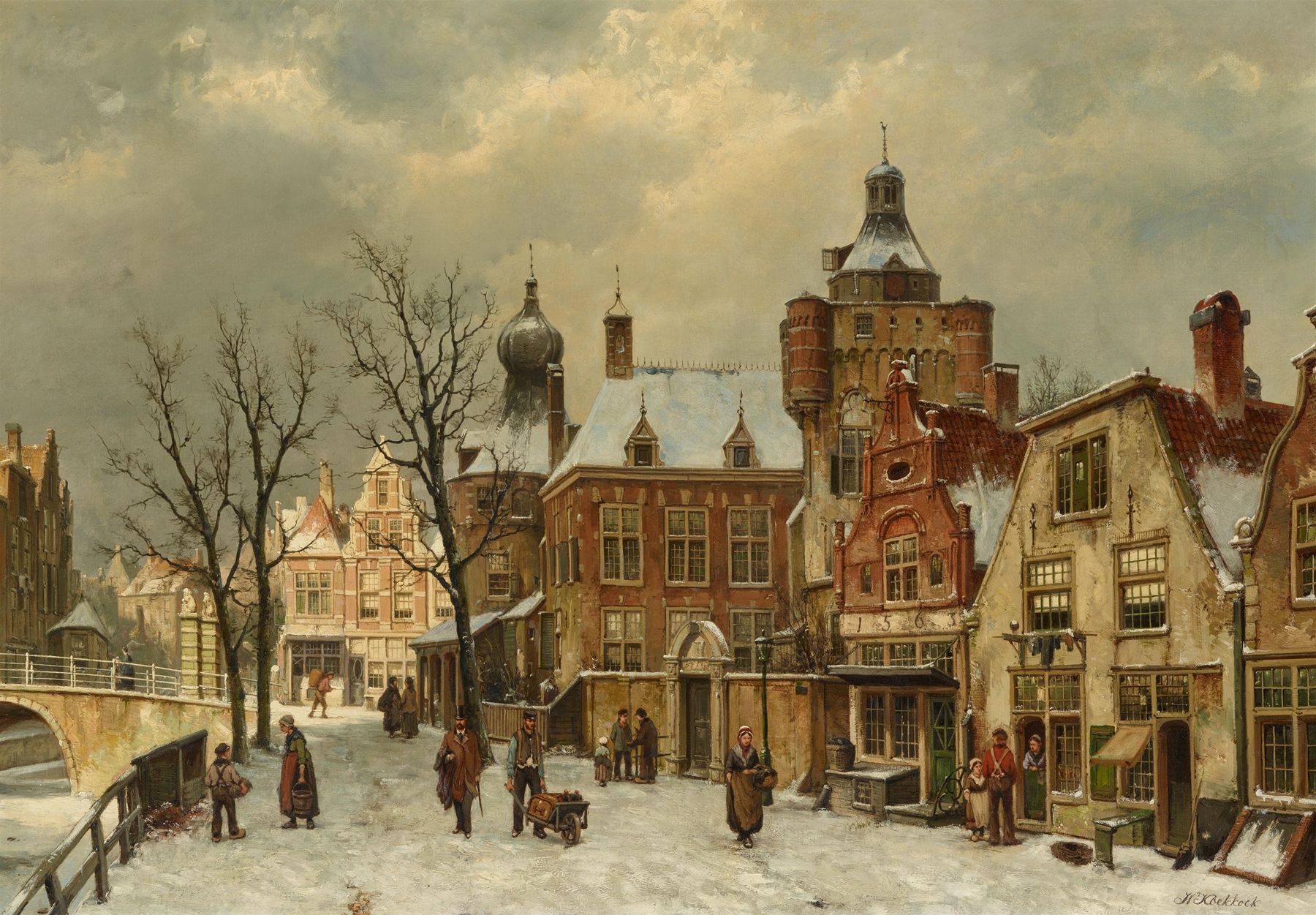
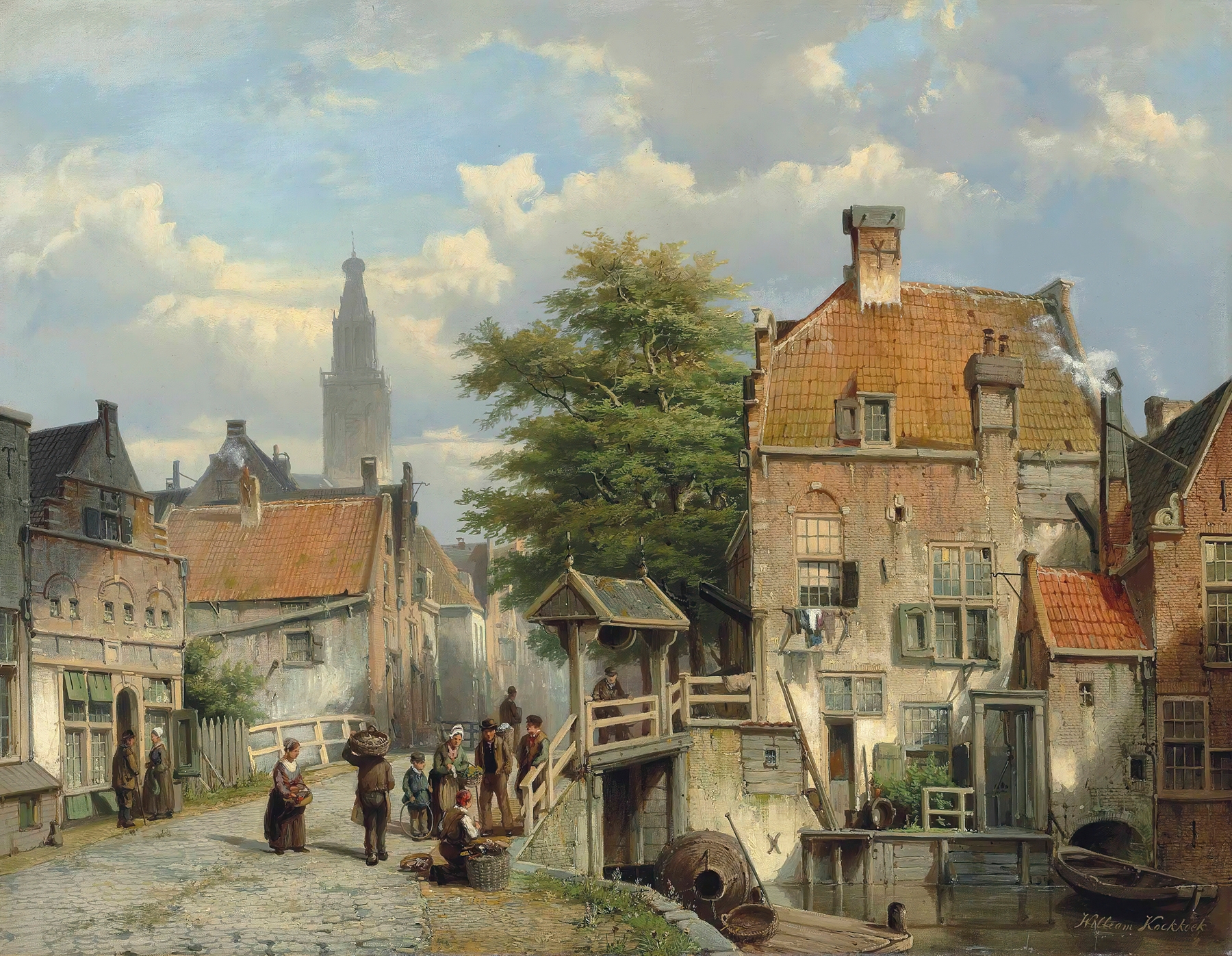
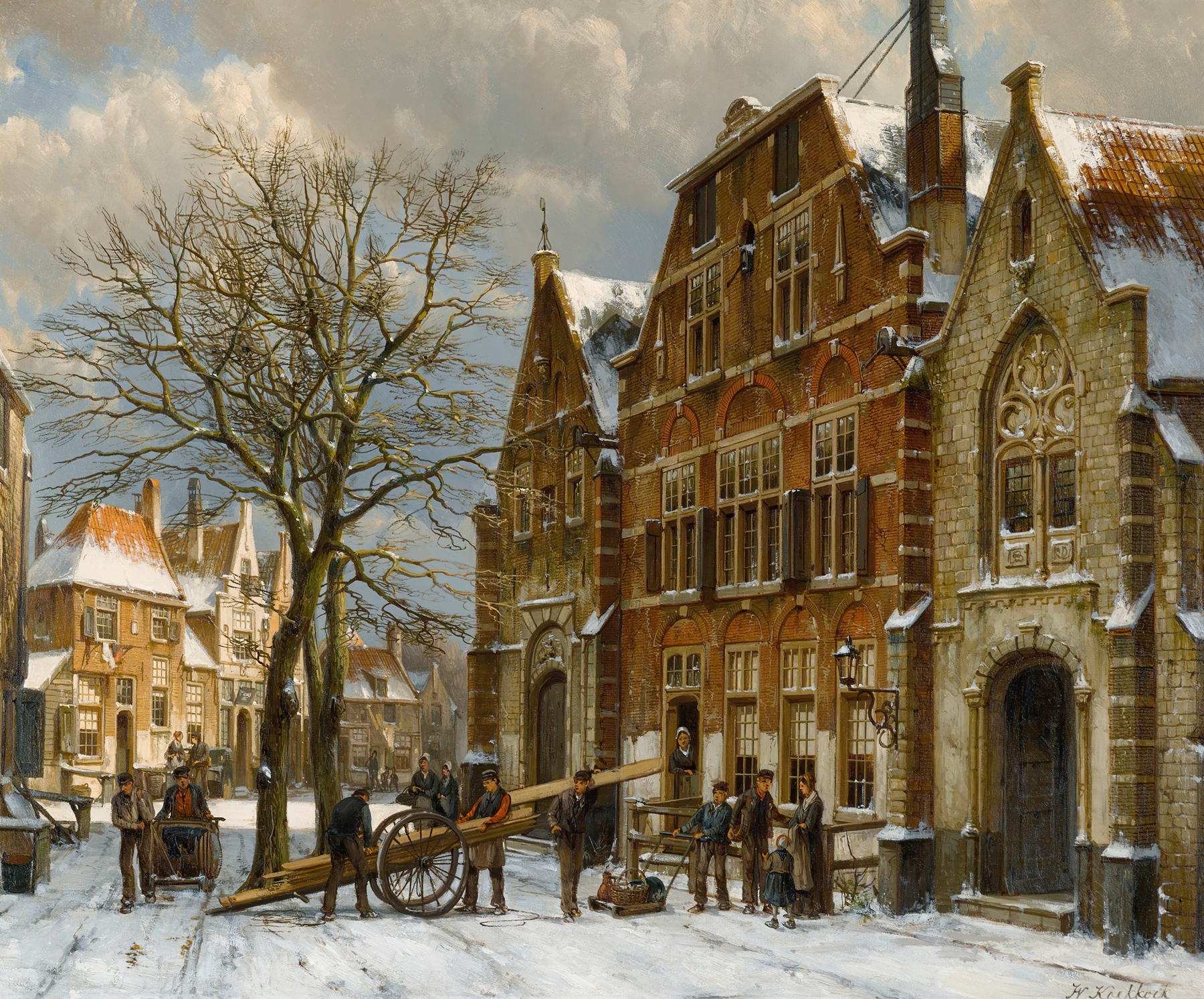
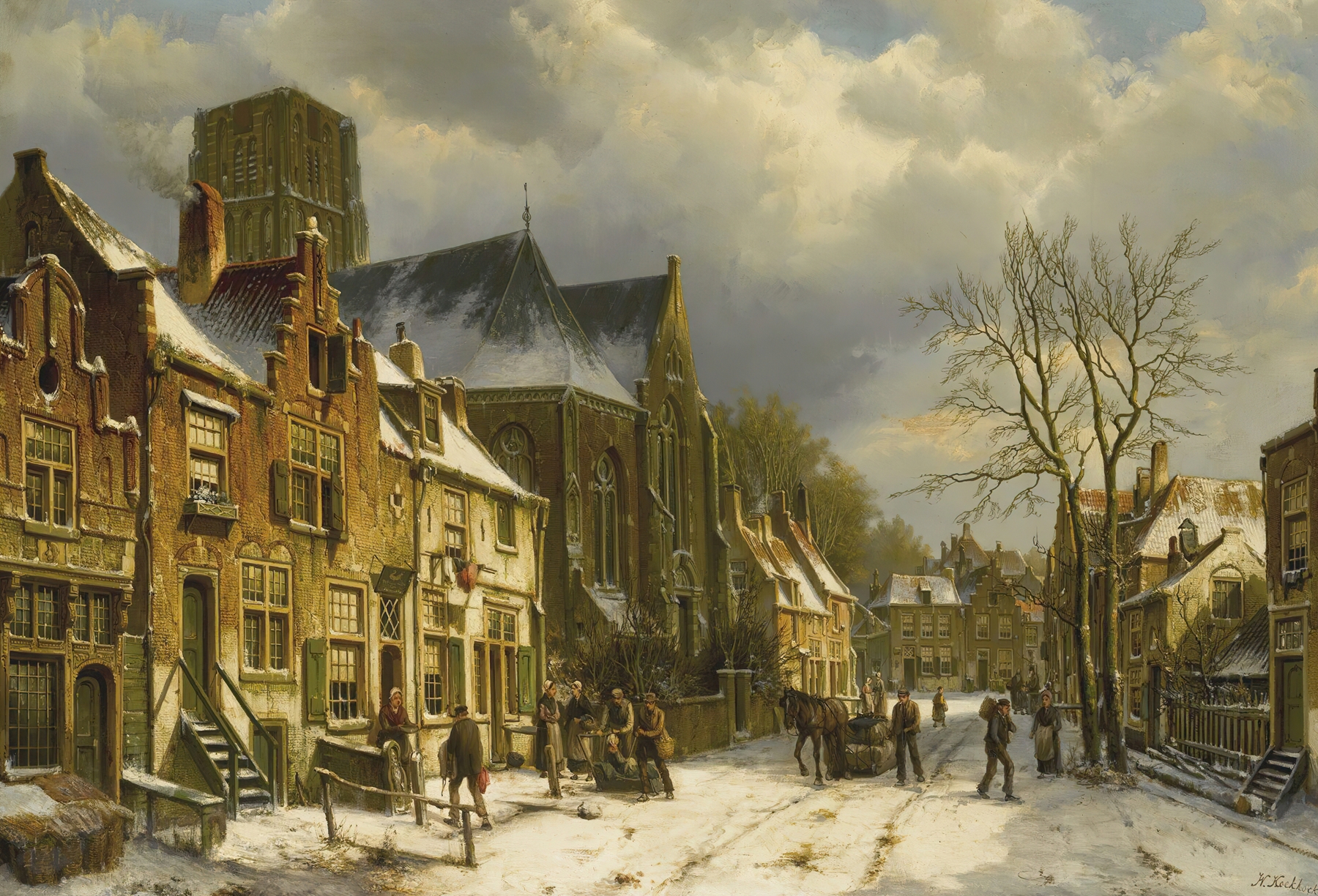
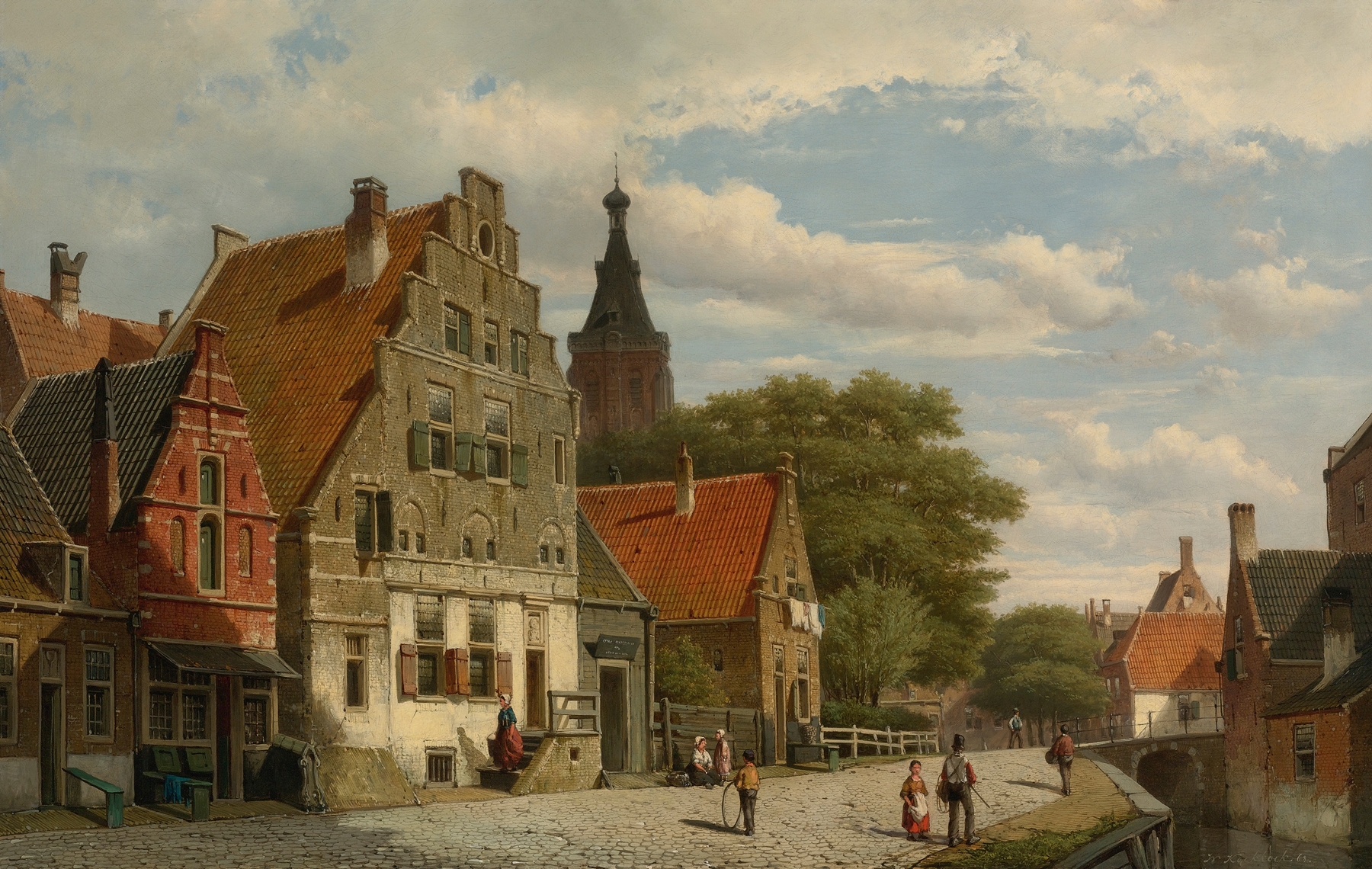
The quaint architecture framing the street acts as a reminder of time’s passage, enhancing the sensation of nostalgia that permeates the piece. Willem Koekkoek painted this scene during a period characterized by the rise of Romanticism in the mid-19th century. Living in the Netherlands amidst a burgeoning interest in realism and the everyday, he sought to capture not only the beauty of the landscape but also the essence of life unfolding within it. This artwork reflects his desire to evoke a sense of serenity, contrasting with the turmoil that often defined the human experience of his time.