Wallfahrtskirche Marienberg bei Burghausen — History & Analysis
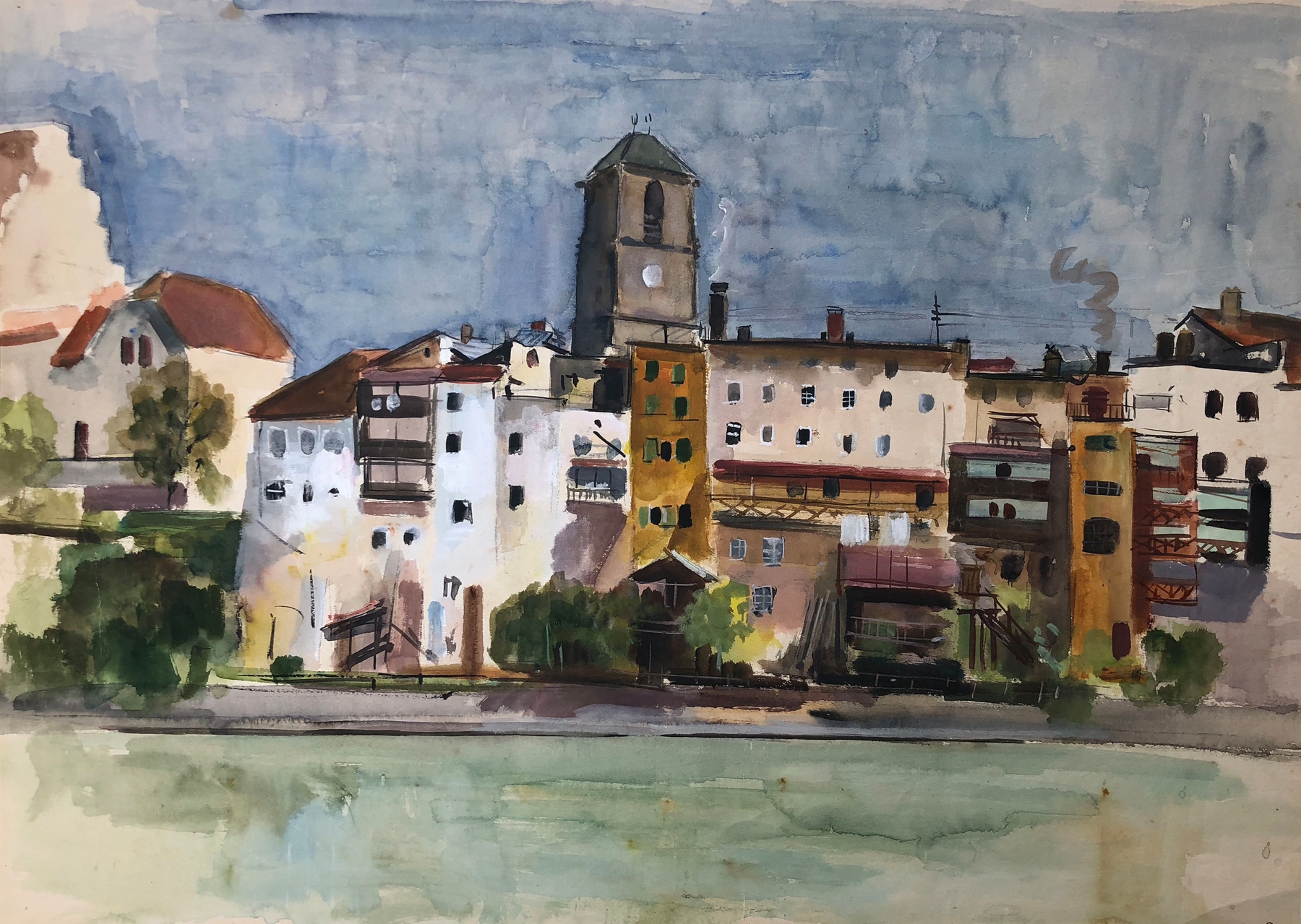
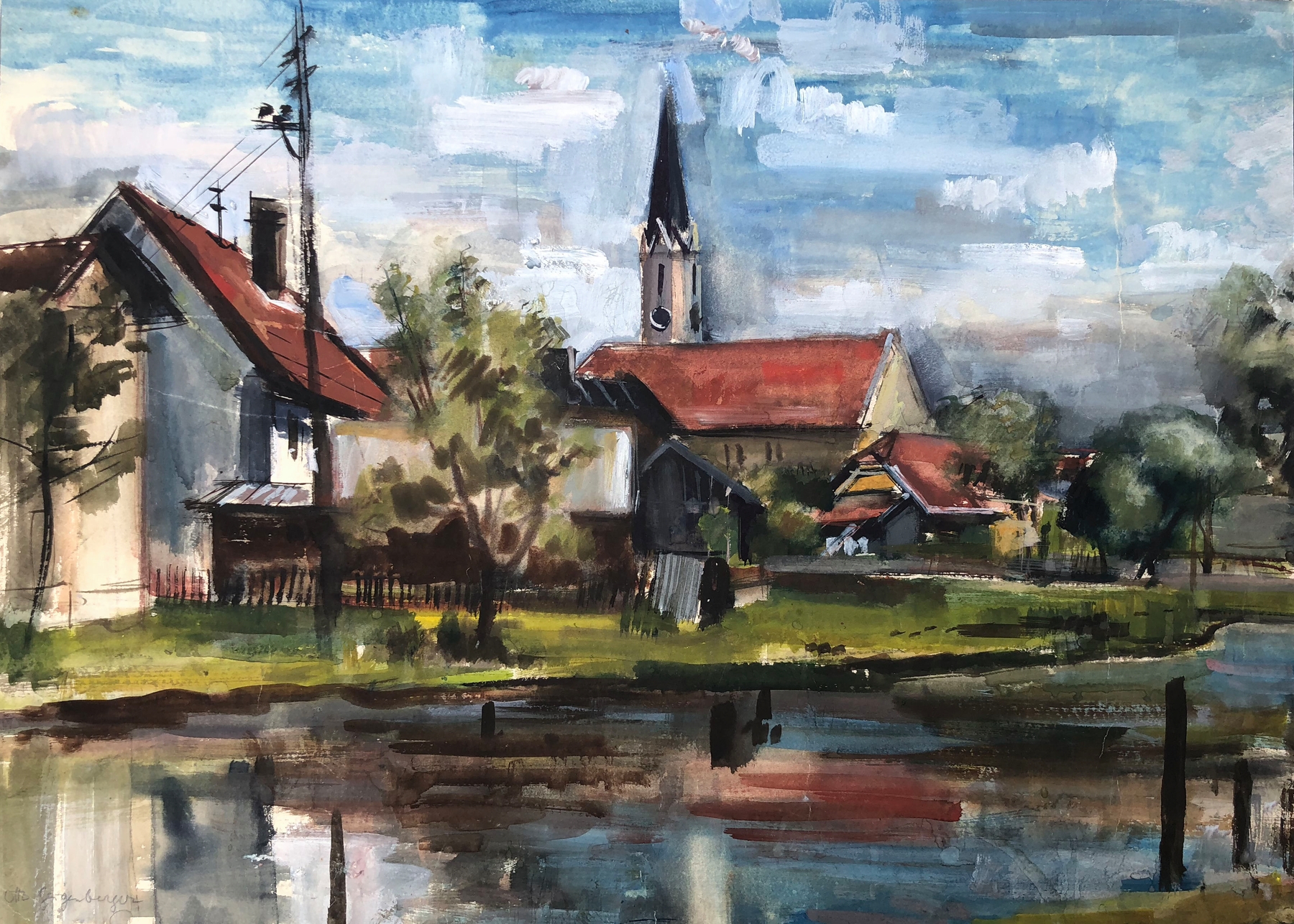
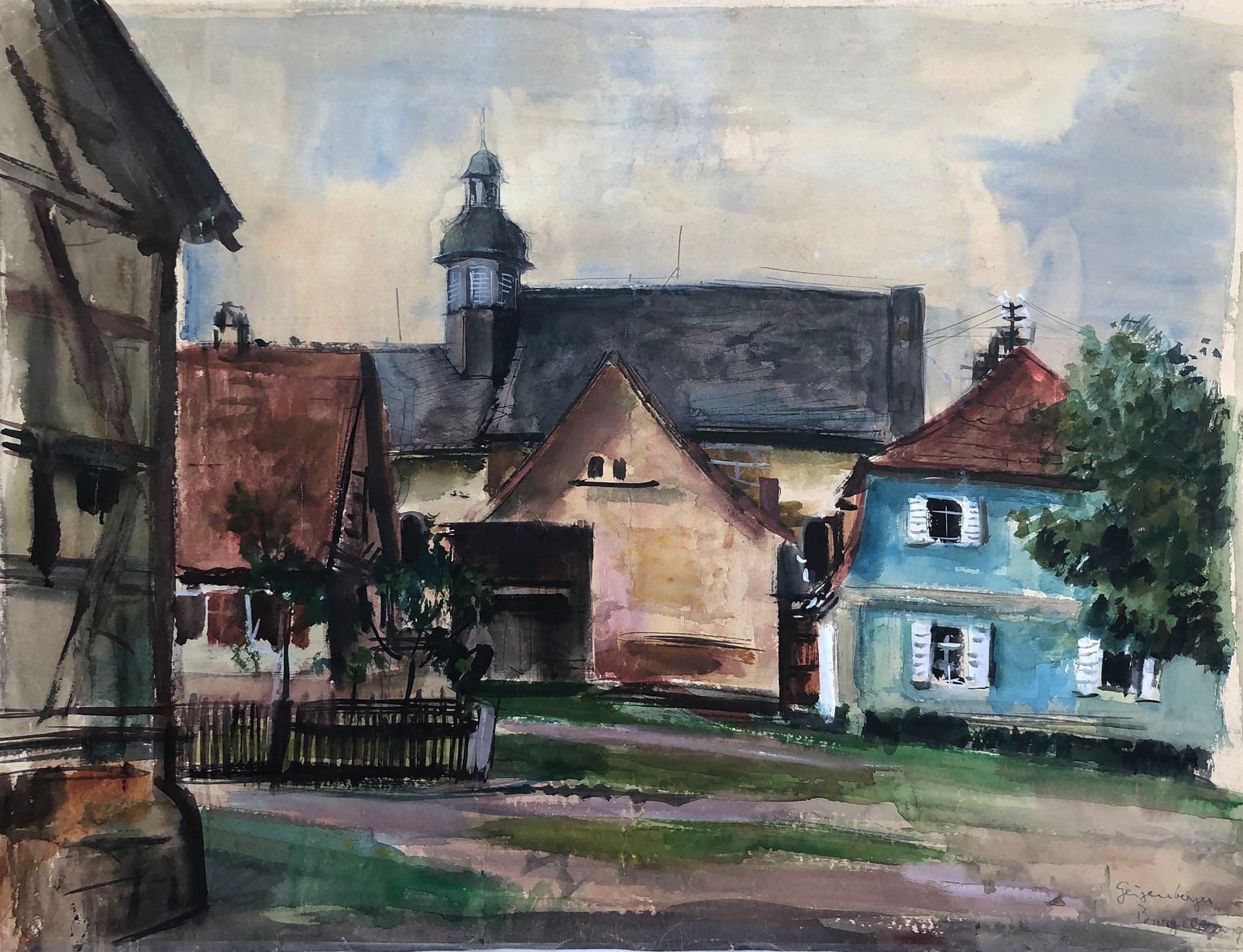
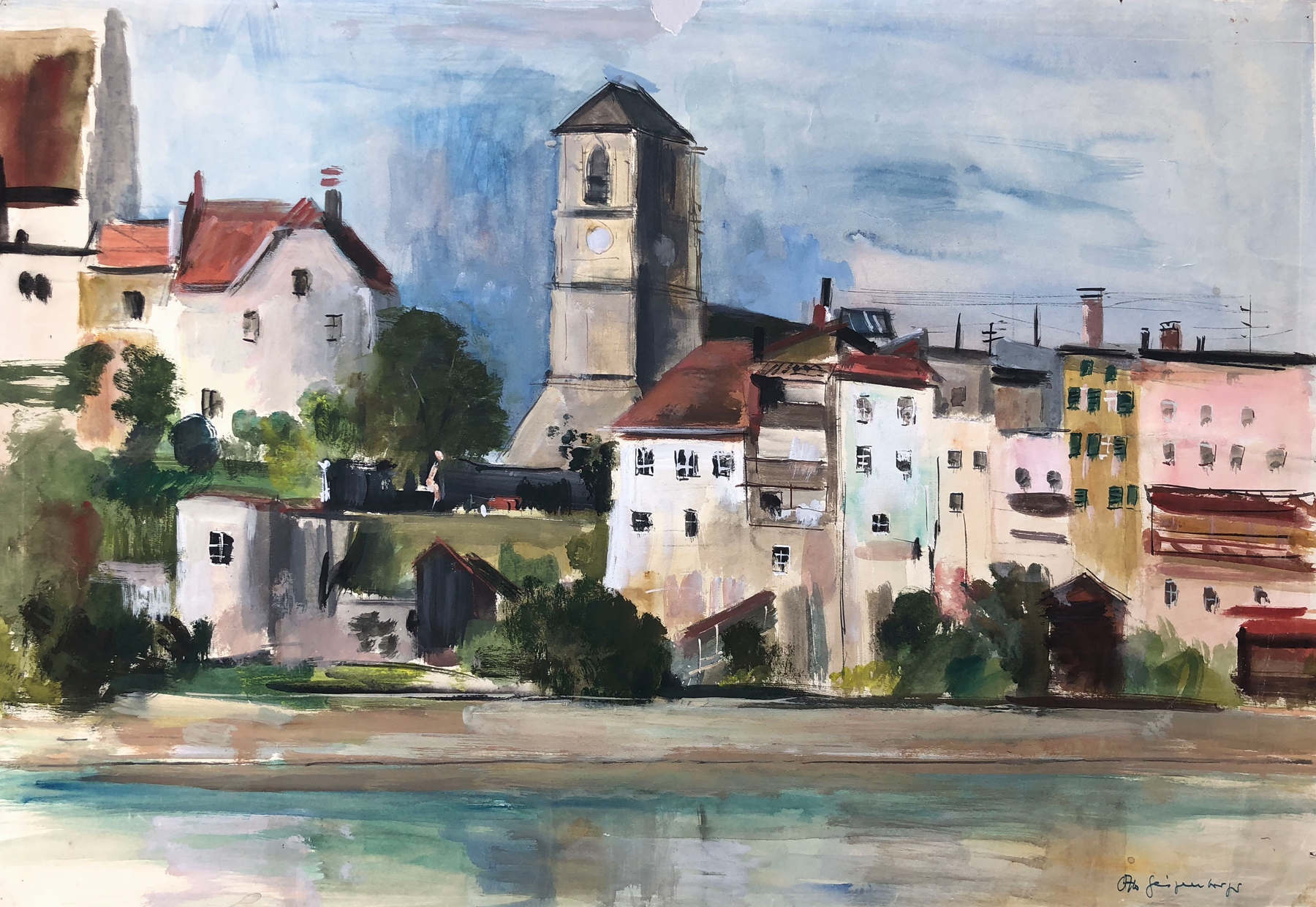
What if beauty was never meant to be finished? In Otto Geigenberger’s Wallfahrtskirche Marienberg bei Burghausen, we confront a moment suspended in reverence, where the sacred intertwines with the sublime. Look to the center of the canvas, where the striking silhouette of the pilgrimage church rises against a horizon peppered with billowing clouds. Notice how the soft pastel colors envelop the structure, each stroke of paint lending a sense of ethereality to the scene. The interplay of light and shadow highlights the church's intricate architecture, drawing the eye upward, evoking a yearning for transcendence.
The cool blues and warm golds breathe life into the landscape, hinting at both serenity and the stirring of spiritual longing. Upon closer inspection, the carefully rendered details reveal profound contrasts. The church, a monument to faith, stands resilient amidst the sprawling valley, while the surrounding nature brims with vibrant life, signifying a harmonious coexistence. Yet, the ethereal quality of the clouds suggests a fleeting moment—beauty that is captured but never fully attained.
In this space, there is a tension between the permanence of the church and the impermanence of the world around it, inviting viewers to ponder their own journeys of faith and exploration. Created in 1939, this work emerged during a turbulent period in Geigenberger’s life, as he navigated the complexities of a changing Germany. The artist, deeply influenced by the landscape and architecture of his homeland, aimed to capture both the physical and spiritual essence of the sites he depicted. This painting reflects not only his artistic vision but also the growing yearning for beauty and solace in an uncertain world.