Wiener Straßenbild vom Mai 1945 — History & Analysis
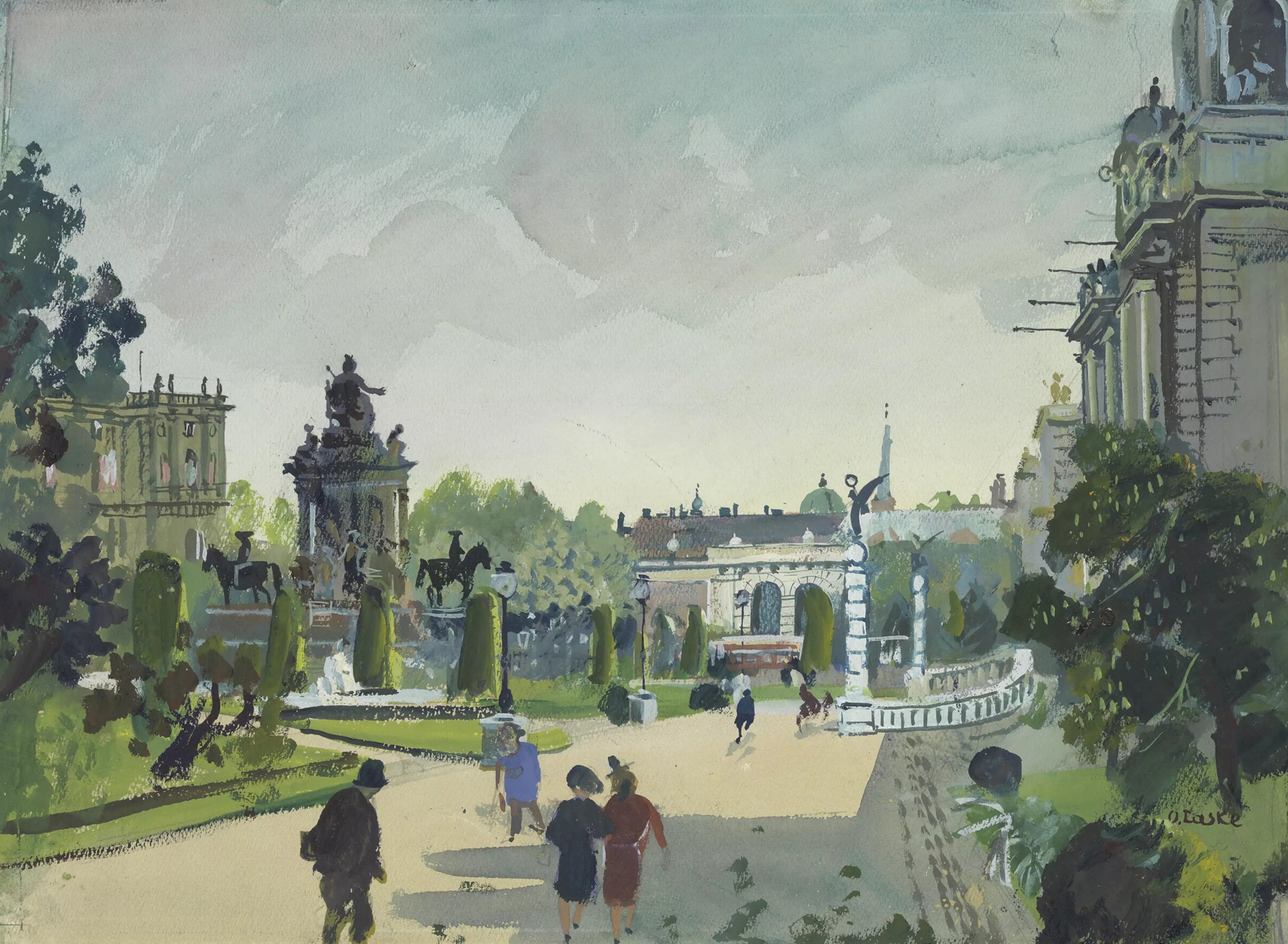
Who listens when art speaks of silence? In the hushed aftermath of World War II, a city stands poised between despair and the flicker of hope, captured in the heart of Wiener Straßenbild vom Mai 1945. Look to the left side of the canvas where desolate streets stretch into the distance. Broken buildings rise against a muted sky, their jagged silhouettes hinting at the recent turmoil. The artist employs a palette of grays and earth tones, evoking a sense of decay that pervades the scene.
The composition is balanced yet unsettling, with a lone figure caught at the edge of a cobblestone path, suggesting isolation amid the remnants of a city once vibrant. Delve deeper into the details, and the emotional weight unfolds. Notice the crumbling façade of a building, which speaks volumes about the scars of war. The figure, seemingly lost in thought, embodies the melancholy of survival—a lone witness to history.
The stillness of the surroundings contrasts sharply with the turbulence of the recent past, creating a palpable tension that resonates with both sorrow and resilience. Oskar Laske created this poignant work in Vienna in 1945, just as the city emerged from the ashes of conflict. It was a time when artists sought to navigate the complex emotional landscape left in the wake of destruction, reflecting both personal and collective trauma. In this moment, Laske’s brush was not just a tool for creation, but a means to capture the fragile echoes of a world irrevocably changed.