Winter in Holland — History & Analysis
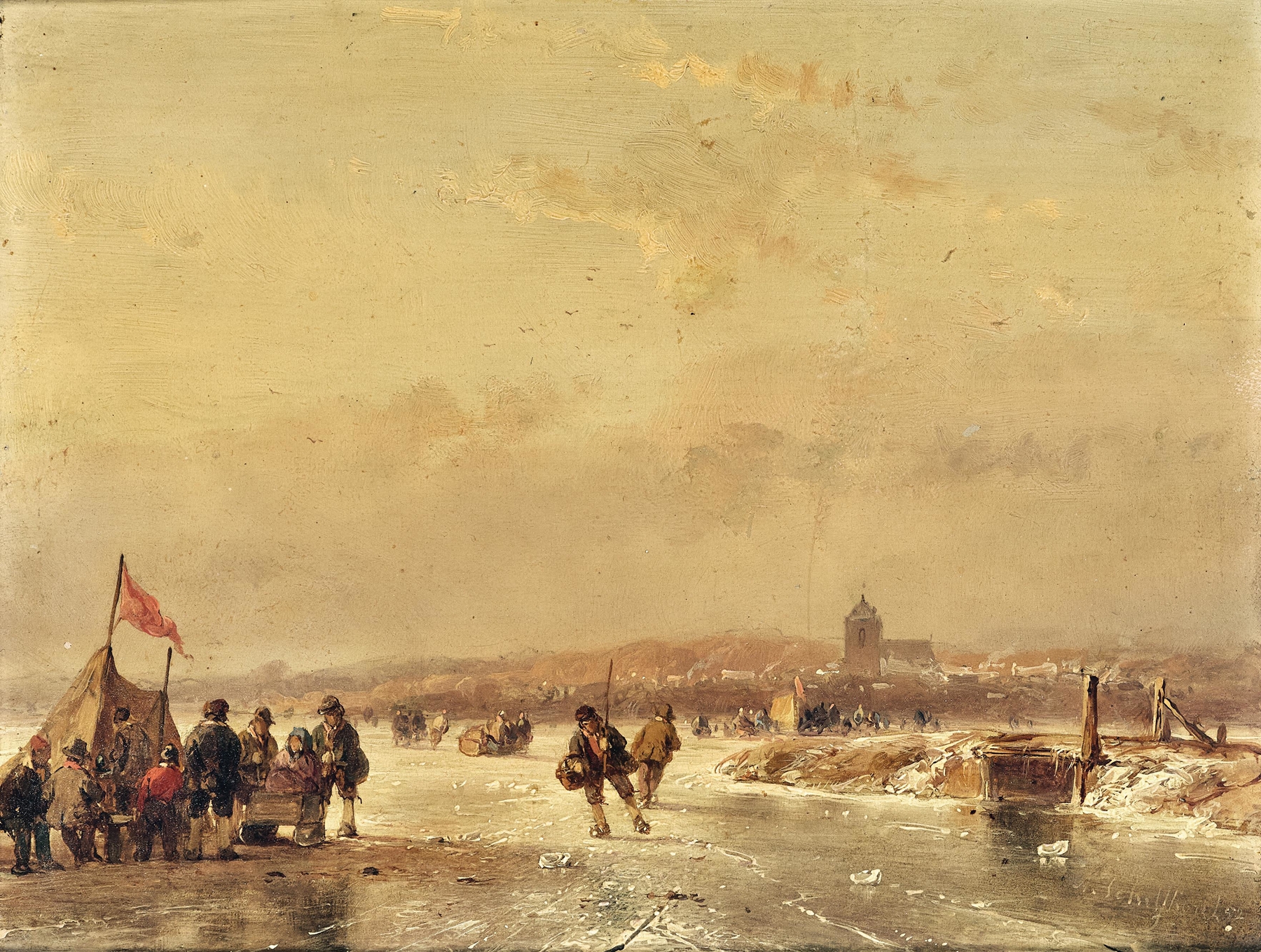
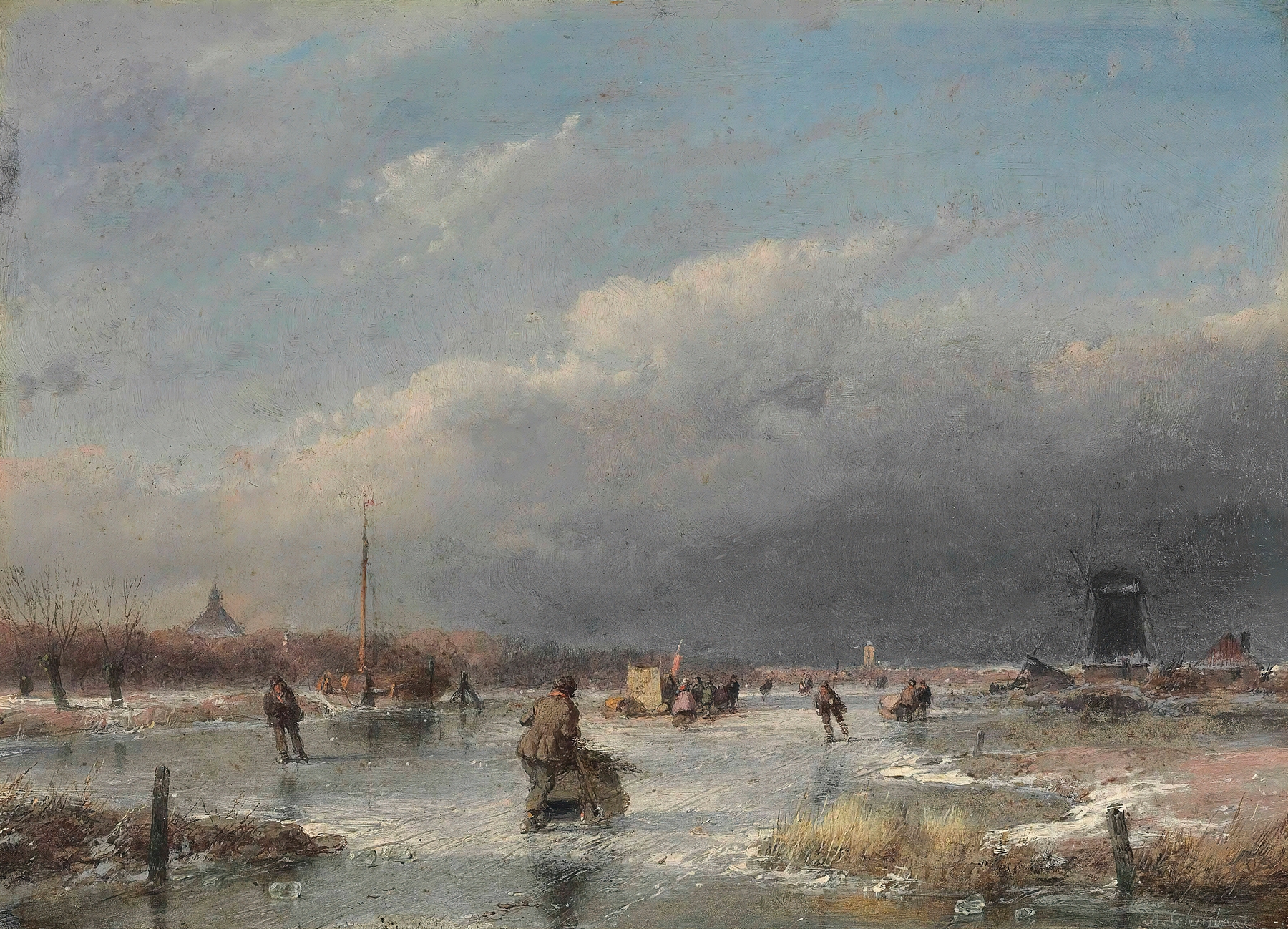
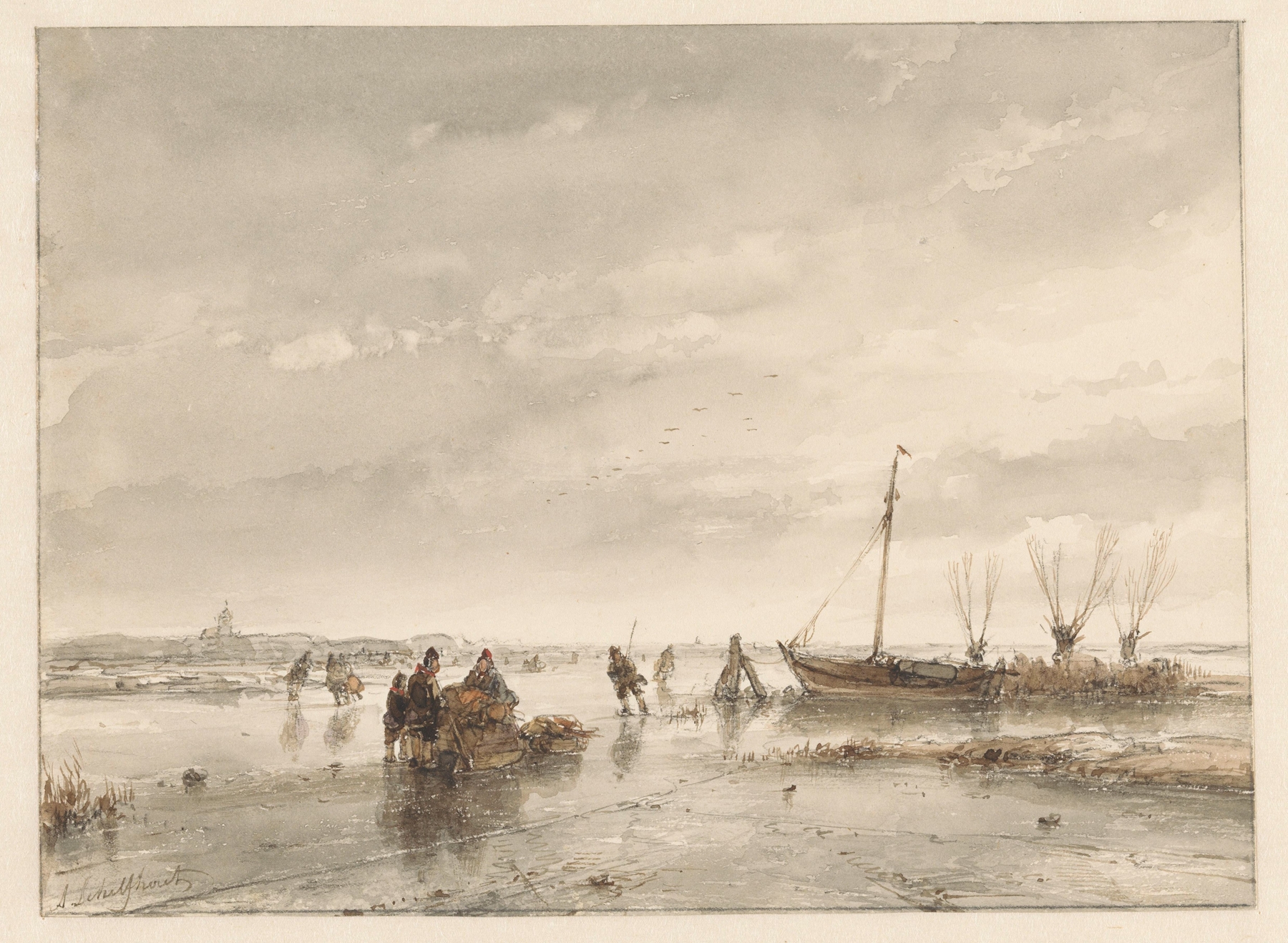
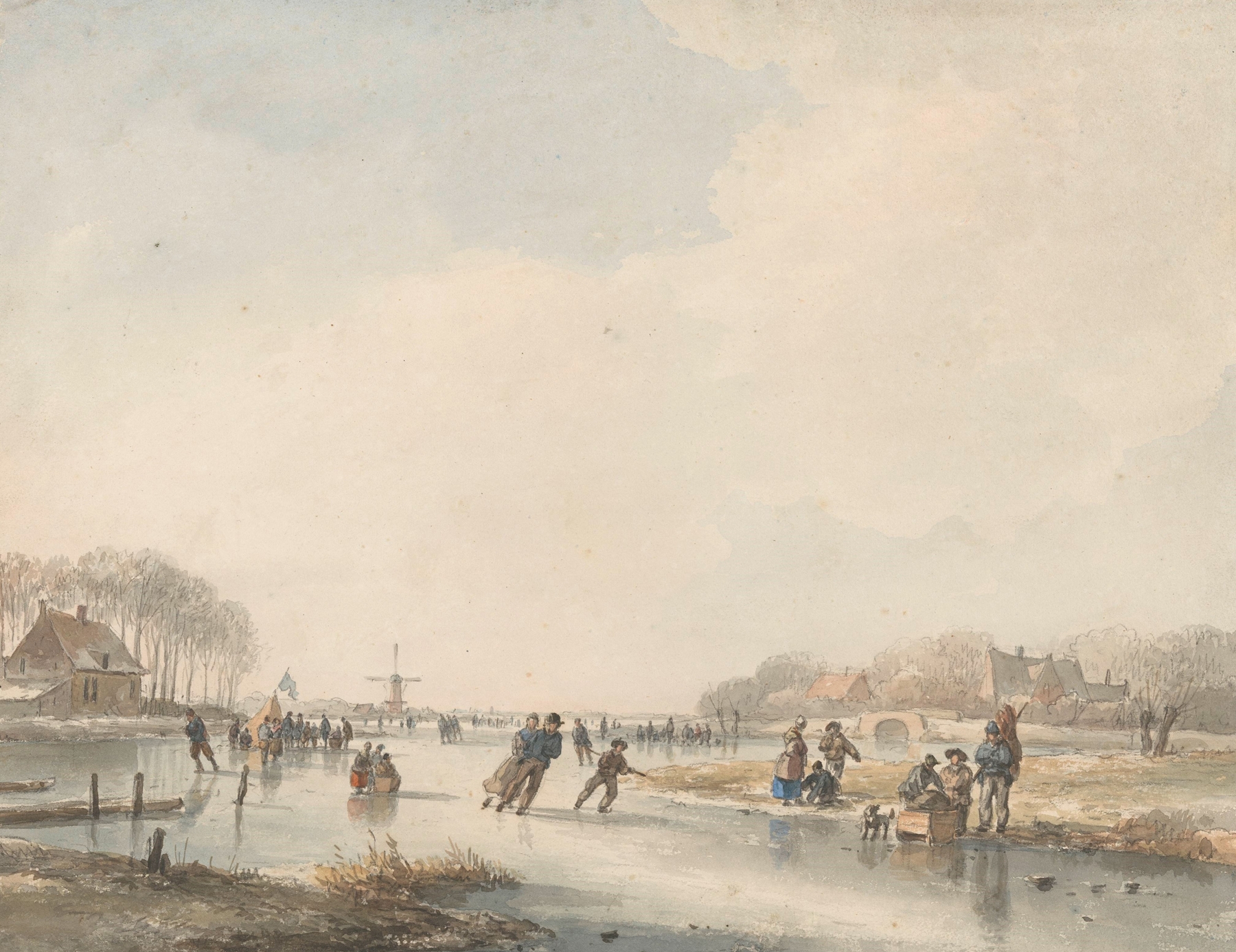
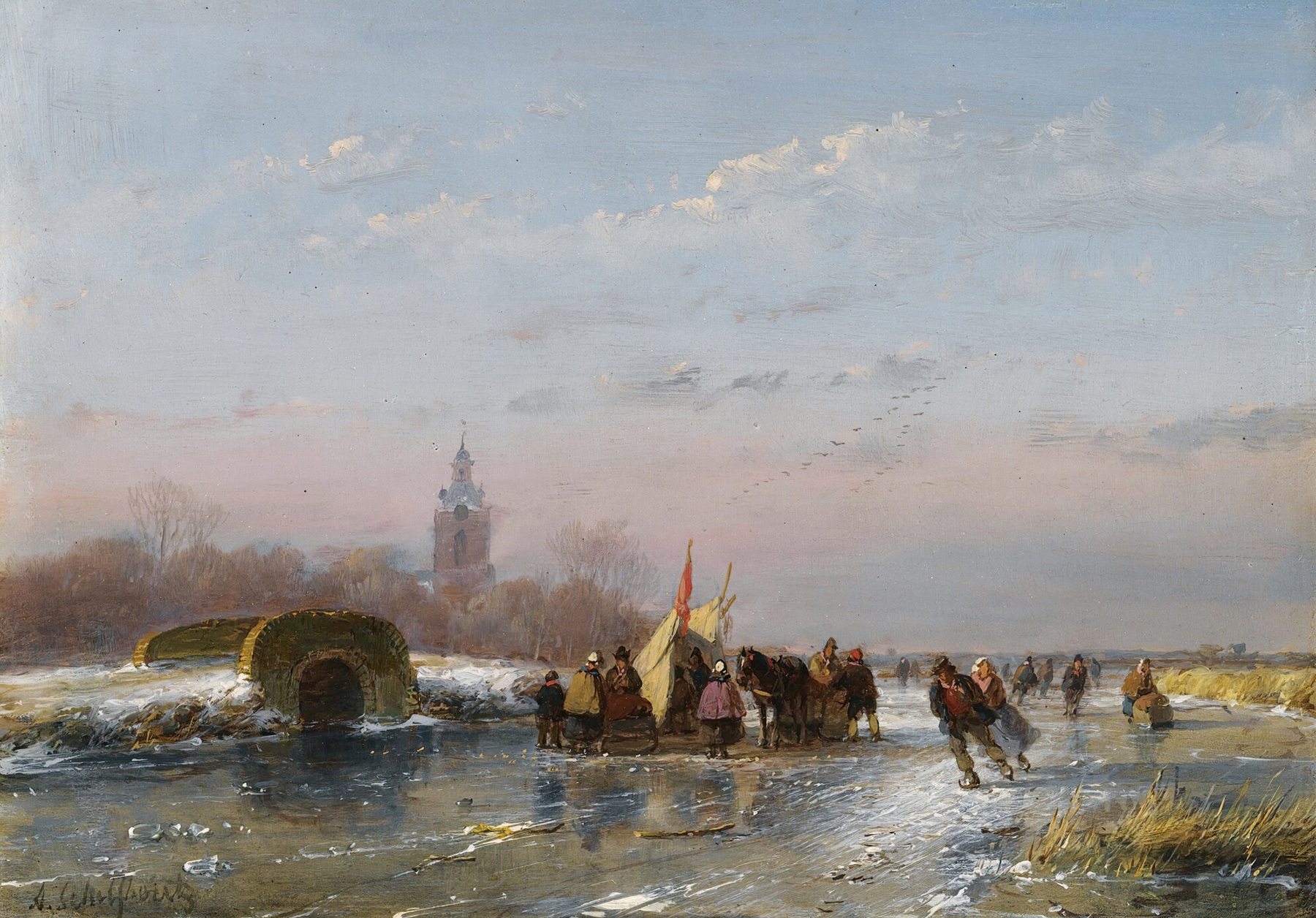
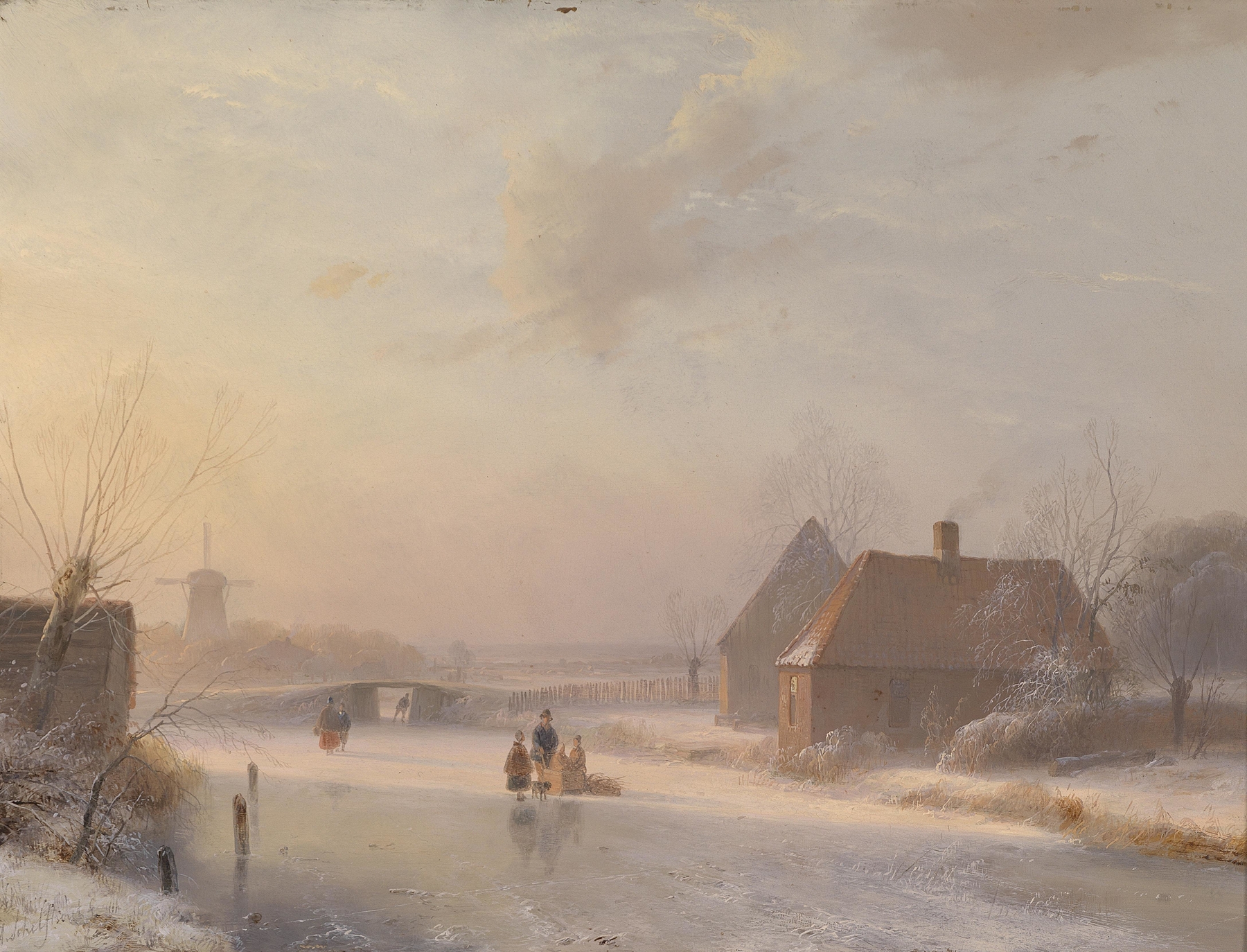
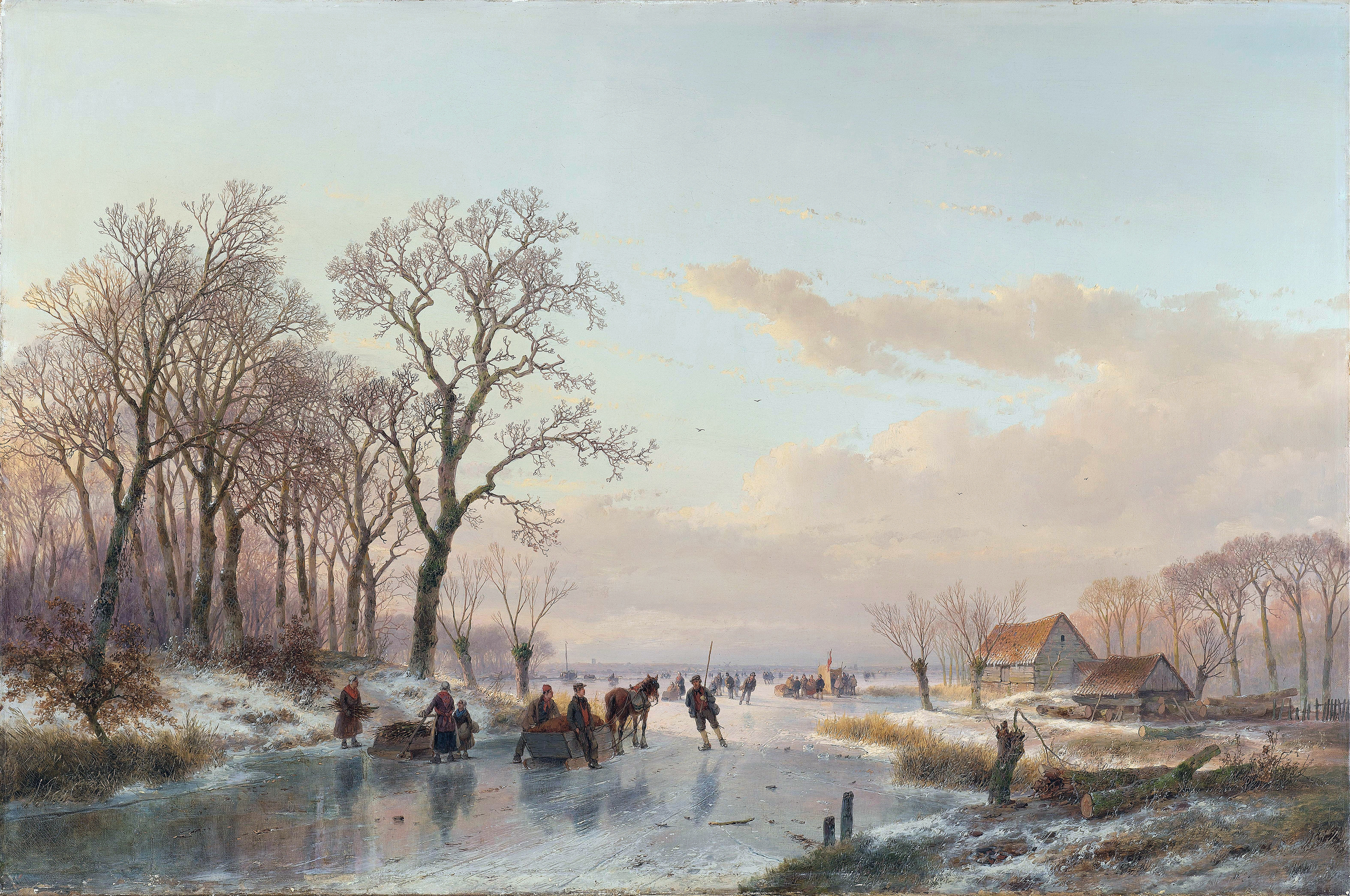
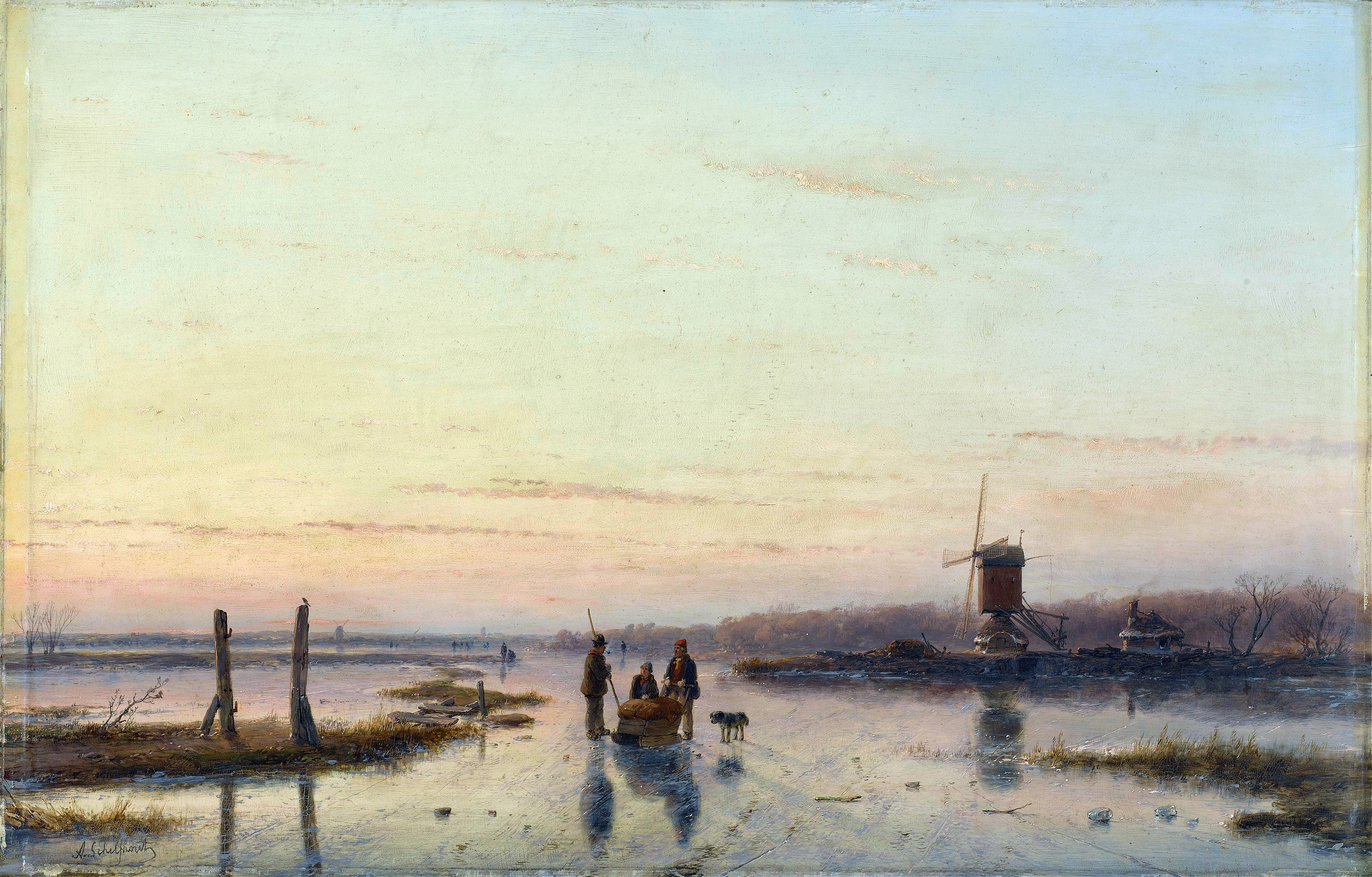
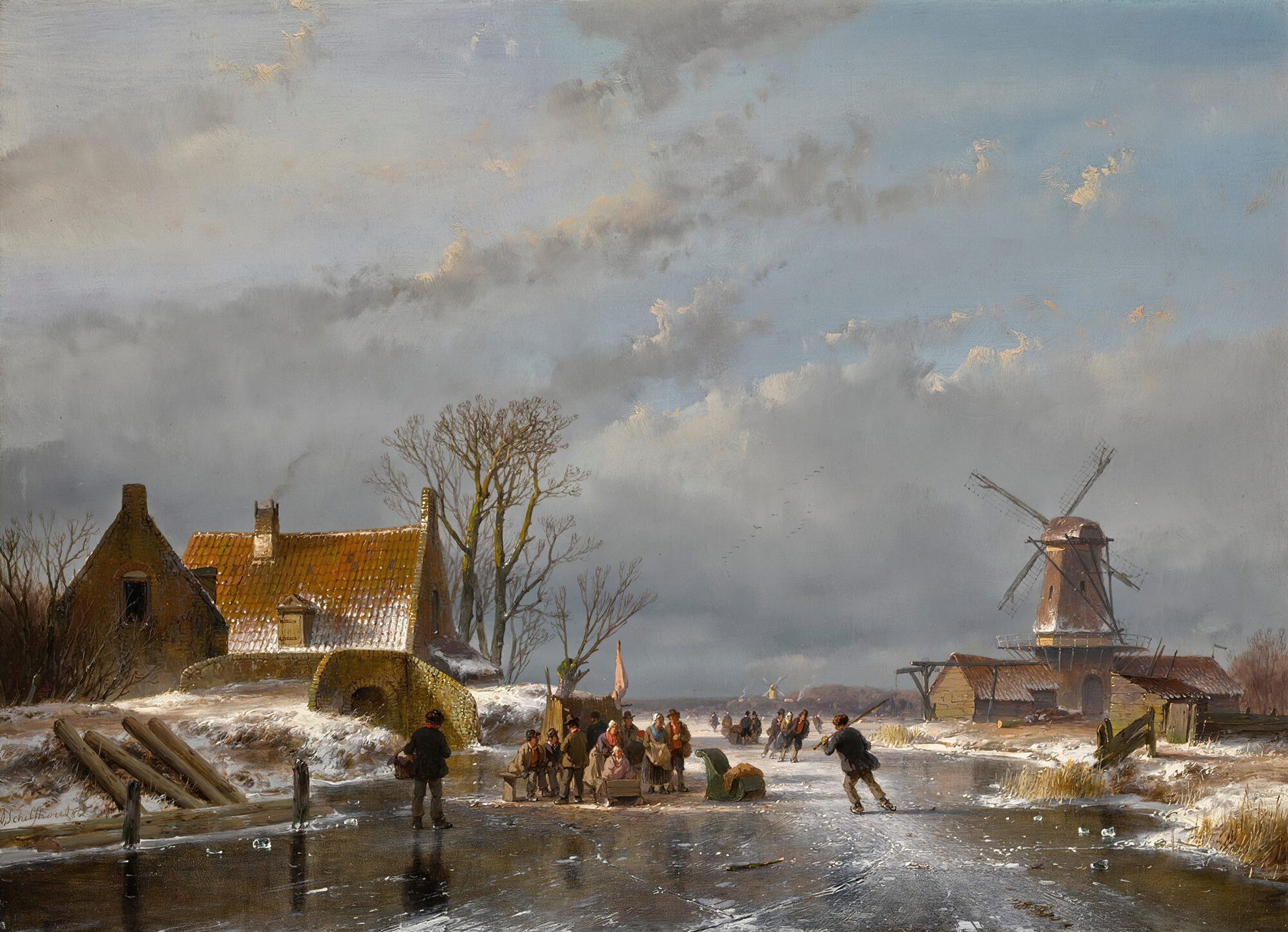
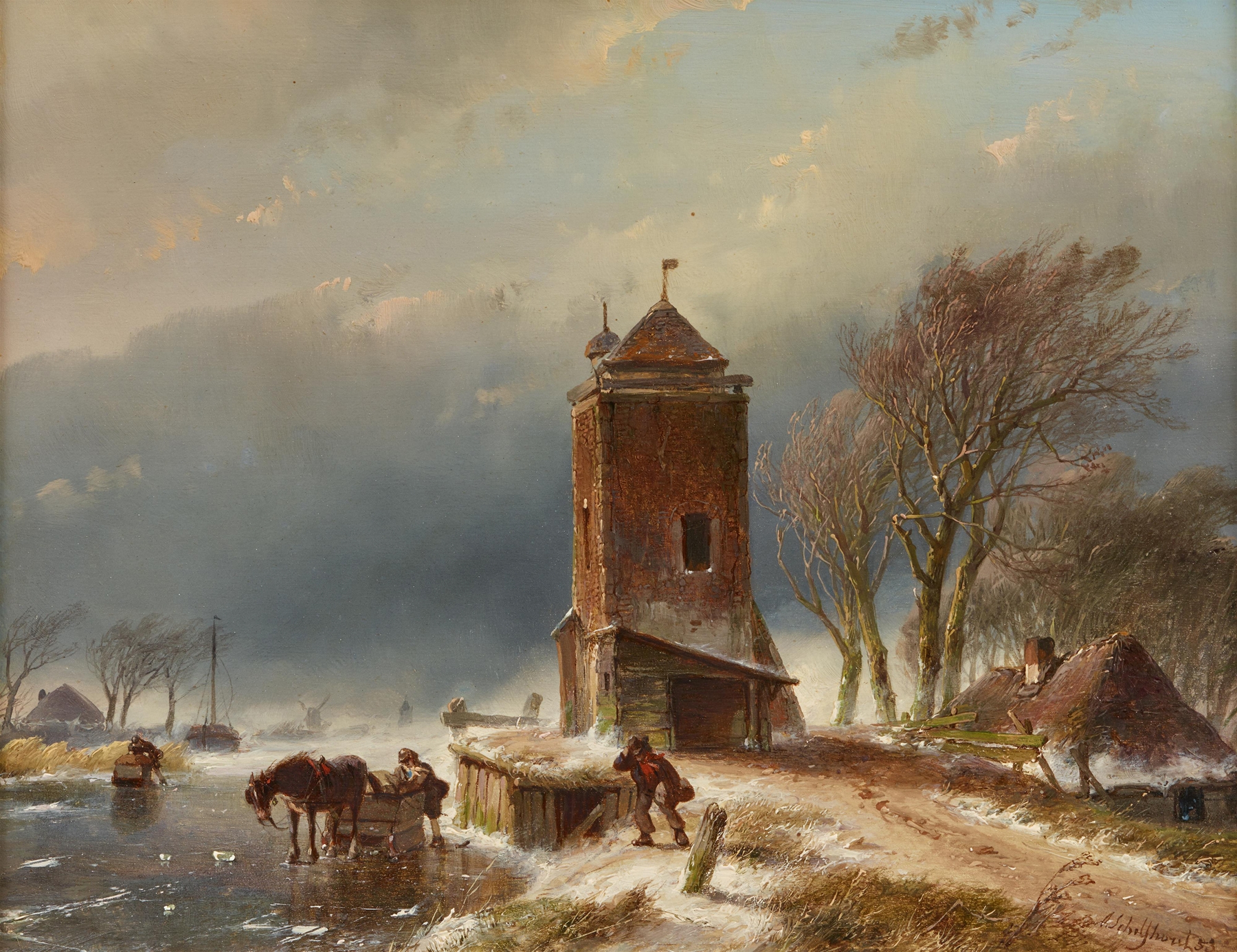
Did the painter know this moment would outlive them? In Winter in Holland, the tranquil beauty of a frozen landscape mirrors the fleeting nature of existence, inviting contemplation on life and mortality. Look to the left at the gentle curve of the river, where the ice captures the soft glow of the winter sun, illuminating the scene with a delicate warmth. The muted palette of whites and blues creates a serene atmosphere, beckoning the viewer into a world where time seems suspended.
Notice the subtle, swirling strokes that suggest movement in the snow, contrasting with the stillness of the figures skating on the ice, each capturing a moment of joy that belies the inevitable passage of time. Beneath the surface, we find layers of meaning. The figures, lost in their winter pastimes, represent the transient joys of life, while the stark trees and icy landscape serve as a reminder of nature's quiet persistence and the cycle of seasons.
The playful skaters contrast with the brooding horizon, suggesting that even within life's merriment lies the weight of impending change, echoing the bittersweet nature of memories we cherish yet cannot hold onto. In 1843, Andreas Schelfhout created this evocative piece while living in the Netherlands, a time when Romanticism was flourishing and artists began to explore emotional depth through landscape painting. He sought to convey the beauty of nature while grappling with themes of mortality and time, reflecting a society increasingly aware of its own impermanence amid industrial progress.