A Frozen Canal near the River Maas — History & Analysis
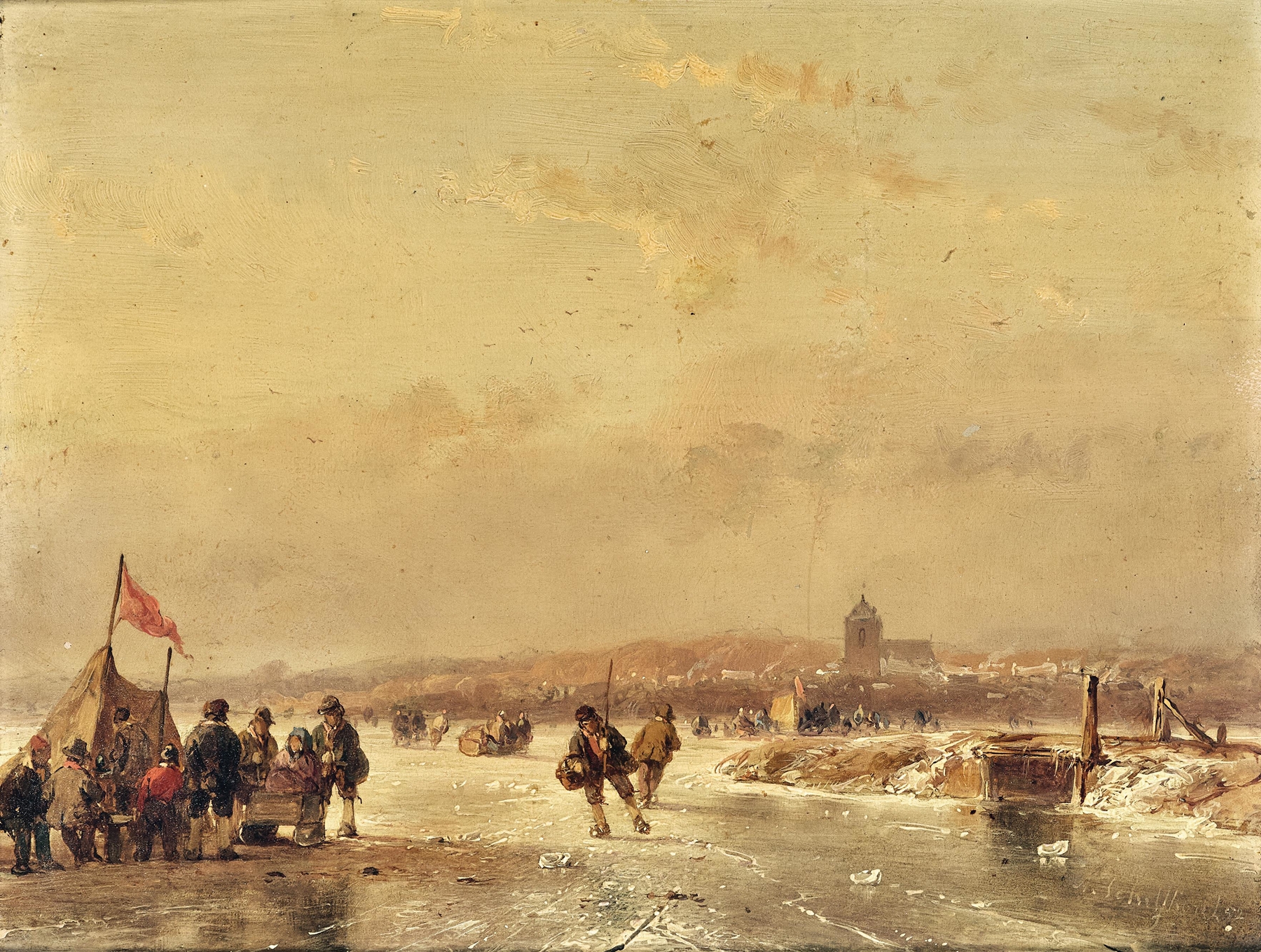
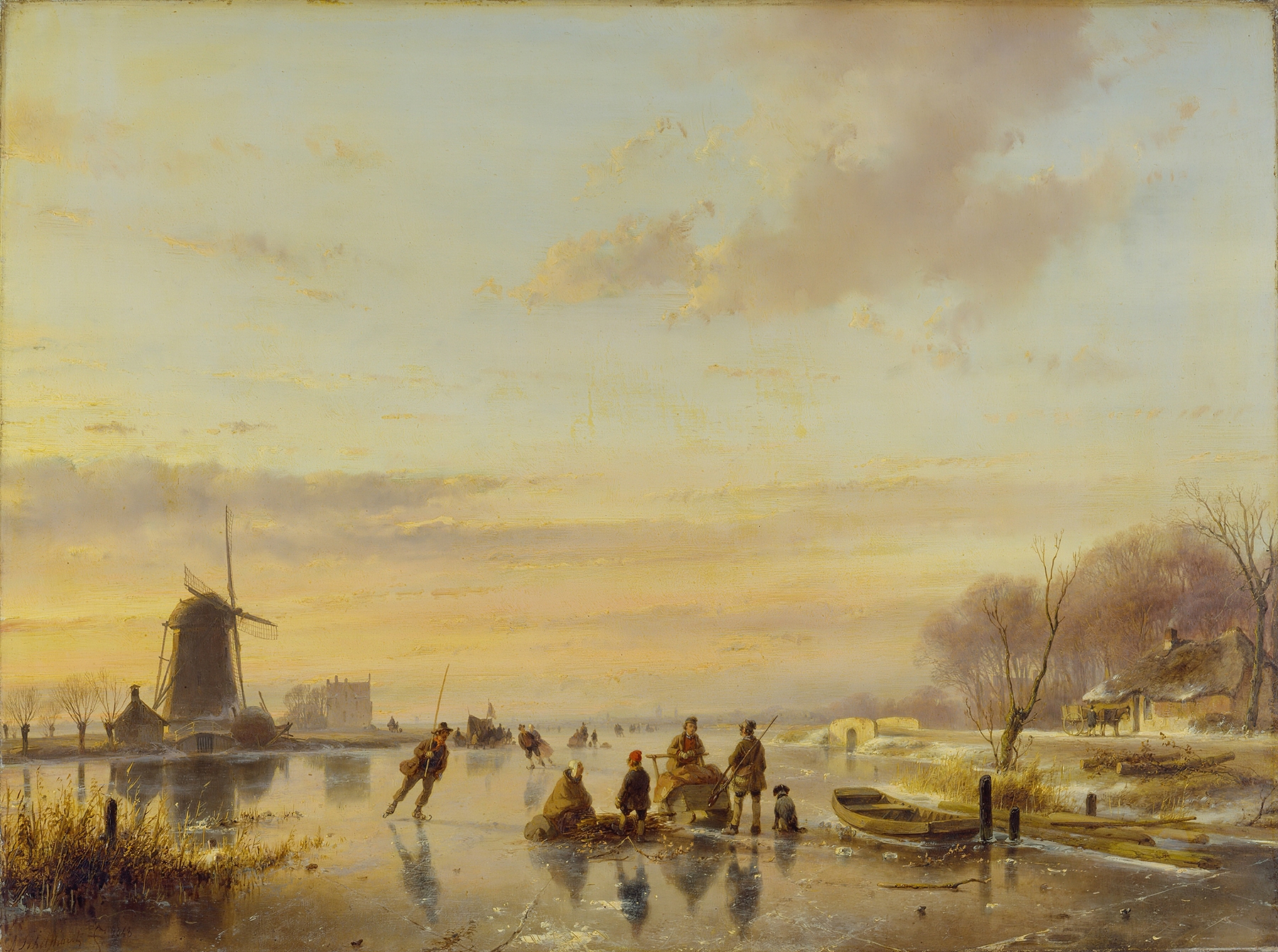
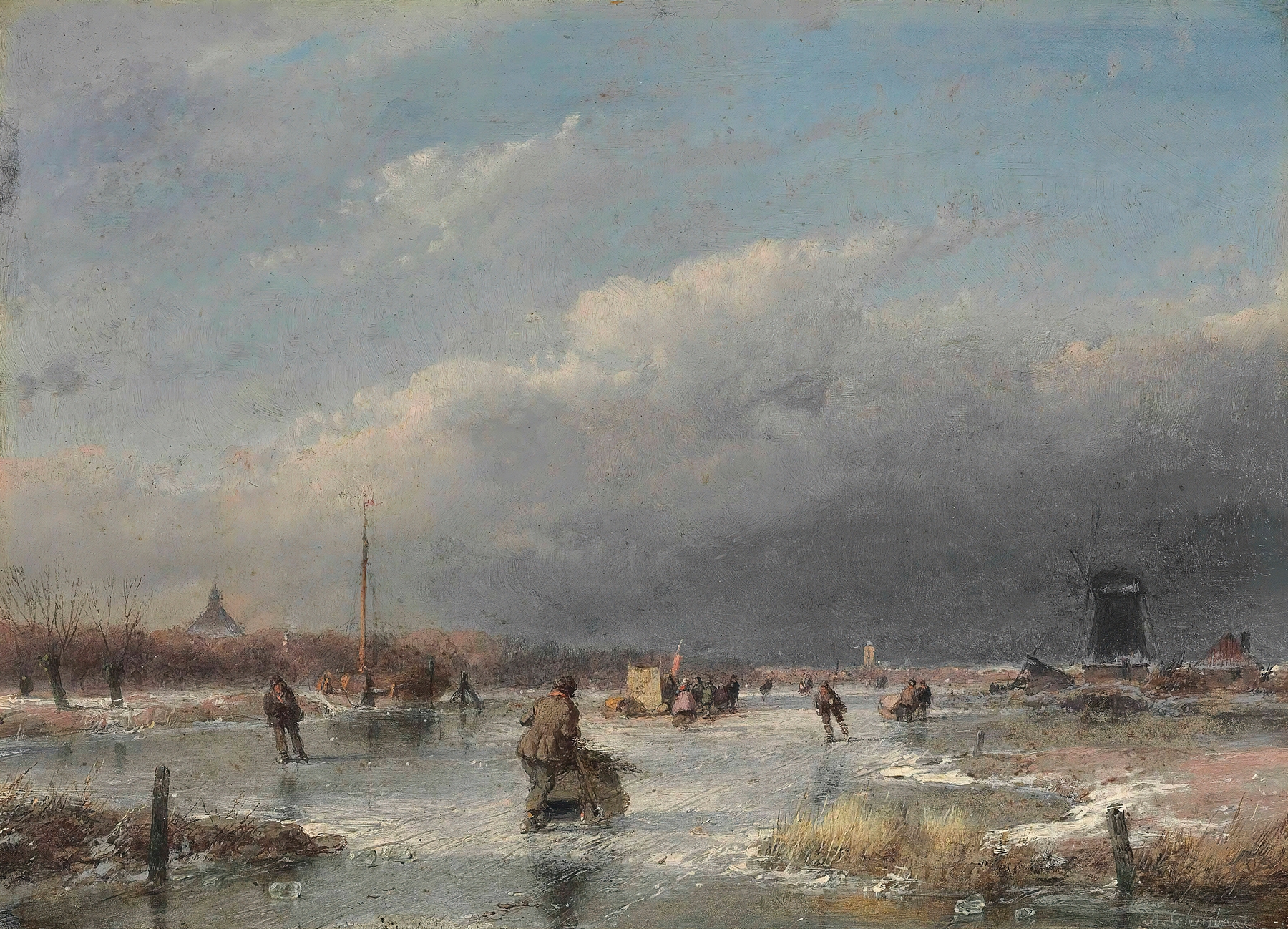
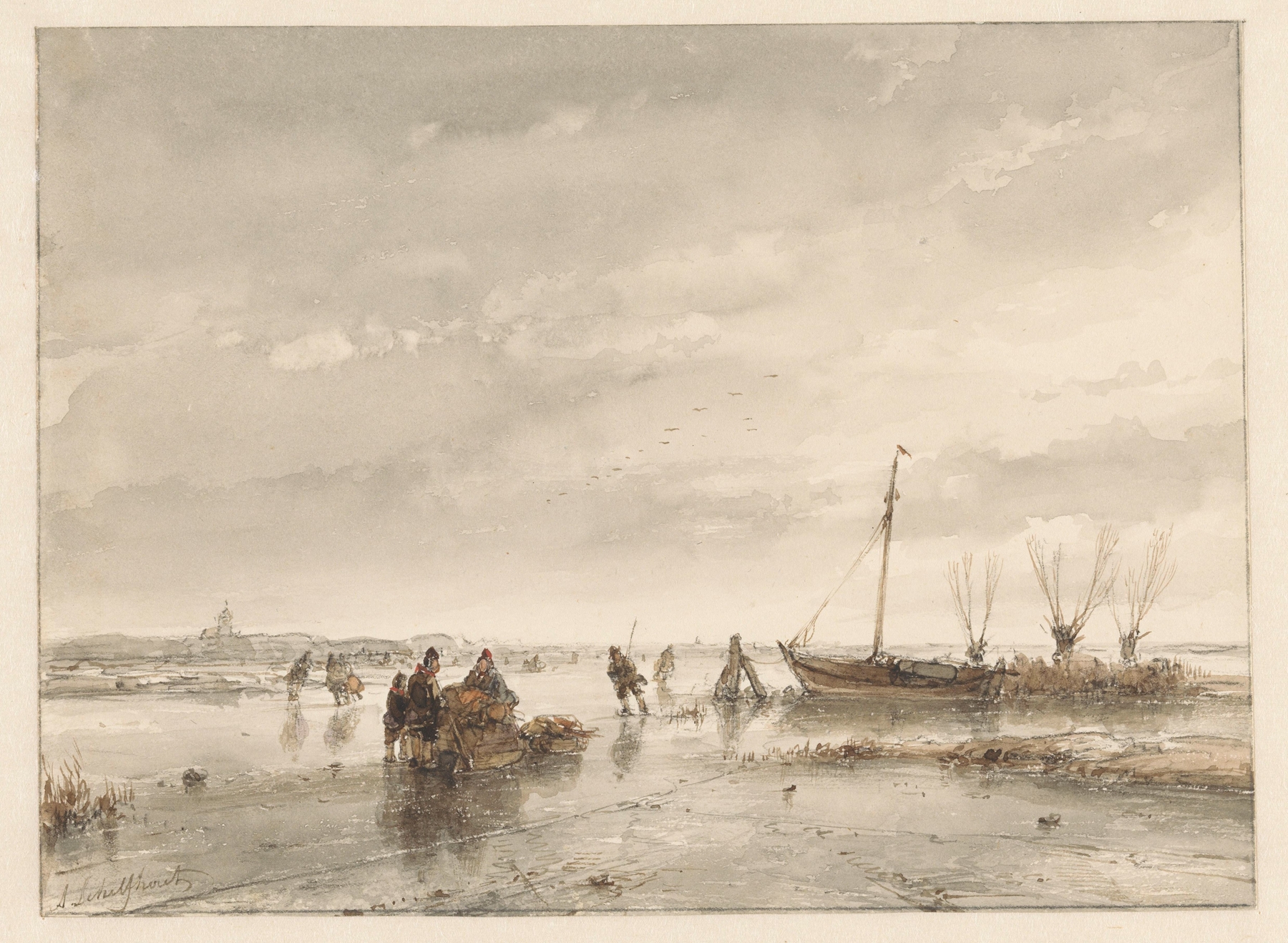
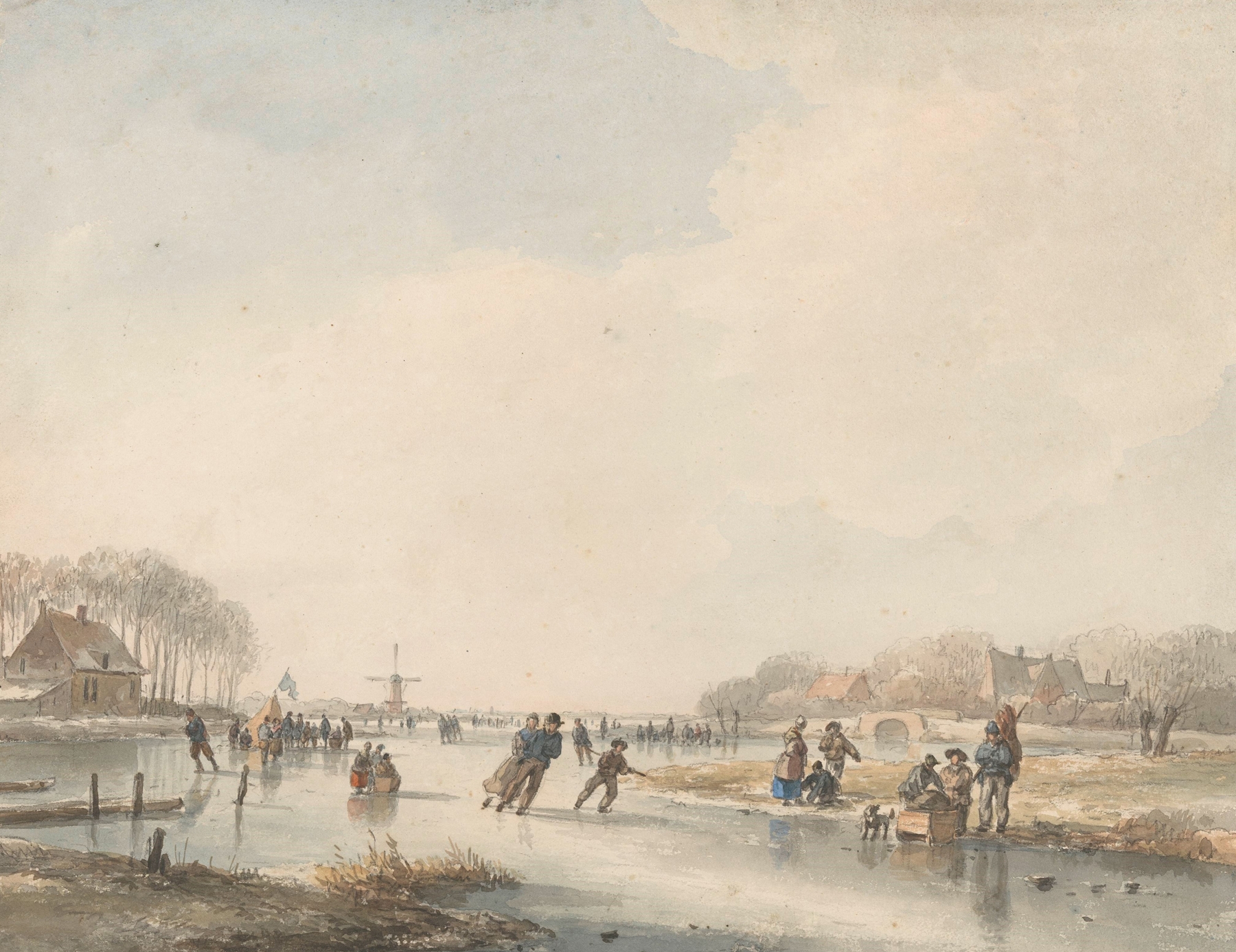
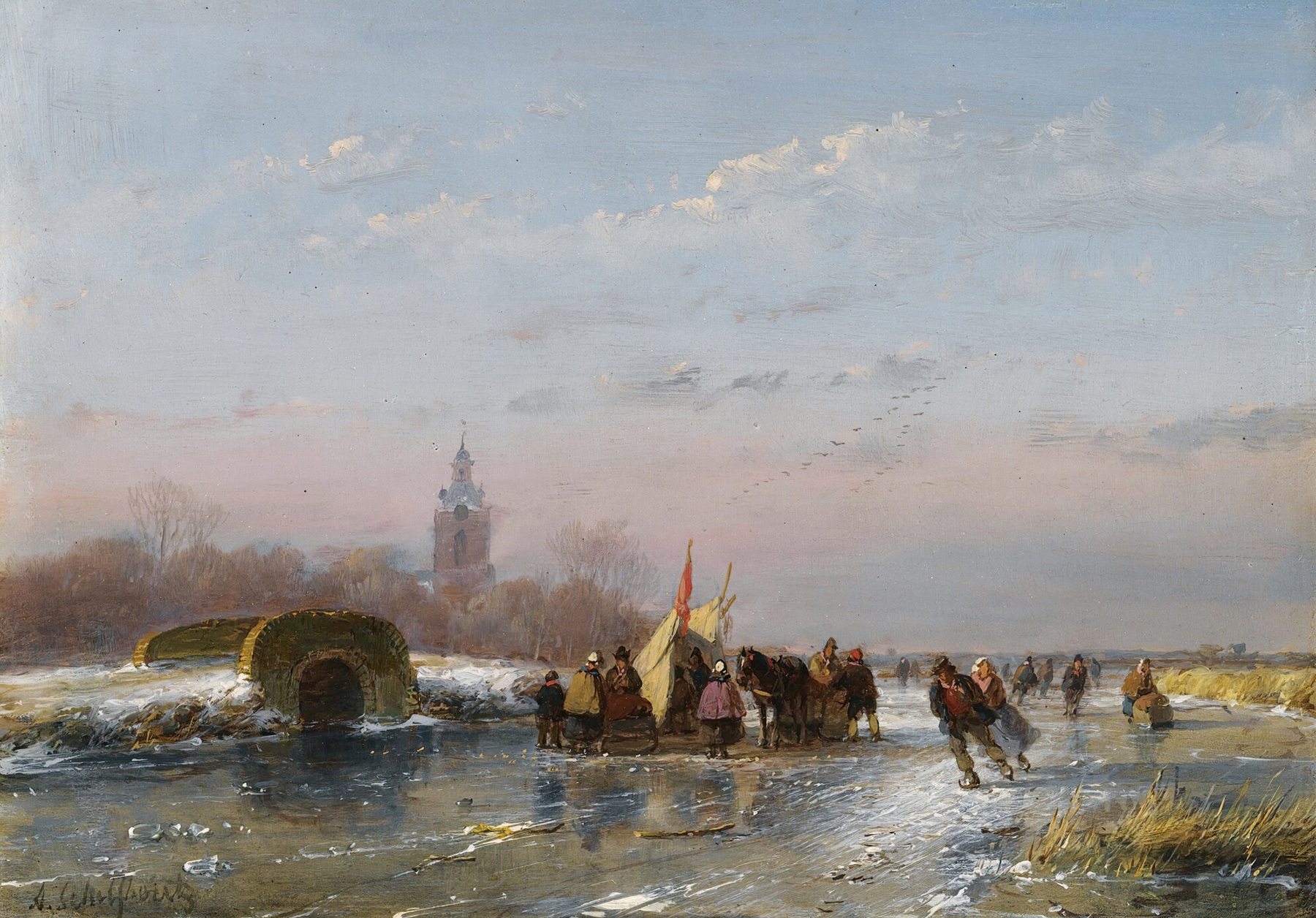
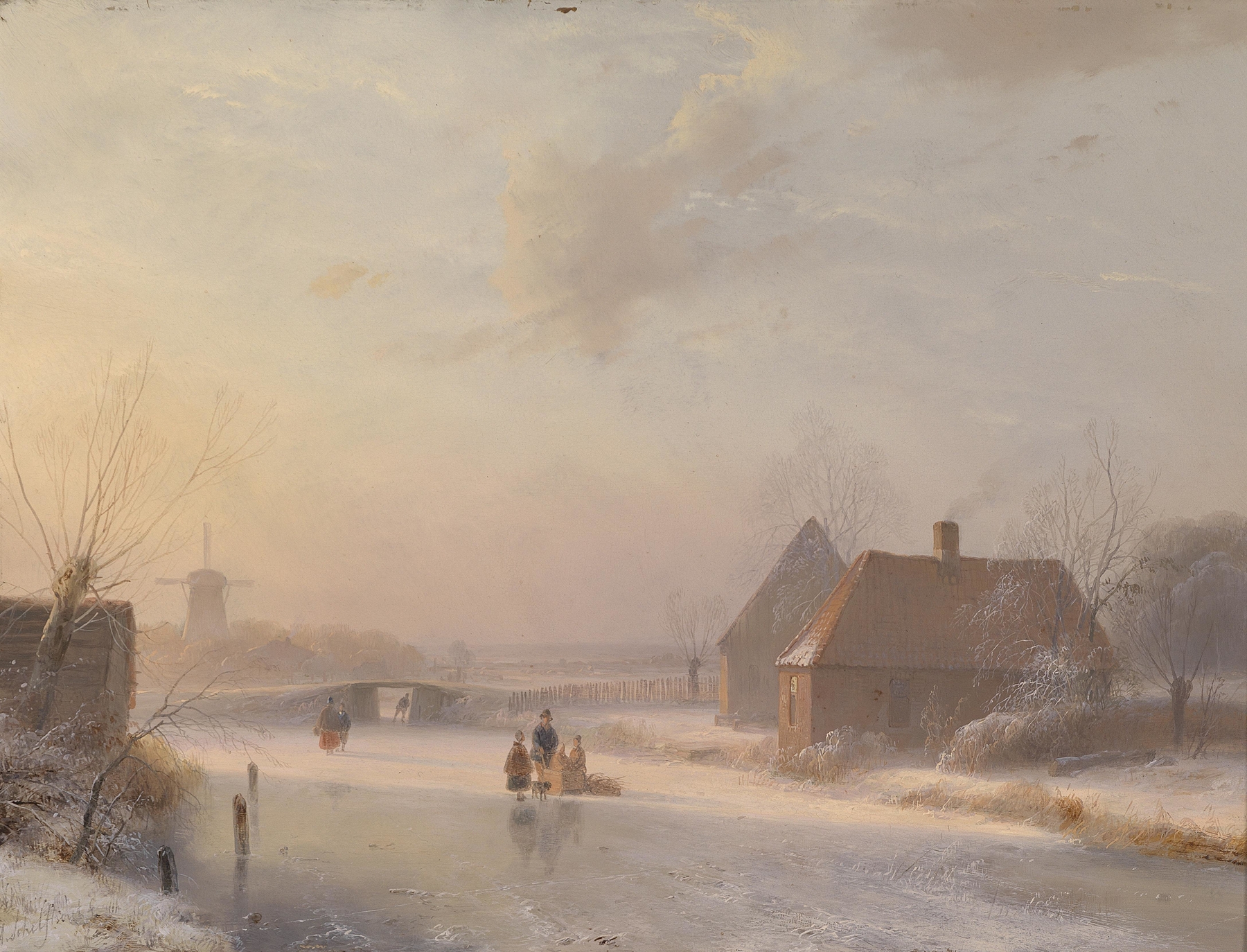
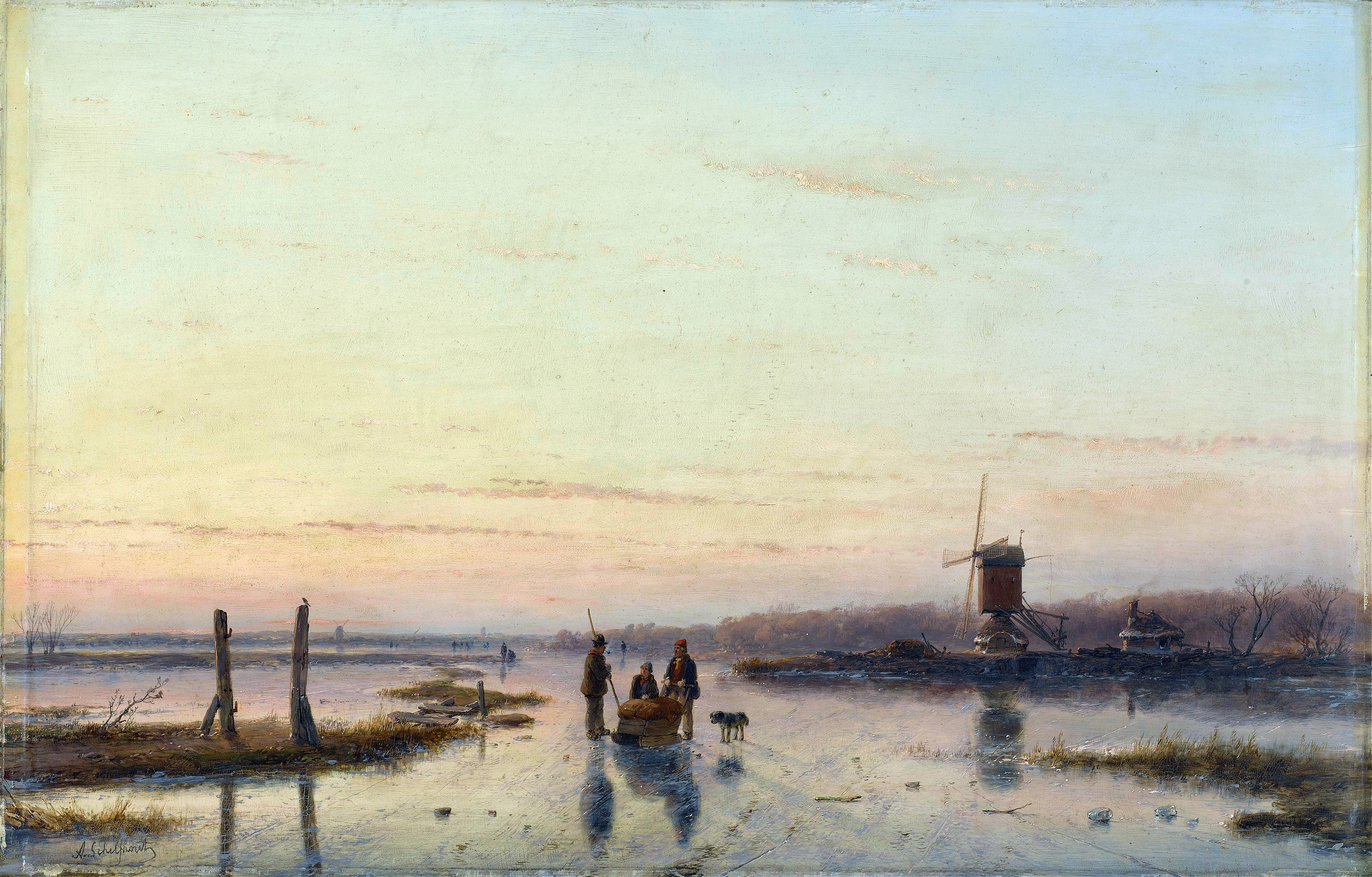
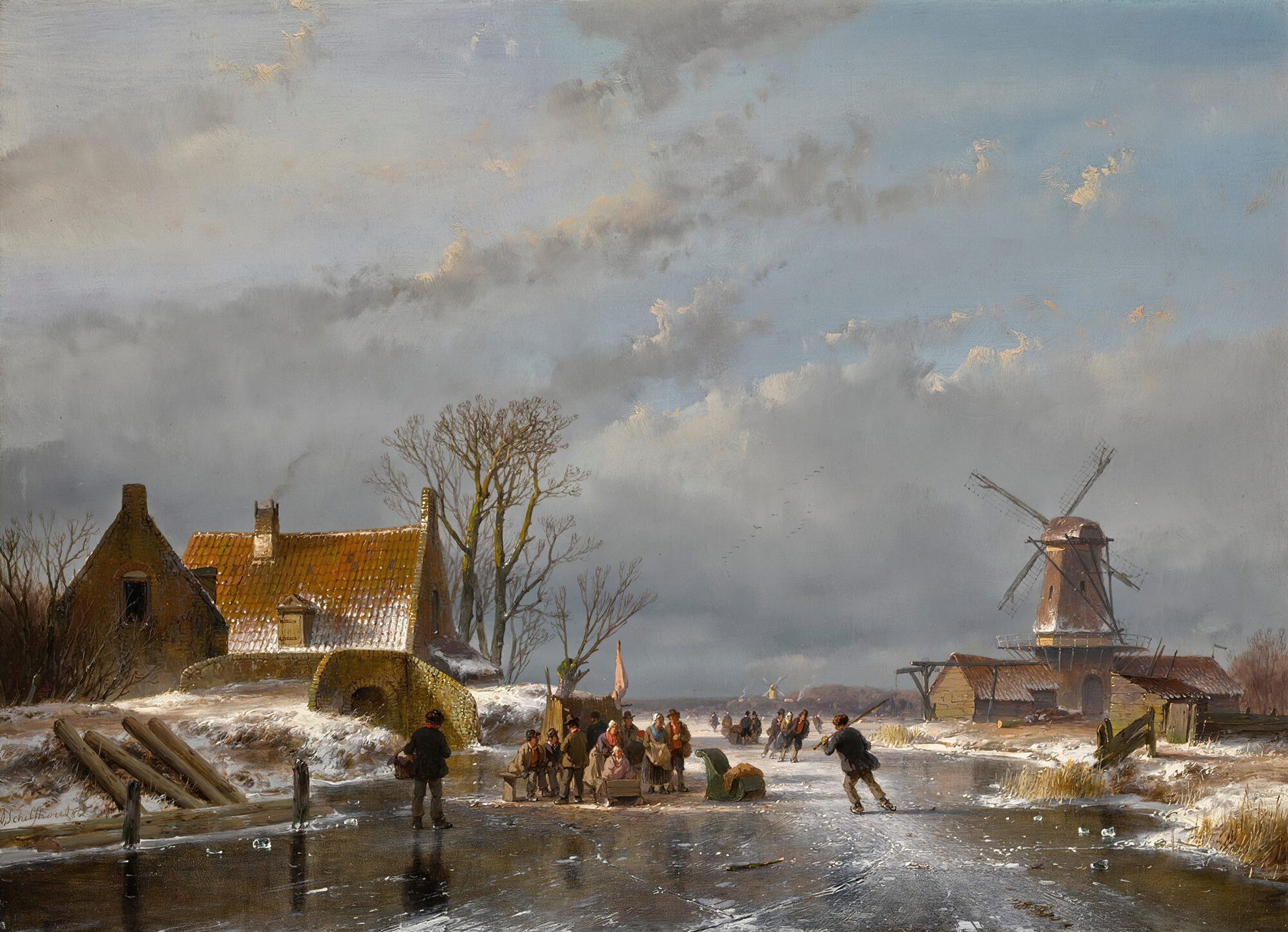
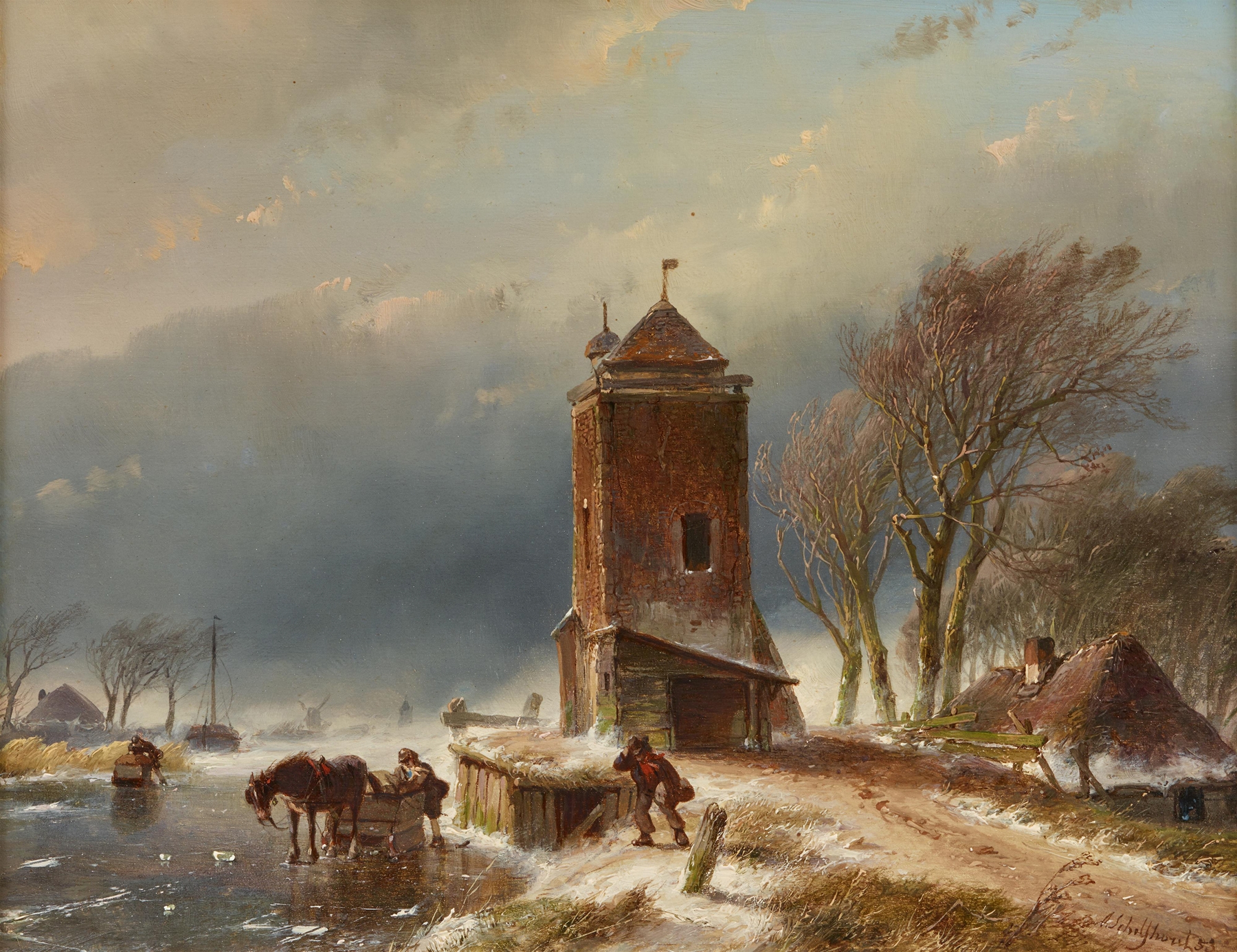
Can beauty exist without sorrow? In Andreas Schelfhout's A Frozen Canal near the River Maas, this question lingers like the chill in the winter air, inviting a contemplation of the delicate balance between joy and melancholy. Look to the foreground, where a winding canal stretches beneath a mantle of ice, its surface glistening under the pale winter sun. The ethereal light breathes life into the scene, illuminating the figures skating gracefully along the frozen path. Notice how the warmth of the warm hues in the sky contrasts with the cool blues and whites of the icy landscape, creating a visual dialogue that both captivates and confounds.
The artist’s masterful brushwork captures the crystalline texture of the ice, inviting the viewer to feel the cold seeping into their very bones. Hidden within this serene winter landscape lies a tension between the vitality of the skaters and the stillness of nature. The hustle of activity contrasts sharply with the serene, almost eerie quiet of the surroundings, revealing an underlying solitude that echoes the transient beauty of the moment. Each figure, though engaged in joyous recreation, becomes a symbol of human fragility against the vast, indifferent expanse of the frozen world.
It evokes a bittersweet nostalgia, a reminder that joy can be fleeting, and sorrow often lies just beneath the surface. Schelfhout painted this work in 1867, a time when he was deeply immersed in capturing the essence of Dutch landscapes. The Netherlands was moving forward into an era of modernity, yet Schelfhout remained dedicated to portraying the rustic charm of his homeland. His focus on winter scenes was a reflection of a growing Romantic interest in nature’s beauty, often infused with emotional depth, echoing the sentiments of a society grappling with rapid change.