Yosemite Valley — History & Analysis
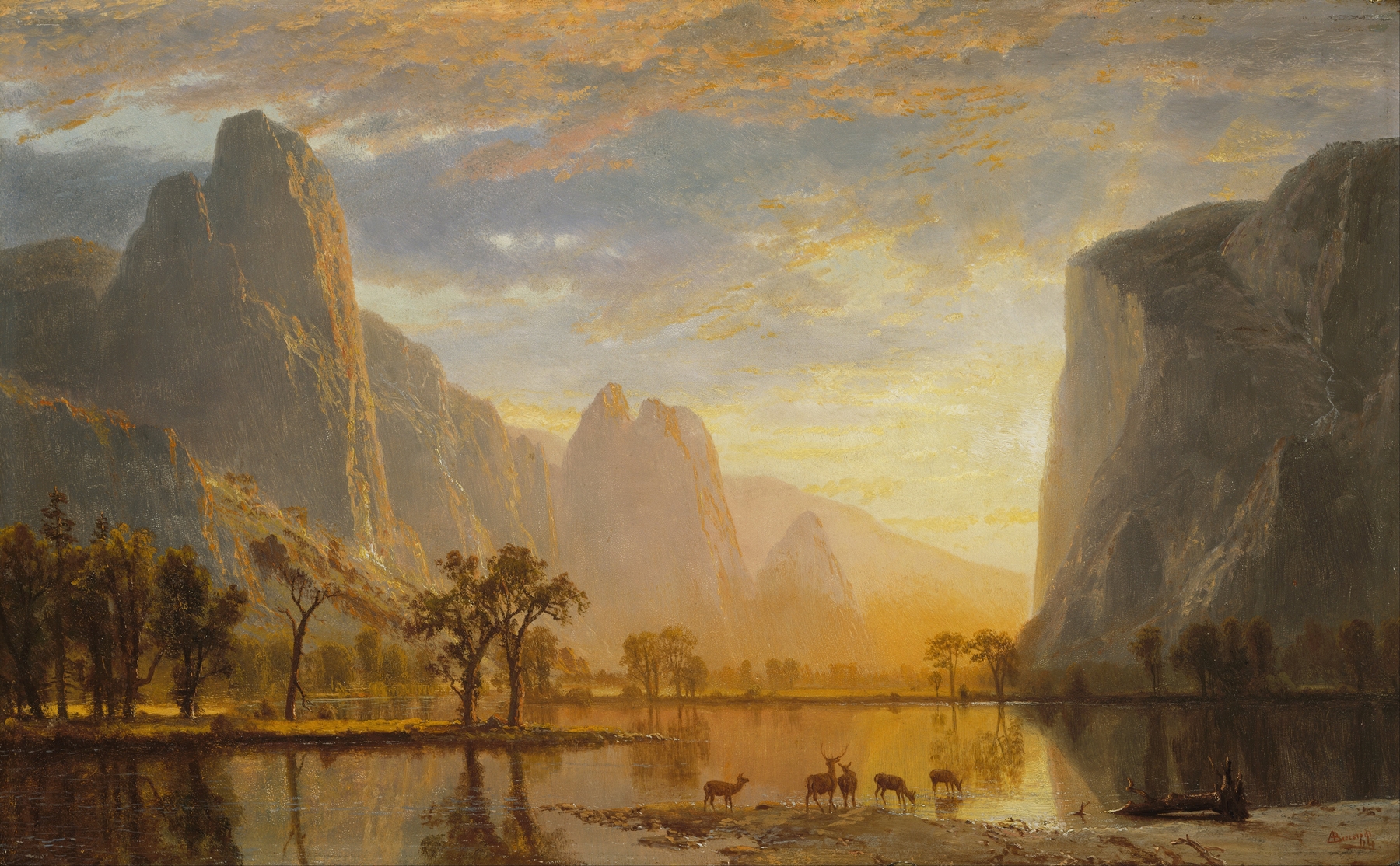
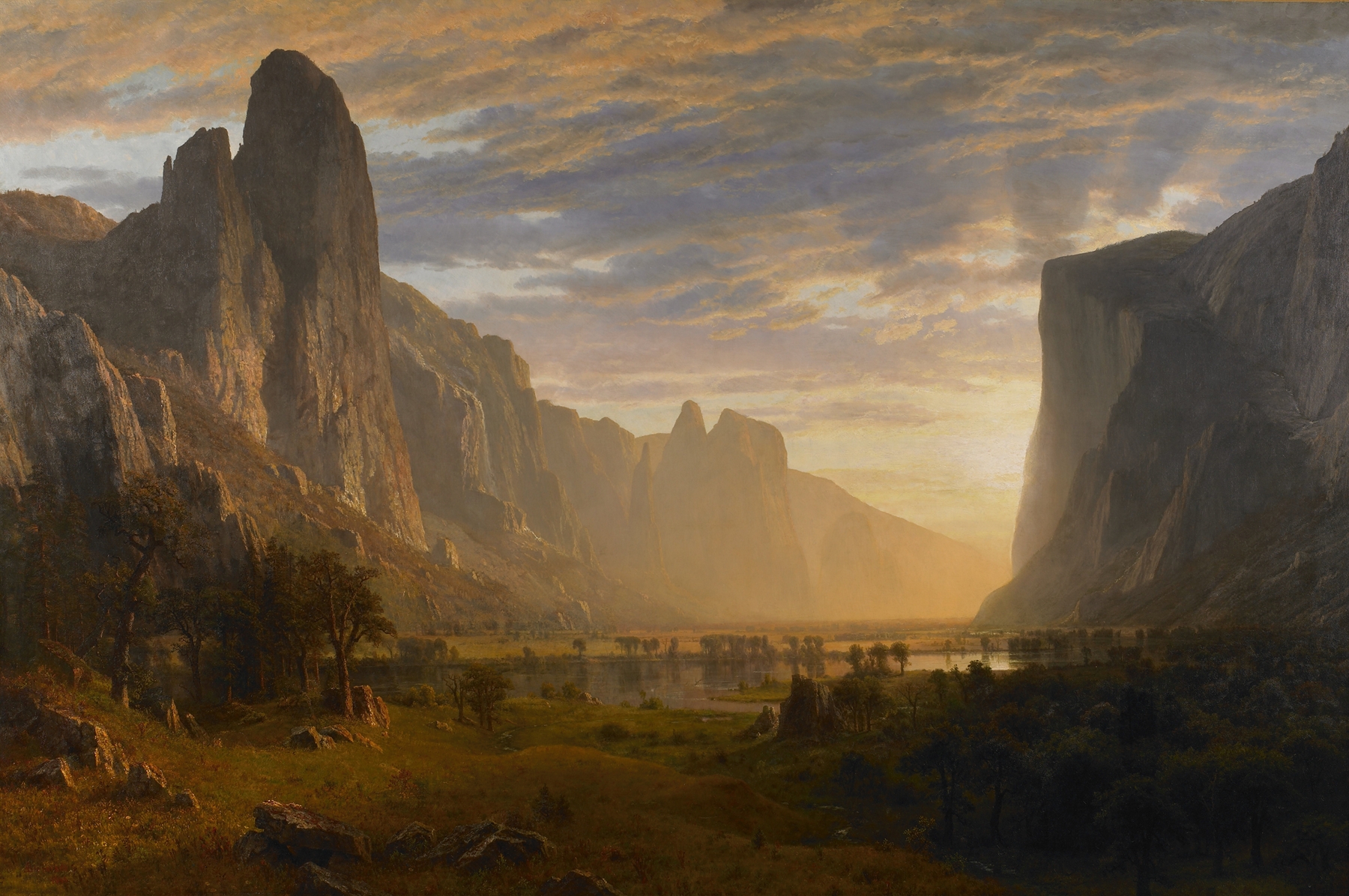
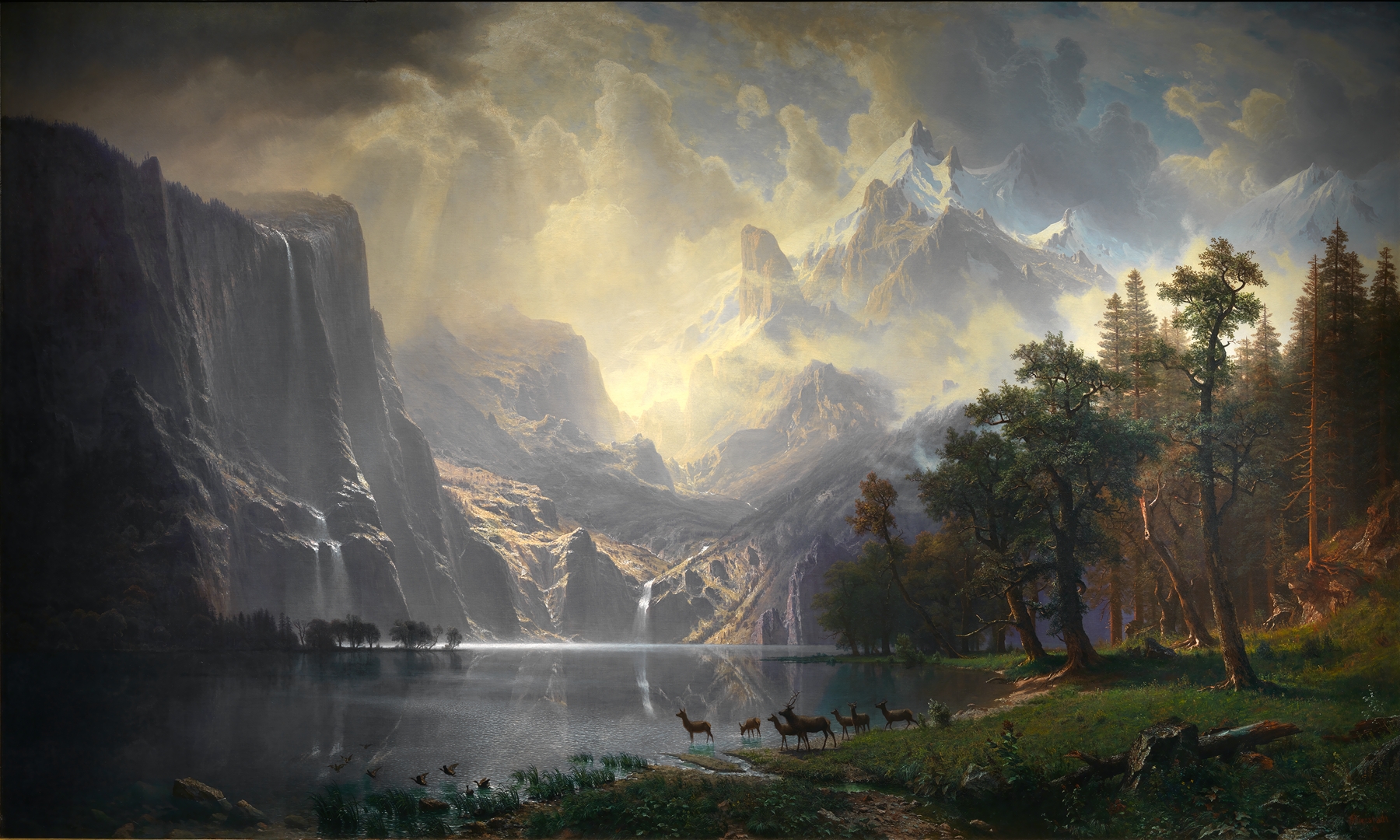
Can beauty exist without sorrow? The tranquil expanse of Yosemite Valley beckons us to explore the depths of its color-drenched wilderness, where nature’s grandeur coexists with our inner tumult. Look to the bottom left, where the lush greens of the foreground invite you in, creating a sense of immediacy. The vibrant palette draws the eye upward, leading to the majestic granite cliffs, awash in golden light. Notice how Bierstadt skillfully contrasts the cool blues and greens of the valley with the warm, intense hues of the setting sun, imbuing the scene with a sense of awe and reverence.
The meticulous brushwork evokes a sense of movement, as if the very air around the valley is alive, stirring the viewer’s soul. Delve deeper into the painting, and you will find emotional tensions woven into the serenity. The towering mountains symbolize both nature’s magnificence and humanity’s insignificance, illustrating a profound conflict between grandeur and vulnerability. The interplay of light and shadow creates a haunting beauty, hinting at the fleeting moments of joy that are often clouded by underlying sorrow.
Each brushstroke serves as a testament to the duality of existence, urging us to confront our own emotions amidst such breathtaking beauty. During the mid-19th century, while Bierstadt explored the American West, he sought to capture its unspoiled landscapes as part of the Hudson River School movement. Yosemite Valley became a focal point of admiration, symbolizing not only the nation's natural heritage but also the burgeoning desire for conservation as industrialization loomed. In this era of artistic exploration, Bierstadt’s works played a crucial role in shaping the nation’s perception of its natural wonders.