À Thuin ou La Partie de tennis — History & Analysis
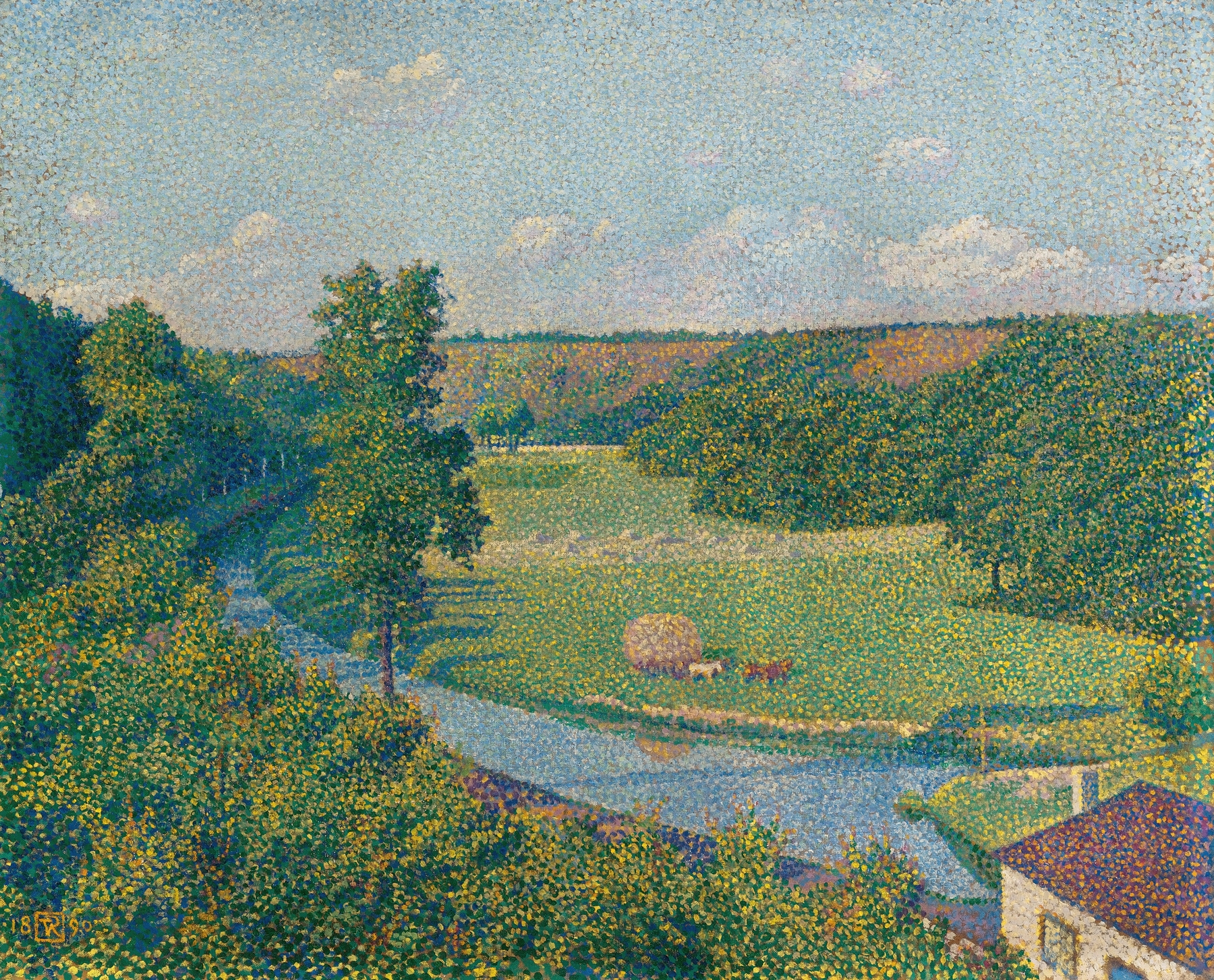
Could beauty survive in a century of chaos? It is a question that resonates through the sun-drenched canvas of À Thuin ou La Partie de tennis, where the spirit of hope plays its own game against the backdrop of life’s tumult. Look to the center, where a group of elegantly dressed figures engage in a game of tennis, their postures infused with both vigor and grace. Notice how the light cascades through the trees, casting playful shadows on the lush grass, while the vibrant palette of greens, blues, and whites harmonizes the scene.
Each brushstroke captures not just the action but the very essence of joy, inviting the viewer to pause and absorb the delightful interplay of color and form. Yet, beneath this surface gaiety lies a more profound commentary: the juxtaposition of leisure against the looming uncertainties of the late 19th century. The players are caught in a moment of bliss, perhaps oblivious to the social changes and political tensions brewing in Europe. One cannot help but feel a subtle melancholy in the way their smiles contrast with the stillness of the surrounding landscape, suggesting that happiness is fleeting, a fragile game easily disrupted.
Theo van Rysselberghe created this work in 1889 while living in Brussels, during a time when the art world was embracing Impressionism and Symbolism. The piece reflects his exploration of light and color, influenced by the avant-garde movements of the time. As he painted, Europe stood at the brink of modernization, a chaotic prelude to the 20th century, imbuing his work with layers of meaning that resonate far beyond the tennis court.