Péniches sur l’Escaut — History & Analysis
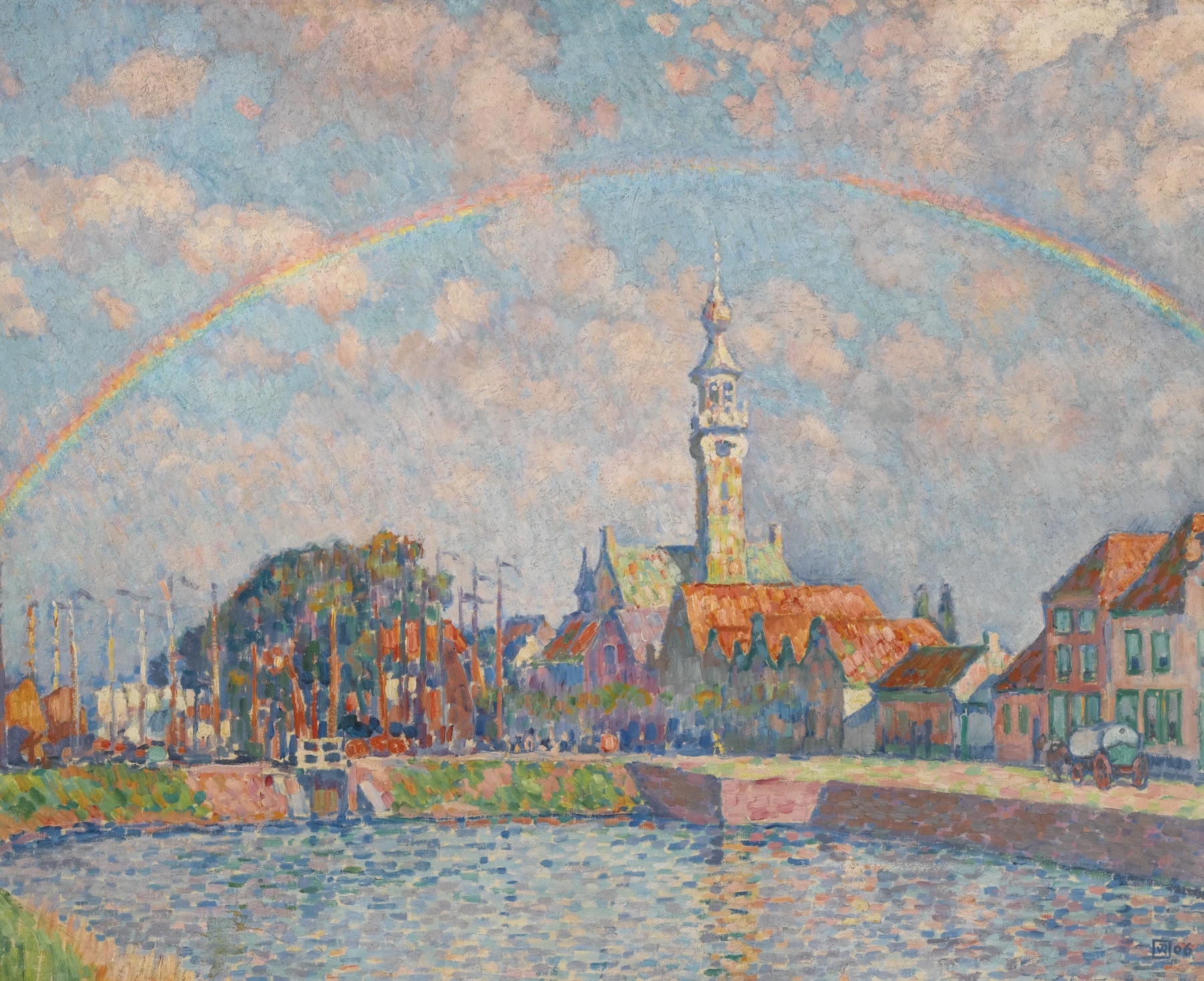
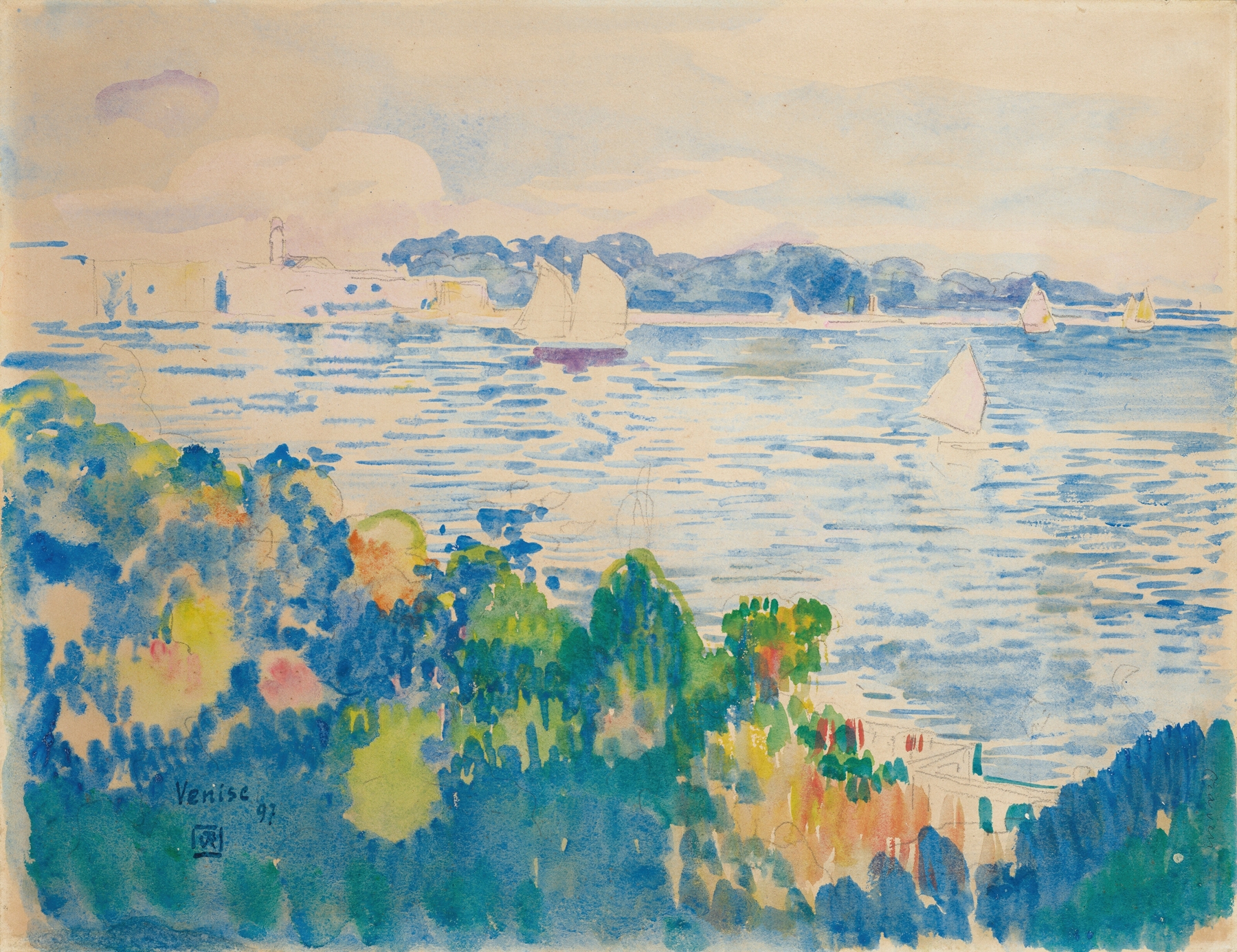
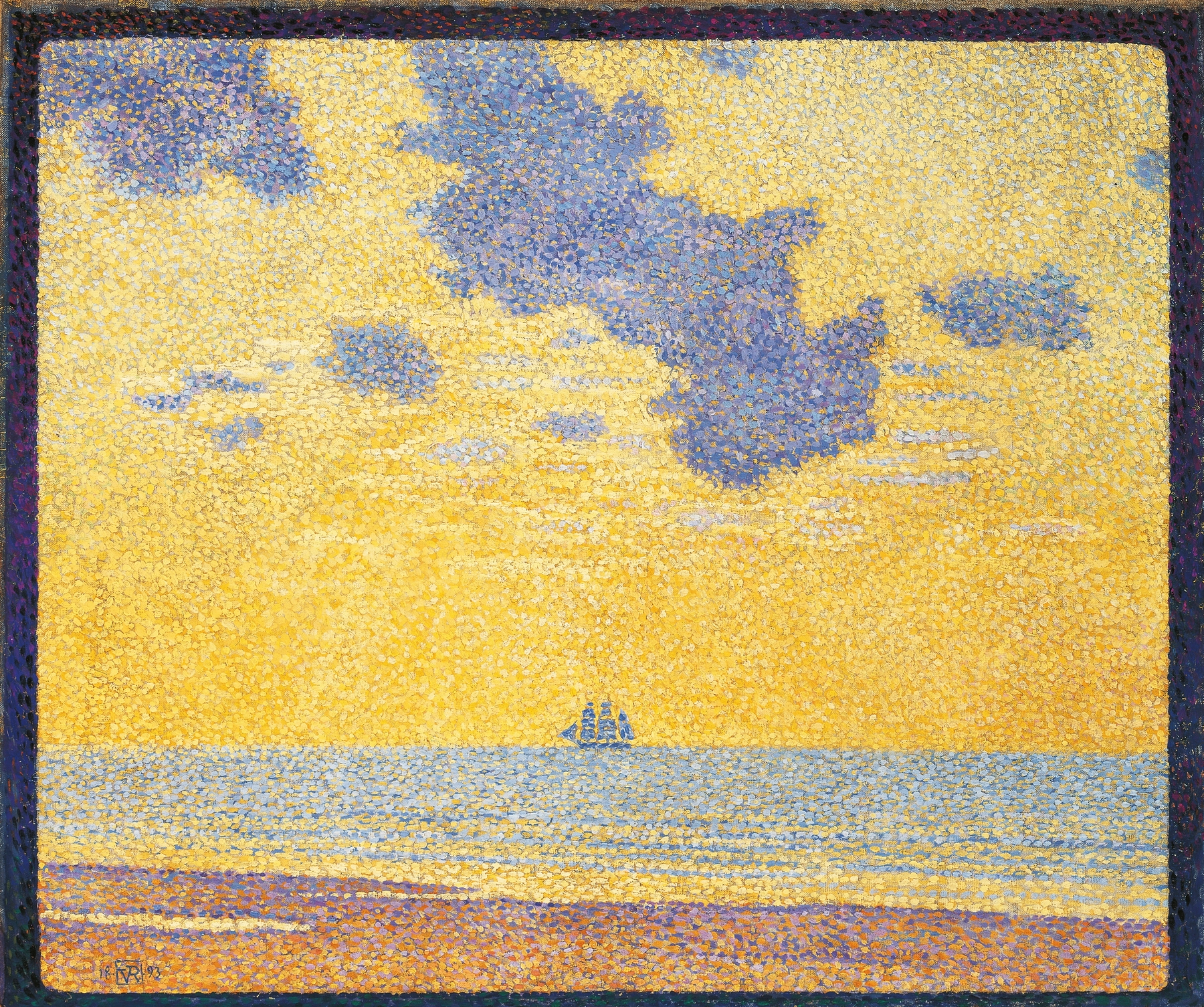
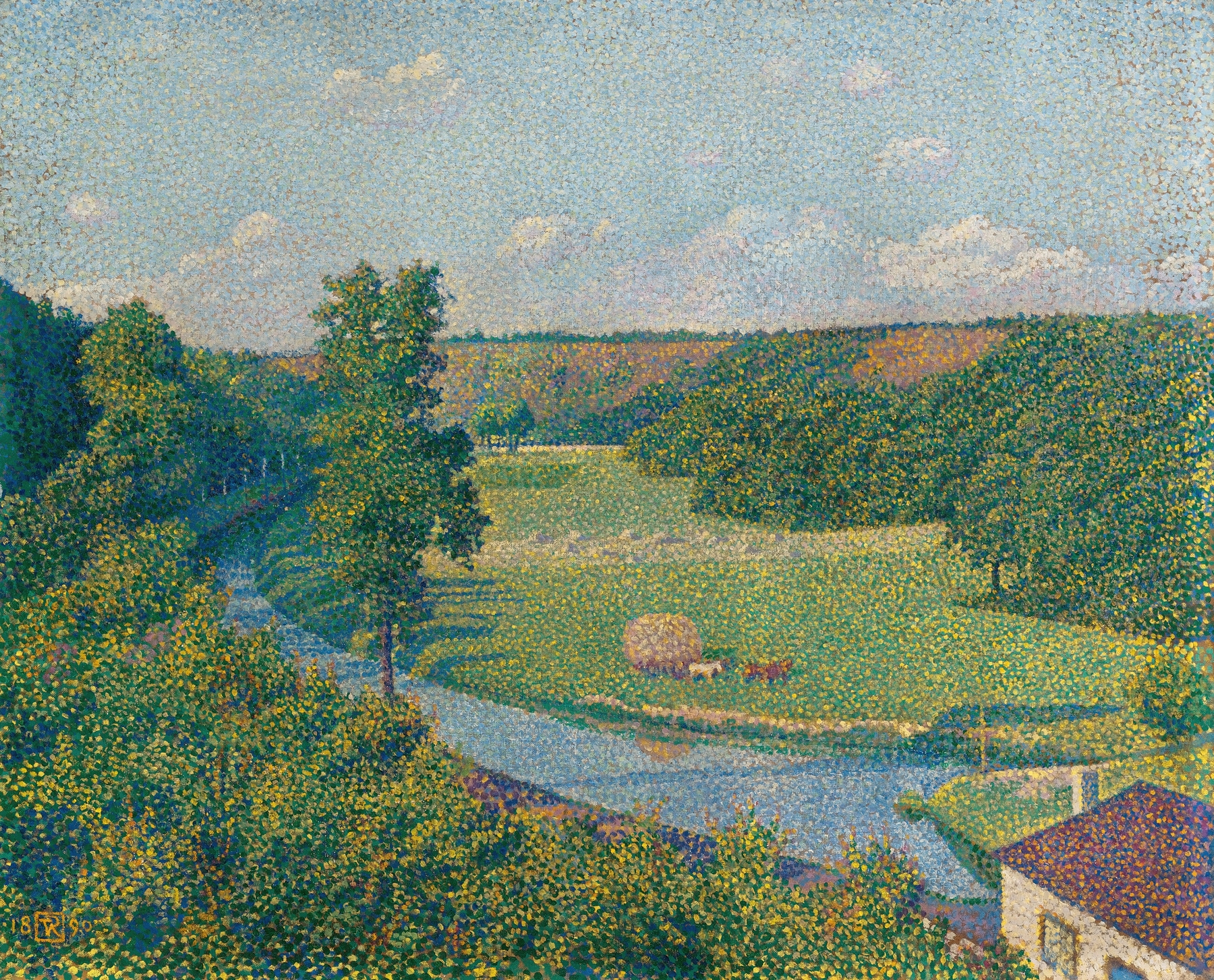
“Every brushstroke is a heartbeat remembered.” In the quiet depths of a painter's mind, the vibrant hues of betrayal intertwine with the tranquil waters of a river, revealing more than just a landscape. Focus on the left side of the canvas, where the gentle curve of the river cradles two narrow boats, their shapes and colors reflecting not merely their existence but an echo of human emotion. Observe how the deep blues and greens are punctuated by warm, ochre strokes that shimmer under the light, inviting you to trace the water's surface as it mingles with the sky. The composition, anchored by the boats, feels both serene and unsettling, as if the placid scene belies a drama waiting to unfold just beneath the surface.
The juxtaposition of the serene natural beauty and the lonely boats speaks volumes about isolation and vulnerability. The water’s stillness contrasts with the subtle tumult of the shoreline; these vessels seem to float between two worlds—a metaphor for betrayal where trust is cast adrift. Each brushstroke carries a memory of fleeting moments, capturing the weight of unspoken words and silent farewells.
In 1892, Van Rysselberghe painted this piece while living in France, immersed in the post-Impressionist movement. Artistic experimentation flourished around him, as many sought to expand the boundaries of representation. During this time, the artist was also grappling with personal changes, feeling the tension between adherence to tradition and the push towards a new expressive freedom—epitomized in works like Péniches sur l’Escaut.