A Bit of the Argonne — History & Analysis
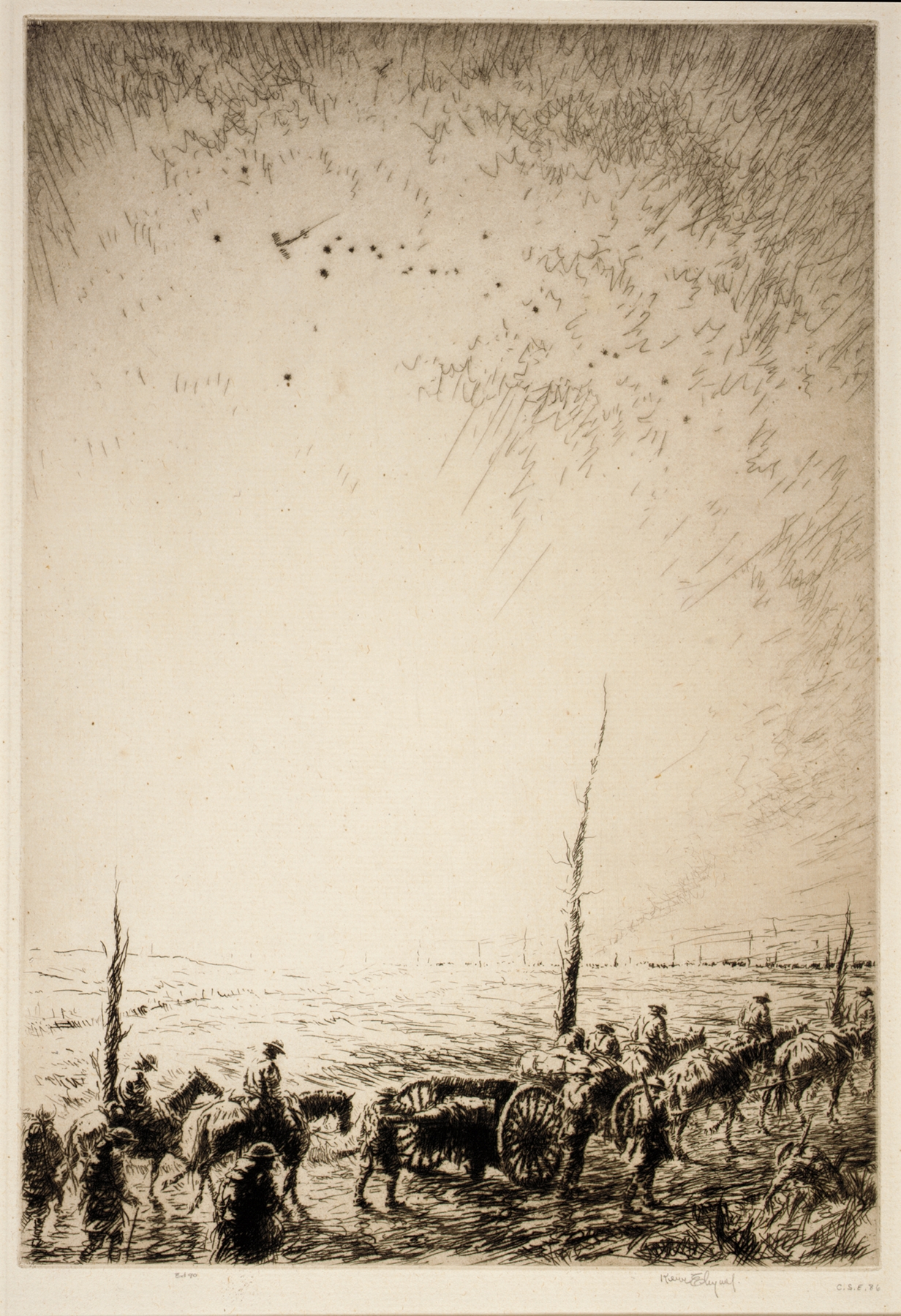
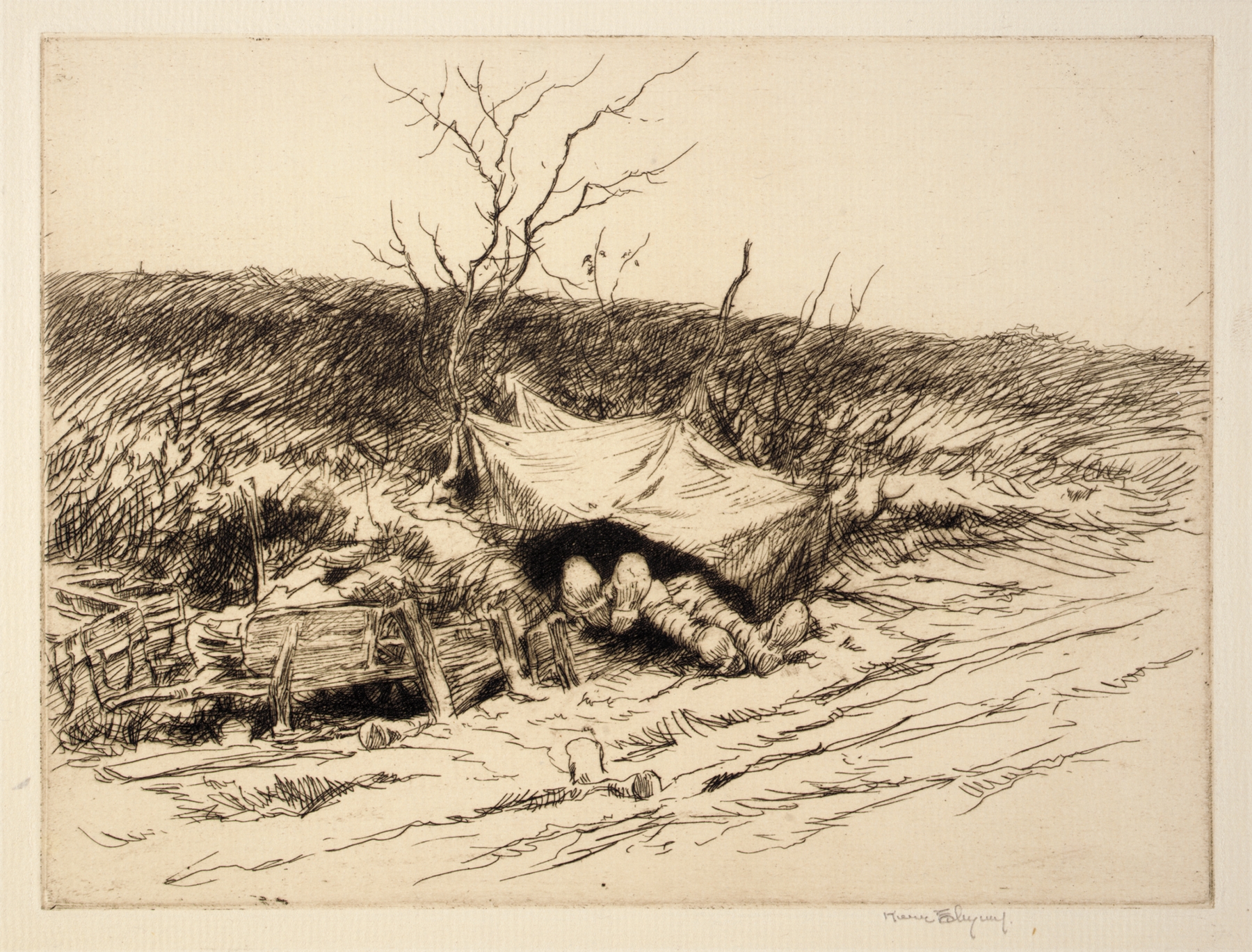
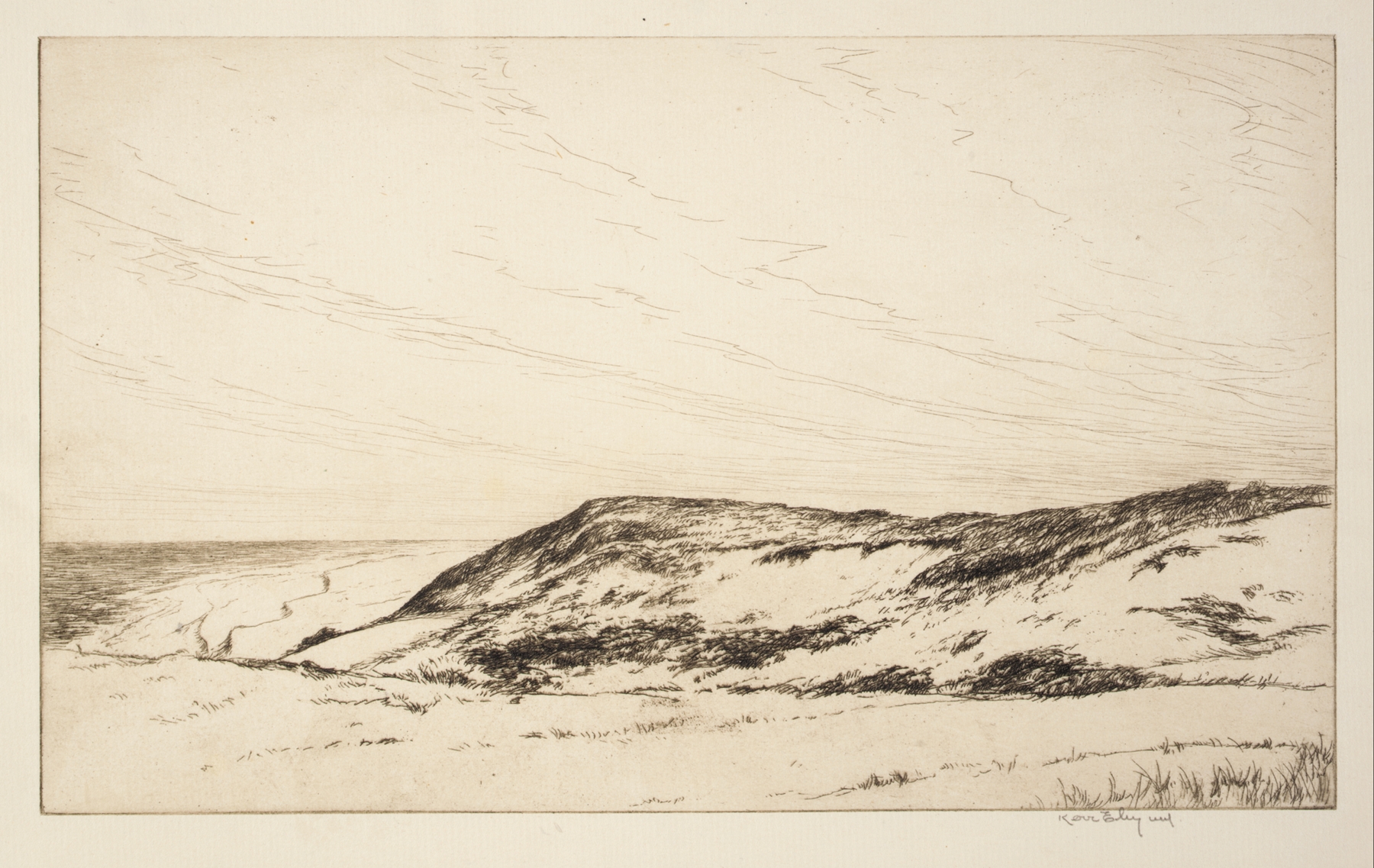
Where does light end, and longing begin? The interplay of shadow and illumination in A Bit of the Argonne evokes a profound ache for connection amid the remnants of war's devastation. Look to the left at the craggy silhouette of trees, their stark forms reaching skyward like desperate hands. The muted earth tones blend seamlessly with soft grays and blues, capturing the early morning light that filters through the haze.
Notice how the artist’s use of etching and aquatint brings texture to the landscape, inviting viewers to feel the roughness of the bark and the smoothness of the mist. This careful technique creates an aura of solitude, underscoring the stillness that envelops the scene. Amidst the serene beauty, a tension arises from the juxtaposition of the tranquil setting and the echoes of sorrow. The distant hills, shrouded in mist, symbolize both hope and uncertainty, suggesting the scars of memory that linger long after the last shot is fired.
The absence of human figures amplifies this sentiment—here, nature stands as a witness to the longing for peace and healing, inviting viewers to reflect on the quiet aftermath of conflict. Painted in 1919, A Bit of the Argonne captures a moment in Kerr Eby's life when he was grappling with the consequences of World War I. Having served as a war artist, Eby was deeply influenced by the emotional weight of his experiences, which permeated his work. This period marked a significant shift in art, as many artists sought to confront the realities of war while exploring themes of loss, resilience, and the quest for understanding in the face of turmoil.