Lower New York — History & Analysis
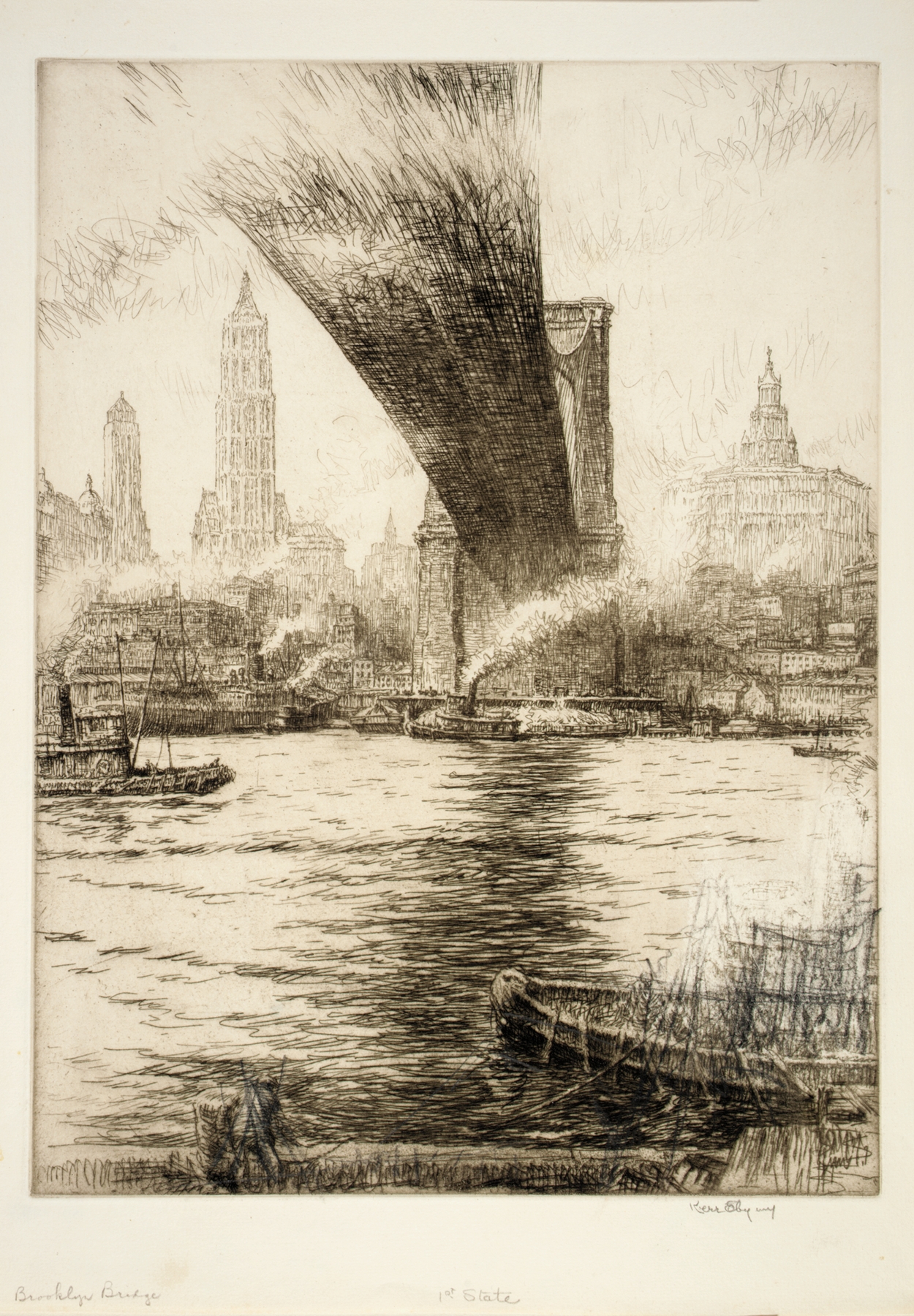
Can beauty exist without sorrow? In Lower New York, the interplay of light and shadow suggests that even amidst urban chaos, poignant moments of grace emerge. Look to the foreground where a lone figure stands beneath the wash of electric light, casting a long shadow that dances against the pavement. Notice how the subtle gradient of the sky transitions from deep blue to the warm glow of street lamps, creating a visual tension that captivates the eye.
The buildings loom in stark contrast, their heavy forms softened by the play of light, evoking both the weight of the urban landscape and the fleeting quality of its beauty. Within this composition lies a profound commentary on isolation and connection. The solitary figure, seemingly insignificant against the towering structures, symbolizes the individual’s struggle for meaning in a crowded world. The light illuminating the scene acts as a metaphor for hope, yet the surrounding darkness hints at the melancholy that often accompanies urban life.
This duality invites the viewer to reflect on their own relationship with the environment and the complexities of existence. Kerr Eby created Lower New York during a transformative time between 1920 and 1940, a period marked by rapid urbanization and the lingering effects of the Great Depression. Living in New York City, Eby was influenced by the bustling life around him and the socio-political climate that shaped modern art. His work captures the essence of an era filled with contradictions, revealing both the vibrancy and struggles of life in America's landscape.