Brooklyn Bridge — History & Analysis
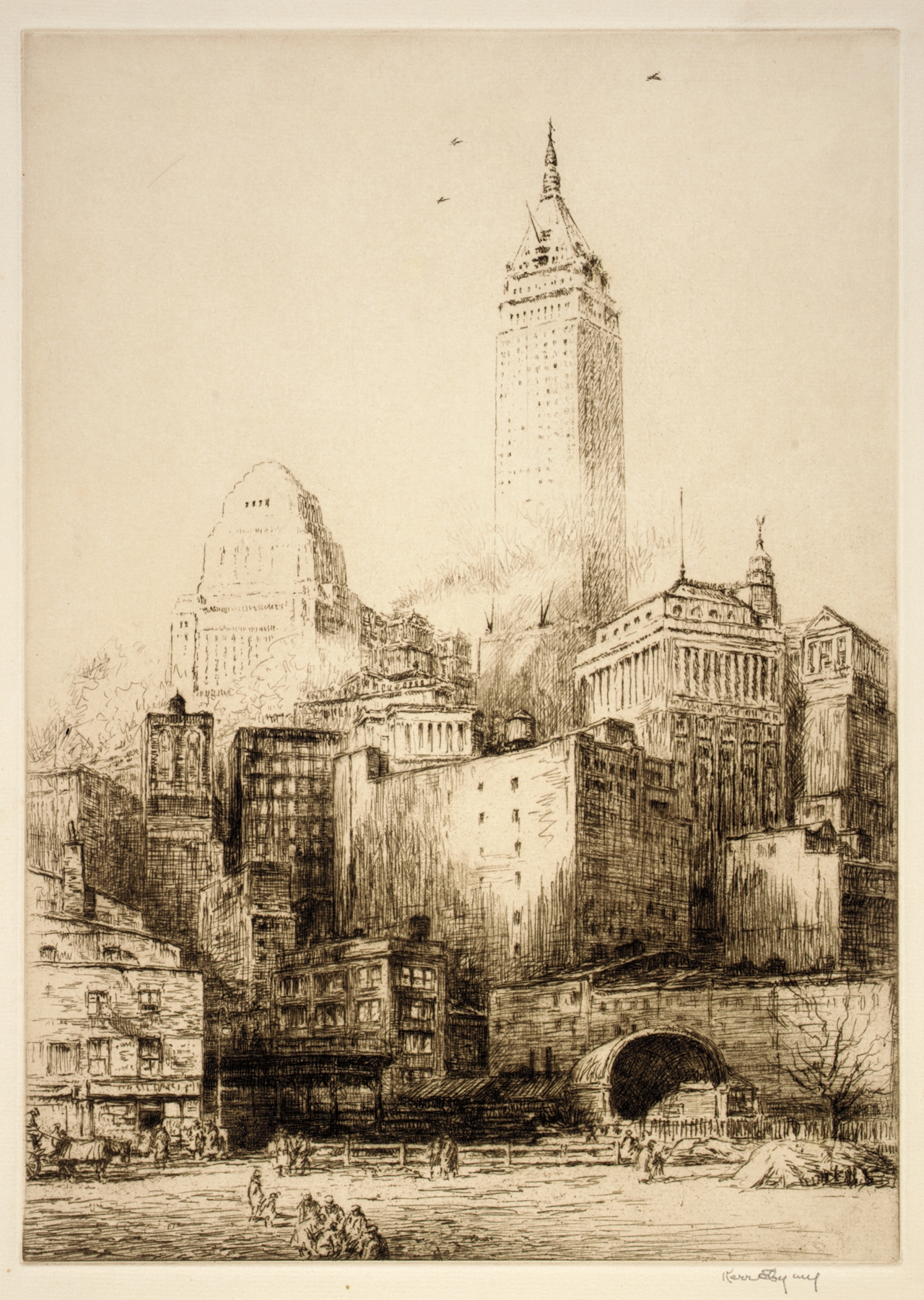
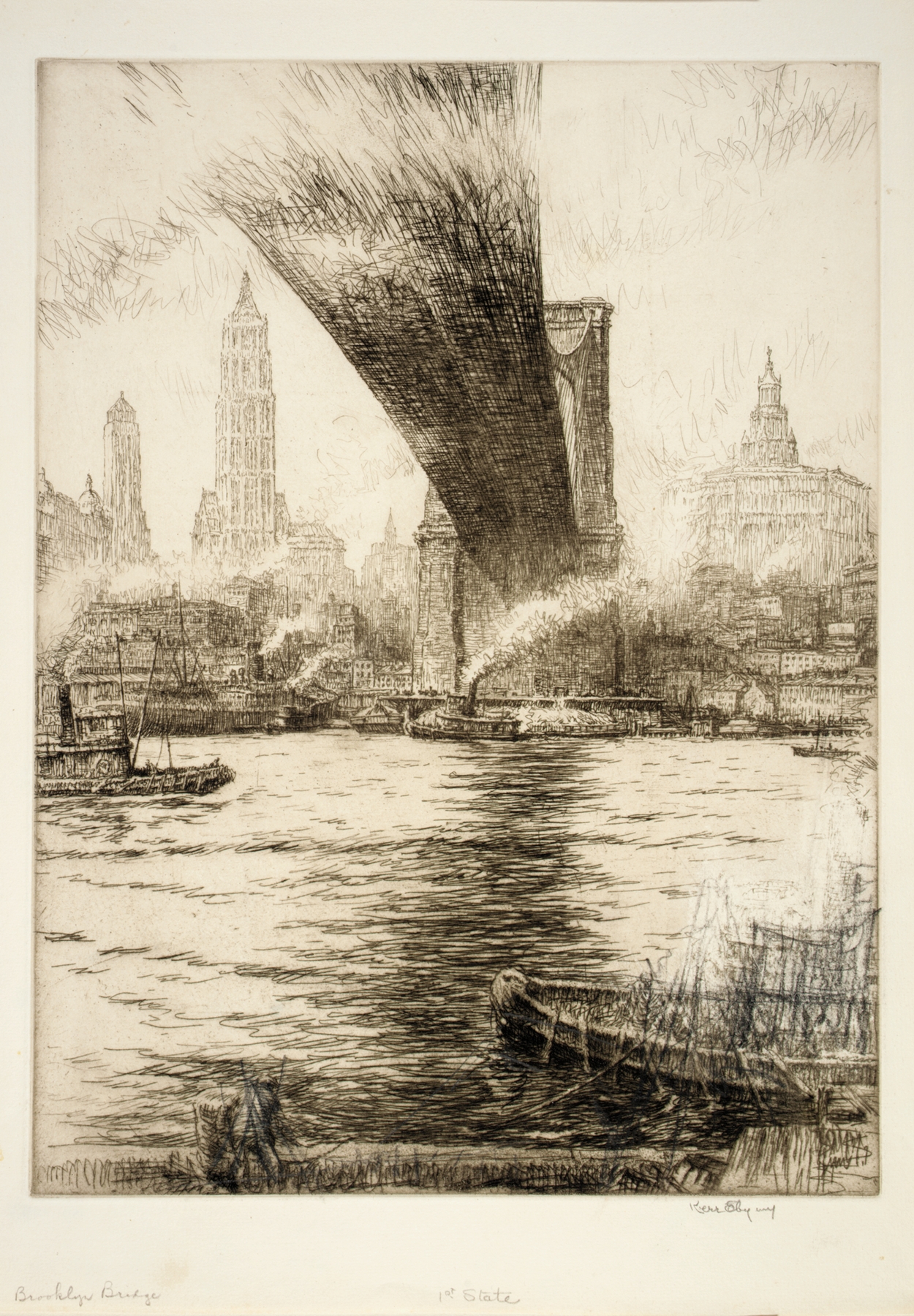
“Sometimes beauty is just pain, disguised in gold.” This sentiment echoes through the stark lines and sweeping forms of a city forever caught between dreams and despair. In Brooklyn Bridge, the duality of the structure stands as a metaphor for human ambition, reflecting both the void created by urban life and the soaring heights of aspiration. Look to the center of the canvas where the bridge stretches across an expansive, muted sky, its delicate arches and cables drawing the eye upward. The interplay of light and shadow plays an essential role, emphasizing the rugged texture of the bridge while contrasting it with the ethereal background.
Eby's choice of a limited color palette—deep grays and soft whites—evokes a sense of solemnity, while the brushstrokes convey the weight of history and the passage of time. Life pulses beneath this architectural marvel, yet it carries a sense of isolation. The empty space surrounding the bridge suggests absence, a void that hints at the countless stories of those who traverse it yet remain unseen. The interplay of strength and fragility also speaks to the inherent struggle within urban existence, where beauty often masks deeper emotional scars.
Each detail invites contemplation, urging the viewer to reflect on the balance between hope and desolation. Kerr Eby painted Brooklyn Bridge in 1930, a period marked by the Great Depression, when the American psyche was grappling with economic hardship and social upheaval. Living in New York City and drawing inspiration from its landscapes, Eby was deeply influenced by the trends of modernism while also rooted in realism. This tension is reflected in his work, capturing a moment of resilience amidst a world marred by uncertainty.