A Capriccio with the Arch of Constantine and the Capitoline Lion Group — History & Analysis
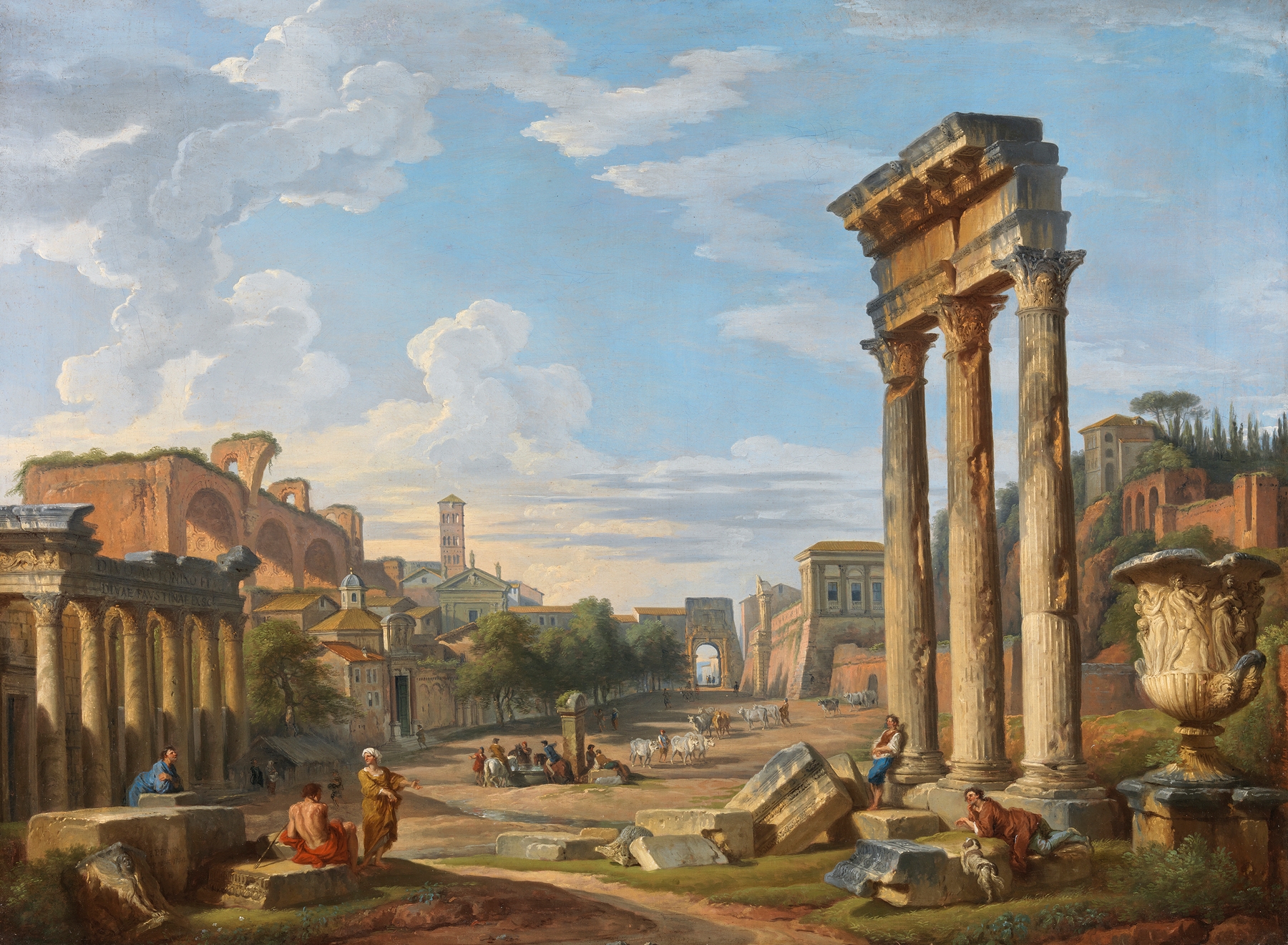
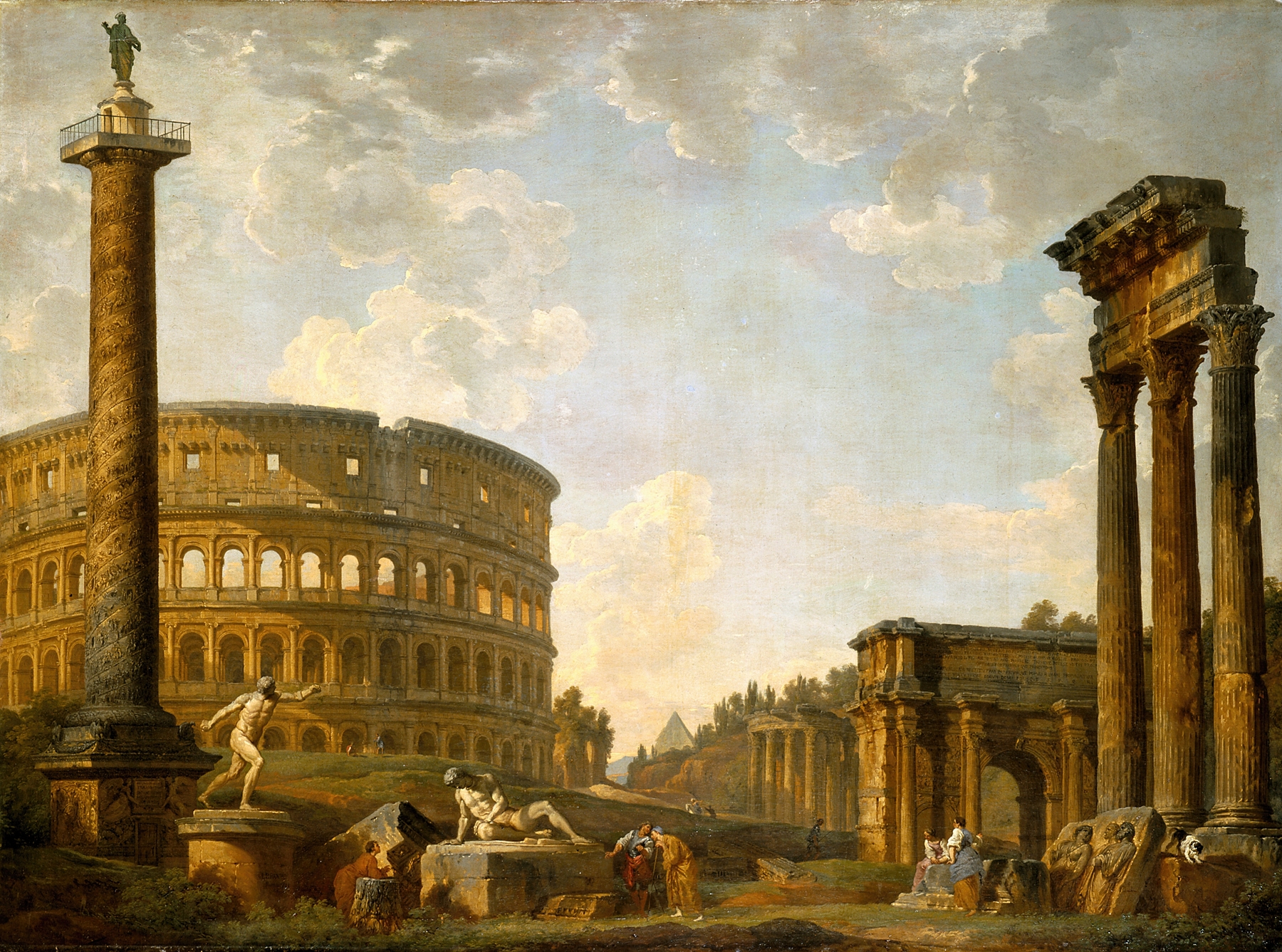
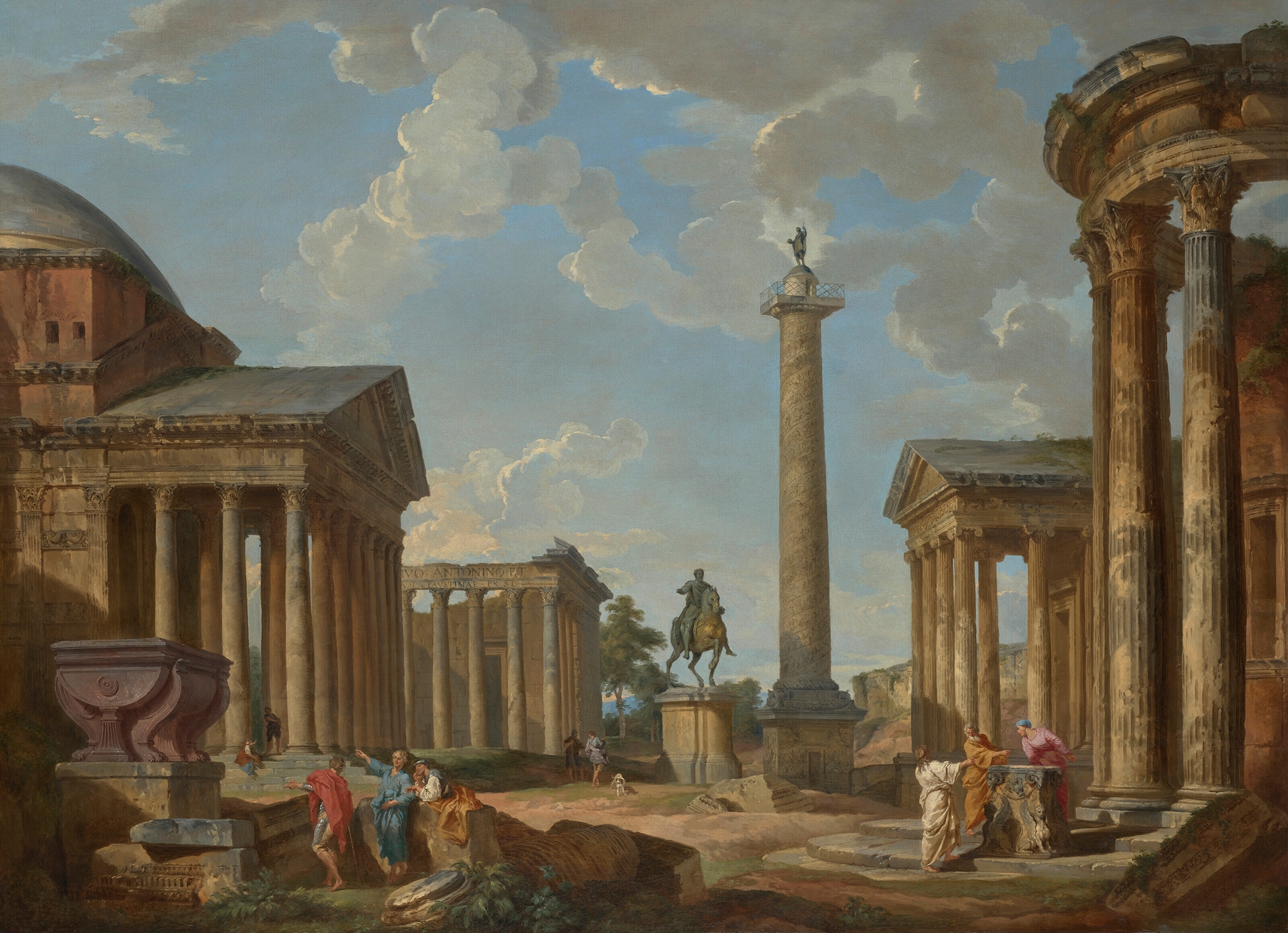
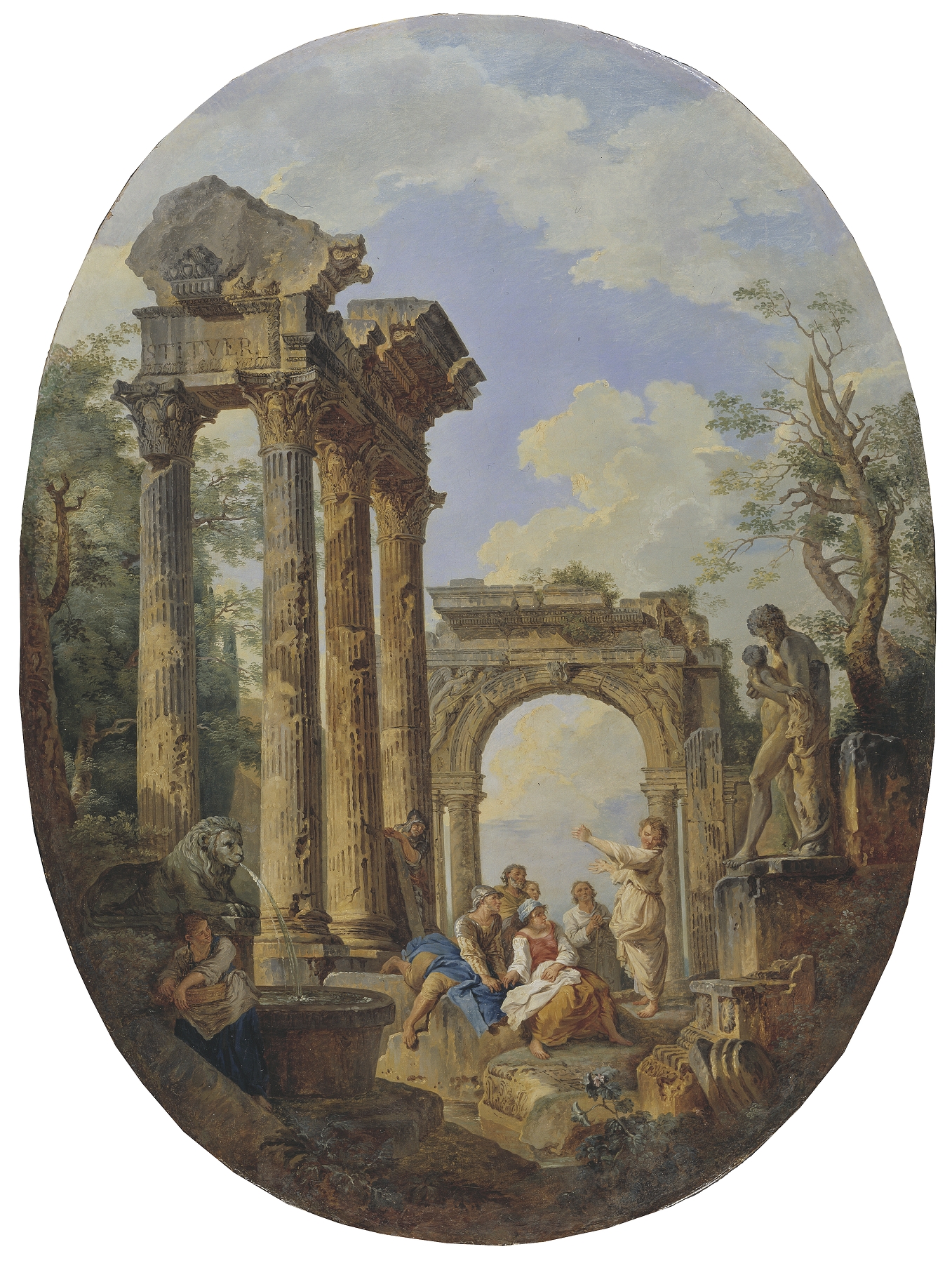
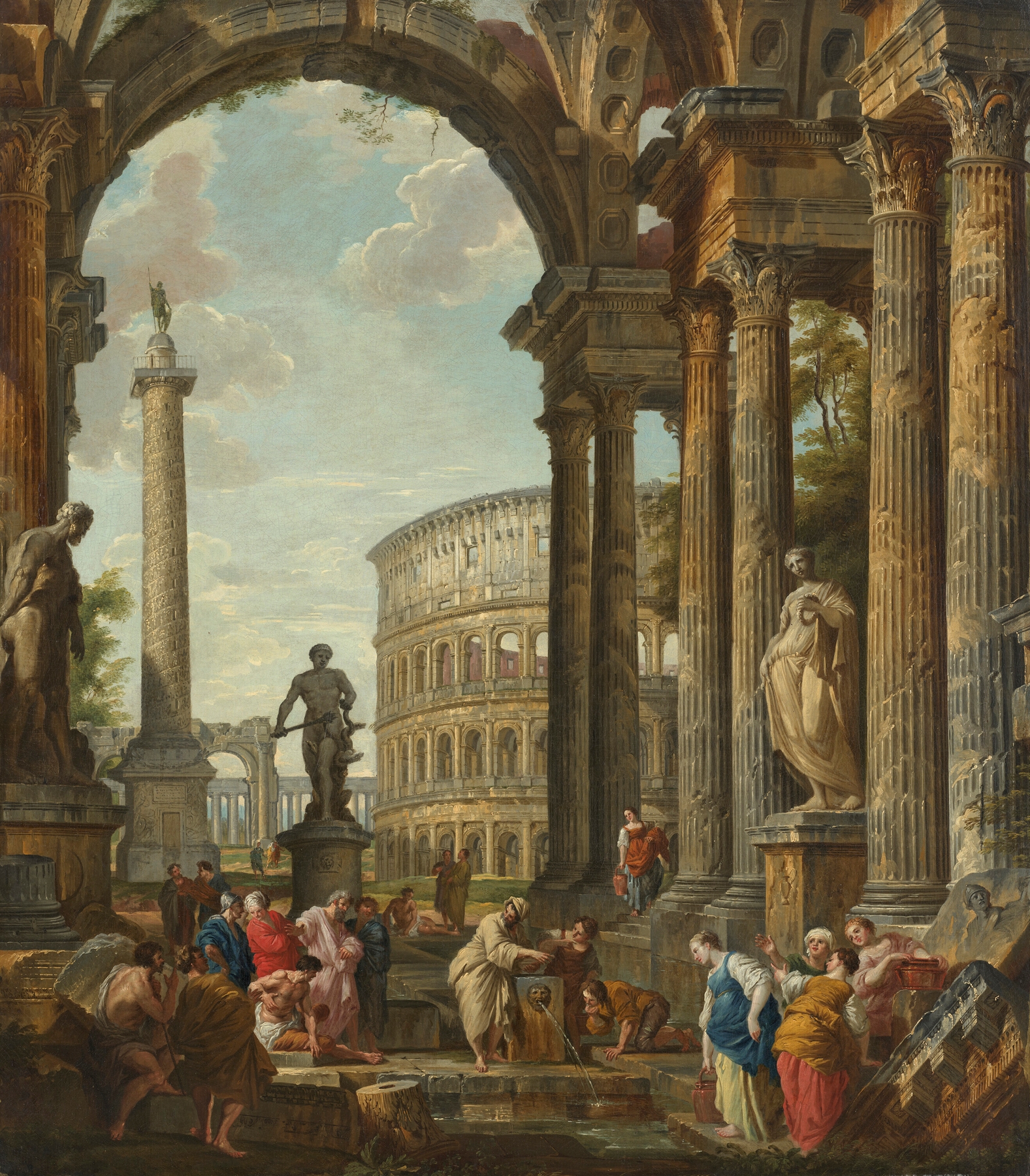
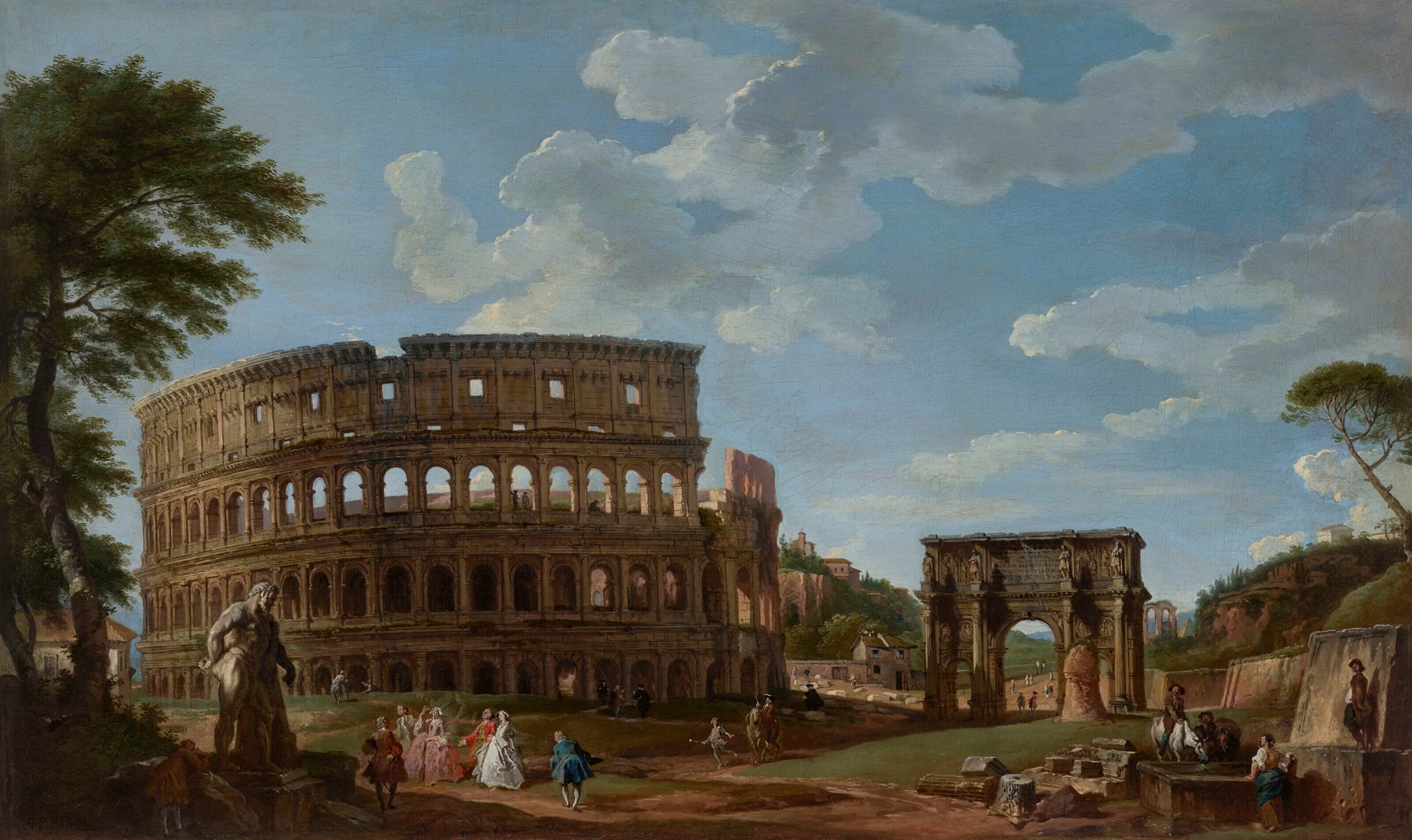
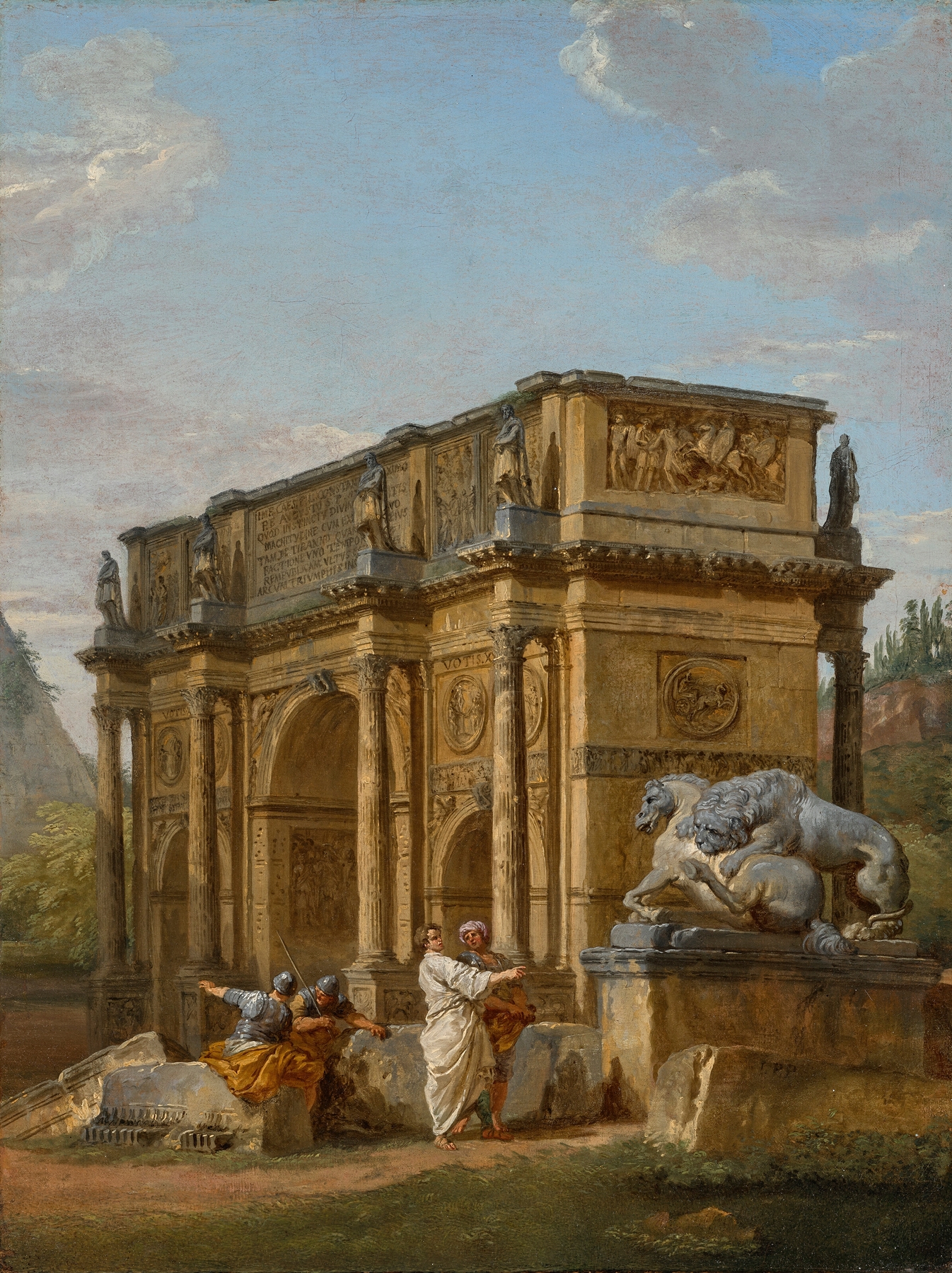
Who listens when art speaks of silence? In the intricate embrace of a bygone era, longing reverberates through history, whispering the tales of lost grandeur and enduring beauty. Focus first on the majestic Arch of Constantine, dominating the left side of the canvas. Notice how it rises against a backdrop of warm, golden hues, its stones bathed in the soft light of a fading day.
Panini employs a delicate balance of shadow and brightness to accentuate the intricate carvings, inviting you to trace the stories etched into its surface. As your gaze wanders, the harmonious placement of the Capitoline Lion Group draws you in, grounding the piece with its powerful presence, embodying strength amid the ruins. Beneath the surface, the painting pulsates with emotional tensions. The juxtaposition of the ancient architecture and the serene lion evokes a dialogue between strength and vulnerability, time and eternity.
Each element, from the atmospheric clouds swirling above to the figures conversing in the foreground, holds significance, creating a sense of connection and longing for a world where every stone has a story to tell. The scene encapsulates not just a moment in history but a feeling that transcends it, inviting viewers to reflect on their own narratives within this landscape. During the 18th century in Rome, Giovanni Paolo Panini found himself immersed in a period of artistic revival, heavily influenced by the neoclassical ideals and the rich historical context surrounding him. This painting, created at an undetermined point in his career, reflects his fascination with the ruins of the past and his ability to blend fantasy with reality, interpreting the remnants of ancient glory through his imaginative lens.